The Alfa Romeo GTV6 is one of the clearest expressions of the classic Alfa formula: a charismatic Busso V6 in the nose, a rear-mounted gearbox for balanced weight distribution and Giugiaro bodywork that still looks purposeful rather than ornamental. It was not merely a faster Alfetta GT. It brought the 2.5-litre V6 from the Alfa 6 into a compact transaxle coupé and became a successful touring-car weapon.
From Alfetta GT to GTV6
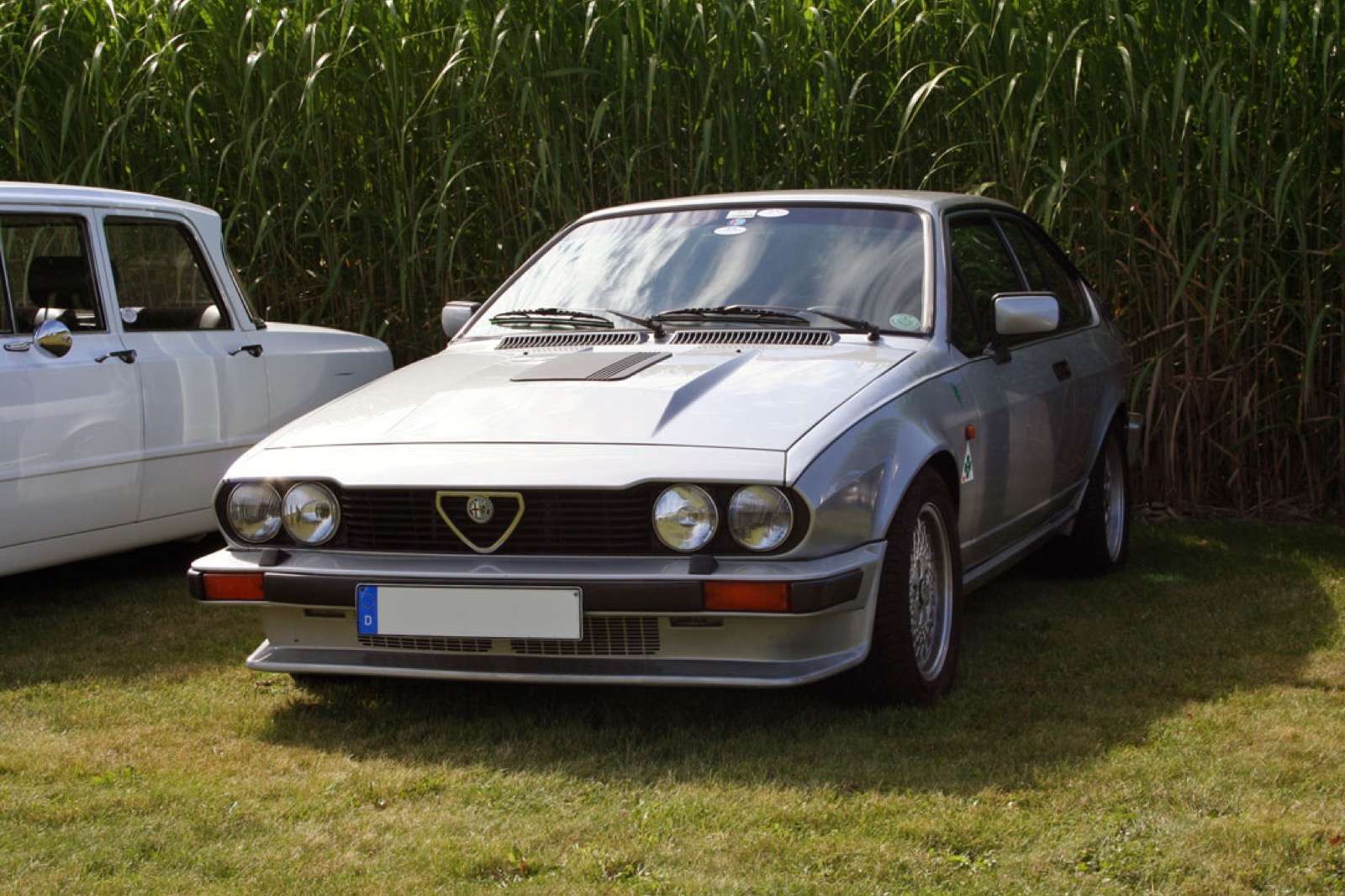
Alfa Romeo launched the Alfetta saloon in 1972 and followed it with Giorgetto Giugiaro’s Alfetta GT coupé in 1974. The crucial engineering idea was the transaxle: the clutch and five-speed gearbox sat at the rear with the differential, while a De Dion rear axle kept the wheels well controlled. Moving this mass rearwards helped the car approach an even front-to-rear balance.
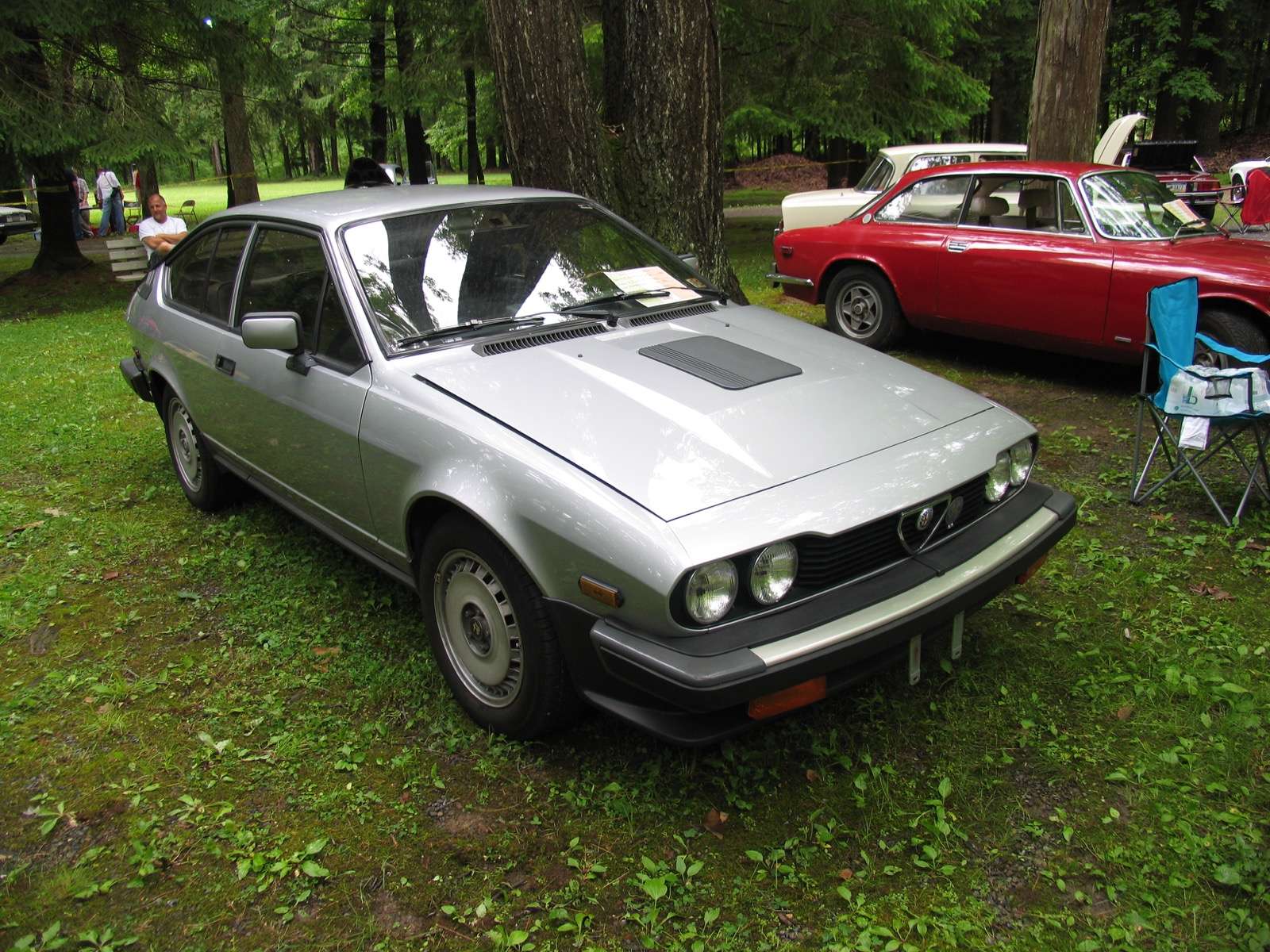
The GTV6 arrived for 1980. Its name described the change that mattered: the fuel-injected 2.5-litre, all-alloy V6 designed under Giuseppe Busso. The bonnet gained a distinctive raised section to clear the engine, while deeper spoilers and detail changes separated it from four-cylinder GTVs. European cars produced roughly 160 PS, with specification varying by market and emissions rules.

The Busso V6 experience
Numbers tell only part of the story. The 2,492cc V6 used a 60-degree bank angle, a single overhead camshaft for each bank and Bosch fuel injection. Its smoothness, response and hard-edged induction note became central to Alfa’s identity for decades. Contemporary tests typically put a European GTV6 near 130 mph and around eight seconds from rest to 60 mph, quick figures for an early-1980s four-seat coupé.
The transaxle layout gave the GTV6 unusually composed handling, but also created its best-known quirks. The long gear linkage can feel deliberate rather than slick, and the inboard rear brakes complicate servicing. A healthy car rewards smooth inputs: the steering is communicative, the chassis works progressively and the V6 encourages the driver to use every revolution.

A competition car with genuine results
The GTV6’s reputation was strengthened on the circuit. Autodelta-developed Group A cars won their class in the European Touring Car Championship in four consecutive seasons from 1982 to 1985. The car also achieved rally success, including a class win at the 1986 Tour de Corse. Those results were not marketing theatre: the rigid shell, rear transaxle and tractable V6 gave teams a strong production base.
South Africa produced an especially evocative derivative. To meet local competition requirements, Alfa Romeo South Africa developed the 3.0-litre GTV6, commonly called the GTV6 3.0. Built in a small homologation run, it used six carburettors and aggressive body details. It is distinct from later European aftermarket conversions and is among the most collectible transaxle Alfas.
Love cars you don’t see every day?
Get forgotten cars, surprising motoring stories and the most interesting finds from Unusual Cars by email.
Free to join. No spam. Unsubscribe whenever you like. See our privacy policy.
Why the GTV6 still matters
Production ended in 1986 as Alfa prepared the 75-based SZ era and later front-wheel-drive coupés. The GTV6 nevertheless remains a useful bridge between post-war Alfa tradition and the more rational cars that followed. It has space for four, a practical hatch, mechanical character and a chassis layout rarely offered at its price.
Its weaknesses are equally important to the story. Corrosion affected sills, arches, suspension pick-up points and the tailgate area; neglected driveline doughnuts, synchros and inboard brakes can turn a cheap example into an expensive project. None of that diminishes the engineering. It explains why originality, structure and documented care now matter more than cosmetic shine.
Alfa Romeo GTV6 FAQs
What engine is in the Alfa Romeo GTV6?
Most GTV6s use Alfa Romeo’s 2.5-litre 60-degree Busso V6 with Bosch fuel injection. Output varies by market, but European specification was about 160 PS.
Why is the gearbox at the rear?
Alfa combined the clutch, five-speed gearbox and differential in a rear transaxle. Moving weight rearwards improved balance and traction, although it required a long gear linkage.
Was the GTV6 successful in racing?
Yes. Group A GTV6s won their class in the European Touring Car Championship from 1982 through 1985 and also achieved notable rally results.
Is a GTV6 the same as an Alfetta GTV?
They share the same Giugiaro-designed body and transaxle platform, but the GTV6 is the V6-powered development introduced for 1980. Earlier Alfetta GT and GTV models primarily used four-cylinder engines.
How many seats does a GTV6 have?
It is a four-seat hatchback coupé. Rear space is modest, but the large glass hatch makes it more usable than many contemporary sports cars.
Research sources
Historical context was checked against Alfa Romeo/Stellantis heritage material. Specifications vary by market and model year.
Continue the Alfa Romeo story
Explore the Rare & Performance Alfa Romeos hub, or continue with the Alfa Romeo 75 and 916 GTV.