UNUSUAL CARS MODEL GUIDE
The Toyota Celica GT-Four was the turbocharged, four-wheel-drive Celica built to take Toyota into the front rank of the World Rally Championship. Three generations were produced—the ST165, ST185 and ST205—each using a 2.0-litre 3S-GTE engine and permanent four-wheel drive.
Quick answer: choose an ST165 for its rarity and direct 1980s character, an ST185 for the strongest connection to Toyota’s championship breakthrough, or an ST205 for the most developed road-car chassis. All three need specialist inspection for rust, cooling faults, worn drivetrains and poorly executed modifications.
Why Toyota built the GT-Four
International rallying moved decisively towards four-wheel drive during the 1980s. Toyota’s rear-wheel-drive Celica Twin-Cam Turbo had proved formidable on long African events, but the company needed a new platform for the broader demands of Group A. The answer was to combine the Celica liftback body with the turbocharged 3S-GTE and a permanent four-wheel-drive transmission.
The first GT-Four appeared in Japan in 1986 and entered international competition as the ST165. Across the following decade, Toyota Team Europe developed the formula into one of the defining rally-car families of the early 1990s.

ST165: the first Celica GT-Four
The ST165 was based on the fourth-generation Celica. Its 3S-GTE placed a twin-cam, 16-valve turbocharged four-cylinder engine across the nose, driving all four wheels through a five-speed manual transmission. The road car was discreet: modest badging, pop-up headlamps and a liftback body concealed hardware developed for serious competition.
Carlos Sainz used the ST165 to become Toyota’s first World Rally Champion in 1990. That achievement proved the concept and gave Toyota the momentum to refine the road and competition cars around the demands of Group A.
ST185: the championship breakthrough
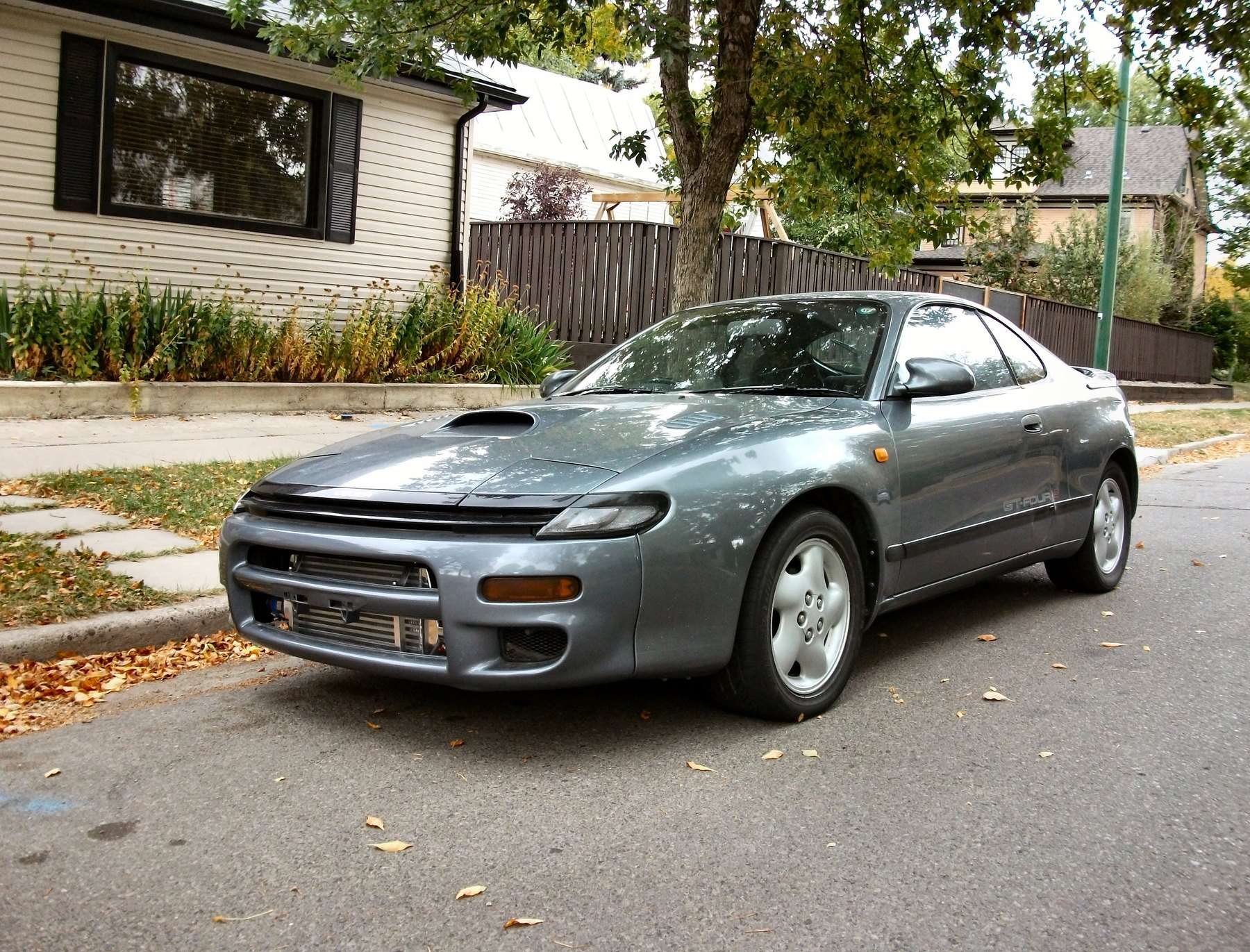
The more rounded ST185 arrived with the fifth-generation Celica. Toyota improved the cooling, drivetrain and chassis while retaining the 1,998cc 3S-GTE. The wide-body form became the visual signature of the model.
A special GT-Four RC was produced for homologation and sold as the Carlos Sainz Limited Edition in Europe. Toyota states that 5,000 RC versions were made for Europe, Australia and Japan. They gained model-specific cooling and competition-relevant changes, so genuine identity should be confirmed carefully.
The ST185 delivered Toyota’s decisive WRC success. Sainz won the 1992 drivers’ title; Juha Kankkunen and Toyota took the drivers’ and manufacturers’ championships in 1993; Didier Auriol and Toyota repeated that pairing in 1994.
ST205: the most developed road car
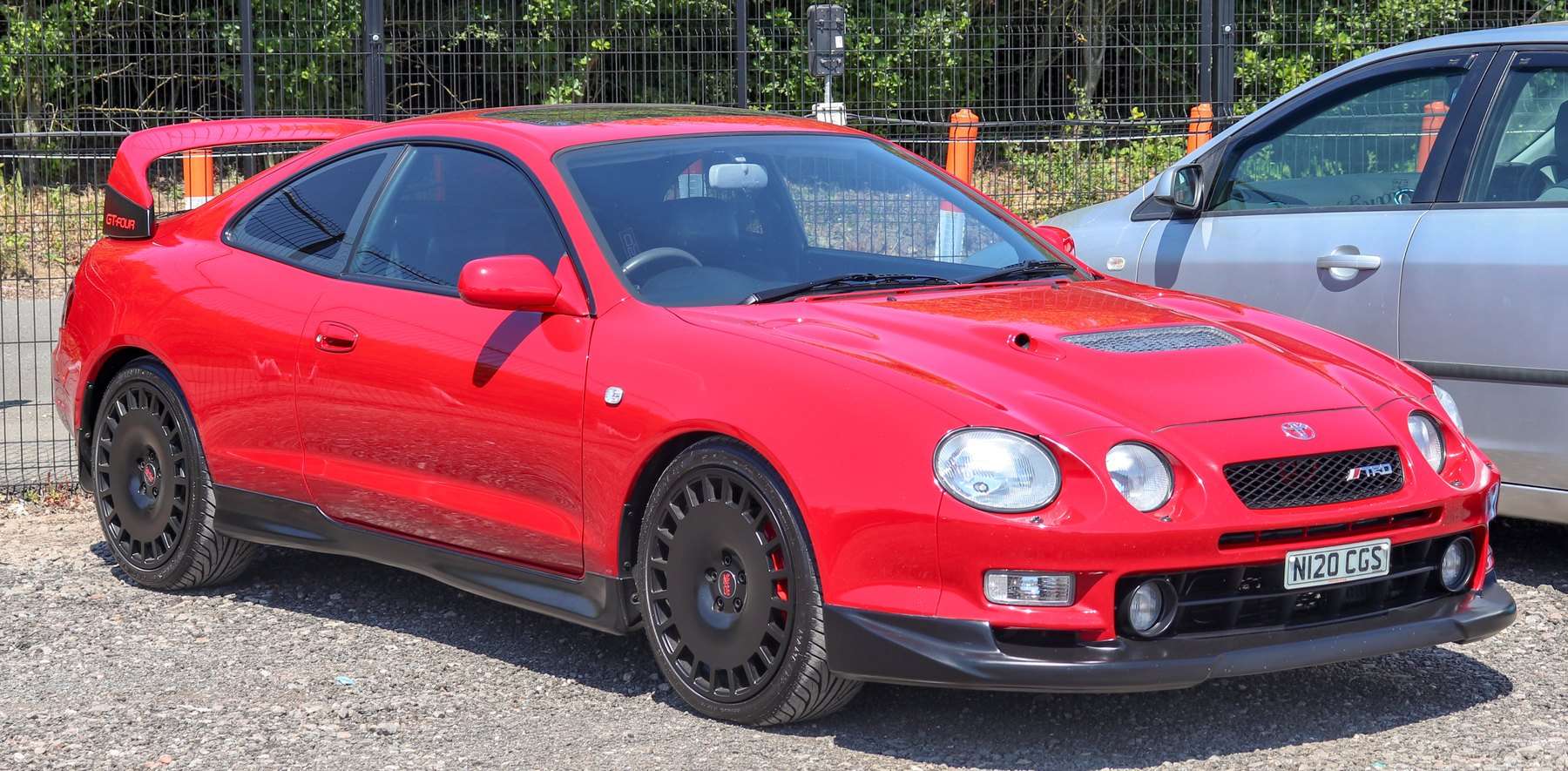
The ST205 appeared in 1994 on the sixth-generation Celica platform. Its enlarged air intakes, four round headlamps, tall rear spoiler and bonnet vents made the rally connection much more explicit. Toyota GB quoted 239bhp for the UK road car, 0–62mph in 6.1 seconds and a 153mph maximum speed.
Engineering changes included a revised 3S-GTE with a larger twin-entry turbocharger and water-to-air intercooling, permanent four-wheel drive, Super Strut front suspension and powerful brakes. A limited WRC homologation version included competition-oriented provisions that were not active in ordinary road use.
The works ST205 won in Corsica during 1995, but Toyota’s season ended in disqualification after officials found an illegal turbo-restrictor system on the competition car. That episode belongs to the rally programme; it does not alter the mechanical identity of the production road car.
ST165, ST185 and ST205 compared
| Generation | Road-car period | Character | Key historical role |
|---|---|---|---|
| ST165 | 1986–1989 | Compact, understated and distinctly 1980s | Established the GT-Four formula; 1990 WRC drivers’ title. |
| ST185 | 1989–1993 | Broader, more mature and available in RC/Carlos Sainz form | Drivers’ titles in 1992, 1993 and 1994; manufacturers’ titles in 1993 and 1994. |
| ST205 | 1994–1999 | Most powerful and technically developed road version | Final works-engineered Celica rally platform; famous and controversial 1995 campaign. |
Published outputs differ by market and year, particularly between Japanese, UK, European and North American cars. Use the chassis code, model plate and original documentation when comparing specifications.

Driving character and significance
A GT-Four feels different from a lightweight front-wheel-drive coupé. The turbocharged engine and four-wheel-drive hardware add weight, but also provide deep-weather traction and a stable, planted character. The ST165 is the rawest and rarest; the ST185 combines rally-era presence with relative usability; the ST205 adds the sharpest brakes and most sophisticated chassis.
The model’s importance is larger than its sales volume. Toyota says the three GT-Four generations accumulated 30 WRC victories, four drivers’ championships and two manufacturers’ championships. They created a direct line from Toyota’s conventional road coupé to the specialist homologation thinking later revived by the GR Yaris.

Love cars you don’t see every day?
Get forgotten cars, surprising motoring stories and the most interesting finds from Unusual Cars by email.
Free to join. No spam. Unsubscribe whenever you like. See our privacy policy.
Toyota Celica GT-Four buying guide
Confirm the model and originality
Check the chassis code, model plate, engine number and import or UK-supply history. RC, Carlos Sainz and ST205 WRC claims require model-specific evidence. Many cars wear replica wheels, spoilers, bonnets or rally graphics, while engine swaps can blur the original specification.
Body and corrosion
Inspect sills, floor, jacking points, wheelarches, suspension turrets, chassis rails, subframes, rear hatch and the areas hidden by body kits or undertrays. Look for crash repair around the front structure and strut towers. Original panels, lamps and trim can be hard to replace.
3S-GTE engine and cooling
Require timing-belt, oil and coolant history. Check for overheating, oil leaks, head-gasket symptoms, smoke and unstable boost. Radiators, hoses, water pumps, intercoolers and turbo oil lines all deserve inspection. Modified cars need evidence that fuelling, ignition, boost control and cooling were engineered together.
Four-wheel-drive transmission
Listen for gearbox, transfer-case and differential noise. All four tyres should match in size, brand and wear because rolling-radius differences can stress the drivetrain. Check clutch operation, driveshaft boots and prop-shaft joints, then inspect every casing for leaks.
Suspension and brakes
The ST205’s Super Strut hardware contains costly joints and links. Knocking, vague steering or uneven tyre wear needs specialist diagnosis. Earlier cars also suffer tired bushes and dampers. Seized calipers, worn discs and improvised brake conversions are common on long-stored or heavily modified examples.
Frequently asked questions
What does GT-Four mean?
It identifies Toyota’s turbocharged, permanent-four-wheel-drive Celica performance model. North American versions were usually marketed as All-Trac Turbo.
How many generations of Celica GT-Four were built?
Three: the ST165, ST185 and ST205, covering the fourth, fifth and sixth generations of Celica.
Which Celica GT-Four won Toyota’s first WRC titles?
Carlos Sainz won Toyota’s first WRC drivers’ title in an ST165 in 1990. The ST185 later delivered the company’s first manufacturers’ championship in 1993.
What is a Carlos Sainz Celica?
It is the European name for the ST185 GT-Four RC homologation derivative. Toyota states that 5,000 RC versions were produced across Europe, Australia and Japan.
Was the ST205 road car illegal?
No. The 1995 disqualification concerned an illegal turbo-restrictor system on the works rally car. It should not be confused with the specification or legality of production ST205 road cars.
Research sources
- Toyota GB: Celica archive
- Toyota GB: Celica GT-Four ST185 competition history
- Toyota GB: Celica GT-Four ST205 technical information
- Toyota GB: 20 years of the Celica GT-Four
- Toyota GB: World Rally Championship history
- Featured image: 1994 Celica GT-Four ST205 by Vauxford, CC BY-SA 4.0.
Continue the Toyota story
Explore the Rare & Performance Toyotas hub, meet the 2JZ-powered Toyota Supra A80, or switch to a mid-engined layout in the Toyota MR2 SW20 guide.