A 20-year-old sports car can still cost £790 a year to tax. For some of the most interesting cars of the 2000s, one day in March 2006 separates that bill from £445.
A Nissan 350Z, a rotary-engined Mazda RX-8 and a V12 Aston Martin might seem unlikely companions. Yet each can illustrate the same strange corner of the UK road-tax system: an ageing car’s annual Vehicle Excise Duty can remain surprisingly high long after its purchase price has fallen.
The oldest cars with the highest road tax in this older emissions-based system can have first-registration dates as early as 23 March 2006. The model itself may have been launched several years before that.
Figures are for 2026/27 and a single 12-month payment. The £790 rate discussed here is the highest annual band for cars registered between March 2001 and March 2017, rather than a claim about every tax regime or a new car’s first-year bill.
Why 23 March 2006 makes a £345 difference
For this age group, Band M covers emissions over 255g/km and costs £790. A crucial exception places cars registered before 23 March 2006 with emissions over 225g/km in Band K, currently £445. The difference is £345 a year. GOV.UK’s tax bands and registration-date footnote.
An 06 plate is not enough. That registration period began on 1 March 2006, so cars first registered from 1 to 22 March can still receive the cheaper treatment. A private plate does not change the vehicle’s original registration date.
The oldest high-tax model generations at a glance
These are representative derivatives, with approximate CO₂ figures from the linked vehicle references. They are examples of models that can qualify, rather than a definitive ranking by production date. Engine, gearbox, body style and the individual DVLA record matter.
| Car | Model from | Approx. CO₂ g/km |
|---|---|---|
| Porsche Cayenne Turbo | 2003 | 378 |
| Nissan 350Z | 2003 | 273–288 |
| Mazda RX-8 231 | 2003 | 284 |
| Bentley Continental GT | 2003/04 | 410 |
| Vauxhall Monaro V8 | 2004 | 360 |
| Aston Martin DB9 | 2004 | 394 |
| Mercedes-Benz SLK 55 AMG | 2004 | 288 |
| BMW M5 E60 | 2005 | 357 |
| Range Rover Sport 4.2 Supercharged | 2005 | 374 |
| Mercedes-Benz CLS 500 | 2005 | 275 |
| Aston Martin V8 Vantage | 2005 | 358–360 |
| Audi RS4 B7 | 2006 | 322 |
For the listed emissions, qualifying registrations before the cut-off receive Band K treatment; those from the cut-off to 31 March 2017 can attract Band M. Photographs illustrate the model or generation and do not establish the pictured car’s UK tax band.
1. Porsche Cayenne Turbo — an early SUV with a later tax sting
The first Cayenne brought Porsche into the luxury SUV market. In early Turbo form it combined a twin-turbo V8 with an official CO₂ figure of around 378g/km, comfortably beyond the Band M threshold.
A 2003, 2004 or 2005 car can be protected by Band K. An example of the same generation first registered from 23 March 2006 can attract £790 a year instead. The age of the design tells you very little about the tax on an individual Cayenne.
2. Nissan 350Z — the £345 difference between similar sports cars
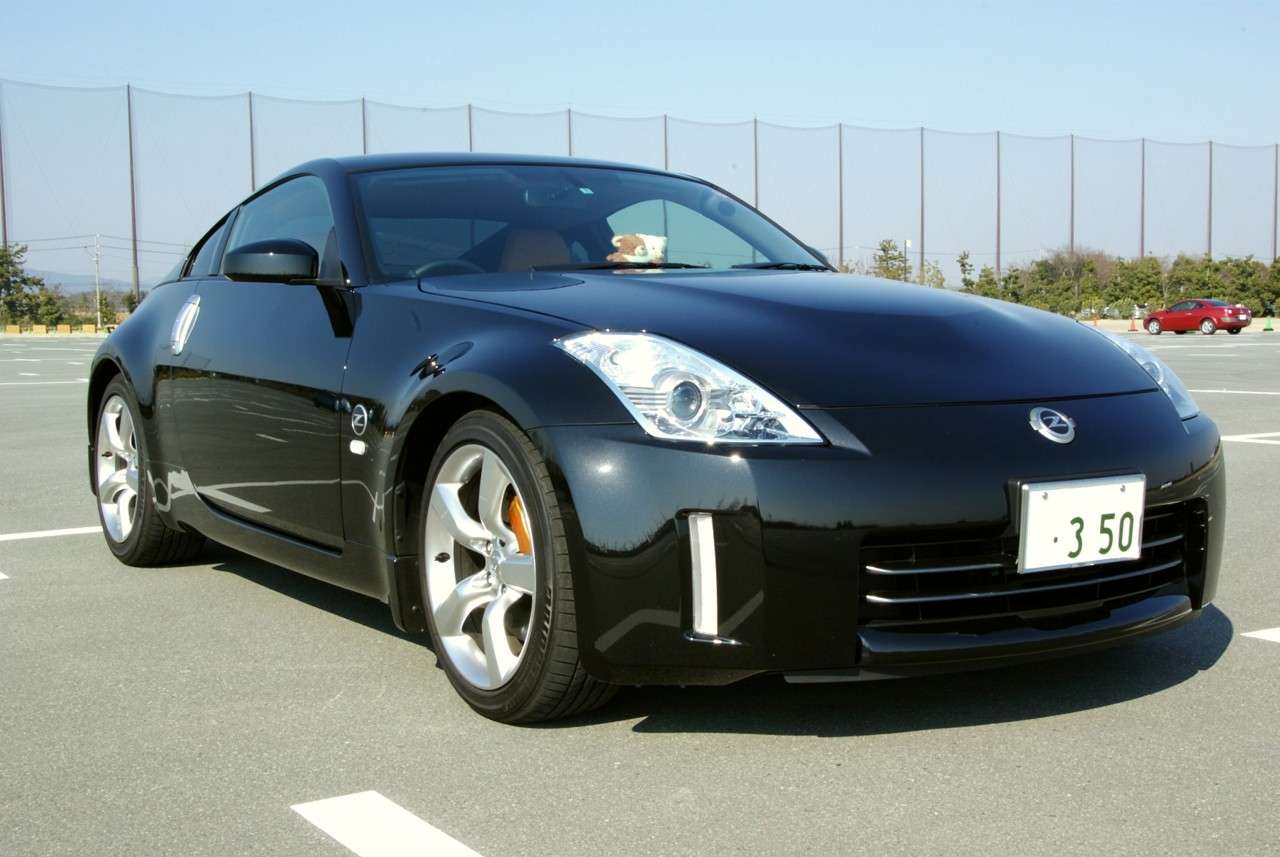
The 350Z is perhaps the most useful everyday example of this quirk. Early UK coupés are commonly recorded at 273g/km, with later versions around 280–288g/km. Those figures all clear the 255g/km threshold.
Two very similar Z33s can therefore have annual bills £345 apart. A car first registered before the cut-off is protected by Band K; a qualifying later registration falls into Band M. When comparing adverts, check the precise date alongside the service history and condition.
3. Mazda RX-8 — rotary character and a substantial fixed cost

The RX-8 makes the tax bill look especially conspicuous. Its rotary engine, rear-wheel drive and unusual rear doors give it plenty of character, but purchase prices can be modest compared with the annual cost of keeping one on the road.
The 231PS version is recorded at about 284g/km. A qualifying example first registered from 23 March 2006 can cost £790 a year to tax; an earlier registration benefits from Band K. The registration date deserves attention, although engine health, a proper compression test and maintenance history remain central to a sensible purchase.
Love cars you don’t see every day?
Get forgotten cars, surprising motoring stories and the most interesting finds from Unusual Cars by email.
Free to join. No spam. Unsubscribe whenever you like. See our privacy policy.
4. Bentley Continental GT — W12 emissions, two possible bills

The original Continental GT brought a 6.0-litre twin-turbo W12 to Bentley’s grand-touring line-up. Early examples are recorded at roughly 410g/km, among the highest figures in this group.
That does not mean every early Continental pays the top band. A car first registered in 2004 or 2005 is on the protected side of the date rule, while a qualifying later example can fall into Band M. Depreciation may make the purchase tempting, but fuel, servicing and repairs still need a substantial budget.
5. Vauxhall Monaro — Australian V8 muscle caught by the calendar

A large, rear-wheel-drive V8 coupé with a Vauxhall badge was never an ordinary sight in Britain. The 5.7-litre Monaro is recorded at around 360g/km, giving it clear potential for Band M.
Many 2004 and 2005 registrations enjoy the cheaper treatment. Examples first registered from 23 March 2006 can pay £790 instead. The car’s appeal is much the same on either side of that date; the annual tax bill is not.
6. Aston Martin DB9 — the oldest V12s can be cheaper to tax
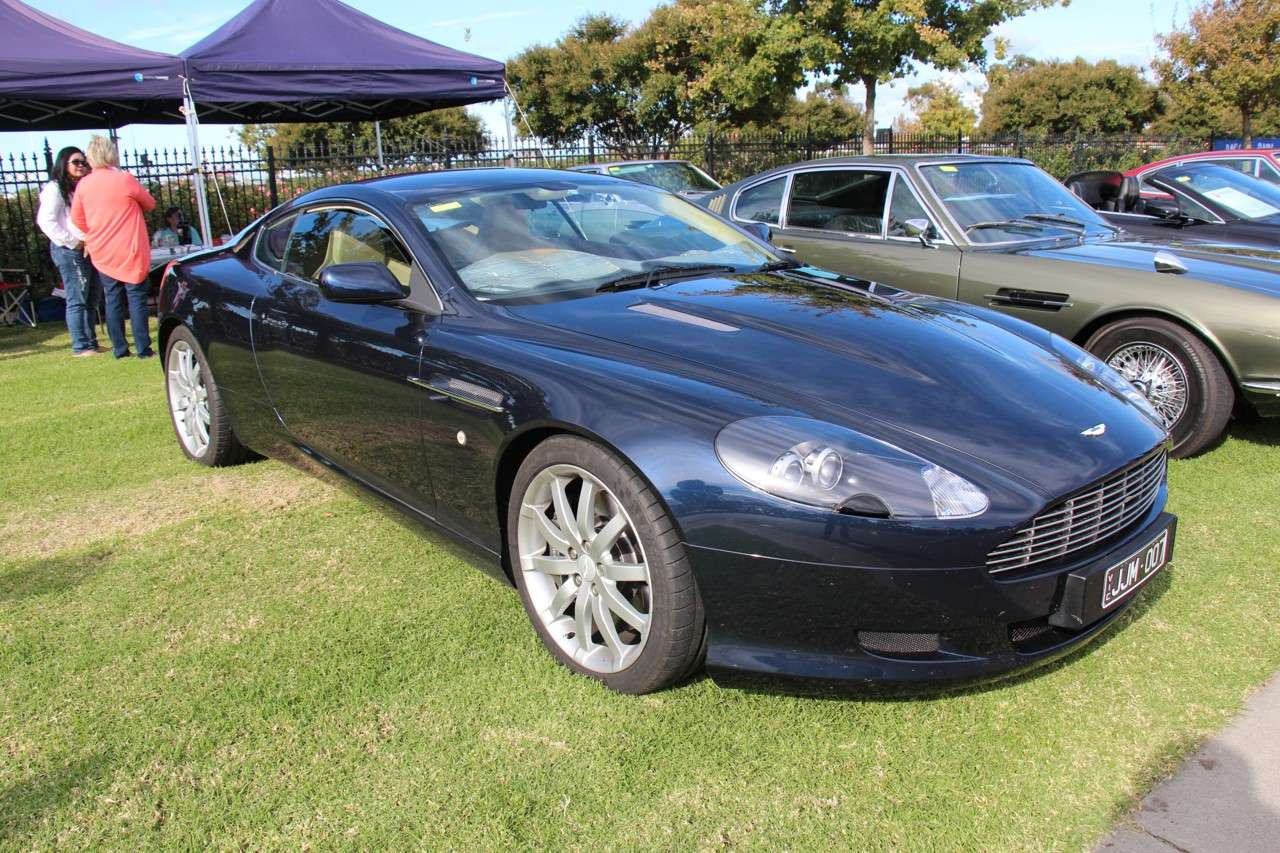
The DB9 arrived in 2004 with a 5.9-litre V12 and the proportions of a classic Aston Martin grand tourer. Early vehicle records show CO₂ around 394g/km.
The earliest registrations escape Band M through the date rule. A later example of the same generation can cost £790 a year, compared with £445 for a protected earlier car. It is a useful detail when comparing cars, even though a V12 Aston’s wider running costs will matter much more.
7. Mercedes-Benz SLK 55 AMG — a compact roadster with a big V8

The R171 SLK 55 AMG squeezed a naturally aspirated 5.4-litre V8 into a compact folding-hardtop roadster. A representative CO₂ figure of 288g/km puts it beyond the Band M threshold.
This generation was sold on both sides of the March 2006 cut-off. An SLK 55 badge therefore cannot tell you whether the annual bill is £445 or £790. Check the car’s first-registration date and recorded emissions before allowing a tempting advert to make the decision.
8. BMW M5 E60 — V10 performance with a registration-date penalty
The E60 M5 is one of the defining performance saloons of its era. Its 5.0-litre V10 produced 507PS, and representative official emissions are around 357g/km. Early UK cars arrived in 2005.
Those early registrations can benefit from Band K, while later examples fall into Band M where the date and emissions qualify. Mechanically similar cars can carry materially different VED bills, so the model year in an advert is not enough.
9. Range Rover Sport 4.2 Supercharged — luxury-SUV depreciation meets £790 tax
The first Range Rover Sport arrived in 2005, and the 4.2-litre supercharged petrol version is recorded at about 374g/km. Its emissions place a qualifying later registration firmly in Band M.
An early 2005 car is protected by the pre-cut-off treatment. A similar example first registered after the cut-off can cost £790 a year. Older luxury SUVs show particularly clearly how a falling purchase price can leave substantial fixed ownership costs behind.
10. Mercedes-Benz CLS 500 — the elegant V8 that crosses the line
The first-generation CLS helped popularise the four-door coupé shape. Its original CLS 500 V8 is listed at around 275g/km, above the Band M emissions threshold.
A 2005 registration can be protected by Band K; a qualifying post-23 March 2006 example can carry the £790 bill. Engine changes and specification differences make it especially important to use the individual car’s recorded figure, rather than transferring one CLS 500’s data to every example.
11. Aston Martin V8 Vantage — another 2005 design on both sides of the divide
The original V8 Vantage launched in 2005. Early versions are recorded at roughly 358–360g/km, making their emissions high enough for Band M.
The earliest registrations are protected by the date rule. Later examples can attract the higher bill. When shopping for an early Vantage, establish whether it was actually first registered before 23 March 2006 rather than relying on a model year or registration plate.
12. Audi RS4 B7 — a modern classic in the expensive band
The B7 RS4 arrived around the 2006 cut-off with a naturally aspirated 4.2-litre V8. Representative CO₂ emissions of roughly 322g/km put it comfortably above 255g/km.
Many UK examples are on the expensive side of the registration rule. A qualifying car still attracts £790 annual VED in 2026/27, despite now being old enough to feel like an established modern classic. As with every car here, check the exact registration rather than assuming a universal rate.
Going further back can make the tax cheaper again
The system does not become steadily cheaper with age. For a private/light goods vehicle registered before 1 March 2001, an engine over 1549cc attracts a £375 annual bill in 2026/27, regardless of CO₂. GOV.UK’s pre-2001 rates.
That creates a striking comparison: a large-engined 1990s car can cost £375, a high-emissions 2004 registration can cost £445, and a similar car registered after the March 2006 cut-off can cost £790.
Much older vehicles can qualify for historic tax exemption. From 1 April 2026, eligible vehicles built before 1 January 1986 can be moved into the historic tax class. They still need to be taxed administratively, and eligibility conditions apply. GOV.UK’s historic-vehicle rules.
What to check before buying
- The exact first-registration date on the V5C. A plate, an advert’s model year and the vehicle’s build date are not substitutes.
- The recorded CO₂ figure. Different engines, transmissions and body styles can have different emissions.
- The current annual rate. Older adverts and tax-check websites can display a previous year’s price.
- The full ownership budget. Insurance, fuel, tyres, servicing and repairs can outweigh the tax difference.
For an imported car or an unusual registration history, confirm the treatment with DVLA rather than assuming a normal UK-market example’s band applies.
Frequently asked questions
What is the oldest car that can pay Band M?
The earliest qualifying first-registration date is 23 March 2006. The car can belong to an older model generation, such as a 350Z or Cayenne introduced in 2003. A generation’s launch date does not make every car of that type eligible.
Can a 2005 car pay £790 road tax?
If it was actually first registered in 2005, the date protection applies. A car described as a 2005 model but first registered later needs checking against its recorded date and emissions.
Why do two Nissan 350Zs have different road tax?
They may fall on opposite sides of the March 2006 cut-off. Version changes can also alter the emissions figure. Check both details for each car.
Does a private number plate change the tax band?
No. Changing the plate does not change the original first-registration date or recorded CO₂ figure used to establish the tax treatment.
A small date detail worth checking
The difference between 22 and 23 March 2006 can still be worth £345 every year. That makes the registration date a useful part of choosing an older performance car, particularly when comparing otherwise similar examples.
The machinery did not suddenly become more polluting overnight. The rules created a dividing line, and that line remains visible in the annual bill two decades later.
For the other side of this story, read Performance Cars With Surprisingly Cheap Road Tax.
Tax rates checked 4 October 2026. Rates can change each April; verify the specific vehicle and current GOV.UK tables before buying.
Explore more Feature Articles →
Love cars you don’t see every day?
Get forgotten cars, surprising motoring stories and the most interesting finds from Unusual Cars by email.
Free to join. No spam. Unsubscribe whenever you like. See our privacy policy.