

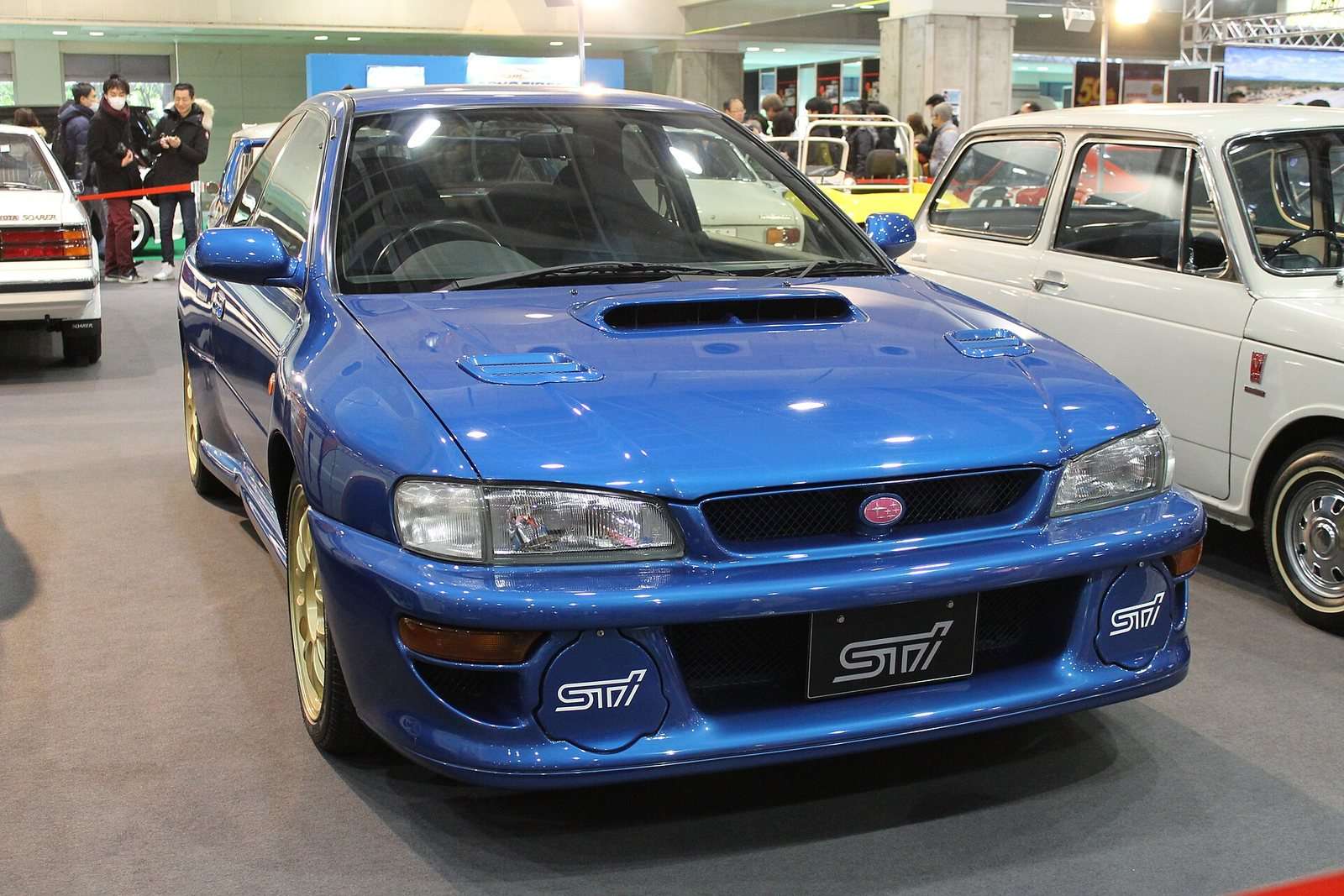
Few Japanese performance cars have acquired a reputation quite like the Subaru Impreza 22B STI. Built in 1998, its wide body, Sonic Blue Mica paint and towering rear wing made it look like a World Rally Championship car with number plates. The real story is even better: beneath the familiar shape sat a unique 2.2-litre engine, specially developed transmission hardware and a chassis assembled from some of the best names in the business.
1. It celebrated two Subaru milestones at once
The 22B arrived during Subaru’s 40th anniversary year, but it also marked the company’s third consecutive World Rally Championship manufacturers’ title. Subaru had won the crown in 1995, 1996 and 1997. The road car was therefore more than a fast special edition: it was a public celebration of the period when the blue-and-gold Impreza became one of rallying’s defining images.
2. It was inspired by the WRC car—not built because rally rules demanded it
Subaru’s own launch material described the 22B as a road version developed in the image of the 1997 World Rally Car. That is not the same as being a homologation special required to make the rally car legal. The contemporary WRC regulations allowed much greater separation between road and competition machinery, so the 22B should be seen as a highly engineered tribute rather than a compulsory production exercise.
3. Subaru never officially decoded the “22B” name
The badge has generated two persistent theories: “22” referring to the 2.2-litre engine and “B” to Bilstein, or 22B being hexadecimal for 555, Subaru’s famous rally sponsor number. Both are neat explanations, but neither appears in Subaru’s contemporary launch release or STI’s official history. The safest fact is that the meaning was left unexplained—and the mystery has become part of the car’s folklore.
4. Its EJ22 was much more than a bored-out STI engine
STI enlarged the flat-four to 2,212cc and used a closed-deck cylinder block, forged pistons, sodium-filled exhaust valves and a specially developed turbocharger. Official output remained at the Japanese-market ceiling of 280PS, but torque rose to 363Nm and the engineering emphasis was strong response through the low and middle of the rev range. It is a unique specification, not simply a standard EJ20 with extra capacity.
Love cars you don’t see every day?
Get forgotten cars, surprising motoring stories and the most interesting finds from Unusual Cars by email.
Free to join. No spam. Unsubscribe whenever you like. See our Privacy Policy.
5. Its centre differential could vary the car’s behaviour
The Driver’s Control Centre Differential, or DCCD, used a 35:65 front-to-rear torque split in its free setting. The driver could progressively lock the centre differential to suit the road surface and driving conditions. This was not an electronic drive-mode menu in the modern sense; it was a direct way to alter how the four-wheel-drive system distributed effort between the axles.
6. The gearbox and clutch received serious attention
Power went through a close-ratio five-speed gearbox with strengthened gears and bearings. Subaru also fitted a twin-plate ceramic-metal clutch to cope with hard use while reducing rotating inertia. These details matter because the 22B was not merely a cosmetic exercise: its drivetrain was deliberately made sharper and tougher than that of a normal Impreza WRX STI.
7. Bilstein, Eibach, BBS and Pirelli were all involved
The suspension combined inverted Bilstein dampers with Eibach springs, while forged 17-inch BBS wheels wore specially selected 235/40 ZR17 Pirelli P Zero tyres. Steering was quickened to a 13:1 ratio. Subaru also increased the track and substantially widened the body, giving the 22B both its famous stance and a mechanical specification worthy of it.

8. The bodywork contained more function than first appears
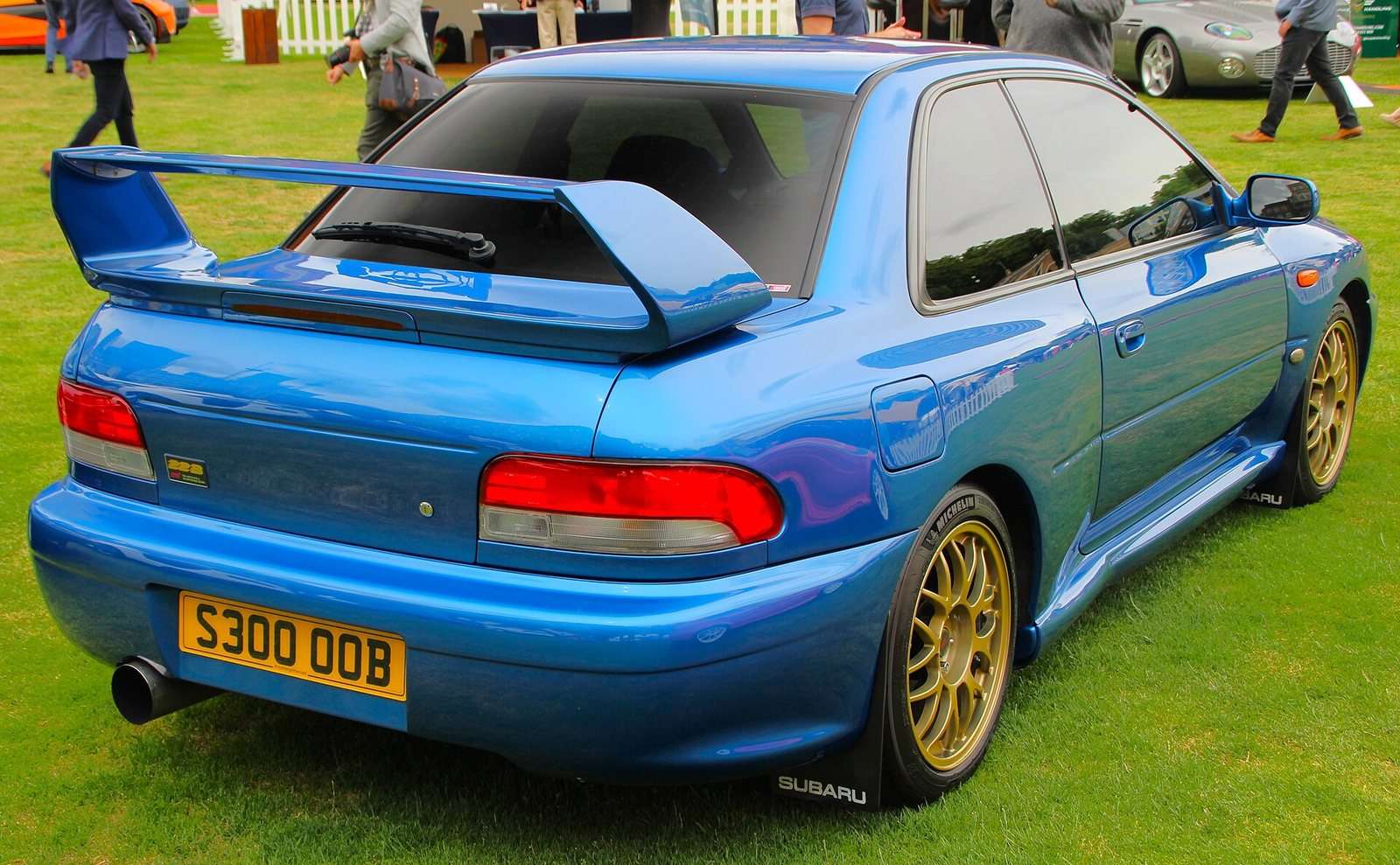
An aluminium bonnet helped reduce weight over the nose, and the two-stage rear wing offered a second angle 17 degrees steeper than its normal setting. STI badges were made from titanium-coloured metal, each car carried a serial plate and Sonic Blue Mica was the defining factory colour. The visual drama was carefully engineered, not assembled from an accessories catalogue.
9. The official Japanese run was 400 cars
Subaru’s March 1998 release specified a limited production run of 400 for Japan, and STI says the allocation sold out almost immediately. Small numbers later reached export markets, including specially prepared UK cars, which is why global totals of 424 or 425 are often repeated. Those figures depend on what is counted; the clearest factory-backed number remains the original 400-car Japanese allocation.
10. “Type UK” cars were not identical to the Japanese originals
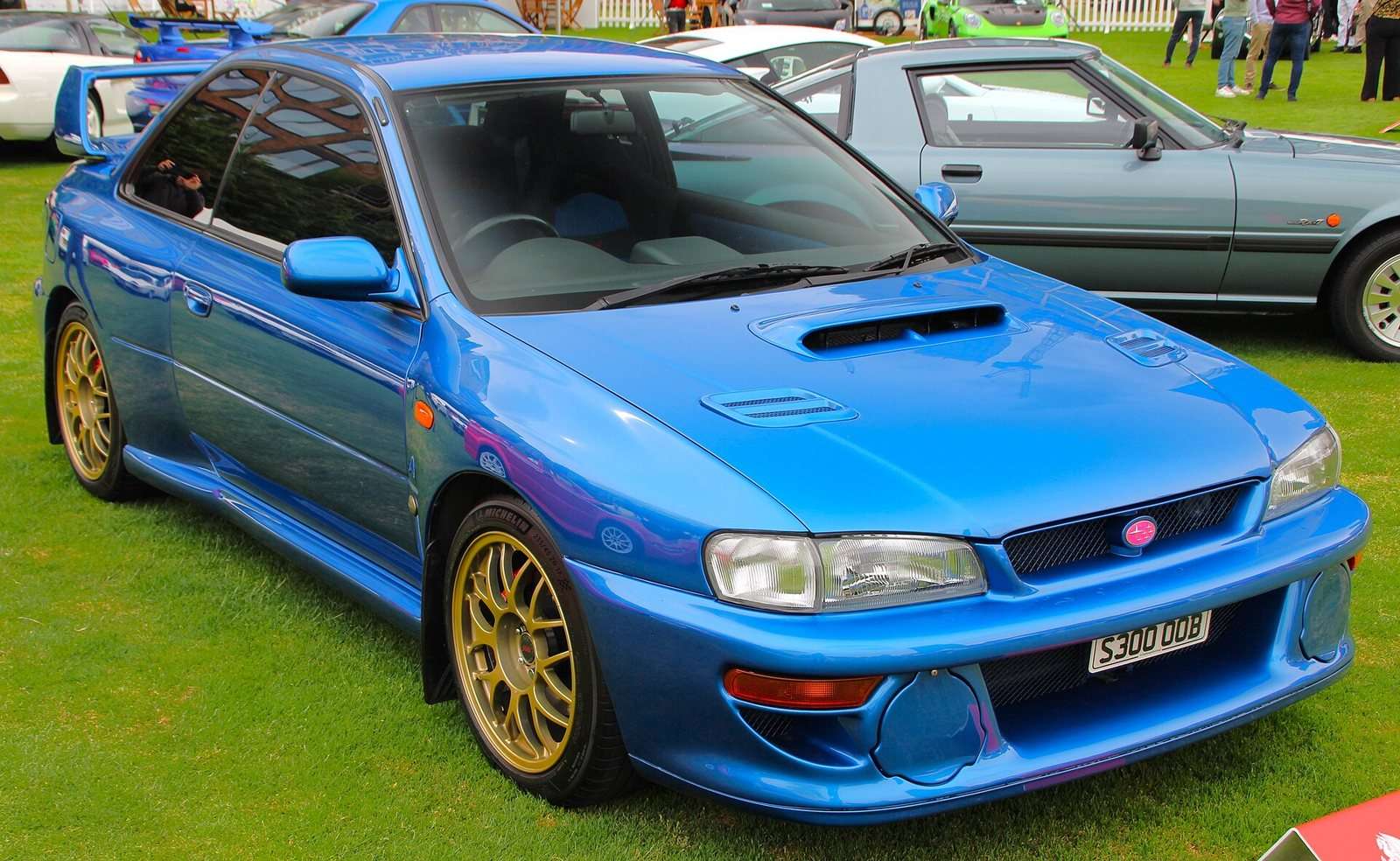
The handful of cars prepared for Britain are commonly known as Type UK models. They are prized in their own right, but details such as speedometer calibration, lighting and market preparation distinguish them from Japanese-market cars. That makes provenance especially important: a blue two-door STI with wide arches is not automatically one of the factory Japanese 400, and genuine identity should be checked against its chassis and numbered plaque.
The 22B deserves its icon status because nearly every part of it supports the same purpose. The body recalls the World Rally Car, but the engine, differentials, gearbox, clutch, steering and suspension ensure the substance is as memorable as the shape.
Love cars you don’t see every day?
Get forgotten cars, surprising motoring stories and the most interesting finds from Unusual Cars by email.
Free to join. No spam. Unsubscribe whenever you like. See our Privacy Policy.