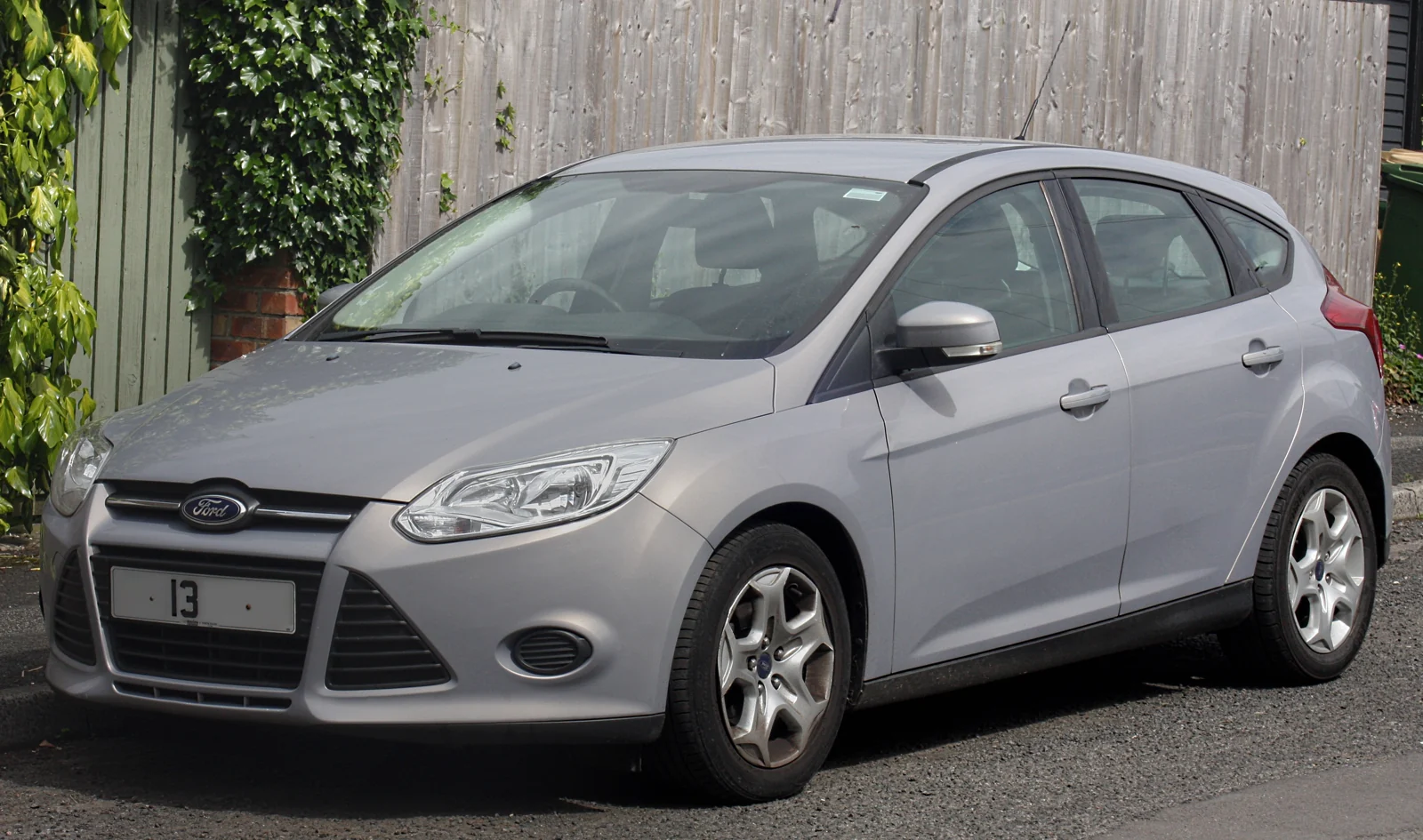
A UK Focus Mk3 diesel can raise several different scanner questions: an engine light, a DPF concern after short journeys, or a warning that an engine-only reader does not explain. Choosing the right route starts with knowing whether the car is a 1.6, 1.5 or ordinary 2.0 TDCi and which system needs investigation.
This guide covers non-ST diesels. It compares generic OBD2 with carefully qualified FORScan routes and explains why a missing soot reading, a clean code list or an impressive product description should not be mistaken for a diagnosis.
Which UK Focus Mk3 diesels are included?
The scope is UK Mk3 and facelift Mk3.5 five-door hatchbacks and estates from the broadly 2011–2018 generation, with 1.6 TDCi, 1.5 TDCi or non-ST 2.0 TDCi engines where supplied. ECOnetic and diesel ST-Line versions are included when they have one of these ordinary powertrains. Check build and generation on late registrations.
ST-Line trim is not a Focus ST engine specification. The 2.0 TDCi 185 Focus ST is excluded and needs separate treatment. Also excluded are petrol and RS models, Mk2 and Mk4/EcoBlue cars, non-UK saloons/imports and remapped or emissions-modified vehicles. The existing Focus ST Mk3 petrol guide is for a different engine scope.
Identify the actual manual or PowerShift gearbox and the engine before applying a supplier coverage statement. An automatic badge alone does not identify the transmission or a supported service command.
Avoid a single “2015 onwards” engine rule
The Ford-authored 2015 UK brochure lists 1.5, 1.6 and 2.0 TDCi variants in the same dated document, with different emissions stages and gearbox combinations. Its ordinary 2.0 entry is 150 PS, distinct from the excluded ST diesel. This confirms why a simple registration-year cutoff can mislead; it is not an exhaustive availability table for every year.
Ford’s UK manual selector also separates build dates. The CEW enGBR manual from 16 February 2015 is a facelift snapshot. An earlier CB8 car should be checked against its own handbook and vehicle identity, rather than inheriting a facelift feature or parameter list.
Quick guide to the diagnostic routes
| Route | Useful starting point | Device and connection | Access and limits |
|---|---|---|---|
| Reputable generic EOBD/OBD2 reader | Emissions-related engine warning and an initial code record | Handheld reader or supported phone adapter and app | Standard engine codes and data supplied by the car. No assumption of ABS, airbag, body or gearbox coverage. |
| FORScan for Windows + OBDLink EX | A broader Ford-aware investigation | Supported x86/x64 Windows laptop; USB interface and correct driver | Officially recommended interface route. Additional modules and PIDs depend on the connected Focus Mk3 diesel (non-ST); no fixed module inventory or service-function promise. |
| FORScan Lite + OBDLink MX+ | Phone or tablet diagnosis | Supported iOS/Android device; compatible Bluetooth interface | Read codes and parameters where supported. Lite does not offer configuration/programming; it is not a duplicate of Windows Extended. |
These routes answer different needs. Buy access to the system you need to investigate, rather than the largest advertised list of functions.
What generic OBD2 can tell you
A generic reader uses the emissions-related diagnostic baseline. European emissions rules distinguish this standardised information from a manufacturer’s wider diagnostic services. Depending on what the car supplies and what the reader displays, useful results include stored or pending engine codes, freeze-frame context, readiness monitors and standard live parameters.
Save the complete code, its status and the conditions in which it appeared. A description mentioning a sensor or actuator identifies a monitored condition or circuit; it does not establish which part failed. Supply voltage, wiring, leaks, mechanical problems and another system’s behaviour can all matter to an investigation.
Readiness is also different from a clean bill of health. A monitor that has not completed is not evidence of a healthy system. Clearing diagnostic information can remove context and affect readiness. Do not erase data simply to see whether a warning stays away.

Why a warning can remain when the reader says no codes
The first question is what the reader actually queried. An engine-emissions scan is not a full-vehicle scan. A non-engine warning may be recorded elsewhere, while an intermittent condition may not have generated a retrievable code in the service the tool requested. A blank result therefore needs to be read alongside the warning, symptoms and tool’s coverage.
Generic readers can display some manufacturer-specific powertrain codes when the vehicle returns them. It would be wrong to say that every Ford-specific code is invisible to generic OBD2. The useful distinction is between standard engine-emissions access and the extra modules, data and diagnostic services a Ford-aware route may support.
What Ford-aware diagnostics may add
FORScan is designed for Ford diagnostics and can provide additional fault information and parameters through supported vehicle networks. That makes it a sensible route to evaluate when an engine-only reader leaves an important question unanswered.
Additional access remains conditional on the individual car, fitted equipment, interface, software and connection. This guide does not guarantee an ABS, restraint, body, transmission or instrument-cluster module list. Read and record what the connected vehicle actually exposes. A shared platform, adapter protocol list or successful scan of a different Ford is insufficient proof of the same coverage here.
Focus diesel questions a scanner can help organise
The 1.6 ECOnetic soot reading is missing in FORScan Lite
A UK 2013 1.6 ECOnetic owner asks about short journeys and absent soot information in FORScan Lite. That question is useful because it separates a driving concern from a data-availability concern. It does not establish that every 1.6 lacks the value or that another app will necessarily reveal it.
Check the actual vehicle profile, responding module, current application, interface and parameter selection. Record what is available and its units. A parameter supported on a different 1.5 or 2.0 calibration may not exist in the same form on this car. Do not substitute a similarly named number and apply another engine’s threshold.
A missing value is not evidence that the filter is clean, blocked or absent. If the symptom persists, give the garage the code report and the description of use. Buying a second adapter solely to obtain a value someone else posted may not answer the underlying question.
DPF concern after repeated short trips
Ford’s 2015 CEW handbook, DPF section on printed page 117 describes automatic regeneration, the effect of certain journey patterns and the exhaust fire hazard. It also notes that fans may continue briefly after switching off. Fan run-on by itself therefore should not be treated as proof of failed regeneration.
Follow the correct handbook for the car and exact warning. This guide gives no universal driving speed, engine-speed recipe, soot threshold or forced-regeneration procedure. A persistent warning or other serious symptom needs investigation; clearing codes or resetting filter values is not a substitute.
When supported readings are available, record their names, units and test conditions. Calculated soot and a physical pressure reading describe different things. Neither should be interpreted without the appropriate technical information. Avoid transferring a normal value from an unrelated TDCi engine.
Engine malfunction or reduced power, but no codes on a basic reader
Keep the displayed message distinct from the tool’s result. What service did the reader request, and did it interrogate only engine-emissions information? Was the condition present during the scan? Save the exact app and reader model alongside the result so the next investigation starts with a known coverage boundary.
A broader Ford-aware scan may help where the car exposes additional information, but it is not guaranteed to explain every intermittent symptom. Check supported raw codes, status and context before clearing. A code description mentioning airflow, boost or a sensor is a starting point for investigation rather than a parts-order instruction.
PowerShift warning, poor shifting or hesitation
Confirm the actual transmission fitted to this Focus. Do not apply a petrol-car or another gearbox’s service advice because both are called automatic. A generic engine scan cannot establish that transmission information was queried. Ask the supplier specifically about diagnostic reading for your engine, gearbox and build.
Supported codes and data can assist an investigation. They cannot certify clutch condition or replace the correct mechanical checks. This guide verifies no transmission adaptation, clutch learning, fluid-service reset or software update. A licence upgrade does not establish that a particular command exists or is appropriate.
ABS, airbag or body-electrical warning
These are different questions from the emissions engine light. Request evidence of access to the fitted system before choosing a handheld scanner or app. Ford-aware software may offer a suitable route when the equipment and connection are supported; the number of modules visible on a different Focus is not a guaranteed inventory.
Follow the handbook for brake and restraint warnings. Do not clear information to conceal a warning or treat a returning lamp as the only test of a repair. For intermittent electrical concerns, a saved event timeline and report give a specialist a better starting point than repeated erasing.
What to take to the garage
Give the garage the engine, gearbox, build date, mileage and complete saved codes, with current or historic status where shown. Include the precise warning text and recent use: repeated short journeys, a long trip, cold starting, or a symptom under load. Mention recent battery replacement or repairs without assuming they caused the fault.
Diagnostic reading does not test timing-drive condition, cooling-system integrity or every fuel and air-path component. Serious running, overheating or braking symptoms still need appropriate checks. The scanner’s useful role is to preserve evidence and narrow the next questions, rather than certify the whole car.
FORScan setup and interface selection
Windows laptop route
For a broader diagnostic investigation, start with current FORScan for Windows and a genuine OBDLink EX USB interface. FORScan recommends EX for its Windows route, and OBDLink documents USB connectivity and Ford MS-CAN support. That supports the interface choice; its promotional claims do not establish access to every module on every UK car.
Check the computer before ordering: FORScan’s published Windows support specifies x86/x64 and excludes ARM. Install from the official source, follow the interface maker’s driver instructions and confirm that the software identifies the correct vehicle. USB avoids the separate phone-platform and wireless-pairing questions.
Phone or tablet route
OBDLink MX+ with current FORScan Lite is an official candidate route for supported iOS or Android devices. The manufacturer documents the interface’s Bluetooth and device support. Check the exact operating system and app availability. The bundled OBDLink app and FORScan Lite are separate applications; buying the interface does not establish that the FORScan app or its cost is included.
FORScan’s application comparison lists code reading, clearing and parameter reading for Lite, along with some supported tests and service functions. Lite does not provide configuration/programming. Windows Standard already covers ordinary diagnostic categories; an Extended licence is not the entry requirement for simply reading fault codes. A licence or menu entry still does not confirm a particular function on your car.
Checks that matter before purchase
- Confirm the exact interface model, genuine supply, current firmware and official support route.
- Check software, operating system and interface together; “works with OBD2” is insufficient for the wider Ford route.
- Ask a handheld-tool supplier about the exact UK generation, engine, transmission and system you need. General “all systems” language is not a vehicle-specific coverage record.
- Check seller returns and UK availability. Manufacturer US prices and warranties are not promises about a UK retailer.
FORScan currently discourages generic adapters marketed as ELM327 because their quality and functionality vary. Its recommended EX/MX+ routes are clearer starting points. Other interfaces, including vLinker FS, need their own current software, firmware and manufacturer checks; they are not approved here from an Amazon search result alone.
How to scan without losing useful evidence
- Photograph or write down the warning message and the circumstances: cold or warm, starting or driving, speed/load and any recent repair.
- Park safely, check battery condition and follow the tool’s ignition and connection instructions.
- Confirm vehicle identity. Save a scan report before clearing anything, including raw codes, status, responding module names and freeze-frame information where available.
- Separate confirmed readings from interpretation. Check PID names, units and operating conditions before comparing values.
- Investigate with the correct technical information. Use the result to plan checks, rather than ordering the first part named in a code description.
- After a justified repair or controlled check, rescan and record which faults return.
Reading a control unit is different from commanding it or changing its stored settings. Do not experiment with output tests, resets, adaptations, coding, programming, keys, immobilisers or replacement-module setup. Brake, steering and restraint work belongs with a suitably equipped specialist. Do not handle or watch a scanner while driving; arrange stationary checks or properly supervised logging.
Love cool cars? Join Unusual Cars Club FREE!
Get forgotten motoring finds, stories, helpful car content and more.
Free to join. No spam. Unsubscribe whenever you like. See our privacy policy.
Scanner routes to consider
Choose a reputable generic reader if your immediate need is an emissions-related engine-code check. Look for raw-code display, freeze-frame and useful live data, a clear support policy and an honest statement of coverage. Spending more makes sense only when it adds access you need.
Choose the Windows FORScan and OBDLink EX route when the question calls for a broader Ford-aware scan and you can use a supported laptop. Choose FORScan Lite and MX+ when mobile convenience matters. Neither setup is a promise of programming capability or a guaranteed cure for a warning.
The linked graphic below and earlier in this article open an Amazon UK search. Results can include unsuitable products. Match the exact interface, application, operating system and vehicle before purchase; appearance in those results is not a compatibility recommendation.
Frequently asked questions
Is ST-Line covered by this diesel guide?
Yes, when it has a UK ordinary 1.5 or other included TDCi powertrain. The 185 PS ST diesel is excluded; trim lettering alone is not engine identification.
Can a generic reader display Ford-specific engine codes?
Sometimes, when returned through the requested service. The distinction is engine-emissions access versus wider Ford diagnostic services, not a rule that every Ford-specific code needs FORScan.
Why can’t I find a soot-load value?
Availability depends on the exact engine/calibration, software, interface and selected parameters. This guide verifies no universal soot PID across 1.6, 1.5 and 2.0 TDCi.
Does the cooling fan mean a regeneration failed?
Not by itself. The cited facelift handbook notes possible fan run-on after switching off. Interpret symptoms with the correct handbook and other evidence.
Is an Extended licence needed just to read fault codes?
FORScan’s comparison lists ordinary diagnostic categories in Windows Standard. Extended functions are separate and still vehicle dependent.
Will FORScan repair PowerShift or reset the DPF?
No repair or exact service function is promised here. Reading supported information and carrying out a controlled workshop procedure are different tasks.
Related diagnostic guides
- Diagnostic-scanner guide hub
- Mondeo Mk4 2.0 TDCi diagnostic-scanner guide
- Focus ST Mk3 petrol: a different powertrain guide
Sources and update record
Documentary evidence reviewed: 8 October 2026. Unusual Cars has not personally tested this vehicle or scanner for this guide. Owner discussions identify questions, not fault prevalence or verified repairs. Exact module inventories, parameter availability and service functions remain conditional.
Check current software, interface firmware, app/device support, seller details and your own build-specific handbook before purchase or use.
- Ford-authored 2015 UK Focus brochure, archive copy
- Ford UK 2015 Focus manual selector
- Ford Focus CEW enGBR manual, builds from 16 February 2015
- 2013 Focus 1.6 ECOnetic FORScan Lite/DPF question
- European emissions OBD legislation
- FORScan official support and adapter guidance
- FORScan application comparison
- FORScan downloads and current requirements
- OBDLink EX specifications
- OBDLink MX+ specifications
Featured photo: DieselFordMondeo / Wikimedia Commons — 2013 Ford Focus Edge – 1560cc 1.6 Duratorq TDCi (115PS) Diesel – Micastone – 21-05-2024, Front Left.jpg. CC BY-SA 4.0. Resized and converted to WebP; image content unchanged. Illustrative model photograph; equipment and market specification may differ.