UNUSUAL CARS MODEL GUIDE
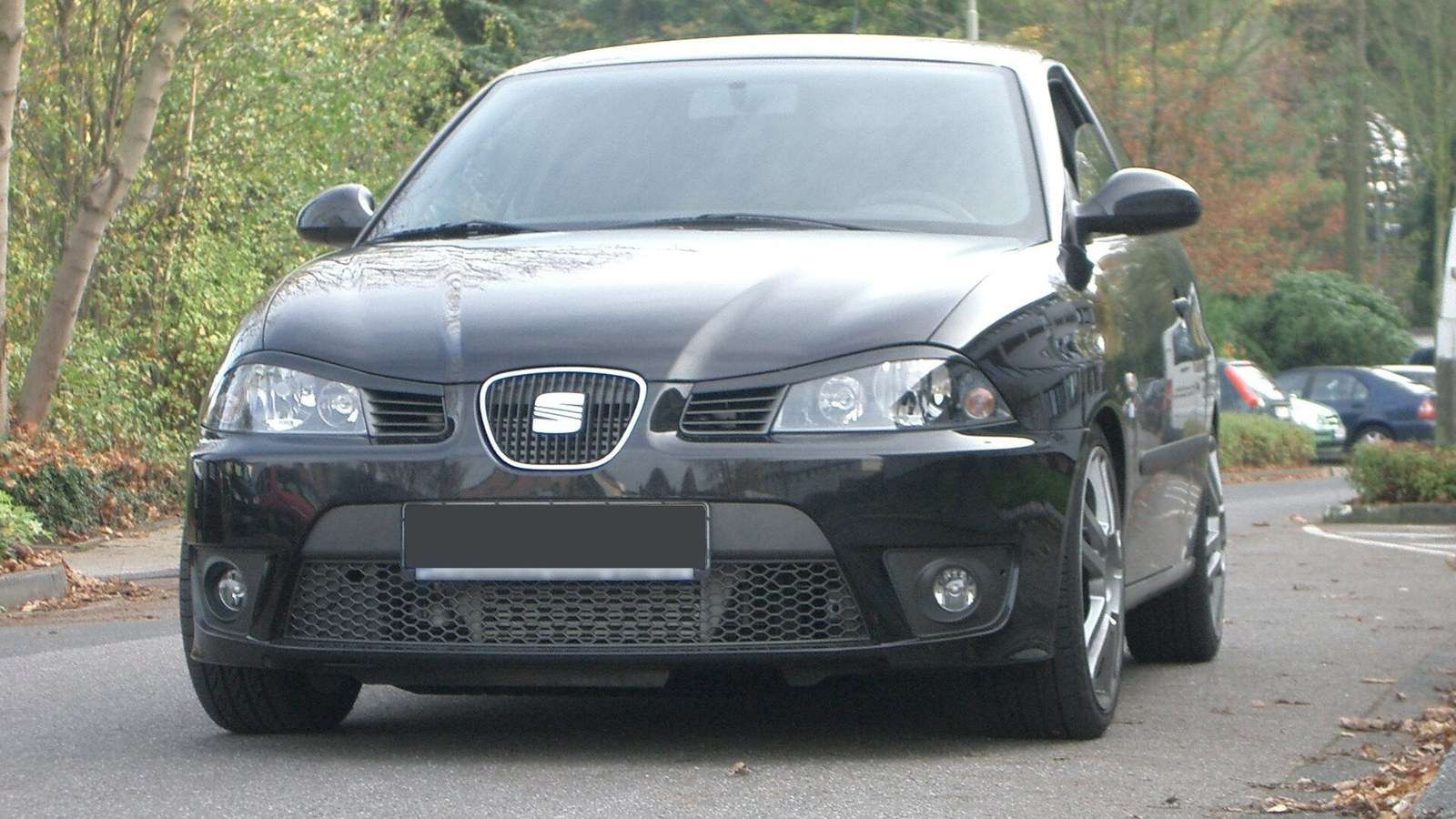
The 6L-generation SEAT Ibiza Cupra offered British buyers two very different ways to build a fast supermini: a 180 PS turbocharged petrol engine or a remarkable 160 PS 1.9-litre diesel. Both combined a compact three-door body with a six-speed gearbox, strong torque and discreet styling, making this one of the most varied Cupra generations.
Featured image: SEAT Ibiza Cupra 6L. Photograph by Echterhoff at German Wikipedia . Uploaded to Commons and modified by Körnerbrötchen ., Public domain, via Wikimedia Commons; locally hosted.
The third-generation Ibiza goes Cupra
Designed under Walter de Silva, the 6L Ibiza arrived in 2002 with sharper proportions and a platform shared within the Volkswagen Group. The Cupra followed in 2004, distinguished by deeper bumpers, a central trapezoidal exhaust outlet, larger wheels and a firmer chassis.
Its most unusual feature was the choice of fuel. The petrol car continued the turbocharged Cupra tradition, while the diesel delivered muscular mid-range performance and long-distance economy at a time when high-output diesel superminis were rare.

Models and specifications
| Version | Engine and output | Character |
|---|---|---|
| Cupra 1.8T | 1.8-litre 20V turbo petrol, 180 PS | Revvier delivery and familiar Volkswagen Group tuning potential. |
| Cupra 1.9 TDI | 1.9-litre turbo diesel, 160 PS | Very strong torque and better cruising economy. |
| Transmission | Six-speed manual, front-wheel drive | No automatic or four-wheel-drive UK Cupra. |
The two cars look similar but have different ownership priorities. Confirm the engine code and original specification rather than relying on badges, wheels or an online advertisement.

Love cars you don’t see every day?
Get forgotten cars, surprising motoring stories and the most interesting finds from Unusual Cars by email.
Free to join. No spam. Unsubscribe whenever you like. See our privacy policy.
Petrol and diesel engines
On the 1.8T, inspect cambelt and water-pump history, breather hoses, diverter valve, ignition coils and turbo response. A healthy car should idle evenly and build boost without surging. Blue smoke, coolant loss or repeated misfire codes need proper diagnosis.
The 1.9 TDI’s torque makes clutch and dual-mass flywheel condition especially important. Check for turbo overboost or limp mode, worn vacuum hoses, EGR contamination and evidence of injector or camshaft problems. Both engines are frequently remapped, so ask what was changed and who carried out the work.

Chassis and braking
The short wheelbase and firm suspension give the Cupra immediate responses, but neglected bushes, top mounts, dampers and rear axle components create noise and instability. The steering should remain consistent and the car should not pull sharply under acceleration or braking.
Inspect the brake hardware and tyres closely. Mismatched or budget tyres make torque steer and wheelspin worse, while seized calipers or corroded pipes can turn an inexpensive hot hatch into a substantial repair.

Body, interior and rarity
Check the front bumper, sills, jacking points, wheelarches, door bottoms and tailgate for damage or corrosion. Three-door cars often suffer seat-tilt and bolster wear, while hard-used examples may show cracked trim, loose parcel shelves and damaged boot floors.
Test climate control, windows, central locking, instruments and every warning lamp. Original Cupra wheels, seats, bumpers and exhaust pieces are increasingly important because cosmetic conversions and incomplete repaired cars exist.

Buying checklist
Choose by use
The petrol version suits buyers who value response and sound; the diesel is an unusual high-torque long-distance option. Condition should decide between two otherwise appealing cars.
Demand invoices
A stamped service record is not enough. Look for dated evidence of belt work, oil specification, clutch, turbo, brakes and suspension.
Verify the car
Use the VIN, engine code and history to confirm that it is a genuine Cupra. Modified styling alone proves nothing.
Sources
Continue the SEAT story
The 6L Cupra made the badge unusually broad by offering both petrol and diesel performance in the same compact three-door body. Explore the complete SEAT hub. Move up to the Leon Cupra R Mk2. Compare the earlier Ibiza Cupra and Cupra R 6K.
Frequently asked questions
Which engines were available in the Ibiza Cupra 6L?
UK buyers could choose a 180 PS 1.8-litre turbo petrol engine or a 160 PS 1.9 TDI diesel.
Does the Ibiza Cupra 6L have four-wheel drive?
No. Both Cupra versions are front-wheel drive with a six-speed manual gearbox.
What is unusual about the diesel Cupra?
Its 160 PS 1.9 TDI engine made it one of the most powerful diesel superminis of its period.
What should petrol buyers check?
Check cambelt and water-pump history, breather and boost components, ignition coils, turbo health and modification quality.
What should diesel buyers check?
Check the clutch, dual-mass flywheel, turbo control, vacuum system, EGR equipment, injectors and correct oil history.