UNUSUAL CARS MODEL GUIDE
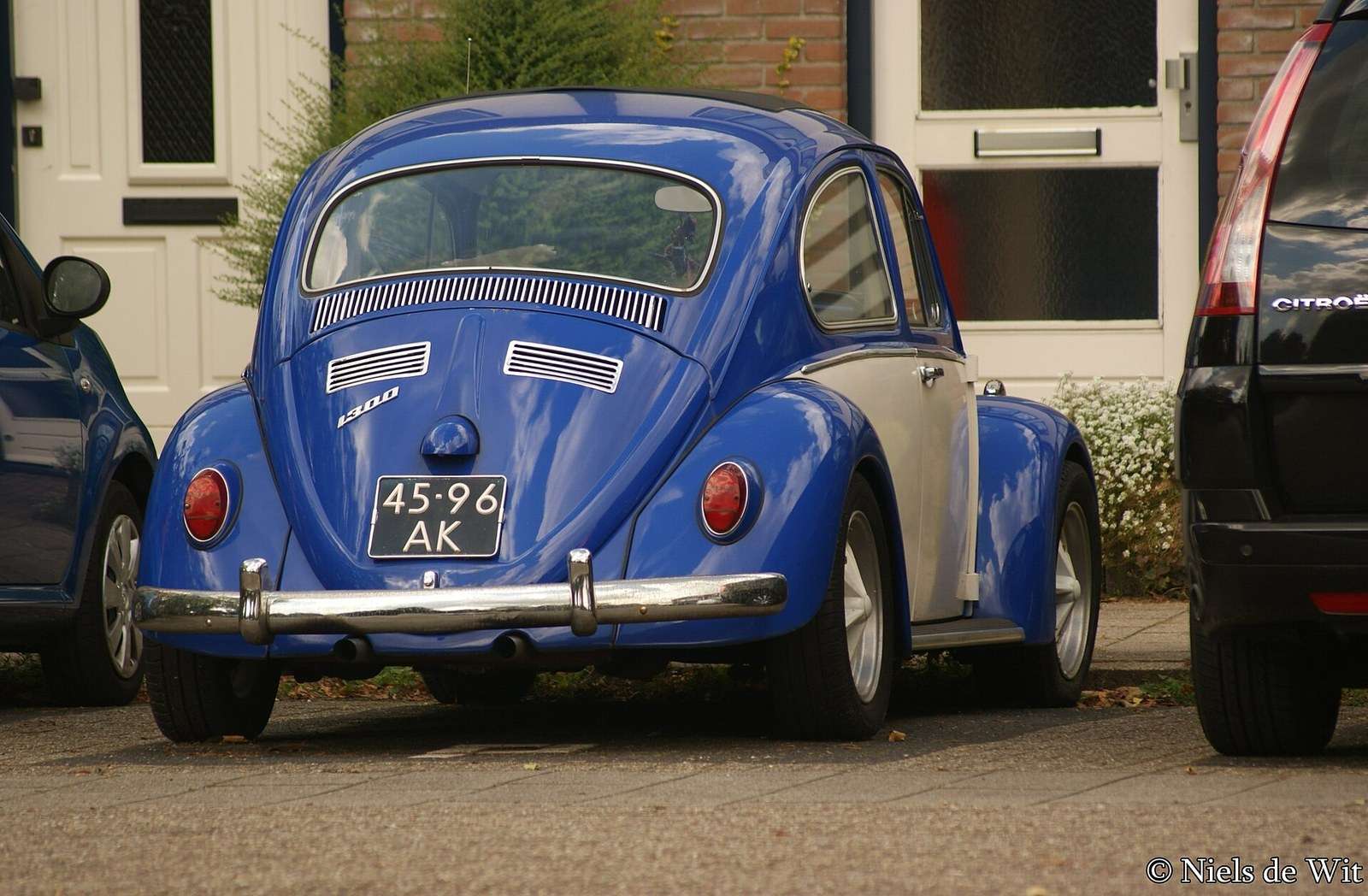
The Volkswagen Beetle 1200, 1300 and 1500 are the conventional torsion-beam versions that carried the original people’s car through its most familiar post-war years. They are mechanically straightforward and supported by a vast specialist network, yet structural corrosion, inaccurate restorations and confused model identities can turn a charming classic into a costly project.
Featured image: 1968 Volkswagen Beetle 1500. Photograph by Riley from Christchurch, New Zealand, CC BY 2.0, via Wikimedia Commons; locally hosted.
From Volkswagen 1200 to the familiar 1960s Beetle
The post-war Beetle evolved continuously rather than changing in conventional generations. The 1192cc 1200 became the durable core of the range, while larger windows, improved heating, better brakes and detail revisions gradually made the car easier to live with. Volkswagen retained the rear-mounted air-cooled flat-four, separate body and floorpan, and front torsion-beam suspension.
The 1200 continued for far longer than many larger-engined derivatives and became the basic Beetle remembered across Britain and Europe. Its modest power rewards momentum rather than speed, but a well-maintained example has light controls, excellent traction and an engaging mechanical character.

| Specification | Detail |
|---|---|
| 1200 engine | 1,192cc air-cooled flat-four |
| 1300 engine | 1,285cc; approximately 40PS |
| 1500 engine | 1,493cc; approximately 44PS |
| Layout | Rear-engine, rear-wheel drive |
| Front suspension | Torsion-beam, unlike the 1302/1303 Super Beetle |
What the 1300 and 1500 added
The 1285cc 1300 appeared for the 1966 model year with roughly 40PS, giving more useful flexibility without changing the Beetle’s essential nature. The 1493cc 1500 followed with about 44PS and front disc brakes on many markets, making it the more relaxed and better-braked conventional Beetle of the later 1960s.
These names describe engine capacity, not a completely separate body family. Equipment and appearance varied by year and market, while engines have often been swapped. Read the chassis number, engine code and period documentation together instead of assuming a deck-lid badge proves the specification.

Love cars you don’t see every day?
Get forgotten cars, surprising motoring stories and the most interesting finds from Unusual Cars by email.
Free to join. No spam. Unsubscribe whenever you like. See our privacy policy.
Key model-year changes
The late 1960s brought 12-volt electrics to many versions, upright headlamps, larger windows, revised bumpers and safety changes. Later conventional Beetles acquired larger rear lamps and further cabin revisions while continuing alongside the MacPherson-strut 1302 and 1303 Super Beetles.
That distinction matters. A 1200, 1300 or 1500 normally retains the compact torsion-beam front end and flatter bonnet, whereas the 1302 and 1303 have strut suspension and a longer nose. Buyers seeking the earlier driving feel and appearance should verify the front chassis and body, not rely on the year alone.
Rust and restoration checks
Inspect the heater channels from the door hinges to the rear quarter, the floorpan halves, body-mounting flange, jacking points, lower A- and B-pillars, frame head, spare-wheel well and bumper mounts. Lift the rear seat to check the battery area. Fresh underseal and carpet can conceal plated or unfinished repairs.
Door gaps and hinge movement reveal structural weakness, while ripples around the front apron and spare-wheel well suggest accident damage. Because bodies can be removed from floorpans, confirm that chassis identity, body style and paperwork form a coherent history. A photographic restoration record is far more useful than a recent repaint.

Engine, gearbox, brakes and steering
Check the air-cooled engine from cold. Excessive crankshaft end float, heavy breathing, persistent smoke and knocking require investigation. Correct cooling tinware, engine-bay seals and thermostat equipment matter because missing pieces allow hot exhaust air to recirculate. Fuel hoses should be modern, securely clipped and routed away from heat.
The four-speed gearbox should select cleanly and remain in gear under load. A vague lever can be linkage wear, but rumbling or jumping out is more serious. Check kingpins or ball joints according to year, steering-box free play, wheel bearings, brake pull and the condition of every flexible hose.

Originality, upgrades and choosing well
Beetles invite modification, from larger engines to narrowed beams and modern seats. Decide whether you want a standard historic car or a modified driver, then verify that changes are engineered and declared properly. Brake, tyre and gearing choices must suit any increase in power.
For most buyers, the best car is structurally excellent, mechanically standard or sensitively improved, and supported by invoices. Correct trim increases value, but routine service parts are readily available. Spend inspection money on the shell because welding and paint quickly exceed the cost of rebuilding a stock engine.
Buying checklist
Begin with a cold start
Ask the seller not to warm the vehicle before inspection. Cold behaviour exposes noises, warning lights and control-system faults that may disappear once temperatures stabilise.
Inspect the structure and underside
Use a lift where possible, distinguish cosmetic corrosion from structural repairs and question fresh underseal or incomplete documentation.
Verify the exact specification
Match chassis, engine, drivetrain, body style and market details to the registration record, identification labels and service history.
Use a marque specialist
A pre-purchase inspection costs far less than correcting hidden body, transmission, roof or four-wheel-drive faults after purchase.
References
- Volkswagen Classic Beetle 1200 history
- Volkswagen Beetle success story
- Hagerty UK Beetle buying guide
- Honest John Beetle 1200/1300 guide
Continue the Volkswagen story
Explore the complete Volkswagen hub for more rare, sporting and technically unusual models.
Frequently asked questions
What is the difference between Beetle 1200, 1300 and 1500 models?
The principal difference is engine capacity: 1192cc, 1285cc and 1493cc. Equipment, brakes and appearance also changed by model year and market.
Are these the same as a Super Beetle?
No. Conventional 1200, 1300 and 1500 Beetles use a torsion-beam front end. The 1302 and 1303 Super Beetles use MacPherson struts and a longer front body.
Where does a classic Beetle rust most seriously?
Inspect the heater channels, floorpan edges, frame head, jacking points, lower pillars, body mounts, battery area and spare-wheel well.
Are classic Volkswagen Beetle parts easy to find?
Routine mechanical, braking, suspension and service parts are widely supported, but correct early trim and high-quality body panels can still be expensive.
Is the 1500 the best classic Beetle to drive?
Its extra torque and front disc brakes can make it more relaxed, but body condition and the quality of maintenance matter more than engine size.