UNUSUAL CARS MODEL GUIDE
The standard Aston Martin V8 is sometimes overshadowed by the later Vantage, yet it was the model that kept Newport Pagnell’s grand-touring tradition alive through turbulent ownership changes and two oil crises. Introduced in 1972 as a reworked DBS V8, it evolved through carburettor, Oscar India and fuel-injected forms, while the 1978 V8 Volante became one of the era’s most recognisable luxury convertibles.
Quick answer: the AM V8 was produced from 1972 to 1989 with a 5,340 cc quad-cam V8, ZF five-speed manual or Chrysler three-speed automatic. Early Series 2 cars retained Bosch injection; Series 3 adopted four Weber carburettors; Oscar India Series 4 refined the body and cabin; Series 5 returned to electronic injection. Structural corrosion, aluminium-panel reaction, engine condition, cooling, fuel systems, transmission and restoration evidence are the critical checks.
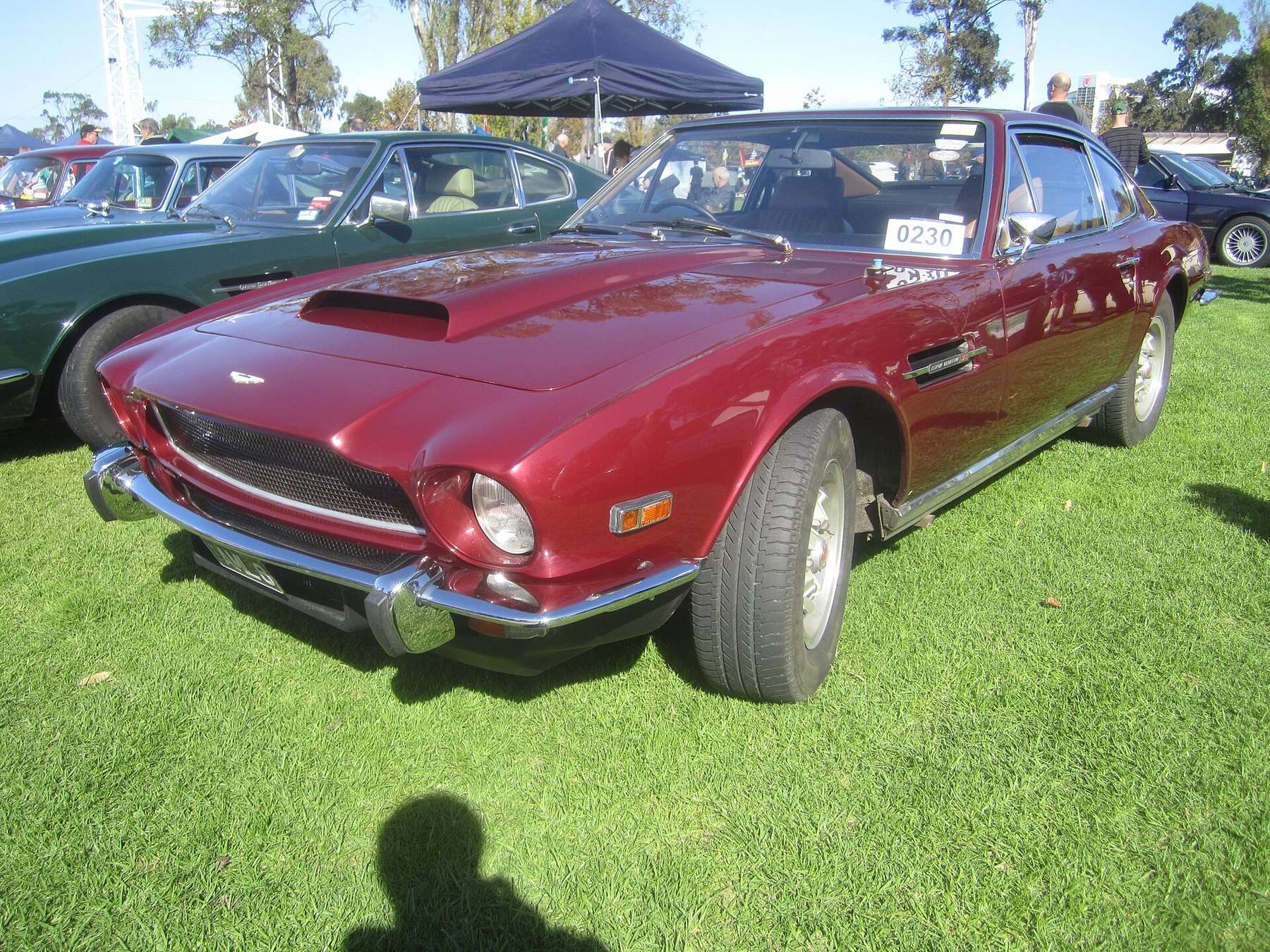
Featured image: 1975 Aston Martin V8 Series 3 saloon. Photograph by Sicnag, CC BY 2.0, via Wikimedia Commons; locally hosted.
From DBS V8 to AM V8
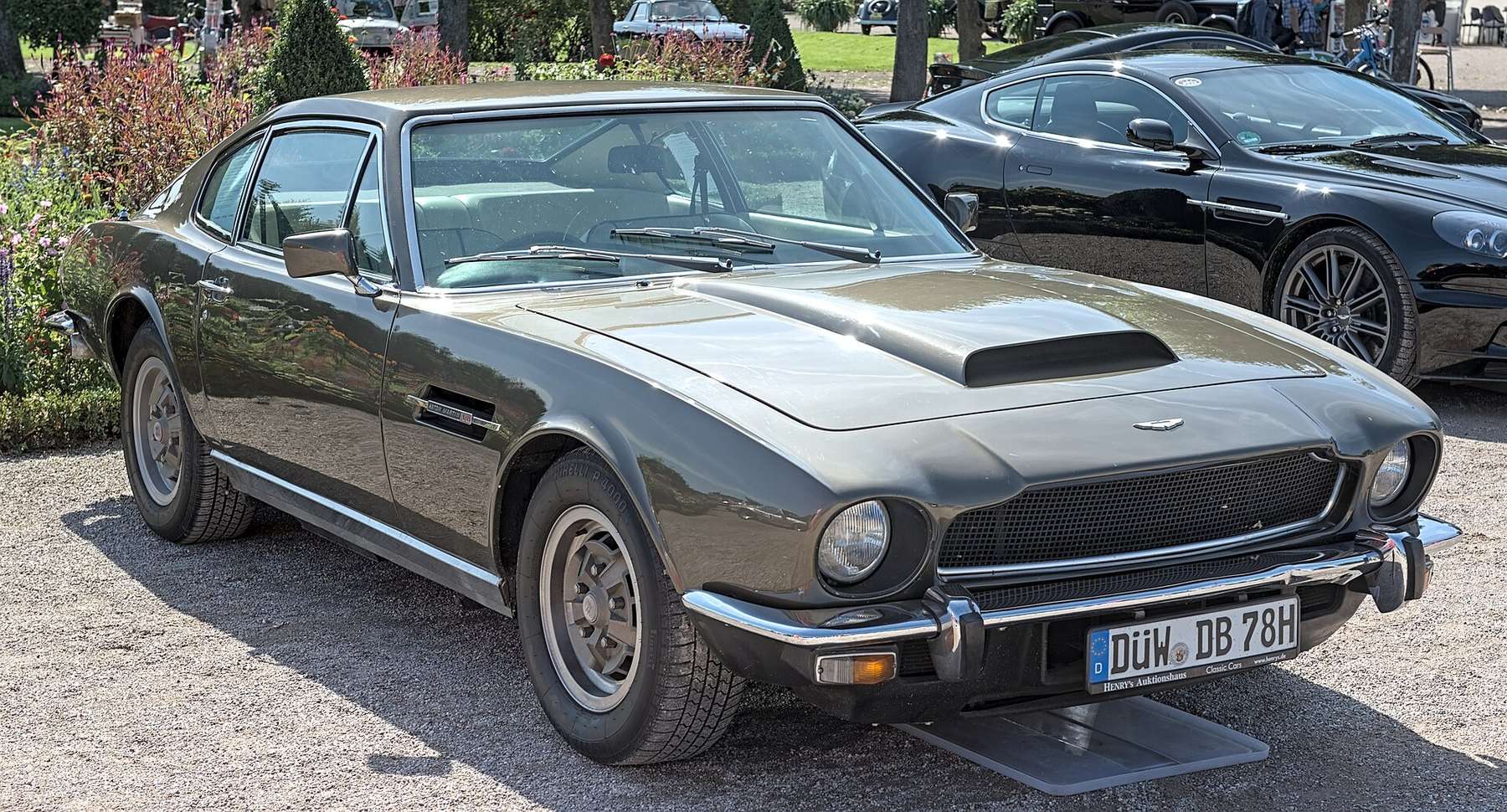
Company Developments bought Aston Martin in January 1972 and quickly revised the DBS V8. Single headlamps, a reshaped grille and a cleaner front treatment distinguished the renamed AM V8, while Tadek Marek’s 5.3-litre all-alloy engine, De Dion rear suspension and substantial four-seat body remained.
These early Series 2 cars retained Bosch mechanical fuel injection. In August 1973 the Series 3 replaced it with four twin-choke Weber carburettors, requiring a larger bonnet bulge. The change simplified factory supply and gave the car the induction character that many owners associate with the classic V8.

Series 3, Oscar India and Series 5
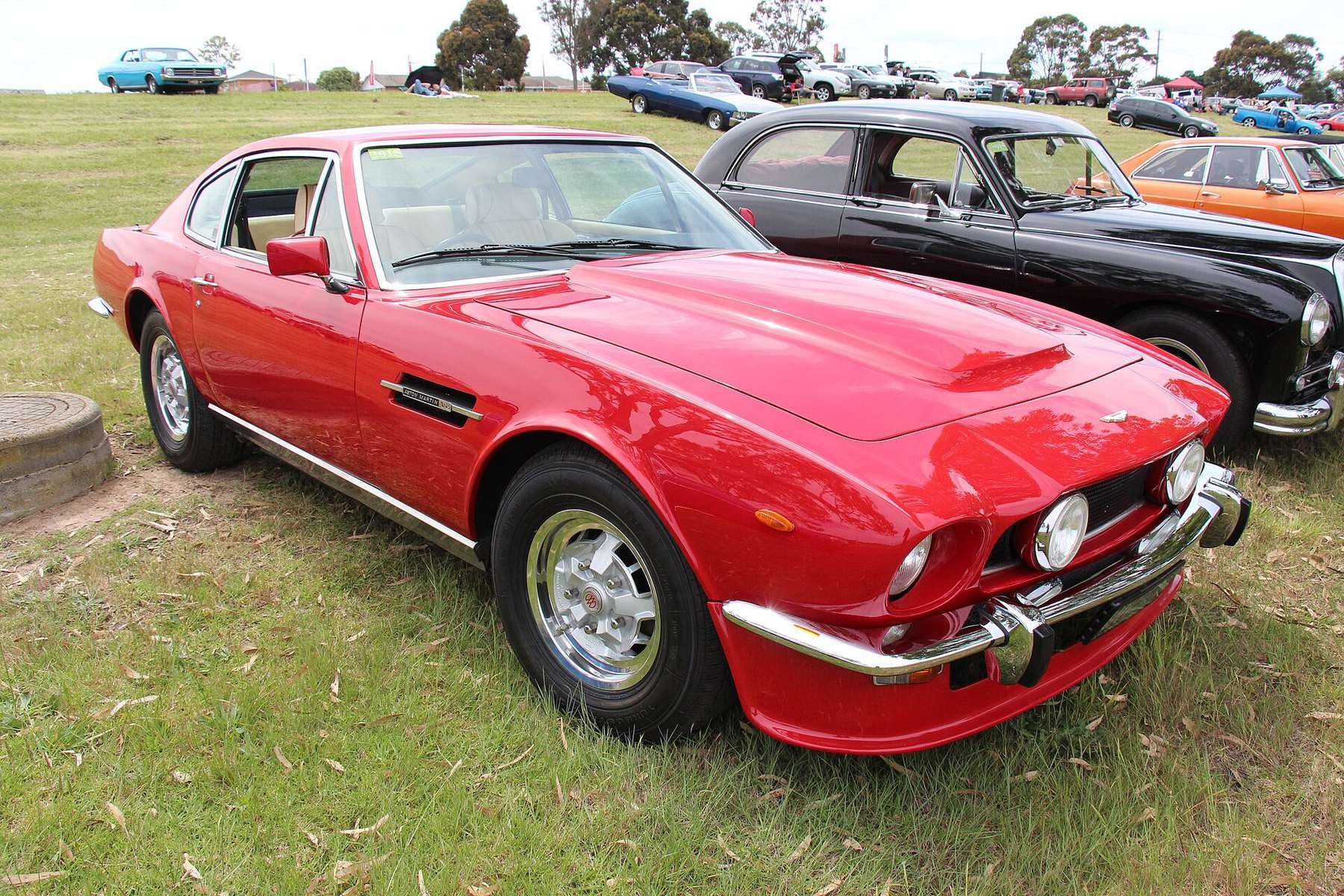
Aston Martin entered receivership in 1974 and resumed production under new ownership in 1975. A Stage 1 engine tune appeared in 1977, followed in 1978 by the Series 4 ‘Oscar India’. Its closed bonnet scoop, revised rear bodywork with an integrated lip, improved trim and burr walnut made the car look more resolved.
The 580-series engine brought further revisions in 1980, BBS wheels replaced the earlier GKN design in 1983, and Weber-Marelli electronic injection arrived for Series 5 in 1985. The flat-bonnet injection cars were the final standard development before the Virage.
| Version | Years | Key feature |
|---|---|---|
| Series 2 | 1972–1973 | Bosch mechanical injection |
| Series 3 | 1973–1978 | Four Weber carburettors |
| Series 4 | 1978–1985 | Oscar India body and cabin revisions |
| Series 5 | 1985–1989 | Weber-Marelli injection and flat bonnet |
Love cars you don’t see every day?
Get forgotten cars, surprising motoring stories and the most interesting finds from Unusual Cars by email.
Free to join. No spam. Unsubscribe whenever you like. See our privacy policy.
The V8 Volante
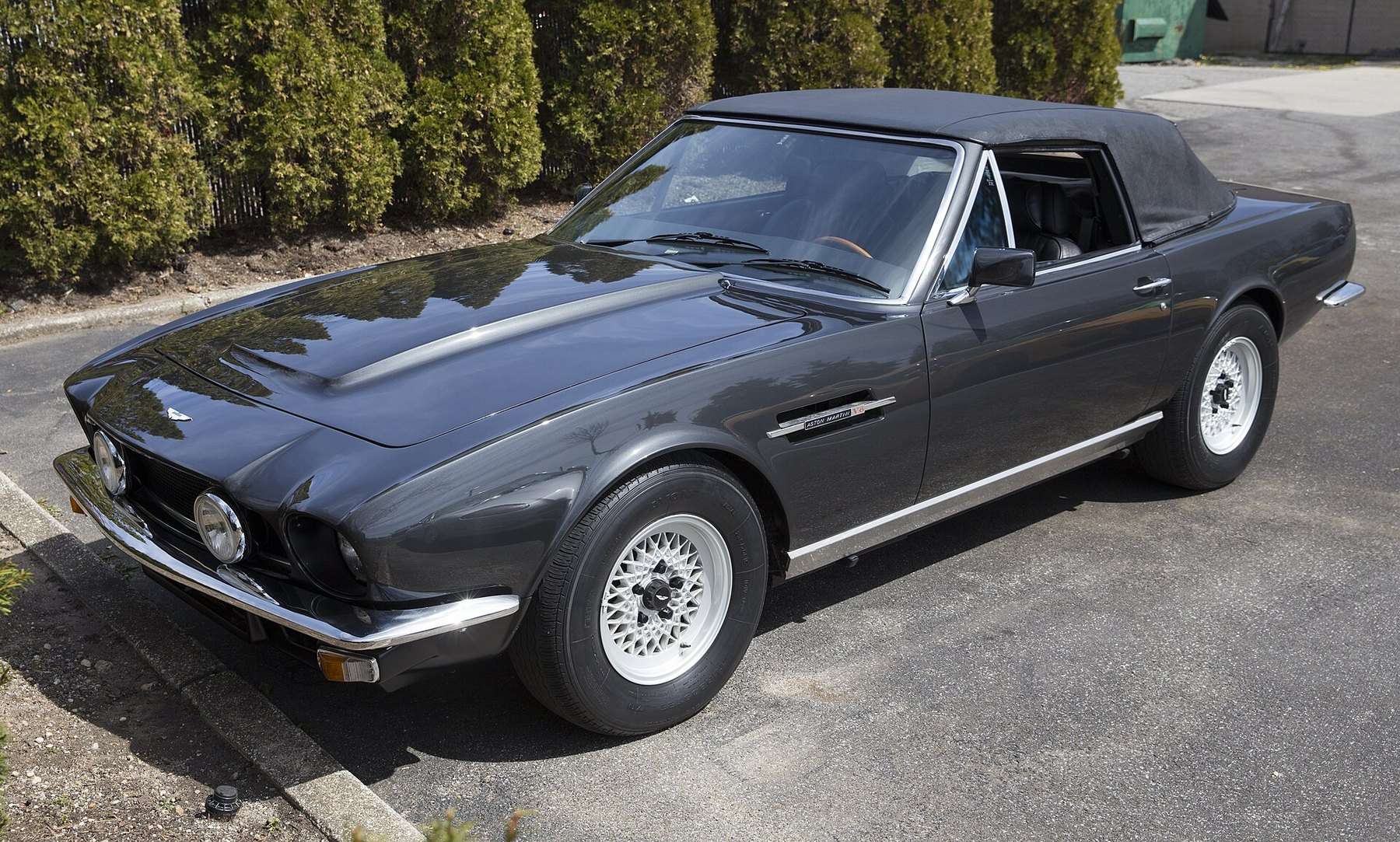
The V8 Volante joined the range in 1978 with a power-operated, fully lined fabric hood. It combined the saloon’s four-seat luxury and 5.3-litre engine with open-air touring, though additional strengthening made it heavier. Early Volantes used the carburettor engine and later cars followed the saloon into fuel injection.
Inspect hood fabric, frame alignment, hydraulic operation, seals, drains and carpets. Water entering unnoticed can damage trim and accelerate structural corrosion. Some cars have Vantage-style spoilers, wheels and engine upgrades, so confirm whether a claimed Vantage Volante is an authentic factory example or a later conversion.
V8 engine, fuel systems and cooling
The quad-cam V8 is strong when maintained but very expensive to rebuild. Cold oil pressure, compression, smoke, timing-chain noise and crankcase breathing require specialist assessment. Overheating can damage heads and liners, so inspect the radiator, fans, water pump, hoses and service history before allowing a long road test to substitute for proper diagnostics.
Bosch mechanical injection needs expert calibration; four Webers require correct balance, jetting and clean fuel; and Series 5 electronic injection brings ageing sensors, wiring and control components. Poor starting, fuel smells, black smoke or hesitation should not be dismissed as normal old-car behaviour.
Chassis, aluminium body and brakes
The steel platform beneath the aluminium panels is the largest financial risk. Inspect sills, outriggers, floors, suspension pick-up points, bulkhead, windscreen frame, door pillars, boot floor and the rear structure. Bubbling where aluminium meets steel can reveal electrolytic reaction, while distorted gaps may indicate corrosion or old accident repairs.
Brake calipers can seize when cars sit unused, and worn bushes or dampers make the heavy Aston feel vague. Check steering assistance, wheel bearings, De Dion location, tyre age and alignment. Replacement trim, glass, bumpers and lamps are costly, so completeness matters as much as paint quality.

Transmission, cabin and documentation
The ZF five-speed manual is desirable but should not crunch or jump out; clutch replacement is costly. Chrysler’s TorqueFlite automatic suits the car well and should engage promptly without flaring or harsh shifts. Listen for differential noise and propshaft vibration, and look for leaks from engine, gearbox and final drive.
Test every gauge, window, lock, heater, air-conditioning function and hood control. Walnut and leather can be restored, but a complete original cabin is valuable. Verify chassis and engine numbers, original specification and factory options through the Heritage Trust, then compare invoices with the work visible on the car.

Which AM V8 should you buy?
Series 2 offers rarity and injection-era character, Series 3 has the classic carburettor experience, Oscar India combines traditional mechanics with a more polished body, and Series 5 is generally the easiest to use. The Volante commands a premium but adds hood and structural checks.
Condition outranks series. The right car has verified identity, a sound chassis, a healthy cooling system and detailed specialist records. A pre-purchase inspection should include a lift examination, compression or leak-down testing where appropriate, fuel-system assessment and a realistic cost for every defect.

Sources and further reading
- Aston Martin: AM V8 history and specifications
- Aston Martin Media: AM V8 heritage archive
- Classic & Sports Car: Aston Martin V8 buying guide
- Magneto: Aston Martin V8 and Vantage buying guide
- Aston Martin Heritage Trust
Continue the Aston Martin story
The AM V8 sustained Aston Martin through the 1970s and 1980s and provided the foundation for the V8 Vantage and Vantage Volante. Explore the complete Aston Martin hub. Start with the preceding DBS V8. Compare the V8 Vantage.
Frequently asked questions
When was the Aston Martin AM V8 built?
The standard AM V8 saloon was produced from 1972 to 1989, evolving through Series 2, 3, 4 and 5.
What engine does the Aston Martin V8 use?
It uses a 5,340 cc all-alloy, four-cam V8, with mechanical injection, carburettors or electronic injection according to series.
When was the V8 Volante introduced?
The V8 Volante convertible entered production in 1978 with a power-operated, lined fabric hood.
What does Oscar India mean?
Oscar India is the informal name for the Series 4 V8 introduced in 1978, identified by revised rear bodywork, a closed bonnet scoop and upgraded trim.
What is the biggest AM V8 buying risk?
Hidden corrosion in the steel structure beneath the aluminium body is the biggest risk, followed by neglected engine, cooling and fuel-system work.