UNUSUAL CARS MODEL GUIDE
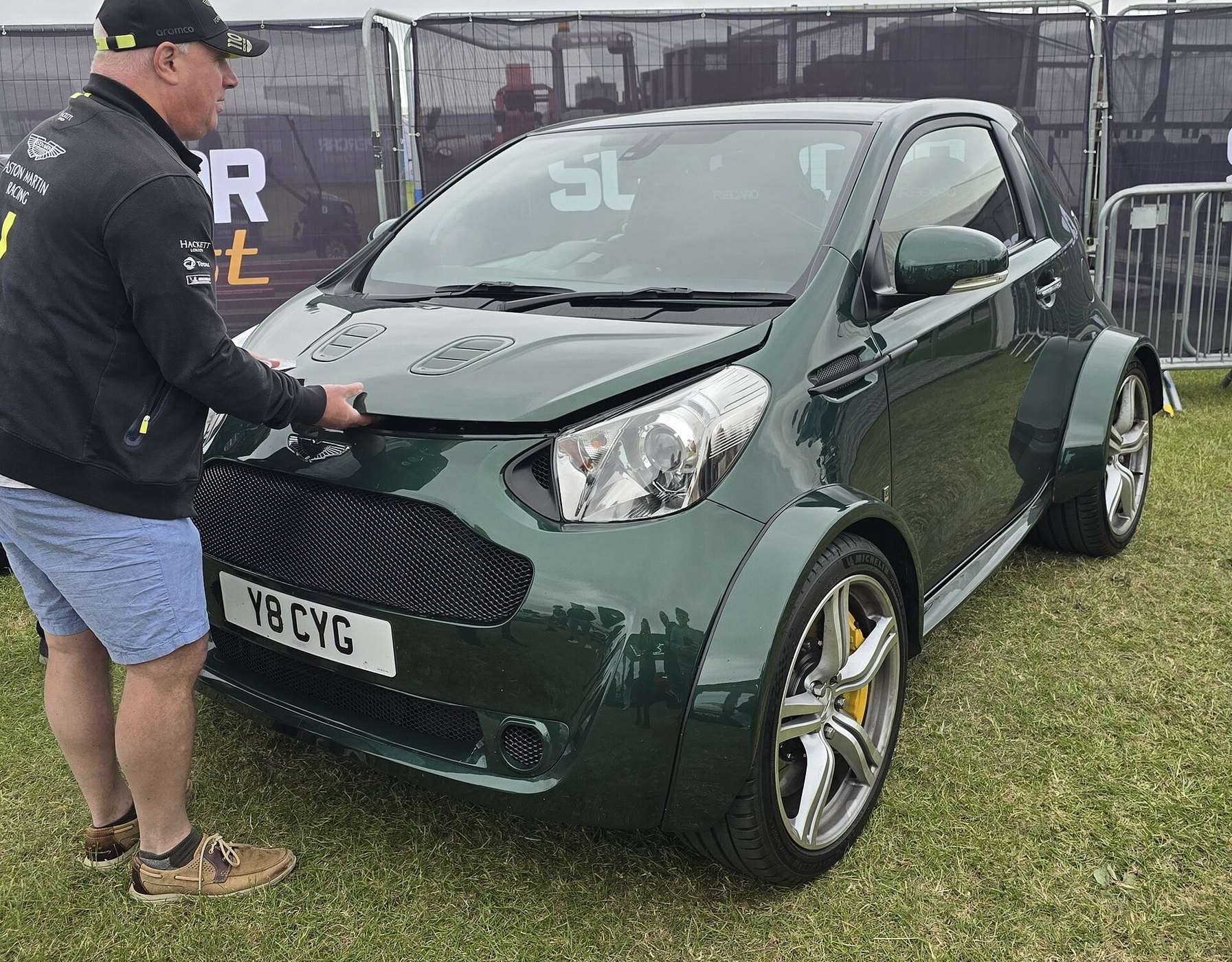
The Aston Martin Cygnet is exactly the sort of car that belongs on Unusual Cars. Beneath its bespoke grille, hand-finished leather and Aston Martin badges is the compact engineering package of Toyota’s iQ, but the result was not a conventional badge-engineering exercise. Each car was finished at Gaydon with model-specific panels and an extraordinary level of personalisation. Expensive, misunderstood and produced for only a short period, it has become a genuinely rare British-market curiosity.
Quick answer: the Cygnet was produced from 2011 to 2013 using the Toyota iQ’s 1.33-litre petrol engine, front-wheel-drive platform and choice of six-speed manual or CVT transmission. Aston Martin supplied its own bonnet, bumpers, grille, side strakes, lights, wheels and extensively retrimmed cabin. The later V8 Cygnet was a one-off Q by Aston Martin commission, not a regular production version.
Featured image: 2011 Aston Martin Cygnet. Photograph by Calreyn88, CC BY-SA 4.0, via Wikimedia Commons; locally hosted.
Why Aston Martin built a city car
Aston Martin wanted a small urban car that existing customers could use in congested cities without abandoning the marque’s materials and personalisation. Toyota’s iQ provided an unusually sophisticated compact platform: very short overall length, four-seat packaging, multiple airbags and a 1.33-litre petrol engine already engineered for European roads.
The Cygnet was assembled and trimmed at Aston Martin’s Gaydon facility. It was intended as a luxury product rather than a cheap entry-level Aston, which explains both its finish and the difficult relationship between its price and familiar Toyota mechanical base.

Specification and UK-market versions
| Item | Specification |
|---|---|
| Engine | 1.33-litre Toyota Dual VVT-i four-cylinder petrol |
| Transmission | Six-speed manual or continuously variable transmission |
| Drive | Front-wheel drive |
| Seats | Compact 3+1 cabin layout |
| Production | 2011 to 2013 at Gaydon |
The mechanical package remained close to the iQ, but body fittings, wheels, paint and most visible cabin surfaces were Aston Martin-specific. Buyers could specify an unusually broad range of colours and leather combinations, so originality must be judged against the individual car’s order record.

Love cars you don’t see every day?
Get forgotten cars, surprising motoring stories and the most interesting finds from Unusual Cars by email.
Free to join. No spam. Unsubscribe whenever you like. See our privacy policy.
What Aston Martin changed
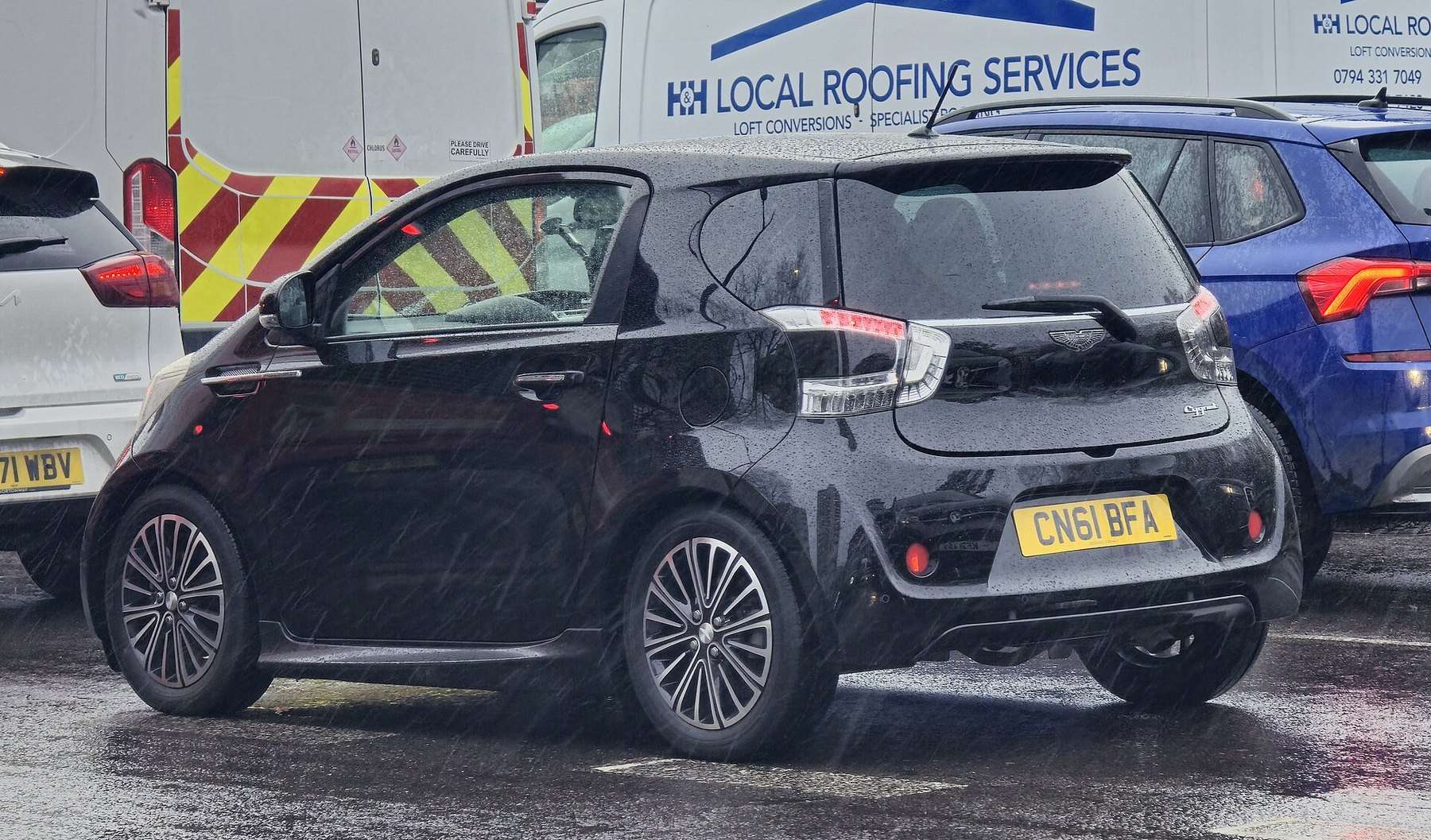
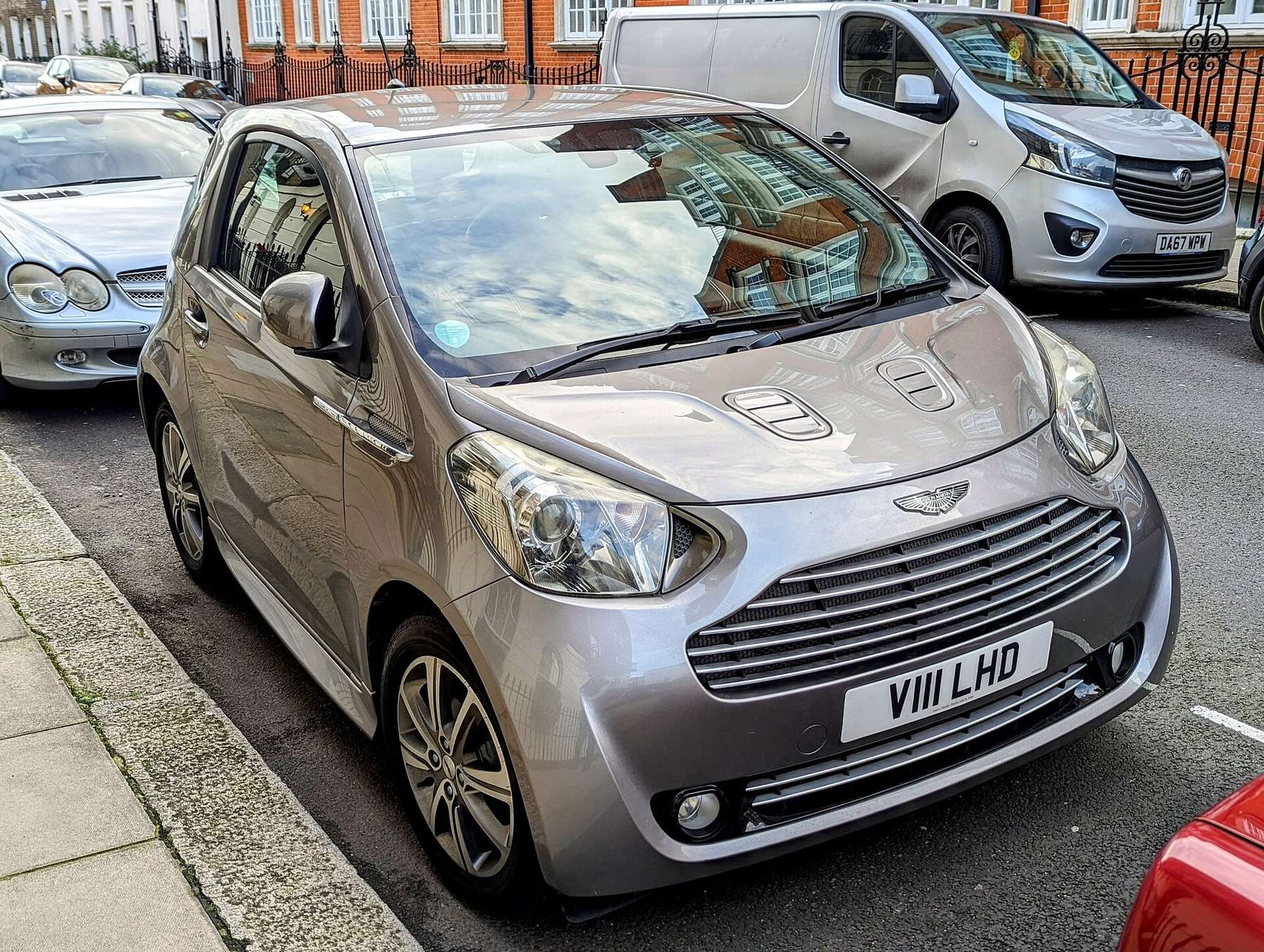
The bonnet, front wings, bumpers and grille created a recognisable Aston Martin face. Side strakes, badging, lighting details and diamond-cut wheels continued the theme. Inside, technicians covered much of the Toyota architecture with hand-cut leather, Alcantara, contrasting stitching and polished trim.
That craftsmanship is important today because the unique components are far more expensive and difficult to replace than ordinary iQ parts. A small parking scrape can involve model-specific grilles, panels or lamps, while worn leather may require a trimmer who can reproduce the factory finish.

Toyota reliability, Aston Martin costs
The 1.33-litre engine and basic running gear are generally straightforward, but age, low use and city driving still take a toll. Check for a clean cold start, stable idle, correct oil level, cooling-system condition and evidence of scheduled servicing. Manual cars need a smooth clutch and quiet gearbox; a CVT should take up drive cleanly without judder or warning lights.
Inspect brakes for corrosion from long storage, tyres for age and uneven wear, and suspension for knocks. Diagnostic warning lights must be investigated rather than dismissed as Toyota issues, because trim removal and Aston-specific parts can change the cost of apparently simple work.
Body, cabin and authenticity
Examine every bumper corner, grille bar, side strake, lamp, wheel and badge. Confirm that the diamond-cut wheels have not been repeatedly refinished and that tyres match. Inside, check all leather panels, seat bolsters, headlining, switch surrounds and luggage-area trim, along with air conditioning, audio, windows, central locking and every warning system.
Because the Cygnet was highly personalised, unusual colours are not automatically later alterations. Obtain the factory specification and compare it with the car. The strongest example retains its original Aston-specific pieces and has not been repaired with ordinary iQ exterior or interior components.
Choosing a Cygnet
A manual offers the most conventional driving experience, while the CVT suits stop-start urban use. Neither is a performance car, and buying solely because the Cygnet is the cheapest route to an Aston Martin badge misses the point. Rarity, compact packaging and its unlikely combination of Toyota engineering with Gaydon craftsmanship are the appeal.
Prioritise complete provenance, undamaged bespoke trim and a specialist inspection. Mechanical service parts can be manageable, but missing Cygnet-specific panels, wheels or interior pieces can dominate the cost of putting a neglected car right.
Sources and further reading
- Aston Martin: Cygnet history and specifications
- Aston Martin: Cygnet and one-off V8 Cygnet
- Octane: Aston Martin Cygnet buying guide
- Toyota UK Media: iQ technical background
Continue the Aston Martin story
The Cygnet is Aston Martin at its most unexpected: a city car whose rarity and hand-finished details now matter more than the controversy that greeted it. Explore the complete Aston Martin hub. Read the DB5 guide. Continue with the hand-built Virage.
Frequently asked questions
Is the Aston Martin Cygnet based on a Toyota iQ?
Yes. It uses the Toyota iQ platform, 1.33-litre engine and transmissions, with Aston Martin-specific body details and a hand-finished cabin.
When was the Aston Martin Cygnet produced?
Aston Martin produced the Cygnet at Gaydon from 2011 to 2013.
Was the Cygnet available with a manual gearbox?
Yes. UK buyers could choose a six-speed manual or a continuously variable transmission.
Was the V8 Cygnet a production model?
No. The 4.7-litre V8 Cygnet revealed in 2018 was a one-off Q by Aston Martin commission.
What should be checked before buying a Cygnet?
Check every Aston-specific panel, grille, lamp, wheel and leather trim piece, then inspect the Toyota-based mechanicals, CVT or clutch, brakes, tyres and complete service history.