UNUSUAL CARS MODEL GUIDE
The 2011 Aston Martin Virage was designed to occupy the narrow space between the elegant DB9 and harder-edged DBS. It combined a 490 bhp naturally aspirated V12 with carbon-ceramic brakes, adaptive damping and a calmer visual treatment. Its market position proved too subtle: after roughly eighteen months, the Virage disappeared as the updated DB9 absorbed much of its specification.
Quick answer: The modern Virage was sold for the 2011 and 2012 model years as a 2+2 coupé and Volante. Its 5,935 cc V12 makes 490 bhp and 420 lb ft, driving through a six-speed Touchtronic 2 rear transaxle. Carbon-ceramic brakes and adaptive dampers were standard. Inspect bonded-aluminium structure, brakes, dampers, cooling, ignition, gearbox, hood systems and service history.
Featured image: Silver 2011 Aston Martin Virage coupé. Photograph by Calreyn88, CC BY-SA 4.0, via Wikimedia Commons; locally hosted.
Why Aston Martin revived the Virage name
Aston Martin unveiled the Virage at the 2011 Geneva motor show. The name returned fifteen years after the earlier Newport Pagnell Virage ended, but the new car belonged to the bonded-aluminium VH generation and shared its basic architecture with the DB9 and DBS.
The brief was refinement with additional authority: more power and braking capability than the contemporary DB9, but softer responses and less visual aggression than a DBS. A revised front fascia, five-vane grille, new sills and distinctive rear treatment provided subtle separation.

V12, transmission and performance
The 5,935 cc naturally aspirated V12 produced 490 bhp at 6,500 rpm and 420 lb ft at 5,750 rpm. A six-speed Touchtronic 2 automatic transaxle drove the rear wheels through a carbon-fibre propeller shaft. Aston Martin quoted 0–62 mph in 4.6 seconds and 186 mph.
| Item | Virage specification |
|---|---|
| Engine | 5,935 cc V12 |
| Power | 490 bhp |
| Torque | 420 lb ft |
| Transmission | Six-speed Touchtronic 2 transaxle |
| Official top speed | 186 mph |
Three-stage adaptive damping and standard carbon-ceramic brakes were important distinctions. The calibration aimed for progressive road behaviour rather than the DBS’s sharper responses.

Love cars you don’t see every day?
Get forgotten cars, surprising motoring stories and the most interesting finds from Unusual Cars by email.
Free to join. No spam. Unsubscribe whenever you like. See our privacy policy.
Coupé and Virage Volante
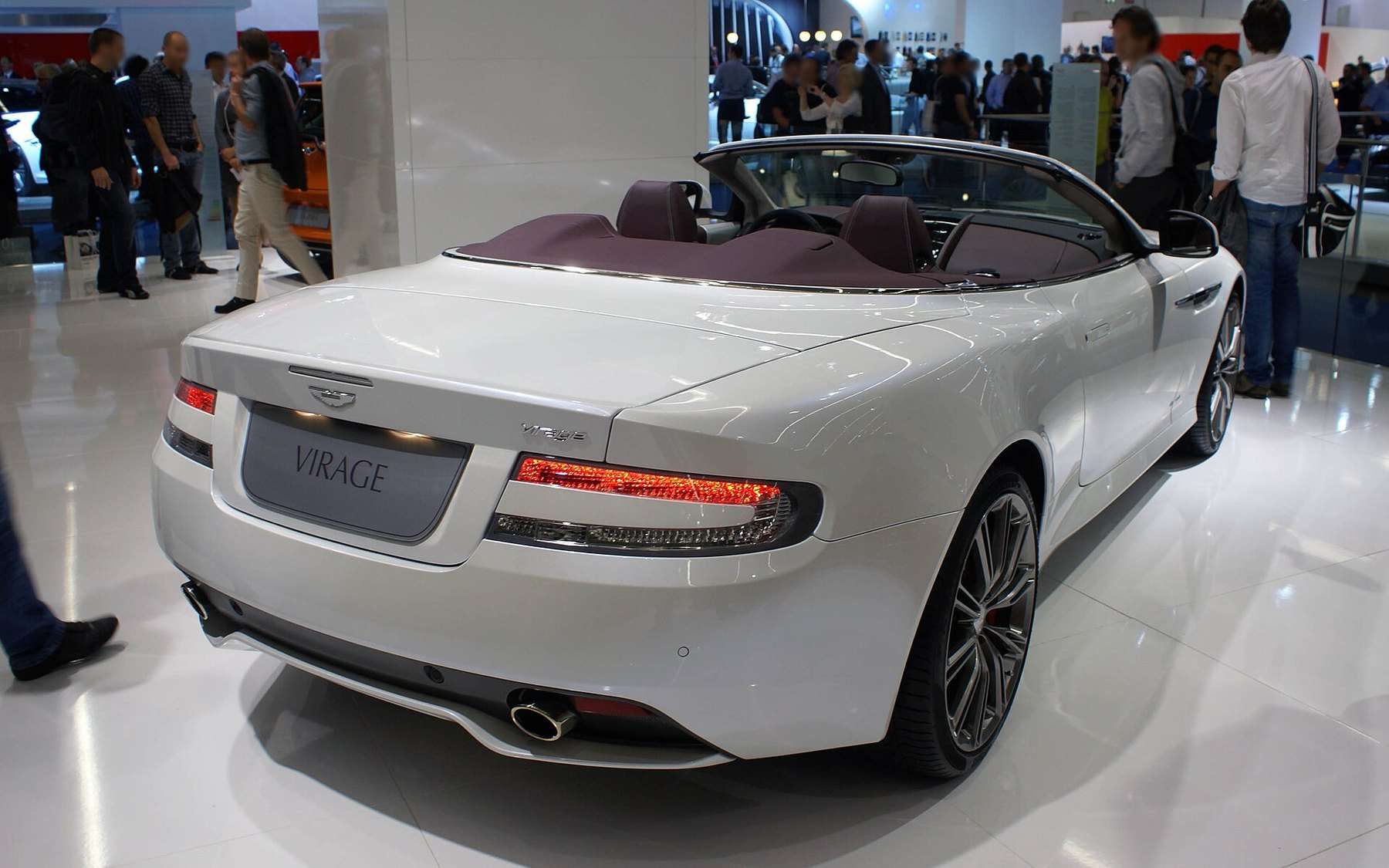
The coupé offered 2+2 seating, while lightweight front seats could be specified with storage replacing the rear seats. The Volante used a power-operated fabric roof and retained the same engine, transmission and braking hardware.
On a Volante, operate the roof repeatedly and examine rams, pump, frame, headlining, seals, drainage and rear-deck alignment. Damp carpets or misted lamps may indicate water entry. Scuttle shake or uneven gaps deserve structural investigation, not dismissal as normal convertible behaviour.

Why production ended so quickly
The Virage was well received, but its position between DB9 and DBS created price and identity overlap. When Aston Martin substantially revised the DB9 for 2013, the newer DB9 adopted more power, carbon-ceramic brakes and styling ideas close to the Virage.
The model’s short life now makes it more unusual than either neighbour, but rarity alone does not guarantee higher value. Buyers should value it as a distinctive specification within the VH family and compare condition, equipment and history directly with late DB9s and DBSs.

Engine, cooling and transmission checks
Start from cold and listen for persistent mechanical noise while checking oil pressure and exhaust condition. Misfires can involve coils or plugs, and access increases labour. Inspect radiators and condensers for debris or corrosion, verify both cooling fans and look for leaks from hoses, covers and seals.
The Touchtronic transaxle should engage promptly and shift consistently in automatic and paddle modes. Hesitation, harsh engagement or driveline vibration needs diagnosis. Low battery voltage causes spurious warnings, but it must not be used to explain every stored fault.

Brakes, dampers, structure and ownership
Carbon-ceramic discs are durable in road use but exceptionally expensive. Check for chips, impact damage, heat distress and measured wear, along with pad condition. Adaptive dampers must change mode without leakage, warning messages or knocking; uneven tyre wear may reveal poor geometry or tired bushes.
Inspect the bonded-aluminium structure, undertrays, mounting points and paintwork for accident repair and corrosion around dissimilar-metal interfaces. Test infotainment, navigation, climate control, seats, windows, parking aids and keys. Annual servicing and age-related fluid, tyre and battery care matter even at low mileage.
Sources and further reading
- Aston Martin Virage period brochure and technical specification
- Autocar: Virage 2011–2012 review
- Auto Trader UK: Virage expert review
- Auto Express: Aston Martin Virage review
- Aston Martin Owners Club
Continue the Aston Martin story
The 2011 Virage is the brief middle chapter between the original DB9 and the comprehensively updated 2013 DB9. Explore the complete Aston Martin hub. Compare the DB9. Compare the contemporary DBS.
Frequently asked questions
When was the modern Aston Martin Virage built?
It was sold for the 2011 and 2012 model years before its specification was largely absorbed by the updated DB9.
What engine does the 2011 Virage use?
It uses a 5,935 cc naturally aspirated V12 producing 490 bhp and 420 lb ft.
Is the 2011 Virage a DB9?
It shares the VH architecture and much hardware with the DB9, but was a separately named model positioned between the DB9 and DBS.
Was there a Virage convertible?
Yes. The Virage Volante used a power-operated fabric roof and the same V12 and six-speed transaxle.
What are the biggest buying costs?
Carbon-ceramic brakes, adaptive dampers, V12 ignition and cooling work, accident repairs and neglected hood or electrical systems can be costly.