UNUSUAL CARS MODEL GUIDE
The Maserati Coupé and Spyder replaced the 3200 GT’s twin-turbo character with a naturally aspirated 4.2-litre V8, a rear transaxle and a much closer technical relationship with Ferrari. Sold from 2001 to 2007, the two-seat Spyder arrived first and the four-seat Coupé followed in 2002. Both were offered as a six-speed manual GT or with the Cambiocorsa automated manual.
Quick answer: the M138 Coupé and Spyder are charismatic modern-classic Maseratis, but condition and maintenance matter more than mileage. Buyers should verify clutch wear on Cambiocorsa cars, suspension and Skyhook dampers, heater-matrix condition, sticky cabin finishes, oil leaks, cooling health, roof operation on the Spyder and evidence of specialist servicing.
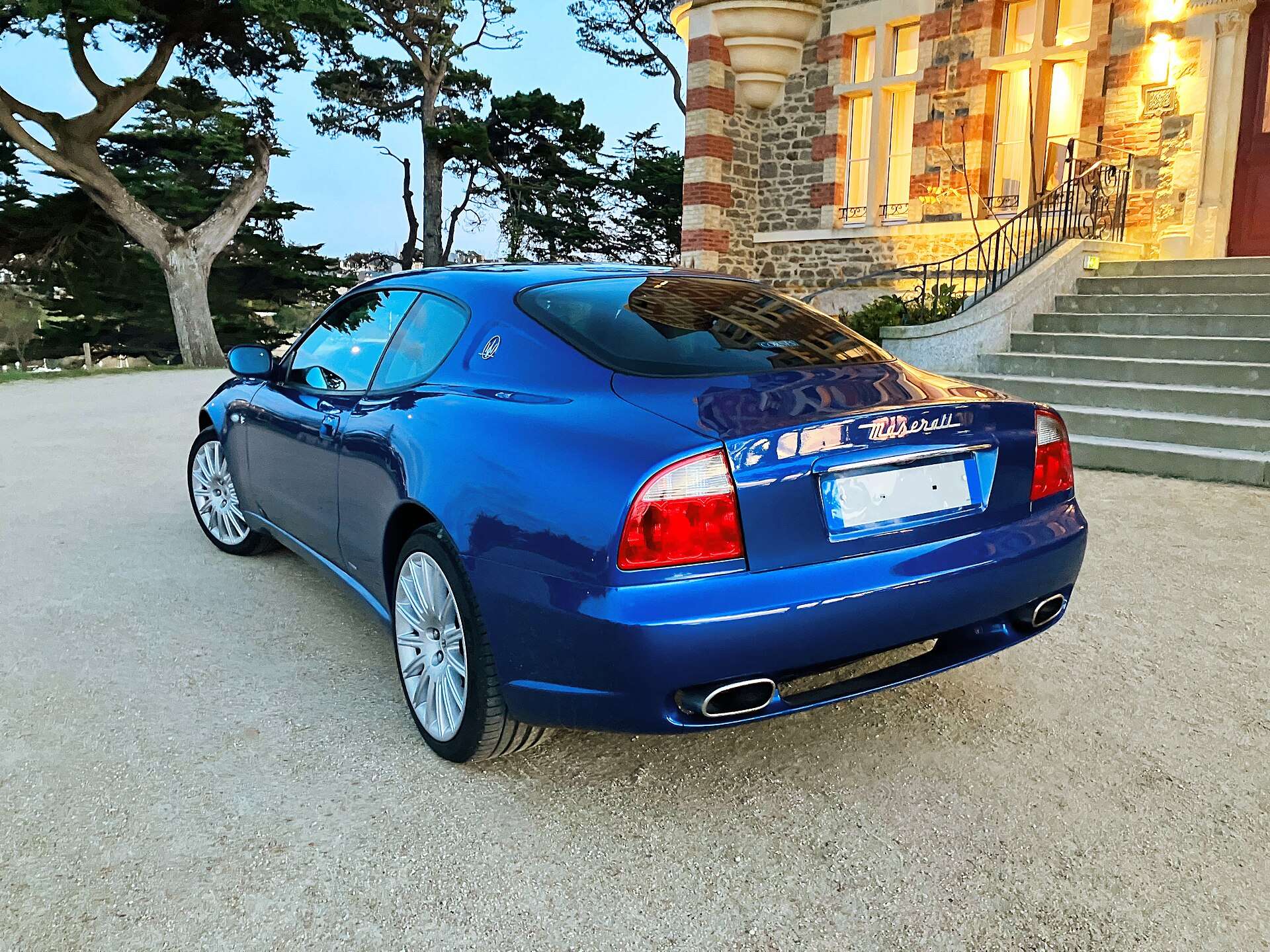
Featured image: blue Maserati Coupé 4200 GT. Photograph by Rundvald, CC BY-SA 4.0, via Wikimedia Commons; locally hosted.
From 3200 GT to a new V8 generation
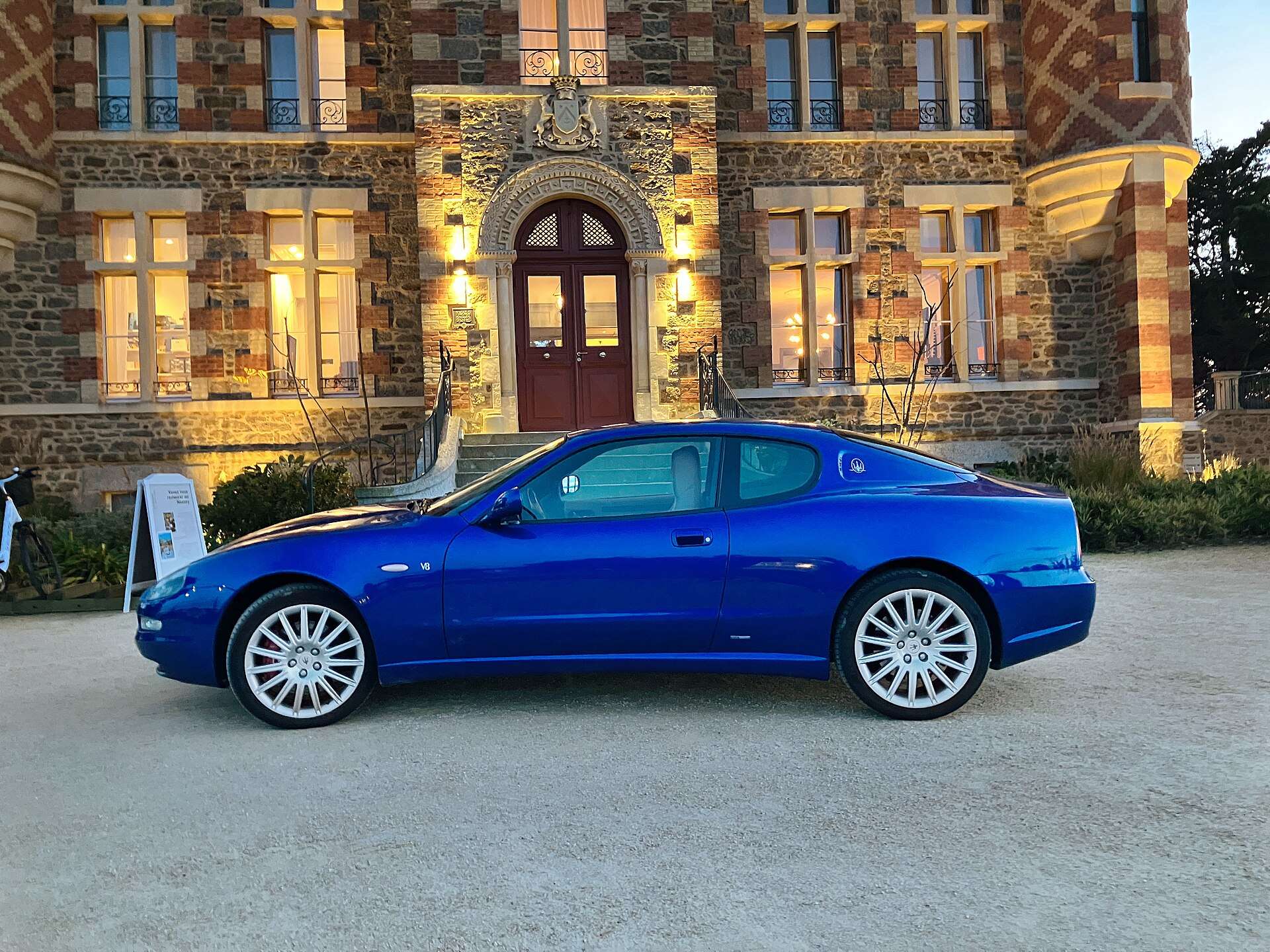
The Coupé retained Giorgetto Giugiaro’s handsome 3200 GT body shape, but it was not simply a facelift. Maserati removed the turbocharged 3.2-litre V8, installed the 4,244cc naturally aspirated F136 engine and moved the gearbox to the rear. The resulting transaxle layout helped distribute mass more evenly, while revised rear lights allowed the car to return to the United States.
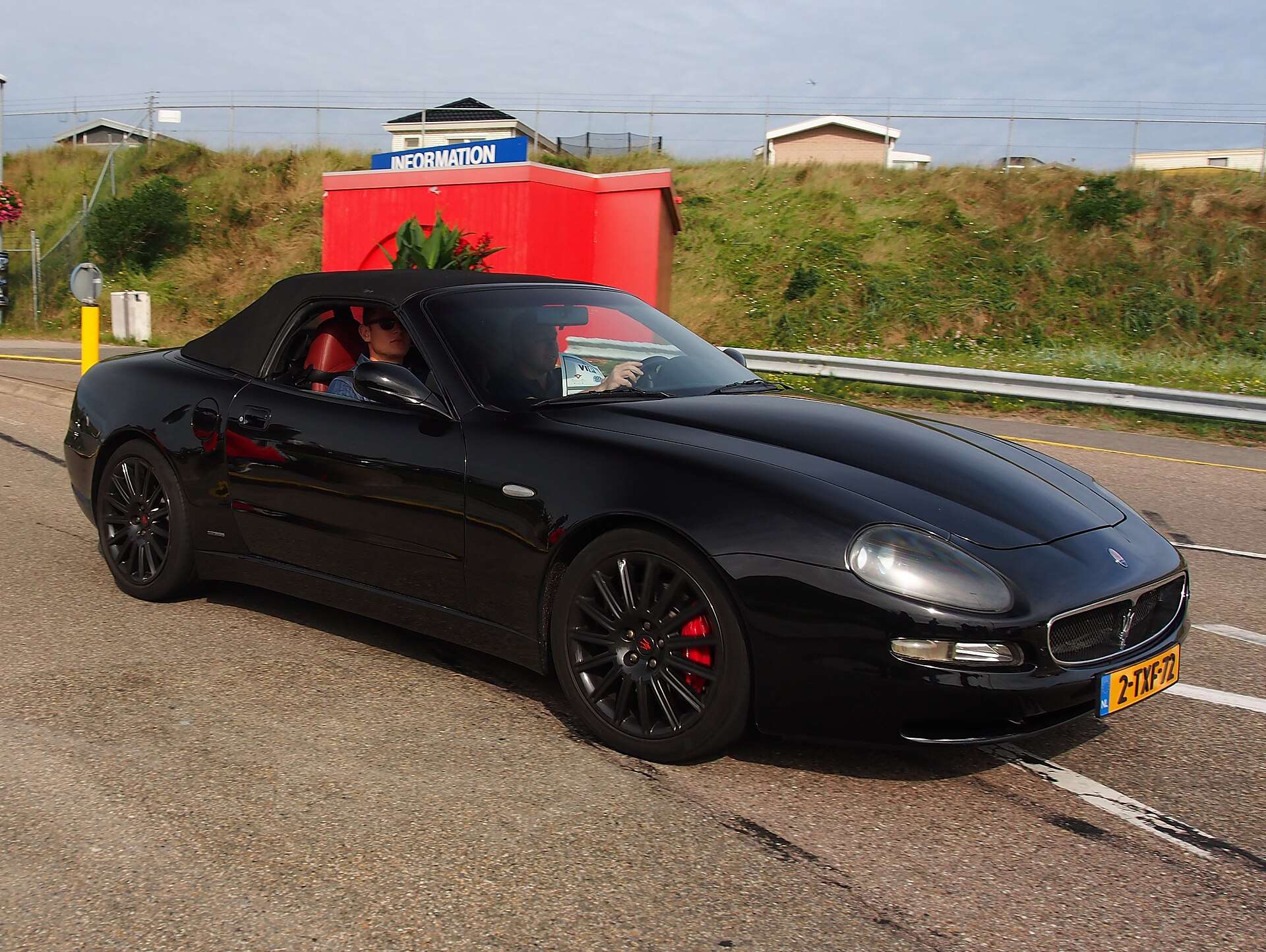
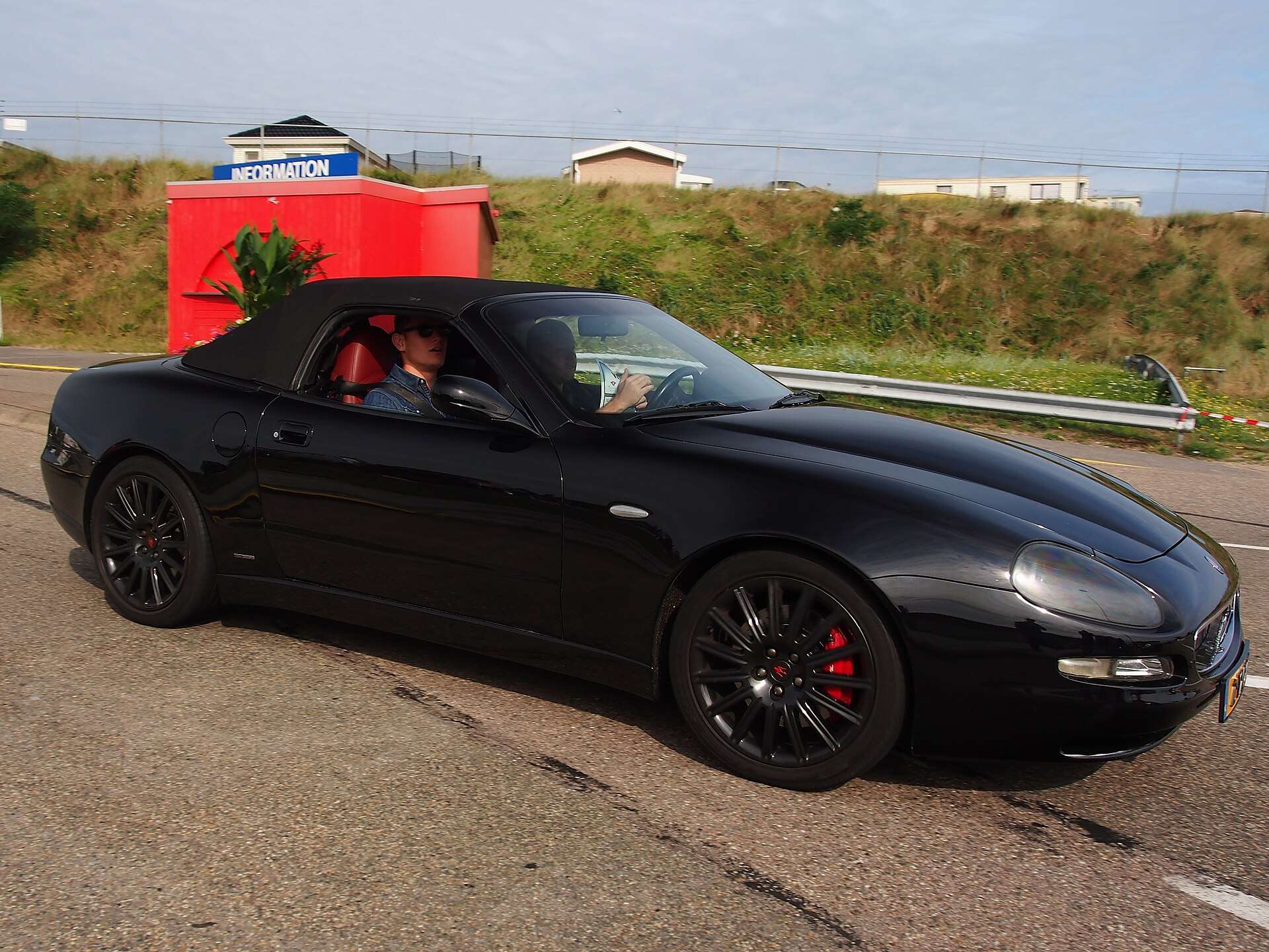
The Spyder had introduced the mechanical package at Frankfurt in 2001. Its wheelbase was shorter than the Coupé’s and it was strictly a two-seater, with a fully powered fabric roof. The Coupé arrived at Detroit in January 2002 and retained genuine occasional rear seating, making it the more practical grand tourer.
Engine, transmission and performance
The dry-sump, 32-valve V8 produced 390hp at 7,000rpm. Maserati quoted a 285km/h top speed for both body styles. A conventional six-speed manual was the rarer transmission; the Cambiocorsa used an electro-hydraulic system to operate a single clutch and the same six-speed transaxle through steering-column paddles.
| Specification | Coupé | Spyder |
|---|---|---|
| Production | 2002–2007 | 2001–2007 |
| Engine | 4,244cc naturally aspirated V8 | |
| Power | 390hp at 7,000rpm | |
| Seats | Four | Two |
| Factory production | 5,404, all versions | 3,889, all versions |
Cambiocorsa can feel clumsy if driven like a torque-converter automatic. Lifting slightly during upshifts helps, but shunting, warning lights or reluctant engagement still need diagnosis. A specialist can read the recorded clutch-wear figure; it should be considered alongside take-up quality and service history.
Love cars you don’t see every day?
Get forgotten cars, surprising motoring stories and the most interesting finds from Unusual Cars by email.
Free to join. No spam. Unsubscribe whenever you like. See our privacy policy.
GT, Cambiocorsa and later changes
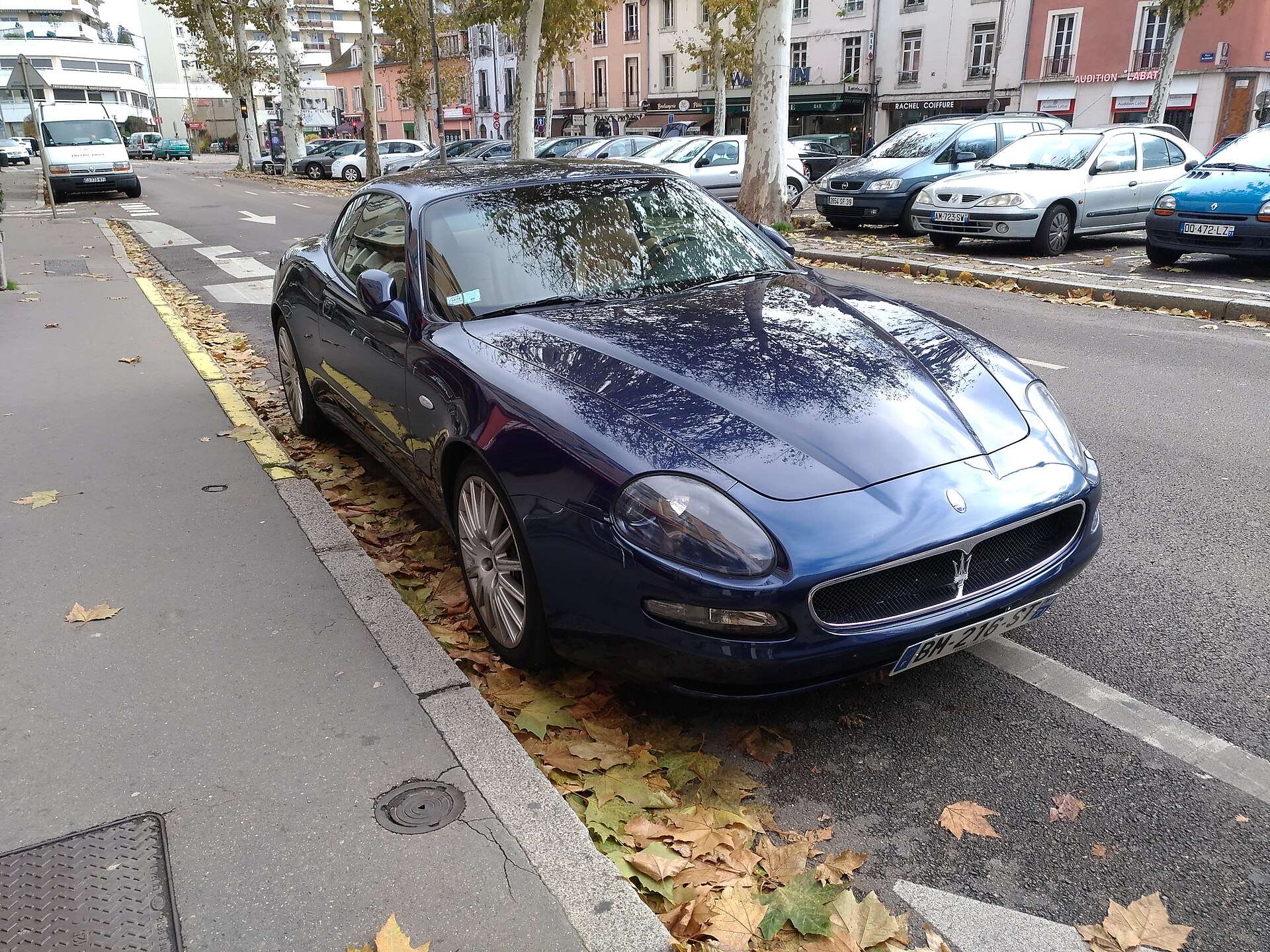
The GT badge identifies the conventional manual, while Cambiocorsa denotes the paddle-operated transmission. Early cars have the purest styling; later examples gained detail and software revisions. The 2004 facelift brought a larger grille and altered bumpers, visually moving the Coupé closer to the GranSport that developed the same platform.
Do not buy on badge or model year alone. Confirm the actual build specification, whether Skyhook adaptive damping is fitted, the date of any clutch and actuator work and the quality of alignment and tyre wear. A car that has been driven and serviced regularly is usually preferable to a long-stored example with deferred maintenance.
What to inspect before buying
Start with a cold engine. Listen for abnormal mechanical noise, look for cam-cover and other oil leaks, confirm stable oil pressure and temperature and inspect the radiator, hoses and coolant tank. Review annual service records rather than accepting a few widely spaced stamps. Exhaust manifolds, catalysts and mounts are expensive when neglected.
On Cambiocorsa cars, obtain a diagnostic printout and test both gentle and brisk shifts. Manual cars need a clean clutch take-up and healthy synchromesh. Check suspension arms, bushes, wheel bearings and dampers; failed Skyhook units and poor geometry can turn an apparently cheap car into a costly project.
Body, cabin and Spyder roof
Inspect accident repairs, panel gaps, wheel rims, underbody corrosion and all drainage points. Cabin leather can shrink, switch coatings become sticky and the heater matrix may leak into the passenger footwell. Test climate control, instruments, seat motors, windows, central locking and infotainment.
For a Spyder, operate the hood several times and inspect its fabric, frame, hydraulic system, rear window and storage well. Water ingress can damage both trim and electronics. The shorter body also deserves a careful check for scuttle shake beyond what is normal for the model.
Sources and further reading
- Maserati Classiche: Coupé history and specifications
- Maserati Classiche: Spyder history and specifications
- PistonHeads UK: Maserati 4200 buying discussion
Continue the Maserati story
Explore the complete Maserati hub. Compare the earlier 3200 GT and the sharper GranSport.
Frequently asked questions
What is the difference between the Maserati 3200 GT and 4200 Coupé?
The 4200 uses a 4.2-litre naturally aspirated V8 and rear transaxle, replacing the 3200 GT’s 3.2-litre twin-turbo V8 and different transmission layout.
Is Cambiocorsa an automatic gearbox?
It is an automated six-speed manual with a single clutch operated electro-hydraulically, not a conventional torque-converter automatic.
How many Maserati Coupés and Spyders were built?
Maserati records 5,404 Coupés and 3,889 Spyders across the GT and Cambiocorsa versions.
What should be checked on a Maserati Spyder roof?
Check the fabric, rear window, frame, hydraulic operation, seals, drains and the storage well for moisture.
What are the main Maserati 4200 buying risks?
Budget for clutch and Cambiocorsa work, suspension and dampers, cooling, oil leaks, exhaust components, electrical equipment and deteriorated cabin trim.