UNUSUAL CARS MODEL GUIDE
The Bentley Turbo R was Crewe’s decisive return to performance. Introduced in 1985, it combined the familiar 6.75-litre turbocharged V8 and formal four-door body with much firmer suspension, wider tyres and sharper steering than the Mulsanne Turbo it replaced.
Quick answer: a good Turbo R feels fast, composed and unmistakably substantial. Buy on structural condition and continuous specialist maintenance, not low mileage alone. Hydraulic servicing, cooling, turbo and fuel systems, suspension wear, corrosion and electrical equipment can each turn a cheap example into a costly project.
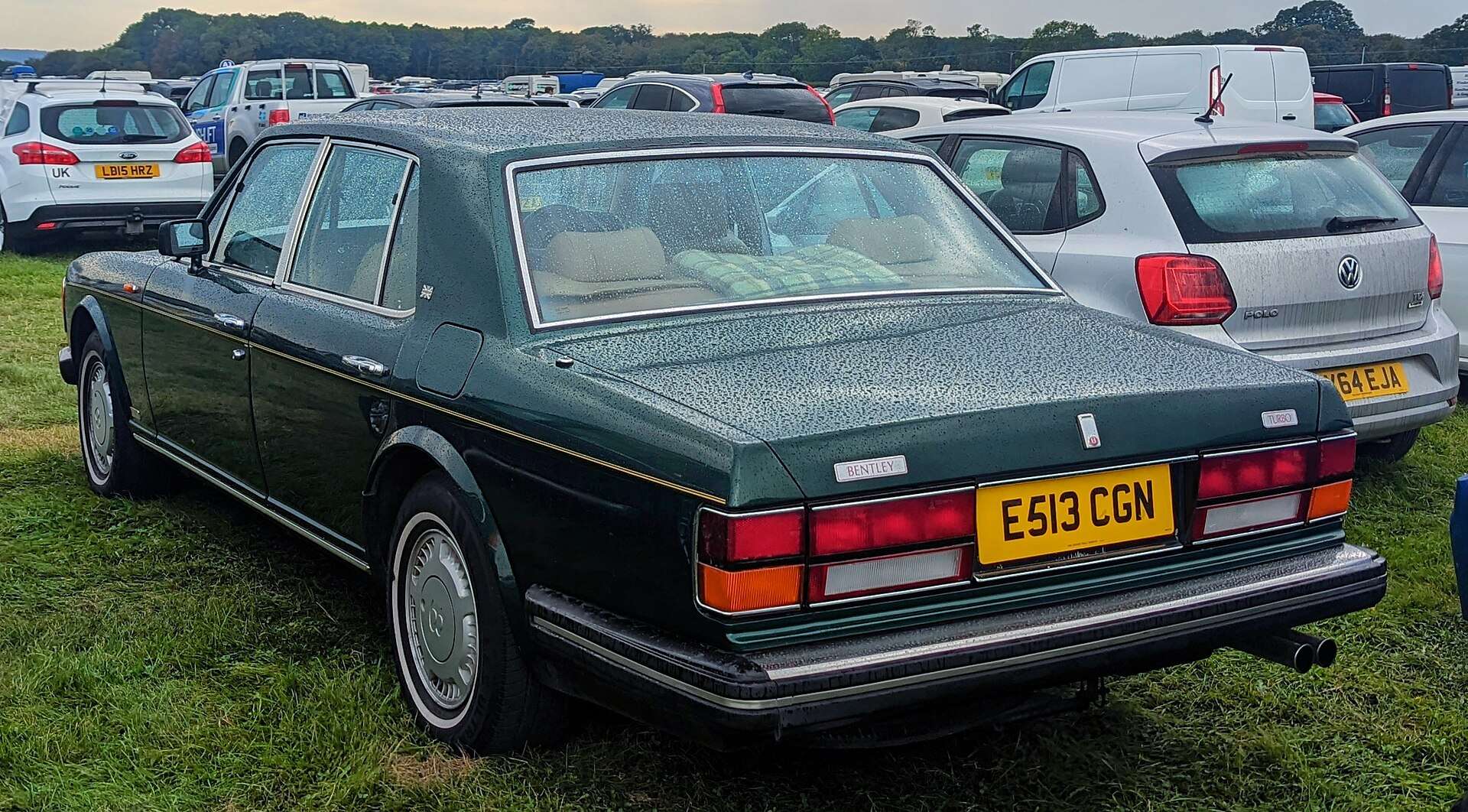
Featured image: green right-hand-drive Bentley Turbo R. Photograph by Calreyn88, CC BY-SA 4.0, via Wikimedia Commons; locally hosted.
Why the Turbo R mattered
The 1982 Mulsanne Turbo restored serious speed to Bentley, but the Turbo R added the chassis discipline needed to use it. Bentley raised roll stiffness by about 50 per cent, fitted wider alloy wheels and lower-profile tyres, retuned damping and revised the steering. The letter R stood for roadholding, and the result established the performance-luxury identity that still defines Bentley.
Early cars used carburettors before Bosch fuel injection arrived for the 1987 model year. Power was officially described as “adequate”, but Bentley’s heritage material now quotes 298bhp for its 1991 collection car, with 0–62mph in about seven seconds and a 135mph maximum. More than 4,000 standard-wheelbase cars were made, plus long-wheelbase derivatives.

Versions and development
| Version | Period | Identification and character |
|---|---|---|
| Early Turbo R | 1985–1986 | Carburettor induction, three-speed automatic and early rectangular dashboard |
| Fuel-injected Turbo R | 1987–1991 | Bosch injection, stronger response and continuing detail improvements |
| Four-speed Turbo R | 1992 onward | GM 4L80-E automatic, revised cabin and later electronic systems |
| New Turbo R / RT | 1996–1997 | Short-lived late cars with Zytek management; RT used a higher-output engine and more overt trim |
Specification varies by year and market, and many cars have acquired later wheels, grilles or lamps. Confirm the chassis number, original build details and engine-management type before ordering parts.
Love cars you don’t see every day?
Get forgotten cars, surprising motoring stories and the most interesting finds from Unusual Cars by email.
Free to join. No spam. Unsubscribe whenever you like. See our privacy policy.
Engine, turbocharger and cooling
The aluminium V8 is durable when coolant chemistry, oil changes and hoses have been respected. Start from cold and listen for persistent tappet noise, exhaust leaks or turbo whine. Check for blue smoke under load, oil leaks, uneven idle and weak boost. Carburettor cars demand knowledgeable set-up; injected cars bring sensors, wiring and fuel-pressure components that also age.
Overheating can damage an otherwise sound engine. Inspect the radiator, expansion tank, water pump, viscous fan, electric fans and every hose, including those hidden beneath the intake. Evidence of regular coolant replacement matters because internal corrosion is expensive to reverse.

Hydraulics, brakes and suspension
The high-pressure mineral-hydraulic system powers the brakes and self-levelling suspension. Warning lamps should extinguish promptly after starting, the brake pedal should feel firm and the rear should maintain the correct ride height. Old accumulators, leaking pumps, tired spheres and contaminated fluid create both safety and financial risk. Ask when the system was last serviced, not merely whether it works today.
Despite its size, a healthy Turbo R should track accurately without wallow. Check front ball joints, bushes, steering rack, rear suspension mounts, dampers and wheel bearings. Uneven tyre wear or vibration may reveal neglected alignment, bent wheels or hidden accident damage.

Body, interior and electrics
Inspect sills, jacking points, wheelarches, lower wings, door bottoms, screen surrounds, boot floor and suspension mounting areas. Vinyl roofs and thick underseal can conceal corrosion. Panel gaps should be consistent and the heavy doors should not drop on their hinges. Replacement brightwork and model-specific trim are costly.
Operate every seat motor, window, lock, mirror, lamp, gauge, air-conditioning mode and audio component. Veneer cracking, shrinking leather and damp carpets are repairable but expensive to correct properly. Water ingress around screens and door seals can also damage wiring and control units.
What is a Turbo R like to own?
The Turbo R is usable in modern traffic and can cover long distances effortlessly, but its 2.4-tonne mass means tyres, brakes, suspension and fuel are never economy-car expenses. Cars improve with regular use; years of inactivity tend to harden seals and expose electrical, fuel and hydraulic faults once recommissioned.
A marque-specialist inspection should include the underside on a lift, hydraulic pressure and leakage, cooling stability, hot oil pressure, boost, gearbox behaviour and a complete electrical test. Service evidence is worth more than cosmetic shine.

Sources and further reading
- Bentley Heritage Collection: 1991 Turbo R
- Bentley: Turbo R anniversary history
- Classics World: Bentley Turbo R buyer’s guide
- Hagerty UK: Bentley Turbo R valuation reference
Continue the Bentley story
Explore the complete Bentley hub. Continue with the Bentley Continental R and Bentley Arnage.
Frequently asked questions
What does the R in Bentley Turbo R mean?
Bentley used R to signify roadholding. The model received firmer suspension, wider tyres and sharper steering than the Mulsanne Turbo.
What engine does a Bentley Turbo R use?
It uses Bentley’s 6.75-litre turbocharged V8. Induction, management and quoted output changed during the model’s long production run.
Are all Bentley Turbo Rs fuel injected?
No. The earliest cars used a carburettor; Bosch fuel injection arrived for the 1987 model year.
What are the main Turbo R buying checks?
Check corrosion, cooling, turbo and fuel systems, hydraulic brakes and self-levelling, suspension, gearbox, electrics and complete specialist history.
Is a low-mileage Turbo R automatically better?
No. Regular use and maintenance are more important than a low odometer reading because long storage can damage seals, fuel systems, hydraulics and electrics.