UNUSUAL CARS MODEL GUIDE
The Ferrari F40 was the company’s uncompromising twin-turbo flagship, unveiled on 21 July 1987 to mark Ferrari’s fortieth anniversary. Its combination of a composite-panelled tubular chassis, 478CV V8, sparse cabin and dramatic Pininfarina body made it the final road car personally presented during Enzo Ferrari’s lifetime.
Quick answer: an F40 is simple in concept but costly to authenticate and restore. Buy only after a marque specialist has checked identity, continuous provenance, accident repairs, chassis tubes and bonded panels, fuel cells or tanks, turbochargers, engine management, gearbox, suspension, brakes, wheels, tyres and the originality of every lightweight component.
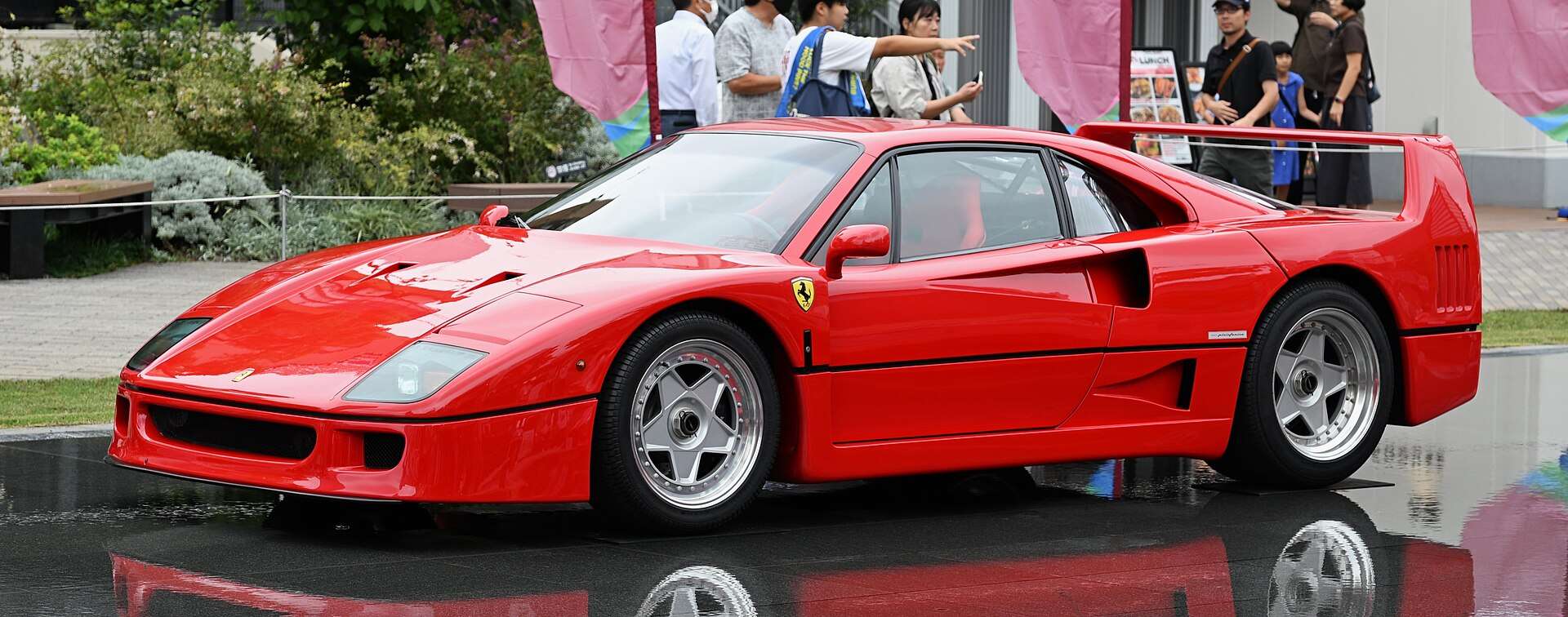
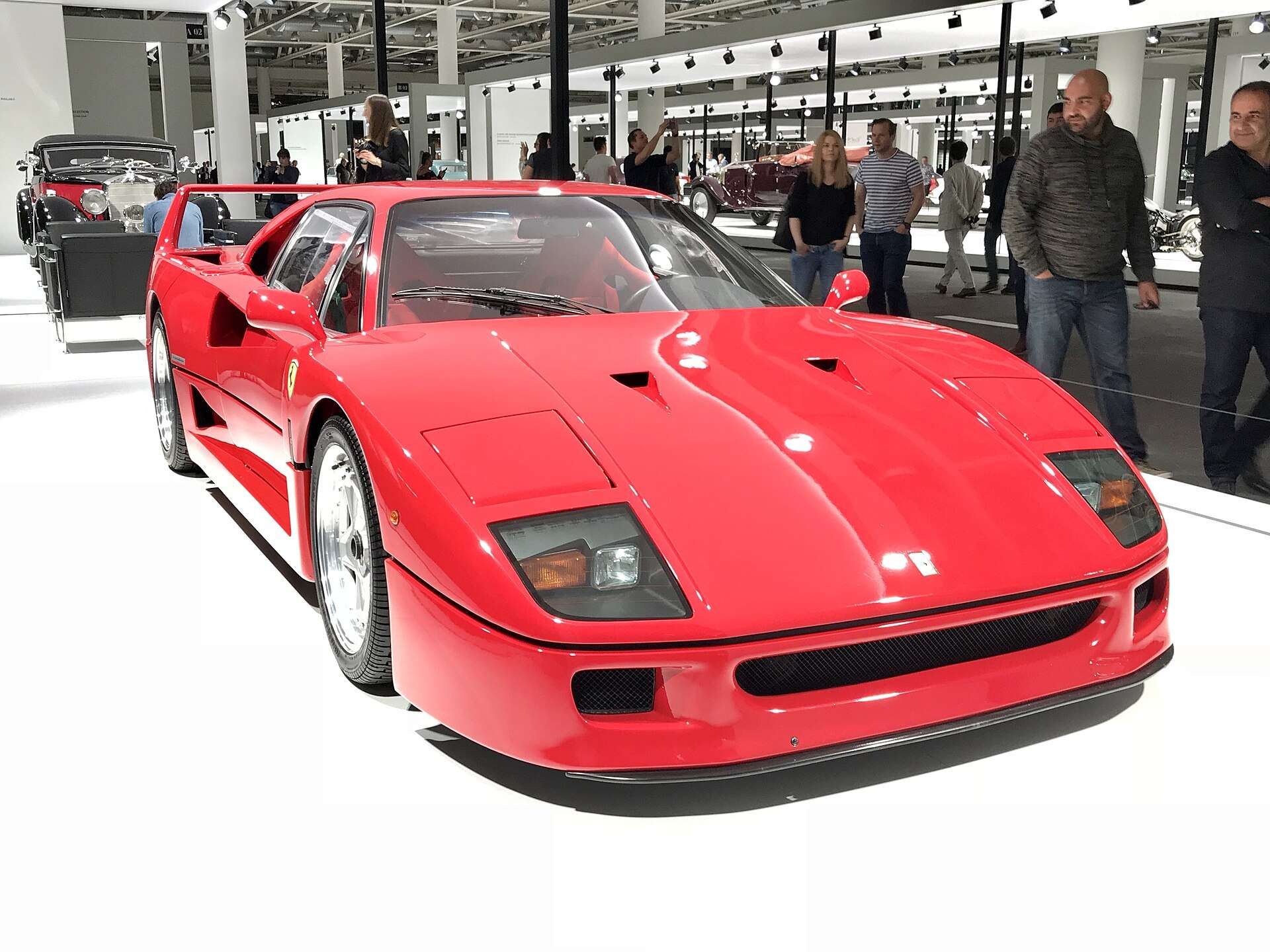
Featured image: red Ferrari F40 front three-quarter. Photograph by TTTNIS, CC0, via Wikimedia Commons; locally hosted.
From 288 GTO Evoluzione to road flagship
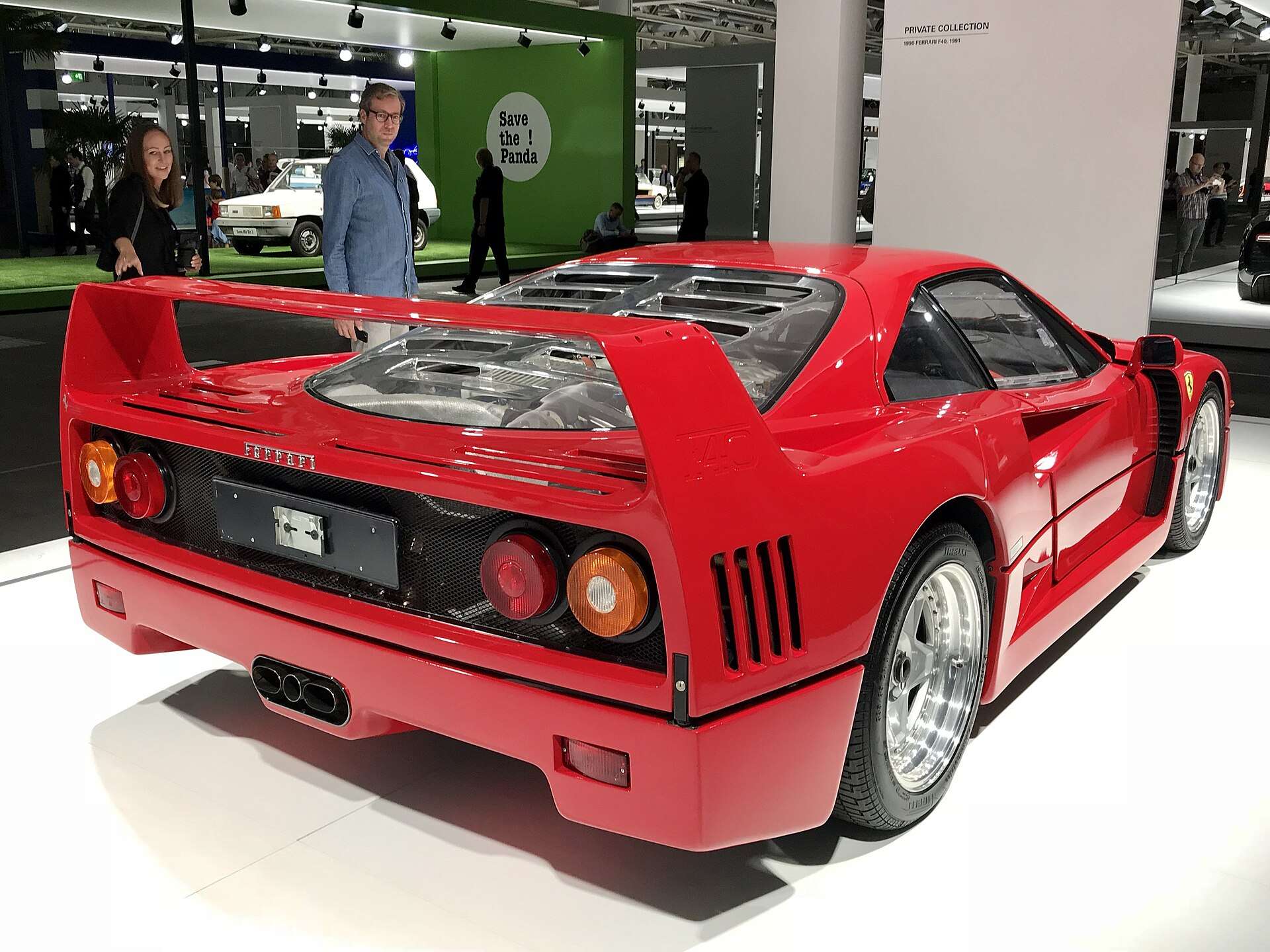
The F40 grew from Ferrari’s experiments with the 288 GTO Evoluzione, but it was developed as a road car rather than a homologation special. Nicola Materazzi led the engineering while Pininfarina shaped a body governed by cooling and high-speed stability. The large rear wing, deep nose, NACA ducts and vented rear screen are functional as well as theatrical.
Ferrari combined a welded tubular steel frame with bonded composite reinforcement and glassfibre, Kevlar and carbon-fibre body panels. Sliding side windows, pull cords, thin carpeting and fixed-back seats made early European cars particularly austere. Later production brought detail changes, including winding windows and adjustable suspension on some markets, so specification should be matched to chassis history rather than judged from a single feature.

Engine and performance
| Specification | Factory figure |
|---|---|
| Engine | 2,936cc 90-degree twin-turbo V8 |
| Output | 478CV at 7,000rpm |
| Transmission | Five-speed manual |
| Dry weight | 1,100kg |
| 0–100km/h | 4.1 seconds |
| Maximum speed | 324km/h |
The dry-sump V8 uses twin IHI turbochargers and intercoolers. Below boost it can feel measured; once the turbines work, torque arrives with the abruptness that defines the car. There is no power steering, anti-lock braking or stability control to disguise the relationship between throttle, rear tyres and road surface.
Love cars you don’t see every day?
Get forgotten cars, surprising motoring stories and the most interesting finds from Unusual Cars by email.
Free to join. No spam. Unsubscribe whenever you like. See our privacy policy.
Identity, history and originality
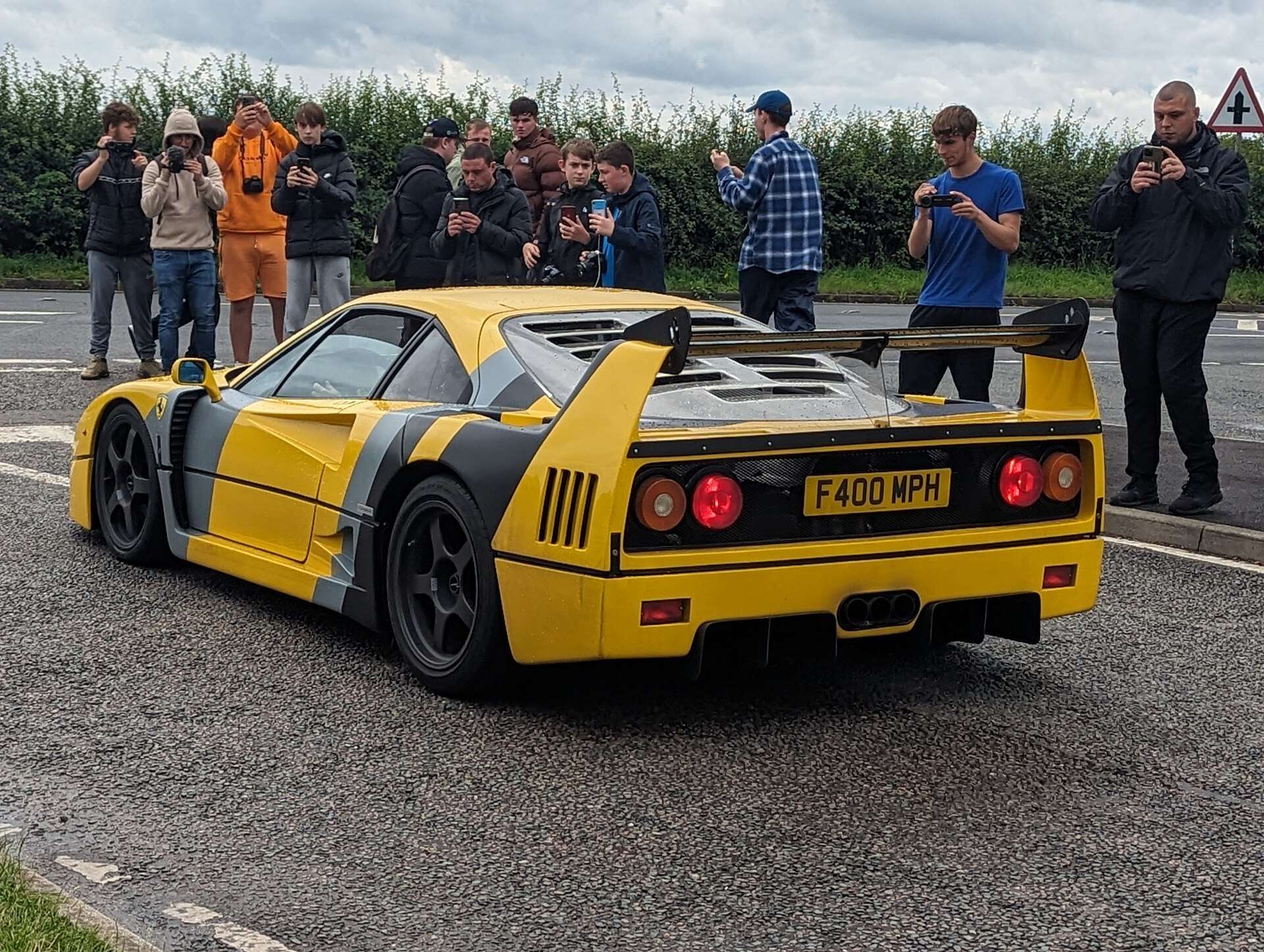
Values make identity the first buying question. Confirm the stamped chassis number, factory assembly number, engine and gearbox details, market specification and complete ownership trail. Ferrari Classiche certification can support the inspection, but it does not replace examination of current condition. Competition conversions, non-standard exhausts, uprated turbos, repainted bodywork and replacement seats are common enough to require careful documentation.
Ferrari built far more F40s than initially anticipated; respected market references place total production at 1,315. Individual cars nevertheless vary greatly through market equipment, accident history and later modification. A low odometer reading without invoices is less useful than evidence of regular exercise, age-sensitive maintenance and sympathetic preservation.

Engine, fuel system and transmission
Start from cold and look for clean oil pressure, even running and controlled smoke. Both turbochargers should build boost evenly without bearing noise, oil leakage or split hoses. Inspect intercoolers, wastegates, ignition, injectors, cooling fans, radiators, water hoses and the dry-sump system. Cars left standing can deteriorate despite tiny mileages.
Fuel arrangements differ by market and build. Flexible racing-style cells have strict replacement lives, while conventional tanks and pumps still demand inspection for contamination, leaks and age. The five-speed gearbox should select cleanly once warm; check synchromesh, clutch weight and release, differential noise, driveshaft joints and fluid leaks. Repairs are specialist, parts-led work rather than routine used-car maintenance.
Chassis, body and accident repairs
Inspect the full tubular structure, bonded composite panels, suspension pick-ups and underbody on a lift. Uneven panel gaps, cracked bonding, disturbed rivets, local paint differences or poor geometry can reveal earlier damage. Composite repair can be excellent when documented, but an invisible cosmetic finish is not proof that the structure was restored correctly.
Check dampers and height adjustment where fitted, bushes, wheel bearings, steering rack, brake discs and calipers. Original magnesium wheels need crack and corrosion assessment. Correct tyres are critical: date codes, storage and heat cycles matter as much as tread. The cabin should retain its lightweight materials, instruments, harness arrangements and simple fittings, with allowance for legitimate market differences.

Sources and further reading
- Ferrari: Enzo’s Dream and the F40 launch
- Ferrari Magazine: the F40 revisited
- Auto Express: Ferrari F40 buying guide
- Hagerty: Ferrari F40 production and valuation reference
Continue the Ferrari story
Explore the complete Ferrari hub. Continue with the Ferrari F355 and Ferrari Testarossa family.
Frequently asked questions
How much power does a Ferrari F40 have?
Ferrari quoted 478CV from the 2.9-litre twin-turbo V8 in European specification.
How many Ferrari F40s were built?
Published specialist references commonly record 1,315 road cars, although individual market specifications vary.
Does the Ferrari F40 have power steering or ABS?
No. The F40 has unassisted steering and no anti-lock braking or electronic stability control.
What is the Ferrari F40 body made from?
It combines a tubular steel chassis with bonded composite reinforcement and lightweight glassfibre, Kevlar and carbon-fibre panels.
What should be checked before buying an F40?
Verify identity and provenance, then inspect accident repairs, chassis and composites, fuel system, turbos, engine, gearbox, suspension, brakes, wheels, tyres and originality.