UNUSUAL CARS MODEL GUIDE
The Lamborghini 350 GT and 400 GT established the company before the Miura made it famous. Both were Touring-bodied front-engined grand tourers built around the Bizzarrini-derived V12, but the 1964 350 GT used a 3.5-litre engine and light Superleggera aluminium body while the 1966 400 GT 2+2 gained a four-litre engine, Lamborghini gearbox, steel panels and genuine rear seats.
Quick answer: Lamborghini records 150 standard 350 GTs and 250 400 GTs. These are rare, hand-built cars whose value depends on identity, originality and restoration quality. Commission a marque specialist to confirm chassis and engine numbers, Touring construction, corrosion, aluminium or steel panel condition, V12 health, six-carburettor setup, gearbox, brakes, suspension, wiring and the completeness of irreplaceable trim.
Featured image: Lamborghini 350 GT. Photograph by MrWalkr, CC BY-SA 4.0, via Wikimedia Commons; locally hosted.
How Lamborghini reached production
The 350 GTV concept appeared in 1963, but the production car required substantial development. Paolo Stanzani’s team softened Giotto Bizzarrini’s competition-minded 60-degree V12 for road use, while Carrozzeria Touring reshaped Franco Scaglione’s concept into a quieter, more practical coupé. The production 350 GT debuted at Geneva in March 1964, less than a year after Automobili Lamborghini was formed.
Its 3,464cc V12 produced 270 CV and drove through a five-speed ZF gearbox. Independent suspension and four-wheel disc brakes were unusually sophisticated for a new manufacturer. The cabin used a 2+1 arrangement with a small central rear seat, natural leather and wool carpeting. Touring’s Superleggera method mounted aluminium panels over a fine supporting framework, saving weight but creating specialised restoration work sixty years later.

From 350 GT to 400 GT 2+2
A small number of late 350 GT-style cars received the enlarged engine and are often called 400 GT Interim models. The definitive 400 GT 2+2 arrived in 1966. Its roof was raised at the rear, the window and boot shapes changed and twin circular headlamps replaced the 350 GT’s oval units. Almost every panel differed despite the family resemblance.
The 3,929cc V12 produced 320 CV and more useful torque. Lamborghini replaced the ZF transmission with its own five-speed gearbox. Steel outer panels replaced much of the 350 GT’s aluminium and the cabin gained two separated rear seats. The result was a more mature four-seat grand tourer and a useful foundation for later front-engined Lamborghinis.

Specifications and identification
| Model | 350 GT | 400 GT 2+2 |
|---|---|---|
| Production | 1964–1966 | 1966–1968 |
| Engine | 3,464cc V12, 270 CV | 3,929cc V12, 320 CV |
| Gearbox | Five-speed ZF | Five-speed Lamborghini |
| Seating | 2+1 | 2+2 |
| Body | Touring Superleggera, mainly aluminium | Touring design, mainly steel panels |
Do not identify a car from lamps or badges alone. Production changes, period repairs and later restorations can blur the distinctions, and the Interim cars require individual research. Record the chassis, engine and body numbers, compare them with factory documentation and obtain a Polo Storico or respected registry opinion before accepting claims about specification or matching numbers.

Love cars you don’t see every day?
Get forgotten cars, surprising motoring stories and the most interesting finds from Unusual Cars by email.
Free to join. No spam. Unsubscribe whenever you like. See our privacy policy.
Body, frame and restoration quality
Inspect the complete tubular platform and Touring support structure on a lift. Moisture can become trapped where unlike metals meet, so apparently attractive paint may conceal corrosion in the steel framework or reaction around aluminium panels. On the 400 GT, check the steel outer body, sills, floors, wheelarches, door bottoms, screen surrounds and suspension pick-up areas.
Panel shape, shut lines and glass fit reveal whether restoration was entrusted to people who understood hand-built Touring bodies. Bonnet, boot, bumpers, lamps, handles and brightwork are difficult to replace. Ask for photographs and invoices from any bare-metal work. A glossy repaint without documentary evidence is less reassuring than an older finish over a known sound structure.

V12, carburettors and driveline
Arrange a cold start, compression or leak-down testing and a long road test. The engine should develop oil pressure promptly, warm without overheating and restart cleanly. Persistent smoke, coolant loss, fuel leaks, timing-chain noise or low pressure require specialist diagnosis. Six carburettors demand correct jetting and synchronisation; an uneven idle may reflect setup, ignition or deeper mechanical wear.
The ZF gearbox in the 350 GT and Lamborghini transmission in the 400 GT have different parts requirements, but both should select every ratio without jumping out or excessive noise. Inspect clutch operation, prop shaft, differential and half-shafts. Brakes, steering and independent suspension must be rebuilt with correct components rather than made merely roadworthy with convenient substitutes.

Cabin, provenance and buying judgement
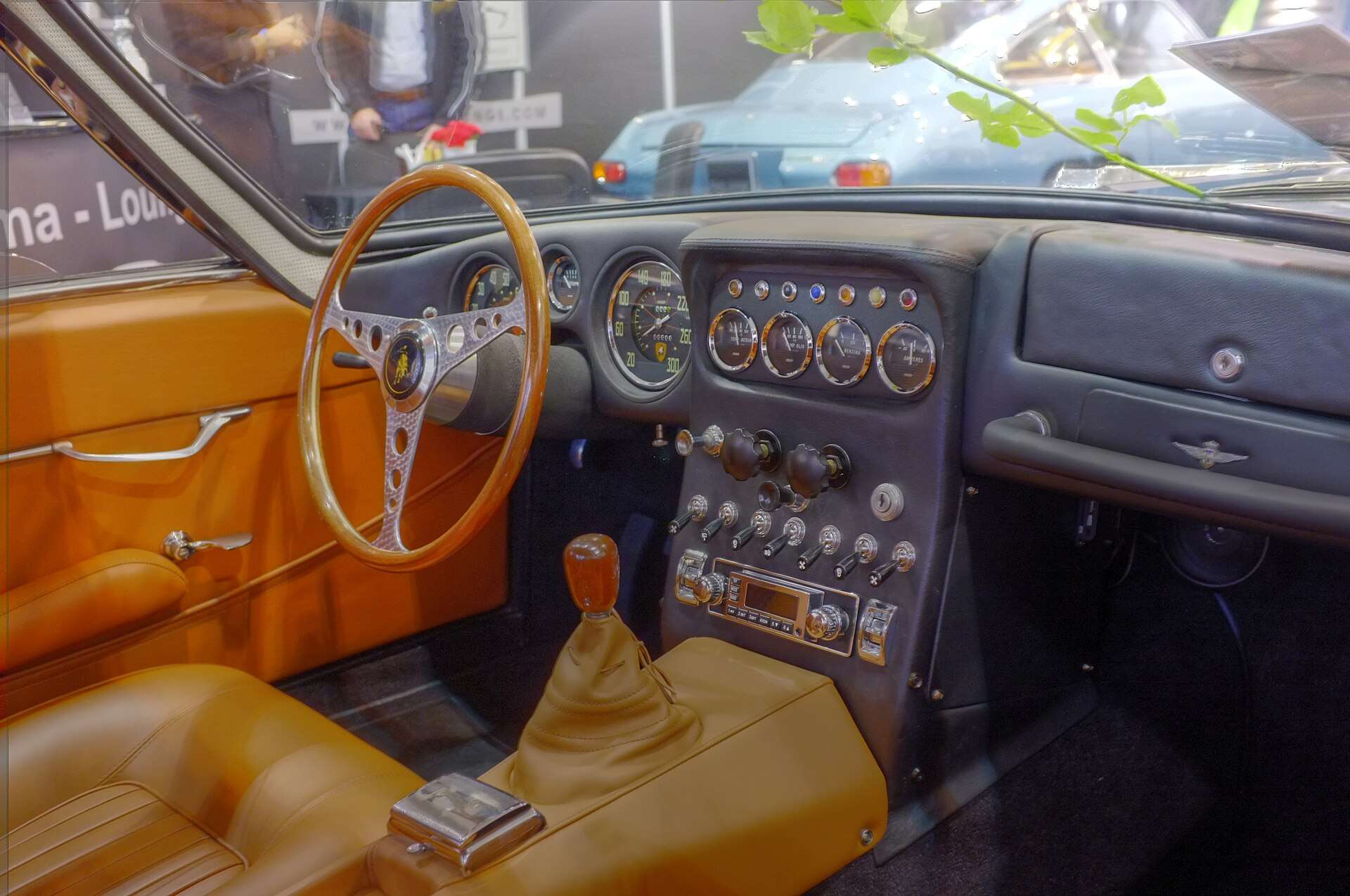
Original instruments, switches, steering wheel, seats, trim patterns and luggage fittings matter because replacements may need to be made by hand. Check every gauge, light, wiper, heater and window. Leather can be renewed, but the best restorations preserve the correct grain, colours, carpets and hardware rather than imposing a modern interpretation.
UK buyers should establish whether a car was supplied new in right-hand drive or converted later, and by whom. Trace ownership, registration changes and restoration work across every market in which it lived. Books, tools, correspondence and period photographs can be as important as mileage. Buy the best documented structure and mechanical condition available; rectifying an incomplete or inaccurately restored example can exceed any apparent saving.
Sources and further reading
- Lamborghini: 350 GT history and specifications
- Lamborghini: 400 GT history and specifications
- Lamborghini: company milestones
- Goodwood Classic Solutions: Lamborghini 350 GT buyer’s guide
- Hagerty: Lamborghini 400 GT history
Continue the Lamborghini story
Explore the complete Lamborghini hub. Continue with the Lamborghini Espada and Lamborghini Miura.
Frequently asked questions
What was Lamborghini’s first production car?
The 350 GT, presented at the 1964 Geneva Motor Show, was Lamborghini’s first production model.
What is the difference between a 350 GT and 400 GT?
The 400 GT has a four-litre V12, Lamborghini gearbox, revised steel body and 2+2 seating; the 350 GT has a 3.5-litre V12, ZF gearbox and mainly aluminium 2+1 body.
How many 350 GT and 400 GT cars were made?
Lamborghini states 150 standard 350 GTs and 250 examples of the 400 GT.
Were right-hand-drive cars made?
Right-hand-drive examples exist, but buyers should verify whether an individual car was factory-built or later converted.
What should be checked before buying one?
Authenticate its identity, then inspect the Touring structure, panels, V12, carburettors, cooling, gearbox, brakes, suspension, wiring, trim and restoration records.