UNUSUAL CARS MODEL GUIDE
The Reliant Regal was the three-wheeler that established Reliant as a serious British vehicle manufacturer long before the Robin. Built from 1953 to 1973, it evolved from an aluminium-bodied, Austin-powered economy car into the glassfibre 3/25 and 3/30 families and their famous Supervan derivatives.
Quick answer: The later 3/25 and 3/30 are the most usable Regals, while the Supervan III has the strongest cultural recognition. Buyers should prioritise chassis condition, correct identity, cooling and lubrication, steering and brake health, and complete model-specific trim.
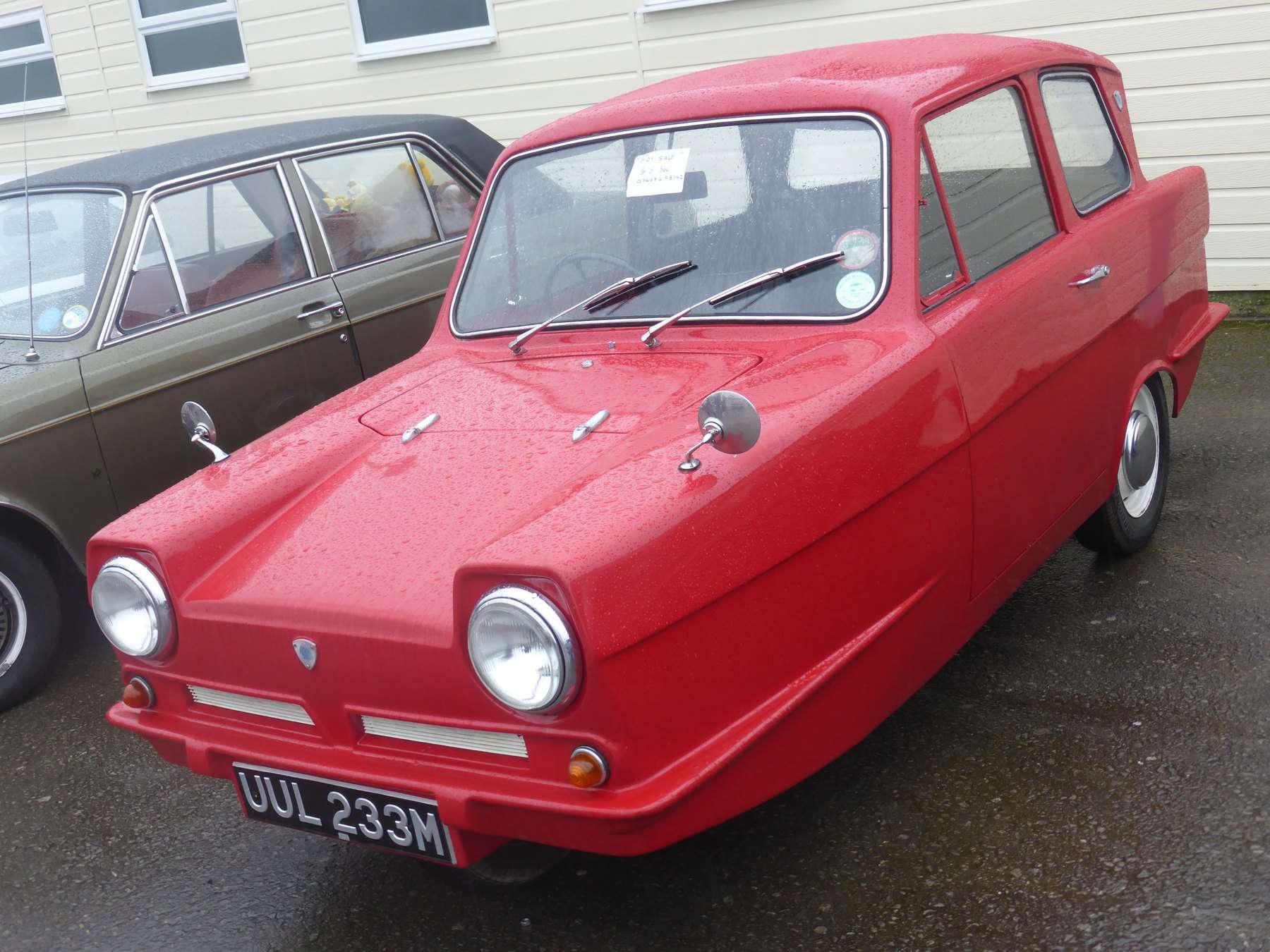
Featured image: Reliant Regal and Supervan: History, Models and Buying Guide. Photograph by andreboeni, CC BY 2.0, via Wikimedia Commons; locally hosted.
From Regent successor to a three-wheeled family car
Reliant introduced the Regal in 1953 as a more car-like successor to its Regent utility vehicles. Early cars combined a single steered front wheel with a rear-driven axle and used the 747cc side-valve four-cylinder engine derived from Austin Seven practice. Their light construction and tricycle classification helped keep purchase and running costs low.
The earliest bodies used an ash frame with aluminium skin. Reliant progressively adopted glassfibre during the 1950s, gaining experience that later shaped the Sabre, Scimitar and Robin. Coupé, saloon, convertible and van forms appeared across the first six marks, so an early Regal must be identified by chassis details and period documentation rather than appearance alone.

Regal generations and the alloy-engine turning point
The decisive change came with the Regal 3/25 in 1962. Reliant replaced the old side-valve unit with its own water-cooled 598cc aluminium overhead-valve engine and adopted sharper glassfibre bodywork. The model name referred to three wheels and a claimed 25 bhp, although specifications changed during production.
In 1968 the 3/30 introduced a 701cc version of the alloy engine with approximately 30 bhp. The 21E trim added a package of 21 equipment items, including brighter exterior details and a more fully equipped cabin. These late cars are the closest Regal relatives of the Robin that replaced the range in 1973.

Love cars you don’t see every day?
Get forgotten cars, surprising motoring stories and the most interesting finds from Unusual Cars by email.
Free to join. No spam. Unsubscribe whenever you like. See our privacy policy.
Supervan, Supervan II and Supervan III
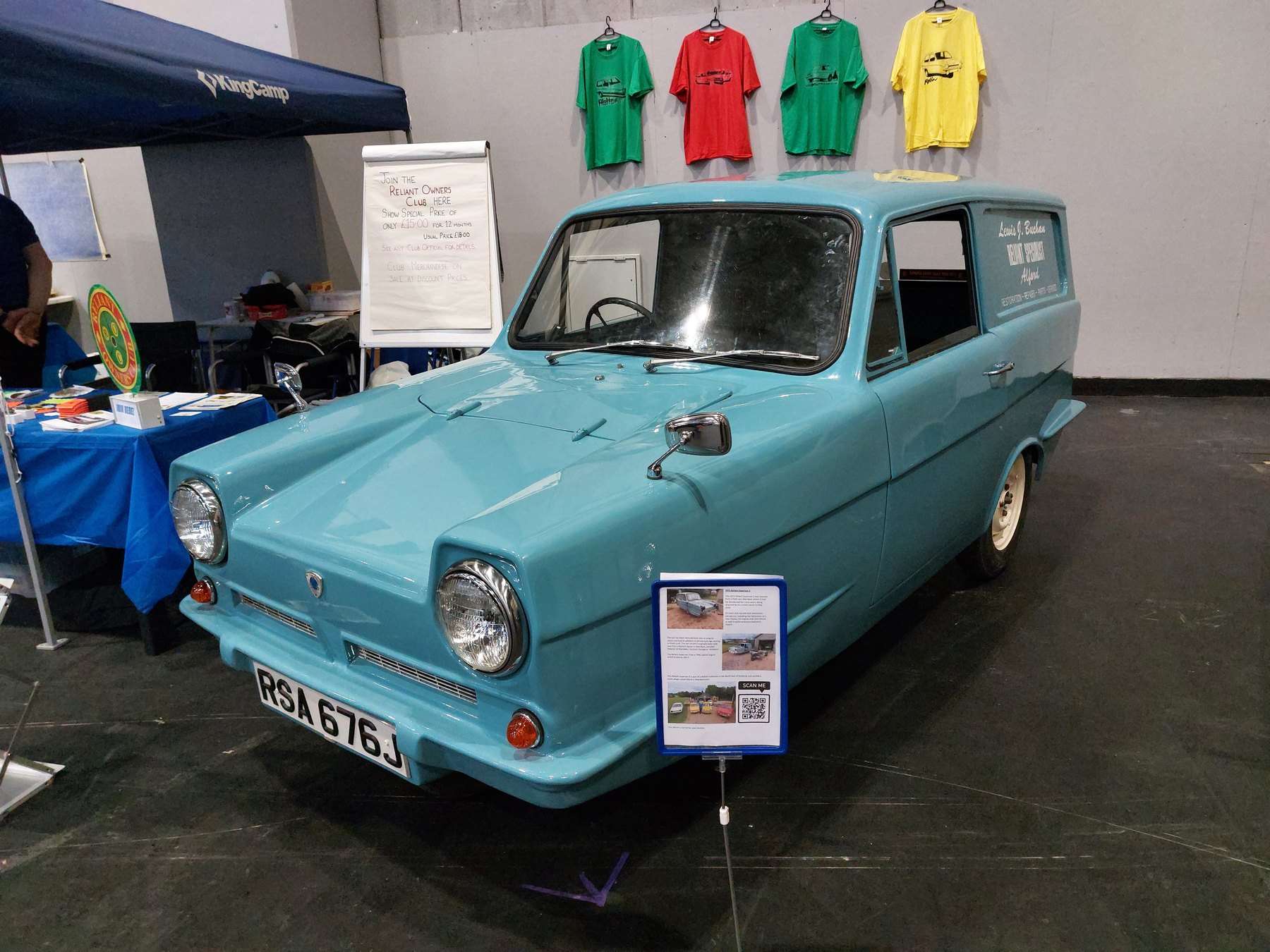
Reliant’s small vans followed the mechanical development of the saloons. The first Supervan arrived in 1966 with the restyled 3/25 Super front and 598cc engine. The 1967 Supervan II used an updated engine and carburettor, while the 701cc Supervan III accompanied the 3/30 from 1968.
The vans were working vehicles, not novelty props. Fleets and tradespeople valued their low running costs, enclosed load space and ability to be driven under the licence rules of the period. The Reliant Motor Club notes that Supervan III sales had overtaken the saloon by 1970.
The Trotters’ van was not a Robin
The yellow van associated with Only Fools and Horses is routinely called a Reliant Robin, but the programme used a Regal Supervan III. That distinction matters because the body, period and model identity are different. Several vehicles appeared during production, while the familiar DHV 938D registration became part of British television culture.
A television-style paint scheme can increase attention but does not prove authenticity. Buyers should establish the underlying chassis number, original registration and body type, then value a replica as a replica unless documented production history supports a stronger claim.

Chassis, body and mechanical checks
Glassfibre panels do not rust, but the steel chassis, suspension mounts, brake pipes and fasteners do. Inspect the front crossmember and steering mountings, outriggers, rear suspension areas and any old patches. On very early aluminium-bodied cars, check the ash structure and corrosion where dissimilar materials meet.
The alloy engine needs clean oil, stable coolant and an unobstructed radiator. Listen for bearing noise, check oil pressure hot, inspect the water pump and hoses, and look for evidence of frost or overheating damage. Steering play, worn kingpins, brake imbalance and old tyres can make a light three-wheeler feel far worse than it should.

Choosing a Regal or Supervan
A 3/25 or 3/30 saloon is the sensible introduction because parts knowledge is good and the later mechanical package is more usable. Early Mk I–VI cars are rarer and demand greater tolerance for period performance and scarce fittings. Supervans command attention and can cost more, especially when restored in television livery.
Buy the most complete, structurally sound and accurately identified example available. Original glass, trim, lamps and commercial fittings can take longer to find than ordinary service parts. A club inspection and a file of invoices are more valuable than a fresh respray.

Continue the Reliant story
Explore the complete Reliant hub. Continue with Reliant Robin and Reliant Rialto.
Frequently asked questions
Is the Only Fools and Horses van a Reliant Robin?
No. The Trotters' van is a Reliant Regal Supervan III, although it is frequently misidentified as a Robin.
When was the Reliant Regal made?
Reliant built the Regal family from 1953 until 1973, when the Robin replaced it.
What is the difference between a Regal 3/25 and 3/30?
The 3/25 introduced Reliant's 598cc aluminium engine; the 3/30 used the enlarged 701cc version and arrived in 1968.
Can a Reliant Regal rust?
The glassfibre body does not rust, but the steel chassis and running gear can corrode severely. Very early cars also require checks of their ash and aluminium structure.
What should be checked first when buying one?
Confirm the vehicle's identity, then inspect the chassis, front suspension and steering, brakes, tyres, cooling system and completeness.