
The Vauxhall Chevette began as a compact rear-wheel-drive hatchback, but Dealer Team Vauxhall turned it into one of Britain’s defining rally cars. The restrained HS and dramatically widened HSR are now often confused with replicas, making their real history especially worth understanding.
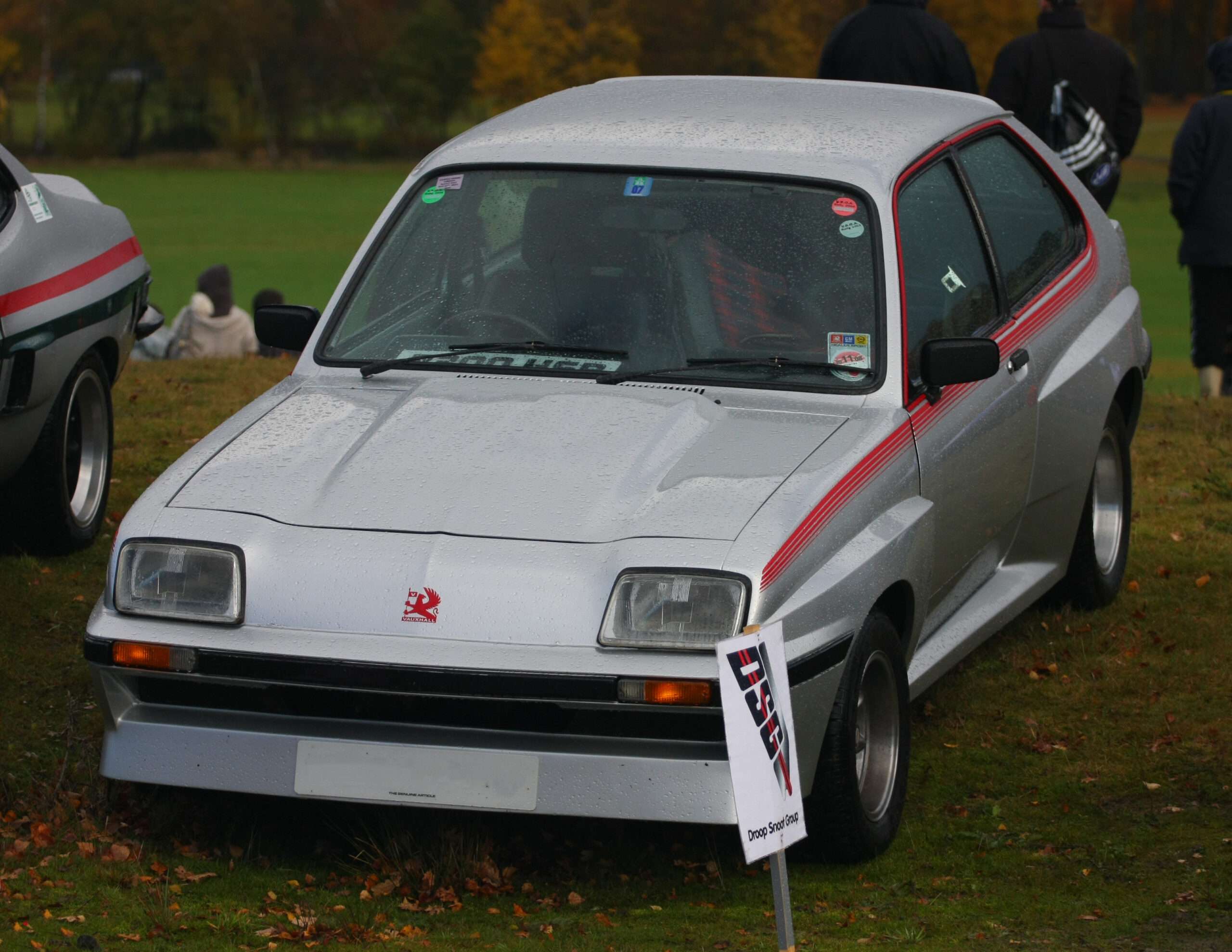
1. The Chevette was part of a global GM family
Vauxhall’s hatchback belonged to General Motors’ international T-car programme. Related models were built in Europe, Asia, Australia and the Americas. The HS therefore began with a very ordinary global small-car architecture before being transformed for British rallying.
2. The HS engine was almost twice the size of the ordinary Chevette’s
Most British Chevettes used a 1,256cc engine. The HS received a 2,279cc, 16-valve version of Vauxhall’s slant-four, a five-speed gearbox and extensive chassis changes. FIA homologation form 649 records the 2,279cc capacity, four cylinders and rear-wheel drive.
3. It was a genuine Group 4 homologation special
The FIA records the Chevette HS 2300 under homologation number 649, effective from 2 November 1976. That paperwork defines the competition model and its approved evolutions. It does not, by itself, prove that any wide-arched car advertised today is an authentic HS or HSR.
4. The original HS was much less visually extreme than the HSR
The road-going HS is recognised for its silver paint and restrained period detailing. The later HSR evolution gained much broader composite bodywork and became the shape most people associate with works rally Chevettes. “HSR” is frequently applied to replicas that merely imitate those arches.
Love cars you don’t see every day?
Get forgotten cars, surprising motoring stories and the most interesting finds from Unusual Cars by email.
Free to join. No spam. Unsubscribe whenever you like. See our Privacy Policy.
5. The HSR was homologated through an evolution of the HS
The FIA’s extension list for homologation 649 records changes covering bodywork, suspension, clutch and gearbox ratios in April 1980. This is the documentary route behind the HSR’s evolution—not a completely unrelated model suddenly appearing with wider arches.
6. Dealer Team Vauxhall gave it a distinct competition identity
The rally programme was closely associated with Dealer Team Vauxhall rather than being remembered simply as a generic factory effort. Drivers including Pentti Airikkala helped make the Chevette a major part of British rally culture, and the model remains highly visible in historic competition.
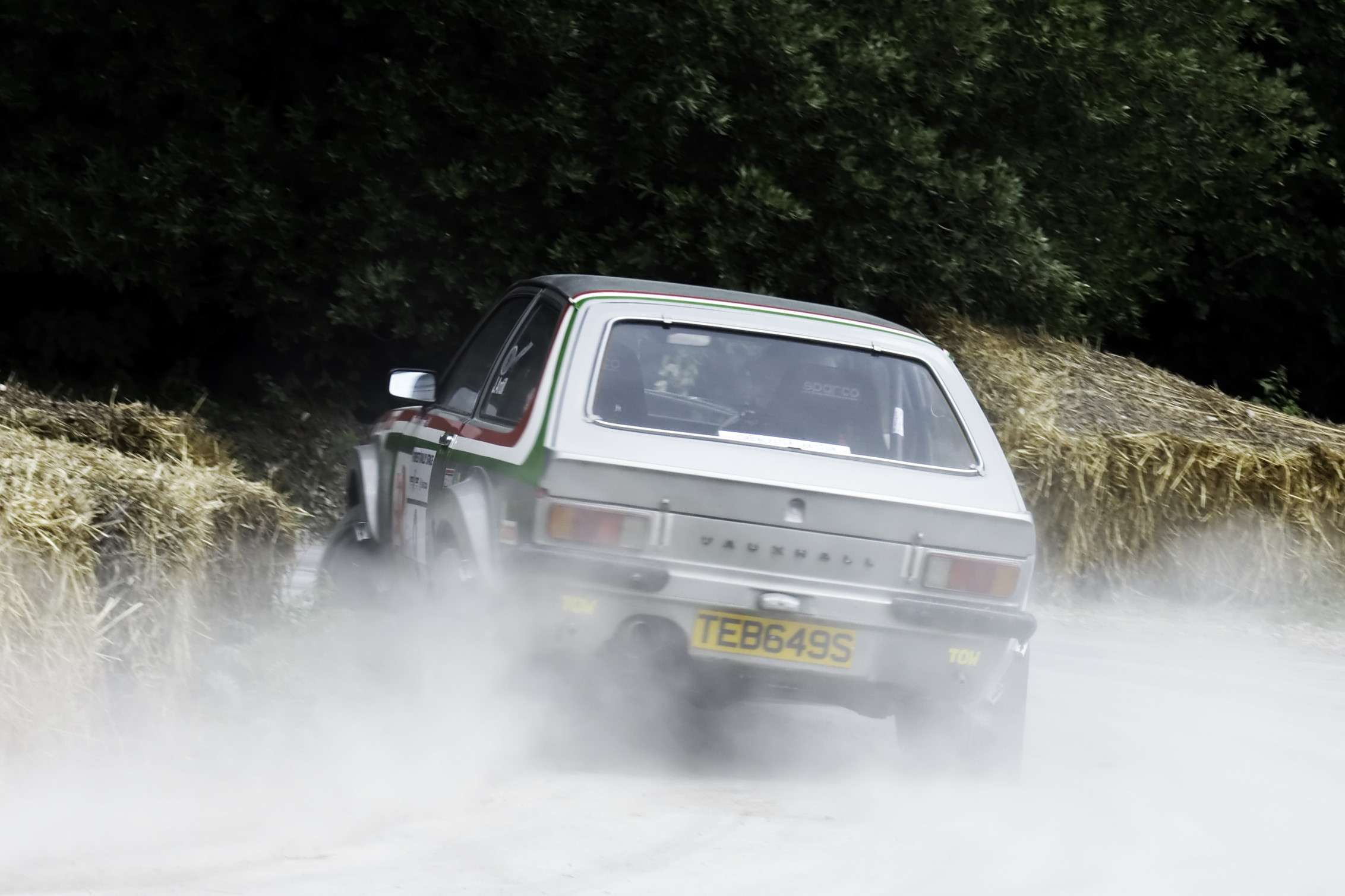
7. Competition specifications varied enormously
Road cars, works machines, customer rally cars and later historic competitors can have very different engines, dry-sump systems, gearboxes, suspension and brakes. A single power figure copied from the internet cannot describe every “HSR”. Any specific claim needs to be tied to a particular car and period specification.
8. Many surviving wide-arched cars are honest replicas
A replica can be an excellent and usable competition car, often with later Vauxhall red-top, Ford or V8 power. The problem begins only when appearance is used to claim genuine HS or HSR provenance. Chassis identity, registration history, period records and restoration photographs matter more than decals.
9. The ordinary Chevette was built at enormous scale by comparison
Vauxhall says Ellesmere Port produced more than a quarter of a million Chevettes. That makes the HS/HSR story more striking: a familiar mass-market hatchback became the basis of a specialised rally programme, while ordinary examples have themselves become scarce on British roads.
10. Its layout now feels more exotic than it did in period
A small three-door hatchback with a longitudinal engine and rear-wheel drive was straightforward in the 1970s. Modern hot hatches are overwhelmingly front- or four-wheel drive. The Chevette’s simple proportions, light shell and driven rear axle are now a major part of its nostalgic appeal.
Learn how to distinguish versions and assess a surviving car in our complete Vauxhall Chevette HS and HSR guide. Browse the full collection through the 10 Things hub.
Research basis: FIA Historic Database homologation 649 and Vauxhall/Stellantis heritage material. Individual-car provenance must be verified independently.