UNUSUAL CARS MODEL GUIDE
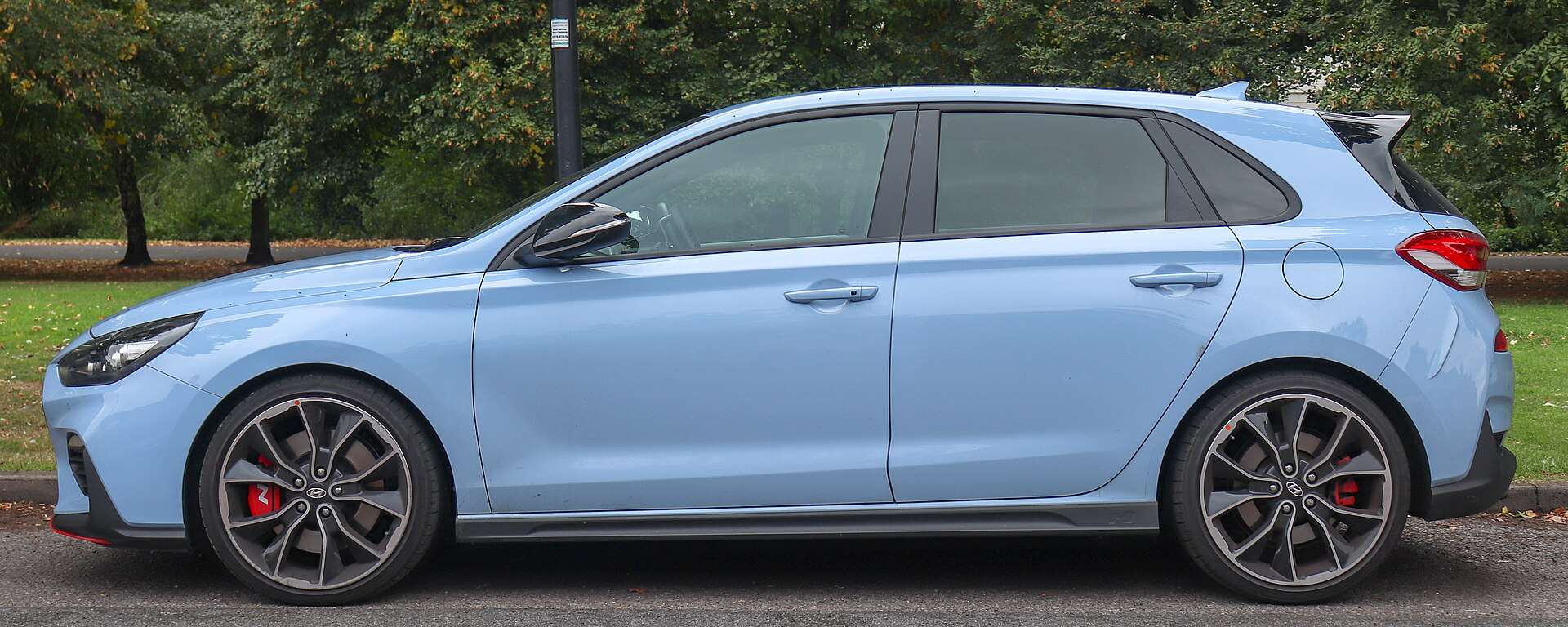
The Hyundai i30 N changed how enthusiasts saw the brand. Launched in Britain for 2018, the five-door hot hatch combined a 2.0-litre turbo engine, six-speed manual gearbox, adaptive chassis and an unusually adjustable N mode. The later facelift added 280 PS and an optional eight-speed dual-clutch transmission.
Featured image: 2018 Hyundai i30 N Performance. Photograph by Vauxford, CC BY-SA 4.0; locally hosted and resized.
How the N division created its first European car
Hyundai established N as a dedicated high-performance operation and developed the i30 N around European roads and the Nürburgring. Albert Biermann, formerly of BMW M, led Hyundai’s vehicle test and high-performance development during the programme. The result was not merely a styling pack: engine, differential, brakes, exhaust, suspension and software were integrated as one package.

250 PS and 275 PS launch versions
At UK launch Hyundai offered the i30 N at £24,995 and the i30 N Performance at £27,995. Both used a 2.0-litre turbocharged engine with 353 Nm of torque and a six-speed manual gearbox. The standard car produced 250 PS; Performance specification raised this to 275 PS and added an electronically controlled limited-slip differential, active exhaust, larger brakes and 19-inch wheels.
| Version | Power | Key distinction |
|---|---|---|
| i30 N | 250 PS | 18-inch wheels, manual gearbox and core adaptive N chassis. |
| i30 N Performance | 275 PS | Electronic limited-slip differential, active exhaust, larger brakes and 19-inch wheels. |
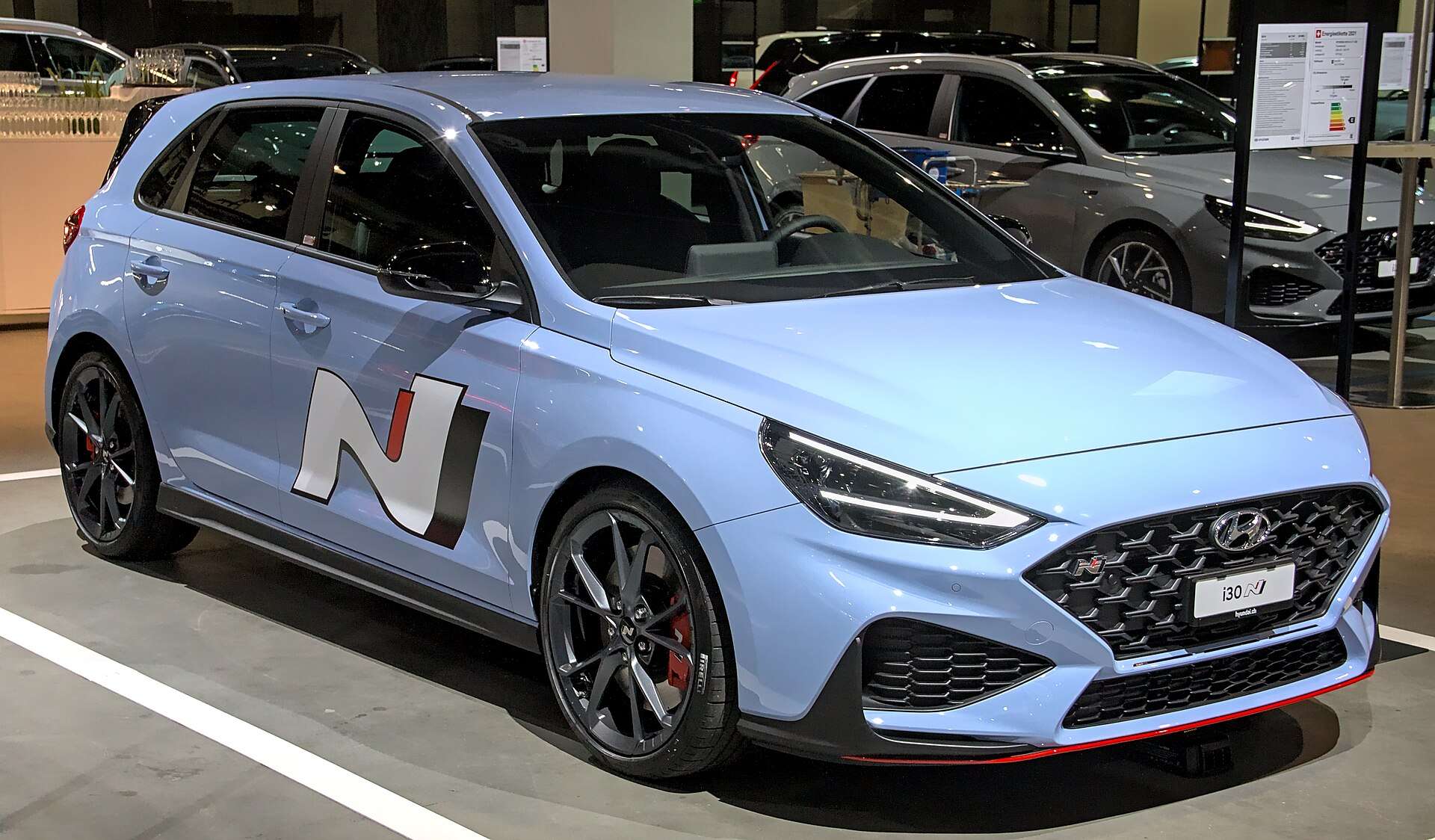
| Facelift N Performance | 280 PS / 392 Nm | Revised styling, lighter seats and wheels, manual or eight-speed wet DCT. |
The facelift and N DCT
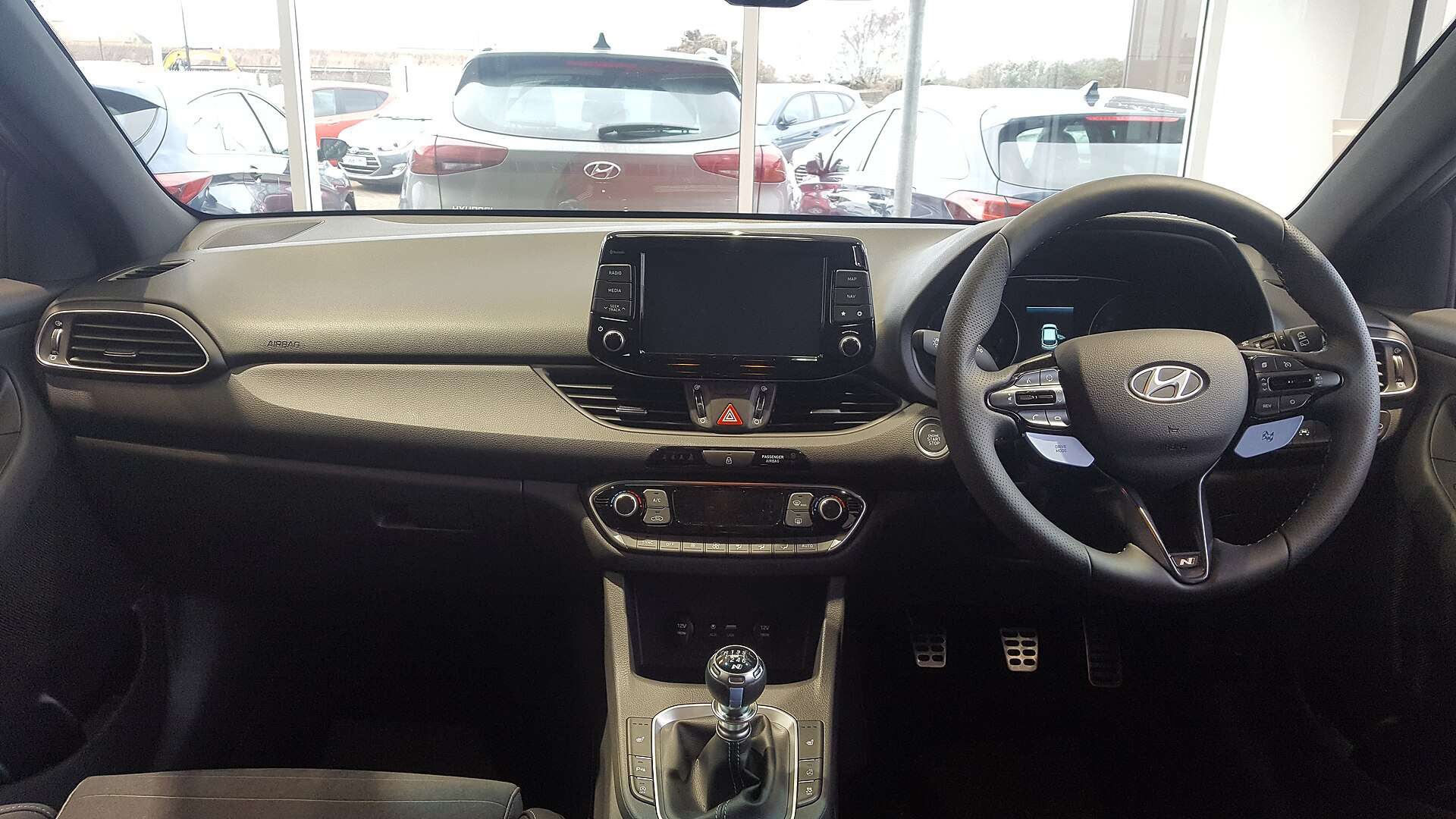
The updated car increased Performance output to 280 PS and 392 Nm. The manual remained, while the eight-speed wet dual-clutch transmission introduced N Power Shift, N Grin Shift and N Track Sense Shift functions. Hyundai quoted 0–100 km/h in 5.9 seconds for the facelift manual and 5.4 seconds for the DCT with launch control.
Love cars you don’t see every day?
Get forgotten cars, surprising motoring stories and the most interesting finds from Unusual Cars by email.
Free to join. No spam. Unsubscribe whenever you like. See our privacy policy.
Hatchback and Fastback
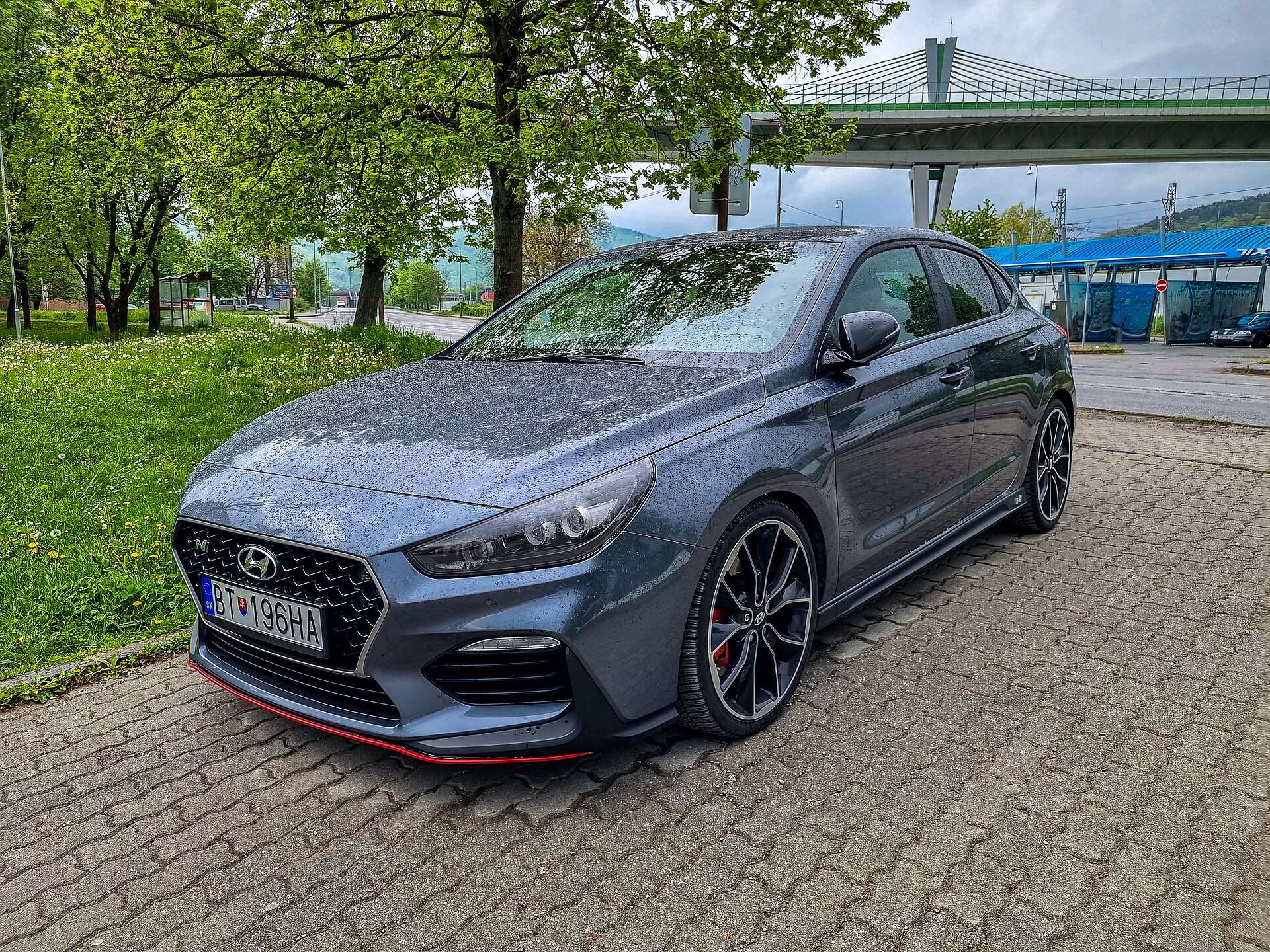
The original five-door hatchback is the most familiar form. Hyundai also produced the i30 Fastback N, combining the same performance idea with a lower roof and longer liftback tail. Market availability and specifications changed over time, so buyers should verify each car rather than assume all N models share identical hardware.
Hyundai i30 N buying guide
Engine and maintenance
Insist on scheduled servicing with the correct oil and evidence that recalls or software updates have been completed. Check cold start, coolant level, oil leaks and full-load performance. Modifications and tuning should be documented and declared.
Clutch, gearbox and DCT
Manual cars should shift cleanly without clutch slip or excessive judder. On DCT cars, test cold and hot behaviour, reversing, low-speed manoeuvres and all modes. Warning lights or drivetrain messages require diagnosis, not reassurance.
Brakes, tyres and track use
The i30 N is track-capable, so inspect pads, discs, fluid history, wheel condition and tyre shoulders. Matching premium tyres are essential. Track use is not automatically harmful when maintenance is excellent; neglected consumables and heat damage are the concern.
Body and electronics
Check front splitters, wheels and bumpers for kerb or track damage, then examine panel gaps and paint. Test adaptive dampers, differential settings, exhaust modes, infotainment, reversing camera and driver-assistance systems.
Research sources
- Hyundai UK: original i30 N pricing and specifications
- Hyundai UK: 2021 i30 N press kit
- Hyundai UK: facelift technical data
Continue the Hyundai story
Explore the Rare & Performance Hyundais hub, then trace the UK-only Coupé F2, then return to the original Pony.
Frequently asked questions
When did the Hyundai i30 N go on sale in the UK?
UK sales began on 4 January 2018.
How much power does the original i30 N have?
The standard car has 250 PS; the original Performance model has 275 PS.
How much power does the facelift i30 N have?
The updated Performance version produces 280 PS and 392 Nm.
Was an automatic i30 N available?
Yes. The facelift introduced an eight-speed wet dual-clutch transmission alongside the six-speed manual.
What should buyers check?
Service history, correct tyres, brakes, clutch or DCT behaviour, electronic modes, accident repairs and evidence of track use or poor modifications.