
UNUSUAL CARS MODEL GUIDE
The Hyundai Scoupé GT Turbo was one of the most unexpected affordable performance cars of the early 1990s. Its compact two-door body, front-wheel drive and 1.5-litre turbocharged engine offered accessible pace at a time when Hyundai was still establishing its British identity.
Featured image: 1992 Hyundai Scoupé GT Turbo. Photograph by Rutger van der Maar, CC BY 2.0; locally hosted and resized.
From Excel coupé to Hyundai performance car
The name combined “sport” and “coupé”. Early Scoupés used Mitsubishi-derived mechanicals, but the important facelift brought Hyundai’s own Alpha engine family. Adding a turbocharger created the GT Turbo, a small coupé that marked a genuine step towards in-house engineering.

Engine and performance
The 1.5-litre turbocharged four-cylinder produced a period-quoted 114 bhp in UK specification. Contemporary reports gave a top speed of around 121 mph and 0–60 mph in about 9.2 seconds. Those numbers were respectable rather than class-leading, but the car’s price and long warranty made the proposition distinctive.
| Version | Engine | Character |
|---|---|---|
| 1.5i | Naturally aspirated 1.5 | The mainstream economy-led coupé. |
| GTX | Naturally aspirated 1.5 | More equipment and sportier presentation. |
| GT Turbo | Turbocharged 1.5 Alpha | The rare performance flagship and principal enthusiast model. |
Why it disappeared
UK sales were measured in thousands rather than tens of thousands and the Turbo was only a fraction of that total. Cheap used values, rust, accidents and the cost of model-specific parts reduced the population quickly. Hagerty’s retrospective notes that fewer than 6,000 Scoupés of all types reached the UK, making any sound survivor noteworthy.

Love cars you don’t see every day?
Get forgotten cars, surprising motoring stories and the most interesting finds from Unusual Cars by email.
Free to join. No spam. Unsubscribe whenever you like. See our privacy policy.
Driving character
The Scoupé is compact, light by modern standards and strongly of its period. The turbo engine provides a noticeable mid-range lift, while the chassis favours predictable front-drive behaviour. Correct tyres, fresh dampers and sound bushes matter greatly because age can disguise the car’s original balance.

Hyundai Scoupé Turbo buying guide
Rust and accident repair
Inspect sills, floors, arches, suspension pick-up points, screen surrounds, door bottoms and the boot. Check panel gaps and paint carefully because sporting cars were often repaired cheaply when values were low.
Turbo engine and cooling
Start from cold and look for smoke, unstable idle, coolant loss or oil leaks. Confirm boost builds smoothly without detonation or hesitation. Service history, warm-up and cool-down habits, clean oil and an effective cooling system are crucial.
Transmission, brakes and suspension
Test clutch slip, synchromesh, driveshaft joints, wheel bearings and brake balance. Worn front bushes and tired dampers can make the car feel much less precise than it should.
Trim and originality
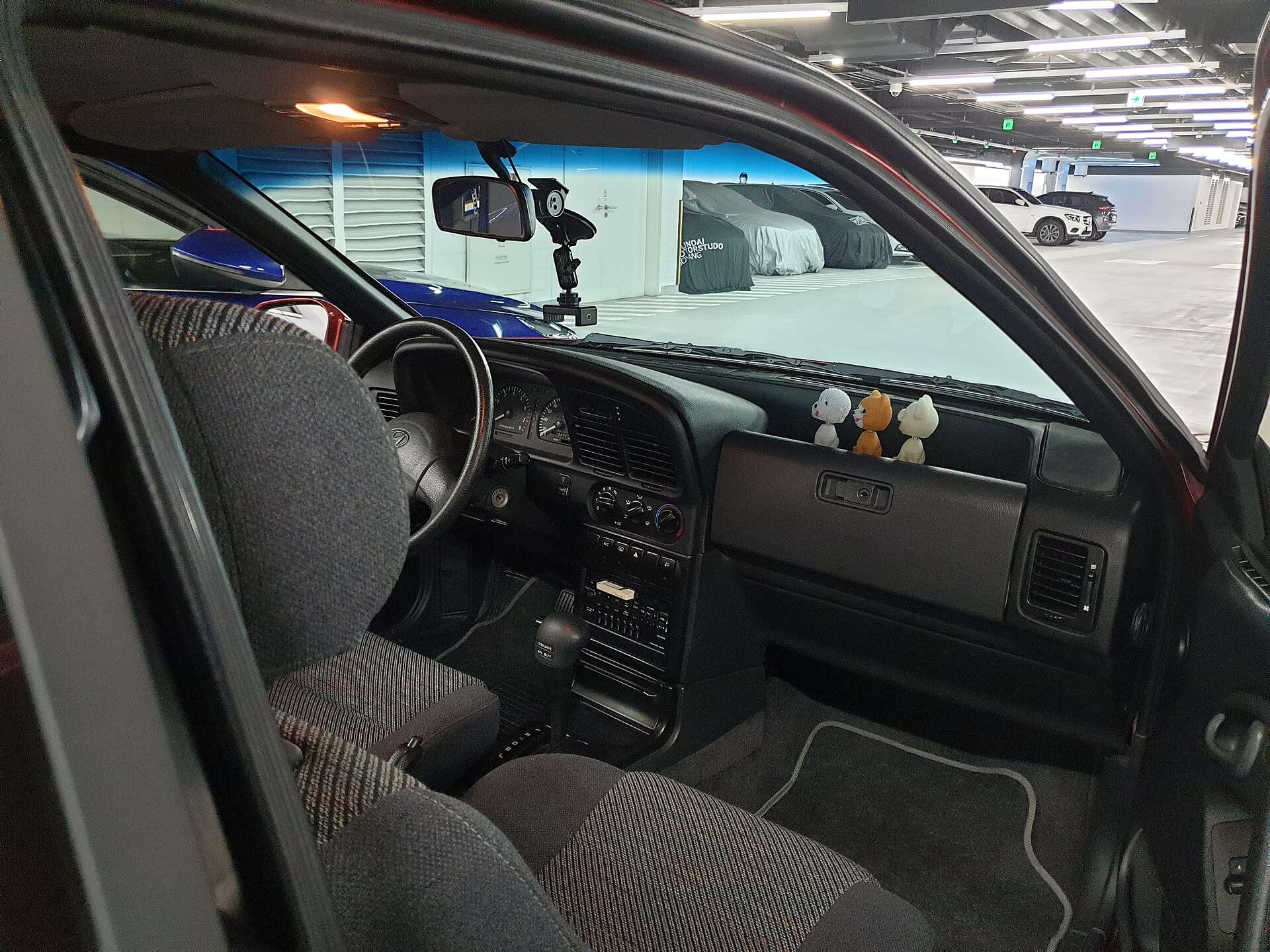
Lamps, spoilers, wheels, badges and interior plastics are model-specific and difficult to replace. A complete original Turbo is usually more valuable than a faster modified car with missing details.
Research sources
- Hagerty UK: Cars That Time Forgot – Hyundai Scoupé
- Honest John Classics: Hyundai Scoupé
- Hyundai UK: company history
Continue the Hyundai story
Explore the Rare & Performance Hyundais hub, then start with the original Pony, then continue to the Coupé F2 Evolution.
Frequently asked questions
Was the Hyundai Scoupé Turbo sold in Britain?
Yes. The GT Turbo was officially sold in the UK, although sales were limited and survivors are now scarce.
What engine does the Scoupé Turbo use?
The facelift GT Turbo uses Hyundai’s 1.5-litre Alpha engine with a turbocharger.
How much power did it have?
Contemporary UK figures commonly quote 114 bhp for the GT Turbo.
How fast is a Scoupé Turbo?
Period UK testing quoted about 121 mph and 0–60 mph in roughly 9.2 seconds.
What are the main buying checks?
Rust, turbo and cooling health, fuel injection, clutch, suspension and completeness of model-specific trim.