UNUSUAL CARS MODEL GUIDE
The second-generation Hyundai Lantra was the point at which the company’s British family cars became genuinely competitive. The rare 2.0-litre versions added useful performance to the practical saloon and Sportswagon bodies, while retaining the low price and long equipment list that defined Hyundai in the 1990s.
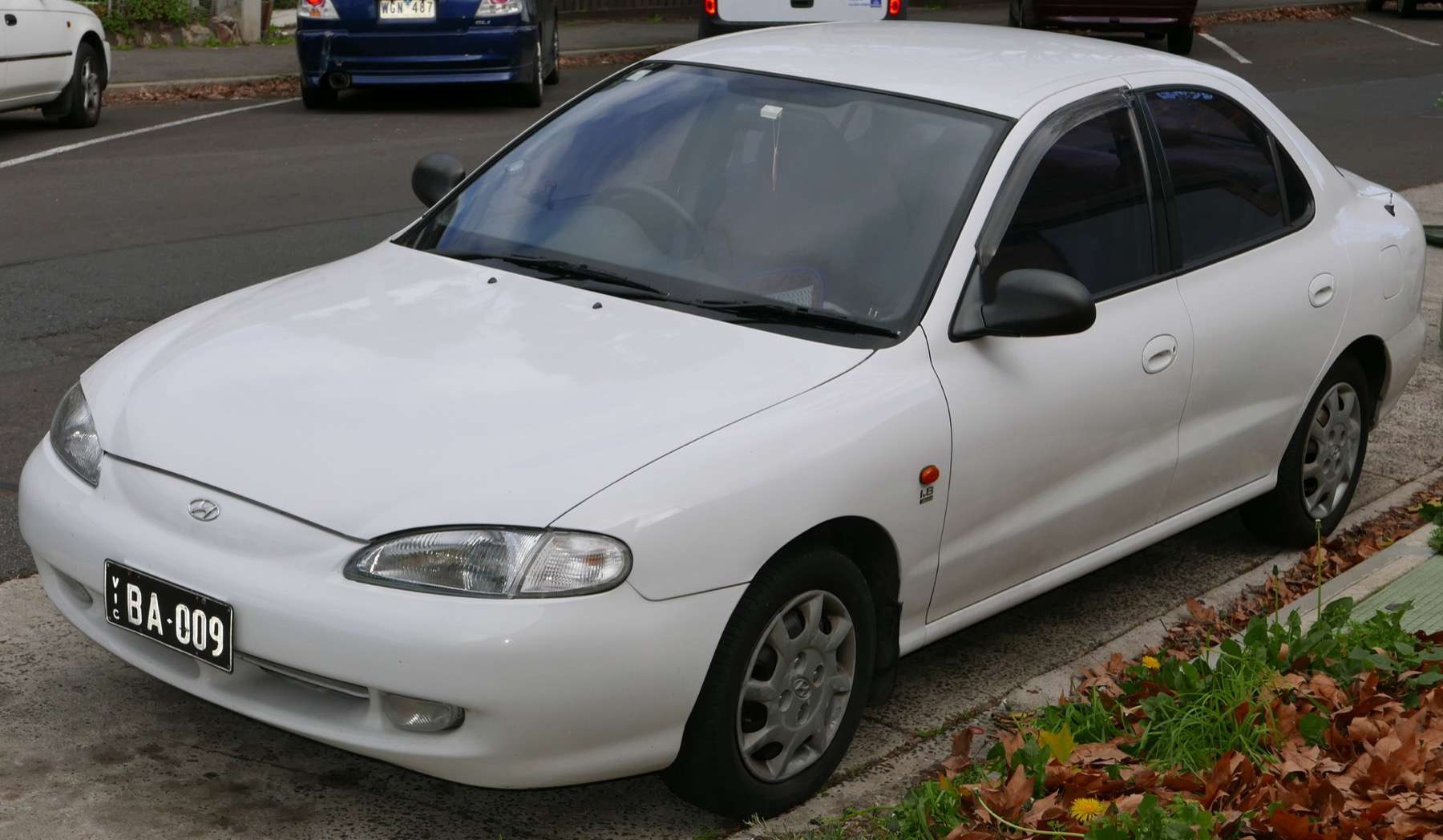
Featured image: 1998 Hyundai Lantra J2 saloon. Photograph by OSX, Public domain; locally hosted and resized.
A more mature Hyundai
The first Lantra arrived in Britain in 1991, but the smoother J2 generation launched in autumn 1995 was a substantial step forward. Hyundai offered 1.6- and 1.8-litre engines at first, adding an estate early in 1996. During 1997 the slow-selling 1.8 was replaced by a 2.0-litre unit in selected saloon and Sportswagon specifications.
The 2.0 did not turn the Lantra into a sports saloon. It did, however, give the light, straightforward car enough pace to compete with larger-engined Mondeos, Cavaliers and Primeras while undercutting them on price.

Engine and performance
Hyundai’s 1,975cc Beta-family four-cylinder used twin overhead camshafts, four valves per cylinder and multi-point injection. Period specifications quote approximately 137 bhp and 180 Nm. A five-speed manual was standard, with a four-speed automatic available on some versions.
| Specification | Lantra 2.0 |
|---|---|
| Engine | 1,975cc DOHC 16-valve petrol four |
| Power | Approximately 137 bhp |
| Torque | Approximately 180 Nm |
| Drive | Front-wheel drive |
| Gearboxes | Five-speed manual or four-speed automatic |
| Body styles | Four-door saloon and five-door Sportswagon |

Facelift and UK-market character
A substantial facelift appeared in 1998 with a split grille, revised bonnet, lights, bumpers and a brighter cabin. Names and equipment changed during the model’s life, so condition and history are more important than chasing one badge. Higher-specification cars commonly offered air conditioning, electric windows and mirrors, remote locking, alloy wheels and a CD player.
The estate is particularly interesting today. It combined a useful square load bay with modest dimensions and simple mechanicals, yet most were worked hard and discarded. Either body style is now far less common than contemporary European or Japanese alternatives.
Love cars you don’t see every day?
Get forgotten cars, surprising motoring stories and the most interesting finds from Unusual Cars by email.
Free to join. No spam. Unsubscribe whenever you like. See our privacy policy.
On the road
The Lantra’s strengths are visibility, uncomplicated controls, a comfortable ride and willing performance. Steering and damping are not as polished as the class leaders, but a healthy 2.0 feels brisk and relaxed. Poor examples can feel loose and noisy because worn dampers, bushes and inexpensive tyres magnify the car’s weaknesses.

Hyundai Lantra 2.0 buying guide
Cambelt and cooling
Evidence of regular servicing is essential. Confirm the timing belt, tensioners and water pump have been replaced at sensible intervals. Check coolant condition, radiator seams, hoses, oil leaks and signs of previous overheating.
Rust and accident repairs
Inspect sills, rear arches, floor edges, suspension mounting points, subframes and the tailgate or boot aperture. Values stayed low for years, so poor accident repairs and deferred corrosion work are common.
Gearbox and running gear
Manual cars should shift cleanly without clutch slip or driveshaft clicking. Automatics need prompt engagement and smooth changes from cold and hot. Knocking over broken surfaces usually points to tired anti-roll-bar links, bushes or dampers.
Equipment and trim
Test air conditioning, windows, locking, mirrors, instruments and the rear wiper on estates. Service items remain obtainable, but lamps, bumpers, interior plastics and model-specific trim can be harder to replace than the engine parts.
Research sources
- RAC Drive: Hyundai Lantra 1991–2000 UK model history
- Auto Catalog Archive: 1998 UK Hyundai Lantra brochure
- Car Codex: Lantra J2 UK versions and specifications
Continue the Hyundai story
Explore the Rare & Performance Hyundais hub, then compare the Accent MVi, then continue with the Coupé F2.
Frequently asked questions
When was the Hyundai Lantra 2.0 sold in Britain?
The 2.0-litre version joined the second-generation UK range during 1997 and continued until the Lantra was replaced around 2000.
How much power does the Lantra 2.0 have?
Period specifications quote roughly 137 bhp and 180 Nm from its 1,975cc 16-valve engine.
Was there a Lantra 2.0 estate?
Yes. The 2.0-litre engine was available in the practical five-door Sportswagon as well as the saloon.
What should buyers check first?
Cambelt history, corrosion, cooling-system condition and missing model-specific trim are the main priorities.