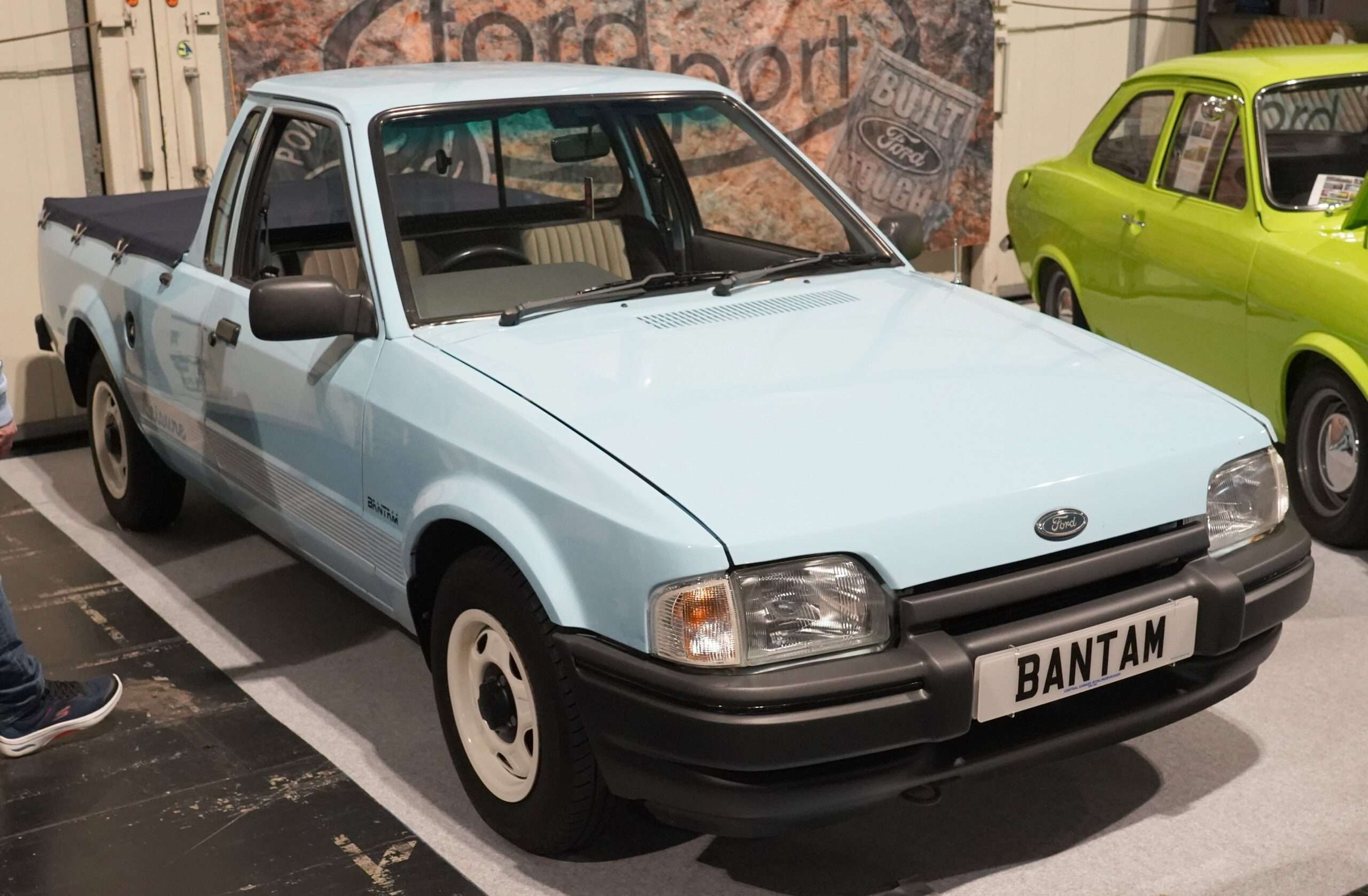
It looks like someone took a familiar Mk3 Ford Escort, removed everything behind the front doors and fitted a load bed. In reality, the first-generation Ford Bantam was a properly engineered South African “bakkie” with a story of its own.
Launched in 1983, this compact half-ton pickup combined front-wheel-drive Escort running gear with a locally designed rear structure built for work. It was never part of Ford’s British showroom range, which is why even lifelong Escort enthusiasts can be stopped in their tracks by one today.
Here are ten of the most interesting facts about the Escort-based Ford Bantam.
1. It was designed and developed in South Africa
The Bantam was not a European Escort conversion shipped south in kit form. Ford South Africa’s own product-development operation created it for local conditions and local buyers. Ford’s official South African history records that the Bantam half-ton pickup was launched in 1983 and was designed and developed in the country.
That mattered because small car-derived pickups occupied a particularly important place in South African motoring. They were cheaper and easier to drive than a traditional one-ton bakkie, but still useful enough for trades, farms and small businesses. The Bantam was therefore conceived as a genuine working vehicle rather than an Escort novelty.
2. It won a design award
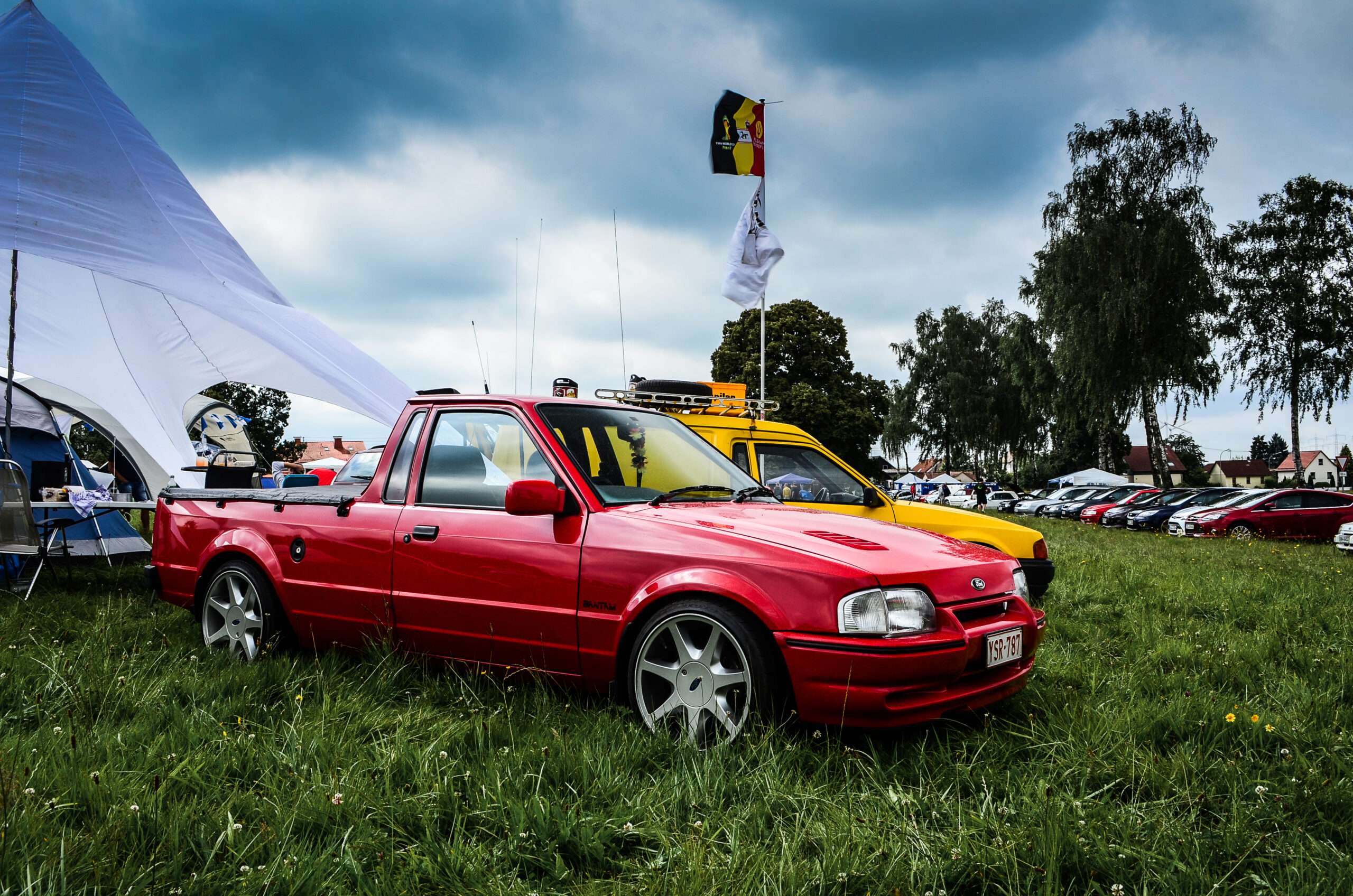
The Bantam’s importance was recognised almost immediately. Ford South Africa says it became the first vehicle to win a Shell Design Award. That is a useful reminder that the clever part was not simply the idea of an Escort pickup, but making two very different halves work as a coherent vehicle.
The cab, windscreen, doors and front structure made the Bantam instantly recognisable as a Mk3 Escort. Behind the cab, however, Ford’s engineers had to create a strong load box, tailgate and rear body that could tolerate the punishment expected of a commercial vehicle.
3. The front half really was Mk3 Escort
Look through the windscreen and the family resemblance becomes even clearer. The Bantam used the Escort’s transverse engine, front-wheel-drive layout, dashboard and much of its front suspension and running gear. Owners therefore enjoyed passenger-car steering, visibility and road manners rather than the heavier feel of a conventional ladder-frame pickup.
This made it part of the “half-tonner” class: a compact unibody utility sharing components with an ordinary car. It was lighter, more economical and more manageable in town than a full-sized bakkie—exactly the combination many South African buyers wanted.
4. The rear suspension was designed for work, not hot-hatch handling
The rear of the Bantam was far more than a chopped Escort shell. It used a dead rear axle located by leaf springs, a tough and simple arrangement better suited to carrying loads than the independent rear suspension of the hatchback.
Accounts of Ford South Africa’s heritage say the strengthened axle was derived from the British Escort GPO van. Together with the locally developed load box, tailgate, rear lamps and small rear-quarter windows, it turned the front-wheel-drive Escort platform into a believable workhorse.
Love cars you don’t see every day?
Get forgotten cars, surprising motoring stories and the most interesting finds from Unusual Cars by email.
Free to join. No spam. Unsubscribe whenever you like. See our Privacy Policy.
5. The engine story is more complicated than “it had Escort CVHs”
Early Bantams were offered with carburettor-fed 1.3- and 1.6-litre Ford engines associated with the South African Escort range. The familiar CVH was part of the story, but it was not the only answer.
South African buyers criticised the CVH installations for noise, vibration, harshness and fuel consumption. Ford subsequently used locally produced crossflow derivatives of the older Kent engine in parts of the Escort and Bantam range. That means a surviving truck’s badge or capacity alone should not be treated as proof of what is under the bonnet: model year, engine number and South African documentation all matter.

6. It had a Mazda-badged twin
The Escort-based Bantam was also sold as the Mazda Rustler. That badge-engineering relationship became even more significant after Ford’s South African operations merged with Anglo American’s Sigma Motor Corporation to form Samcor in the mid-1980s.
Later Bantams would move to Mazda 323-based engineering, but the Rustler name already existed alongside the first-generation vehicle. For collectors, the pressed tailgate script can offer a clue to when and under whose corporate structure a vehicle was produced: early panels may carry Ford or Mazda lettering, while later examples can be associated with MMI/Samcor-era identification.
7. Production moved during a turbulent period
The earliest Bantams were built at Ford’s Struandale operation in Port Elizabeth, now Gqeberha. Production later moved to the Samcor plant at Silverton, Pretoria, after the corporate changes surrounding Ford’s withdrawal from South Africa during the apartheid era.
This history explains why apparently similar trucks can wear different details, badging and paperwork. It also places the Bantam inside a much larger story about South Africa’s motor industry, sanctions, local manufacturing and the unusual Ford–Mazda relationship of the period.
8. Its rivals included the Nissan 1400 and Volkswagen Caddy
The Bantam entered a market in which Nissan’s B140-based 1400 bakkie had become deeply established. Volkswagen’s Golf-based Caddy offered another car-derived alternative. Ford’s answer was modern-looking, front-wheel drive and visibly connected to one of the era’s most popular family cars.
The Nissan proved exceptionally hard to dislodge, but the Bantam name survived long after the Escort-based original. Ford celebrated the model’s 25th anniversary in 2008, evidence that the basic idea had grown into a recognisable South African institution even though the platform changed twice.

9. The Bantam name suited the vehicle perfectly
A bantam is a small breed of chicken often associated with a bold, feisty character. The name neatly captured the pitch: compact dimensions without a timid attitude. It was a little bakkie expected to perform real work.
That identity continued through three generations. The Escort-based model ran from 1983 until around 1990; a Mazda 323-derived Bantam followed; and a Fiesta-based third generation arrived in 2002. Production finally ended in 2011, meaning the name lasted almost three decades even though the engineering underneath it changed dramatically.
10. In Britain, it is rarer—and more confusing—than many exotic cars
The first Bantam was built for Southern Africa and never became a regular UK-market Ford. The examples seen in Britain are imports, which is why one can attract more attention at a show than a far more expensive performance Escort.
Buying one requires more than checking ordinary Mk3 Escort rust areas. The cab, inner wings and front running gear may be familiar, but the load bed, rear structure, lamps, glass and suspension contain South African-specific parts. Buyers should check the V5C description, VIN, engine number, NOVA history and evidence that import duties were handled correctly. A heavily modified “RS Turbo pickup” may be entertaining, but originality is especially valuable when the base vehicle is already so scarce.
Why the Escort Bantam deserves to be remembered
The Ford Bantam is a brilliant example of a familiar car being re-engineered for a completely different market. It retained enough Mk3 Escort character to trigger instant nostalgia, yet its South African load bed, leaf-sprung rear axle and complicated Ford–Mazda history make it a genuinely distinct vehicle.
If this unusual branch of the Escort family appeals, read our Ford Escort XR3 Perana guide and the Ford Escort RS Turbo guide. You can also discover more overlooked models in the Rare & Forgotten Cars hub, browse the Ford section, or explore every feature in the 10 Things hub.
Research notes
This article was checked against Ford South Africa’s corporate heritage timeline, Ford South Africa heritage material, contemporary South African motoring coverage and surviving vehicle records. Exact engine and trim availability varied by year, so surviving examples should be identified from their numbers and period documentation rather than appearance alone.
Love cars you don’t see every day?
Get forgotten cars, surprising motoring stories and the most interesting finds from Unusual Cars by email.
Free to join. No spam. Unsubscribe whenever you like. See our Privacy Policy.