
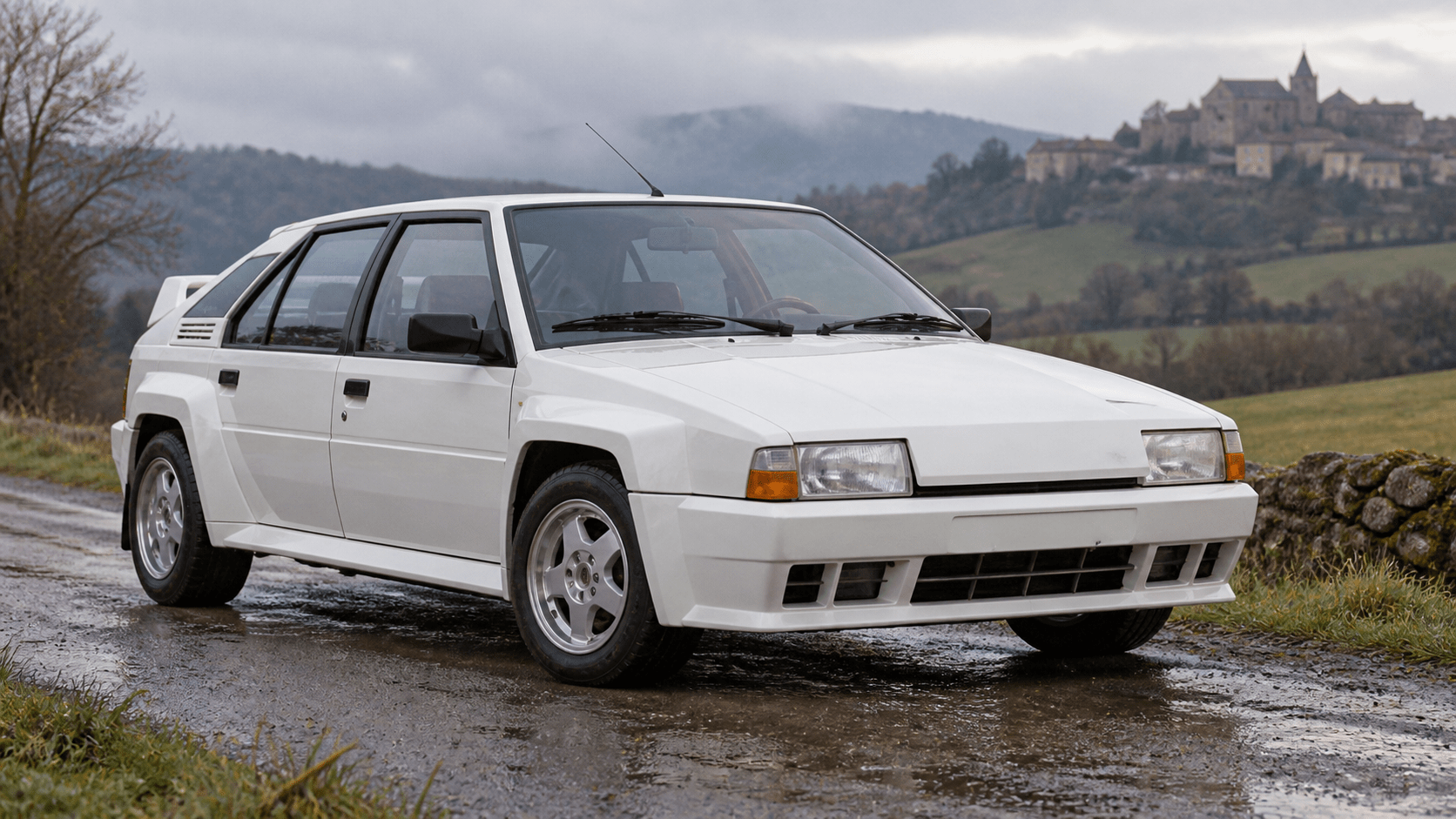
The Citroën BX 4TC was one of Group B rallying’s strangest homologation specials: a long-nosed, four-wheel-drive BX that arrived late, competed only briefly and became far rarer than the rules intended.
1. Its FIA homologation arrived on New Year’s Day 1986
The FIA approved the BX 4TC as Group B number B-279, effective 1 January 1986. That timing left Citroën very little opportunity before Group B was cancelled at the end of the season.
2. The engine sat longitudinally ahead of the cabin
Where the class-leading Peugeot 205 T16 and Metro 6R4 put their engines amidships, Citroën placed the BX’s unit lengthways in the nose. It created a distinctive silhouette but concentrated considerable mass at the front.
3. Its engine had humble family-car ancestry
The 2,141cc turbocharged four-cylinder traced its architecture to the Chrysler/Simca 180 family rather than a glamorous new racing design. For homologation, the FIA’s 1.4 turbo factor placed it just below the three-litre class limit.
4. Road cars produced about 200PS
The customer version offered roughly 200PS, while the lighter Evolution rally car used more boost and substantially more power. Both shared the unusual idea of turning Citroën’s large family hatchback into a four-wheel-drive performance machine.
Love cars you don’t see every day?
Join the Unusual Cars Club for new “10 Things” articles, forgotten cars and surprising motoring stories by email.
Free to join. No spam. Unsubscribe whenever you like. See our Privacy Policy.
5. The long nose was a packaging necessity
The extended front bodywork was not merely styling theatre: it helped accommodate the longitudinal engine and drivetrain. Wider arches, unique lamps and rally-inspired wheels completed the transformation.
6. It kept distinctly Citroën suspension
Despite the competition hardware, the road-going 4TC retained hydropneumatic self-levelling suspension. That gave it a character no rival homologation special could copy and allowed the body height to be adjusted.
7. Customer cars were painted white
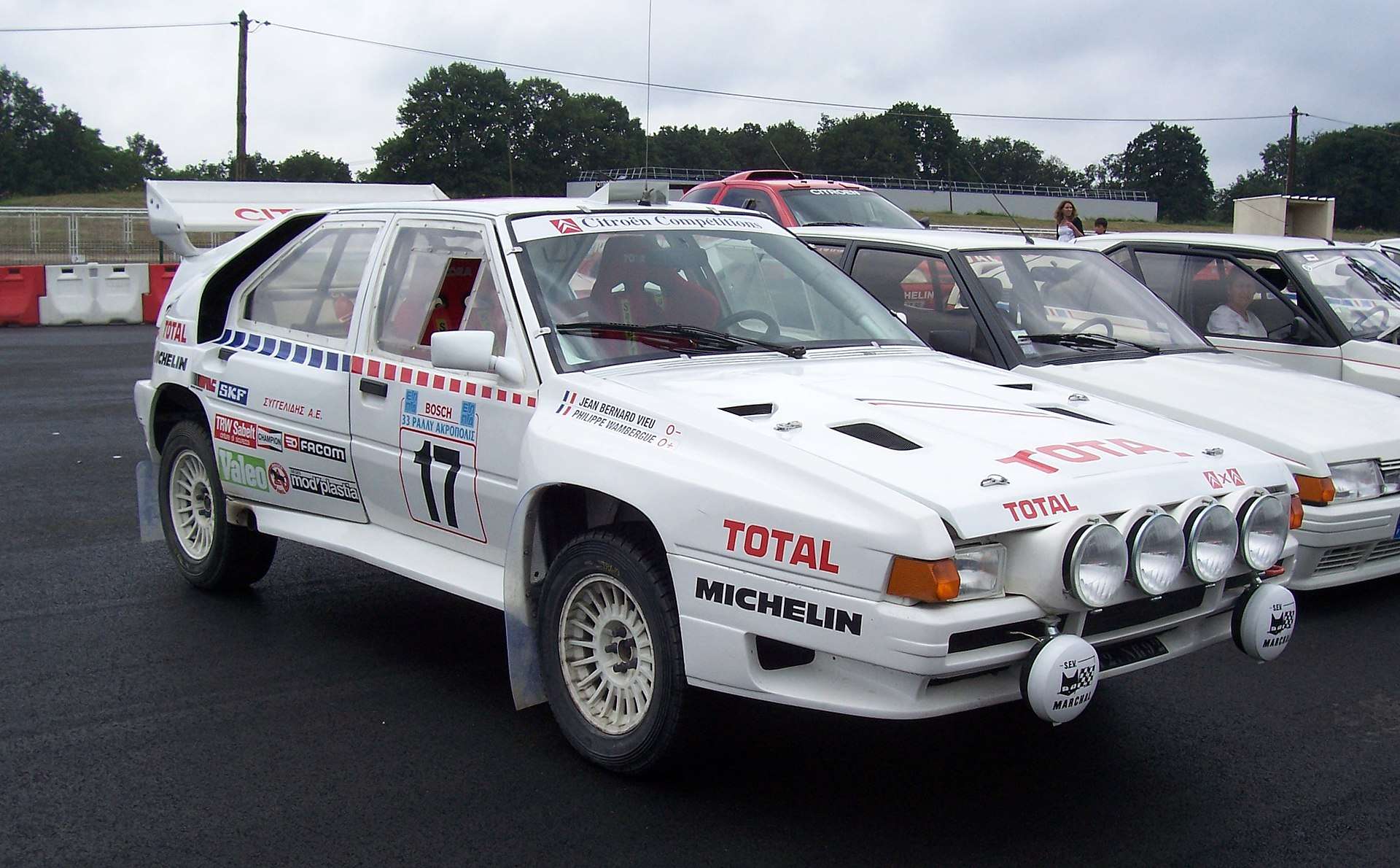
The road-going BX 4TC was offered in white, reinforcing its visual connection to Citroën’s works rally cars. The red, blue and white competition graphics made the Evolution versions far more conspicuous.
8. The 200-car production story is disputed
Group B rules demanded 200 road cars, but surviving records and marque specialists suggest substantially fewer reached customers. Figures around 86 sold cars are often quoted, while the exact number completed remains debated.
9. It entered only three World Rally Championship rounds
The works team appeared at Monte Carlo, Sweden and the Acropolis in 1986. Jean-Claude Andruet’s sixth place in Sweden was the model’s best WRC result before Citroën ended the programme.
10. Citroën reportedly destroyed unsold examples
Accounts from the period say Citroën offered to buy cars back and dismantled or destroyed unsold stock after the project failed. Whatever the precise total, genuine survivors are now among the rarest Group B road cars.
Read our full Citroën BX 4TC history, specifications and buying guide, then explore every article in the 10 Things hub.
Research note: homologation date, engine capacity and competition classification were checked against FIA form B-279; rally results and production claims were cross-checked with marque records and specialist histories.
Love cars you don’t see every day?
Join the Unusual Cars Club for new “10 Things” articles, forgotten cars and surprising motoring stories by email.
Free to join. No spam. Unsubscribe whenever you like. See our Privacy Policy.
