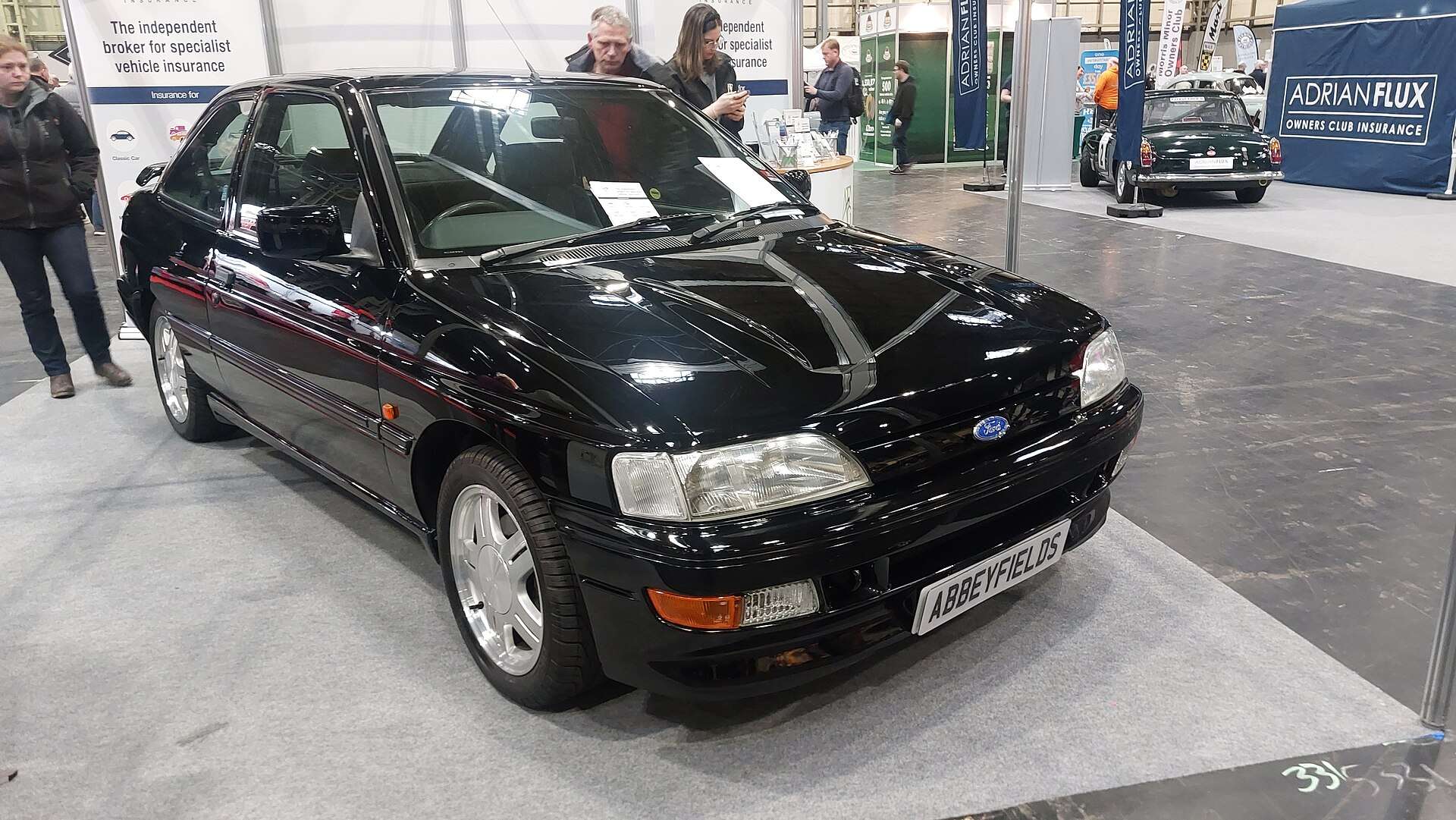
The 1991 Escort RS2000 revived one of Ford’s most famous badges for a very different era. Instead of rear-wheel-drive rally simplicity, the new car combined a 16-valve engine, front-wheel drive and the everyday usefulness of a modern hatchback.
It lived in the shadow of the Escort RS Cosworth, but the RS2000 has a story—and a character—all its own.
1. The RS2000 badge returned after more than a decade
Ford had last used the name on the rear-wheel-drive Mk2 Escort. Its return in 1991 deliberately connected the new Mk5 performance model with Rallye Sport history, even though the engineering recipe had changed completely.
2. Its engine was not a Zetec
The 1,998cc unit was Ford’s I4 twin-cam engine, with a cast-iron block, alloy 16-valve head and chain-driven camshafts. It produced about 150PS—usually quoted as 148bhp in Britain—and 190Nm of torque.

3. The engine had roots in the Sierra
The I4 family first appeared in the Sierra, initially in eight-valve form. For the RS2000 Ford created a 16-valve version with multi-point injection, giving the Escort a broader, torquier delivery than the later high-revving 1.8-litre XR3i.
4. The bonnet bulges were functional visual theatre
Twin power bulges made the RS2000 immediately recognisable. Along with deeper bumpers, side skirts, 15-inch five-spoke wheels and discreet RS badging, they gave it presence without copying the wild wings of the Cosworth.
Love cars you don’t see every day?
Join the Unusual Cars Club for new “10 Things” articles, forgotten cars and surprising motoring stories by email.
5. It had four-wheel disc brakes
Ford equipped the RS2000 with discs at both ends and offered anti-lock braking, giving it a more serious chassis specification than ordinary Escorts. Recaro seats, sports instruments and a close-ratio five-speed gearbox completed the package.
6. A four-wheel-drive RS2000 really existed
From 1994, Ford offered an RS2000 4×4. It used a permanent four-wheel-drive system and is now much rarer than the front-drive car. It was not a homologation clone of the Cosworth; it was a separate, more discreet all-weather fast Escort.
7. It was homologated for international rallying
The FIA approved the Escort RS2000 for Group A competition in 1993. Privateers used it in rallying, where its naturally aspirated engine and simpler body made it a practical alternative to the far more exotic turbocharged Cosworth.

8. The facelift changed more than the grille
The RS2000 evolved through the Mk5a and smoother Mk6 body styles. Later cars gained revised styling and interior updates, but retained the same basic 2.0-litre 16-valve character until production ended in 1996.
9. It was quicker than its reputation suggests
With roughly 148bhp in a relatively light three-door shell, the front-drive RS2000 could reach 60mph in a little over eight seconds and around 130mph. Its strong mid-range made it an effective real-world road car.
10. The Cosworth’s fame made it more unusual
The winged RS Cosworth became the poster car, leaving the ordinary-looking RS2000 underappreciated and frequently modified. Original examples—especially 4x4s—are now scarce reminders of Ford’s transitional 1990s performance era.
Research basis: Ford technical data, FIA homologation records and period model documentation.
Continue exploring: Visit the complete 10 Things hub.