
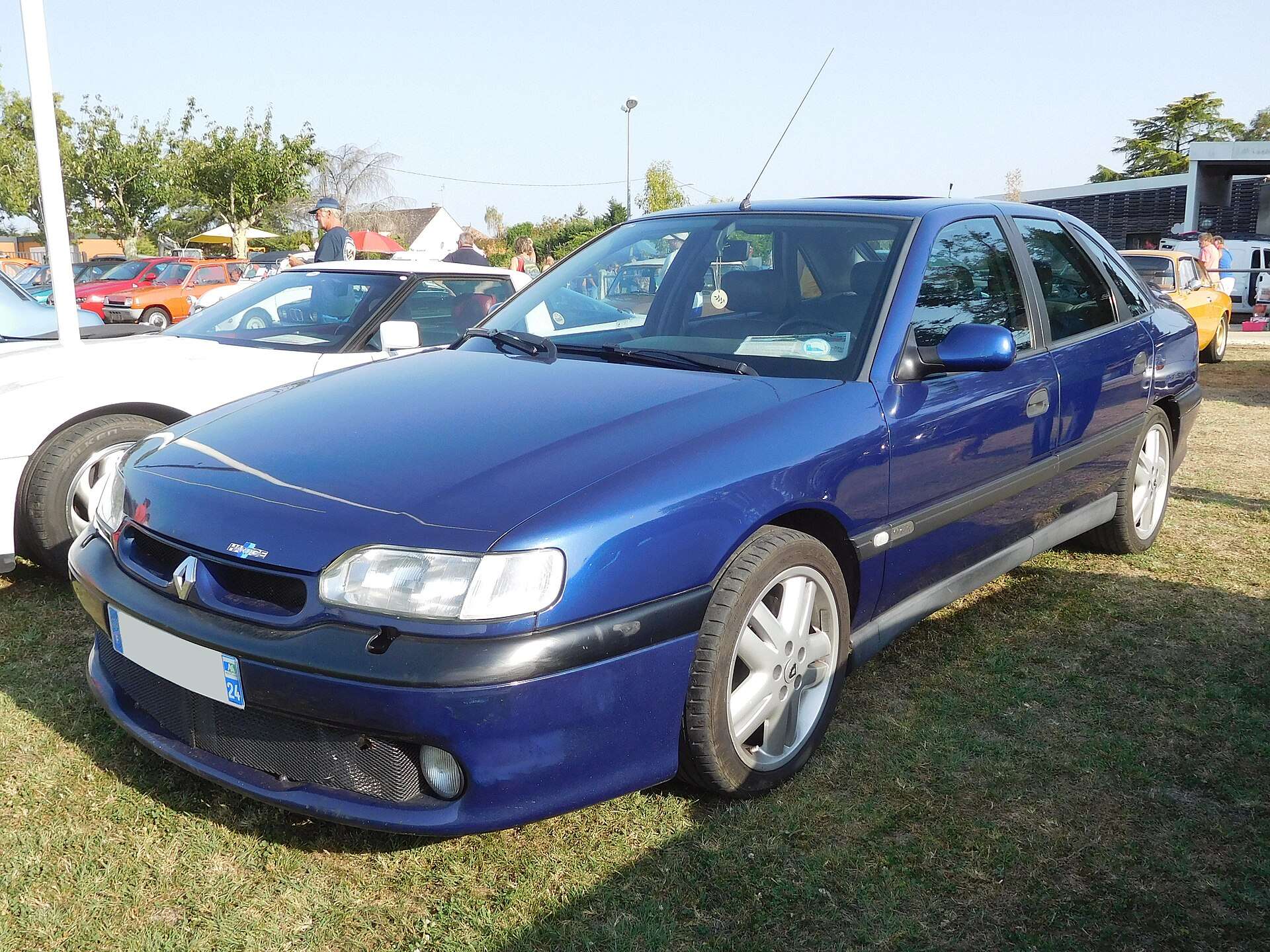
The Renault Safrane Biturbo was France’s audacious answer to Germany’s fastest executive saloons: a discreet five-door flagship with twin turbos, four-wheel drive and development help from two famous German specialists.
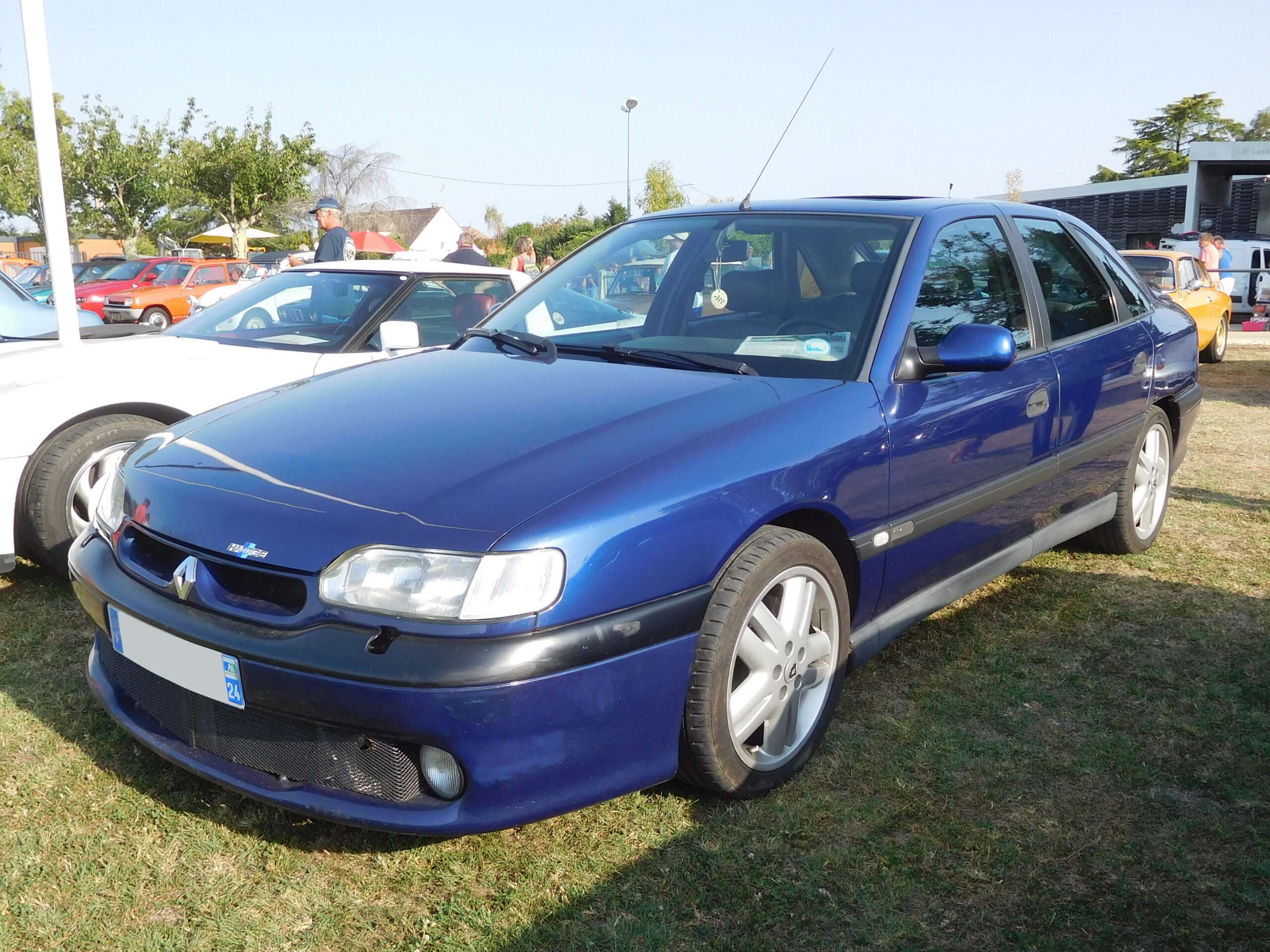
1. Renault outsourced key development to Germany
Rather than engineer the entire flagship alone, Renault worked with Hartge on the powertrain and Irmscher on the chassis, bodywork and final assembly. The result was effectively a Franco-German super-saloon sold through Renault dealers.
2. Its V6 was related to the Alpine A610’s engine
The 2,963cc PRV V6 shared its roots with the unit used by the Alpine A610. Hartge added two compact KKK K04 turbochargers and electronic boost control, producing 268PS and 365Nm.
3. Almost all its torque arrived across a huge rev range
Renault claimed 97 per cent of maximum torque was available from 2,300 to 5,000rpm. That broad delivery mattered more in a heavy luxury hatchback than a dramatic high-rev power peak.
4. The gearbox reportedly limited the final output
Development cars were said to make around 280PS, but production output was reduced to protect the five-speed PK9 manual transmission. There was no automatic Biturbo.
Love cars you don’t see every day?
Join the Unusual Cars Club for new “10 Things” articles, forgotten cars and surprising motoring stories by email.
Free to join. No spam. Unsubscribe whenever you like. See our Privacy Policy.
5. Every wheel was driven
The Safrane used Renault’s Quadra permanent four-wheel-drive system with a viscous coupling. Electronically controlled dampers altered their behaviour according to speed and driving conditions.
6. It could reach the German gentlemen’s agreement limit
Renault quoted 250km/h—155mph—and roughly 7.2 seconds from rest to 100km/h. Those figures placed the five-door Safrane among serious European performance saloons.
7. It was assembled through an extraordinary production chain
Cars began as Safrane V6 Quadras at Renault’s Sandouville plant before travelling to Irmscher in Germany. Engines were modified by Hartge, while Irmscher completed the distinctive body, interior and final assembly work.
8. Buyers could choose RXE or Baccara luxury
The Biturbo was offered in already lavish RXE trim and even richer Baccara form. Leather, wood and extensive electric equipment made it a genuine luxury flagship rather than a stripped performance special.
9. Only 806 were built
Its complicated production, very high price and conservative badge worked against it. Production ended in 1996 after just 806 examples, making it far rarer than contemporary BMW M and Mercedes-AMG rivals.
10. Renault never repeated the experiment
A proposed second-generation Biturbo did not reach production. The original remains a one-off moment when Renault, Hartge and Irmscher combined to create one of the most technically ambitious French road cars of the 1990s.
Read our detailed Renault Safrane Biturbo history and buying guide, then explore every article in the 10 Things hub.
Research note: power, torque, drivetrain and performance figures were checked against Renault’s official Turbo Saga press material and contemporary specialist documentation.
Love cars you don’t see every day?
Join the Unusual Cars Club for new “10 Things” articles, forgotten cars and surprising motoring stories by email.
Free to join. No spam. Unsubscribe whenever you like. See our Privacy Policy.
