
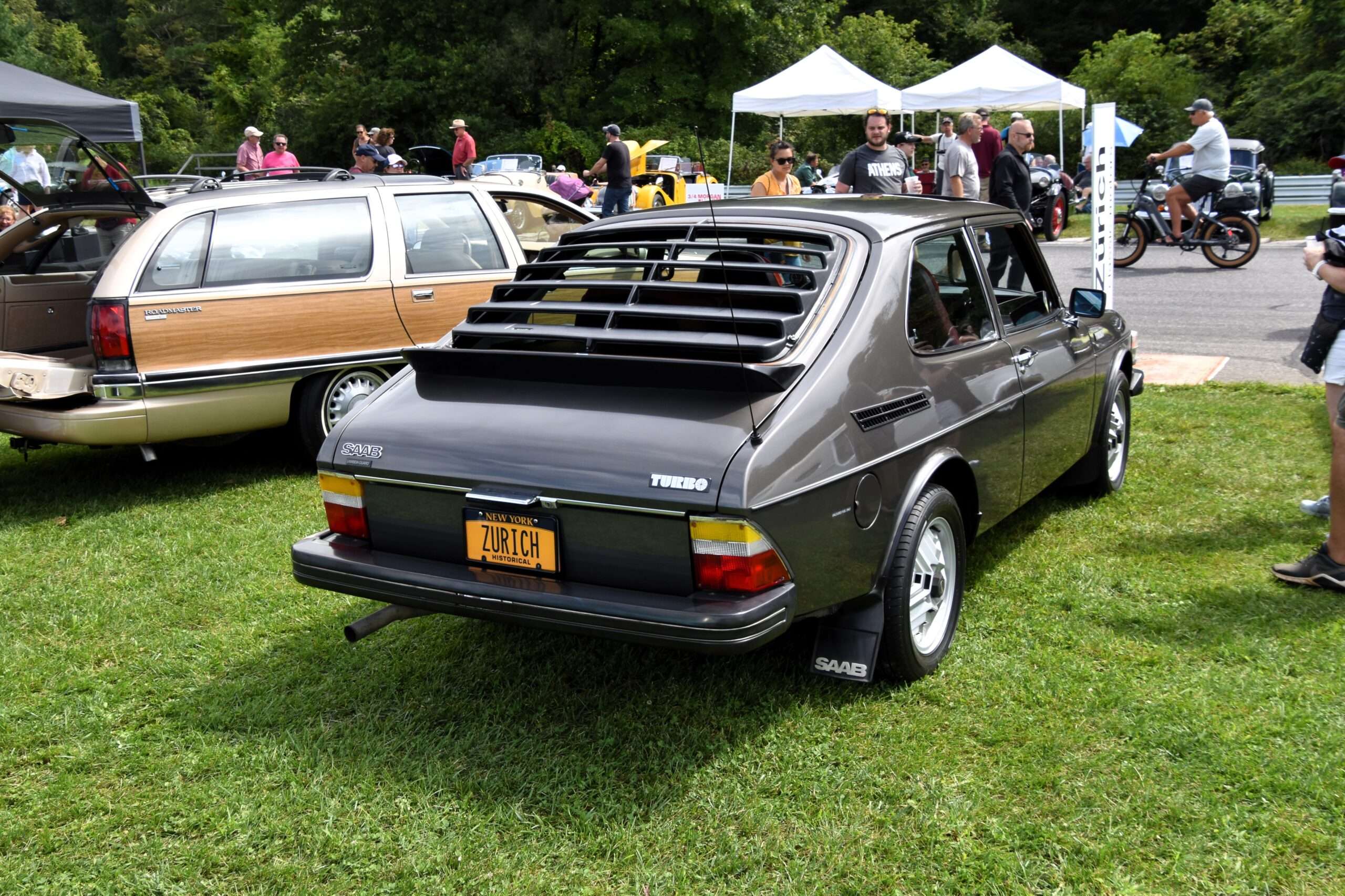
The Saab 99 Turbo did not invent the turbocharger, but it helped turn turbocharging from an exotic and temperamental idea into usable everyday performance.
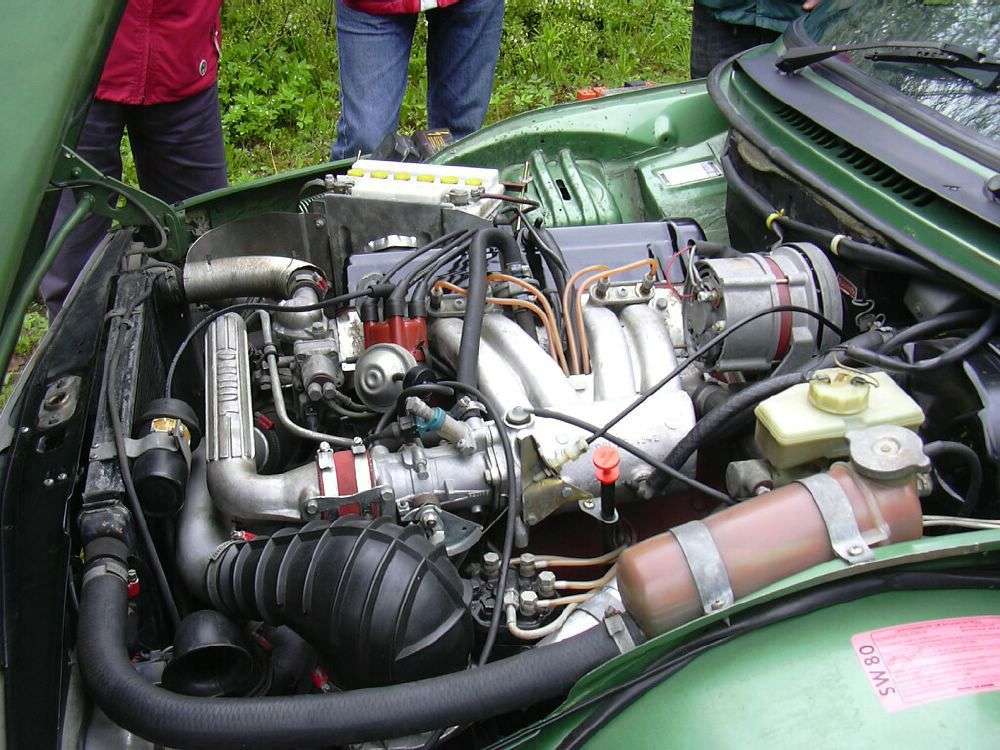
1. It made its debut at Frankfurt in 1977
Saab revealed the production 99 Turbo at the Frankfurt motor show in September 1977. The first customer cars arrived for the 1978 model year.
2. Saab focused on torque, not a spectacular peak figure
Previous turbo road cars often delivered abrupt high-speed power. Saab’s engineers concentrated on boost response and mid-range flexibility so ordinary drivers could exploit the performance every day.
3. Its engine was mounted backwards and leaned over
The longitudinal four-cylinder sat at a 45-degree angle, with the clutch and gearbox ahead of the engine. This unusual layout reflected the 99’s long development from its Triumph-derived beginnings.
4. Bosch injection helped make the turbo practical
Mechanical fuel injection allowed more accurate fuelling than a conventional carburettor installation. The US version also used an early closed-loop catalyst and oxygen-sensor system.
Love cars you don’t see every day?
Join the Unusual Cars Club for new “10 Things” articles, forgotten cars and surprising motoring stories by email.
Free to join. No spam. Unsubscribe whenever you like. See our Privacy Policy.
5. The first cars had only four gears
A four-speed manual gearbox was standard. With strong turbocharged torque and relatively high gearing, the 99 delivered its character through mid-range thrust rather than constant gearchanging.
6. The Inca wheels became a design signature
Distinctive turbine-like alloy wheels, spoilers, special instruments and unique trim identified the Turbo without disguising the practical Saab body.
7. It was offered in more than one body style
The three-door Combi Coupé is the definitive image, but Saab also produced two-door notchbacks and a very small number of five-door Turbos in Europe.
8. It won a World Championship rally
Stig Blomqvist and Björn Cederberg won the 1979 Swedish Rally in a Saab 99 Turbo. It was an important demonstration that turbocharging could succeed at the highest level of rally competition.
9. Production exceeded ten thousand
Saab records 10,607 cars, including an initial fleet of 100 pre-production examples. Survival is far lower because corrosion, hard use and scarce model-specific parts removed many.
10. It created Saab’s modern identity
The 99 Turbo’s success flowed directly into the 900 Turbo and later Saab performance models. Turbocharging became so closely associated with the marque that it shaped Saab’s engineering image for the rest of the company’s life.
Read the detailed Saab 99 Turbo history and buying guide, explore our Saab collection, or browse the complete 10 Things hub.
Research note: launch, production and technical details were checked against Saab heritage material and the original 1978 technical brochure.
Love cars you don’t see every day?
Join the Unusual Cars Club for new “10 Things” articles, forgotten cars and surprising motoring stories by email.
Free to join. No spam. Unsubscribe whenever you like. See our Privacy Policy.