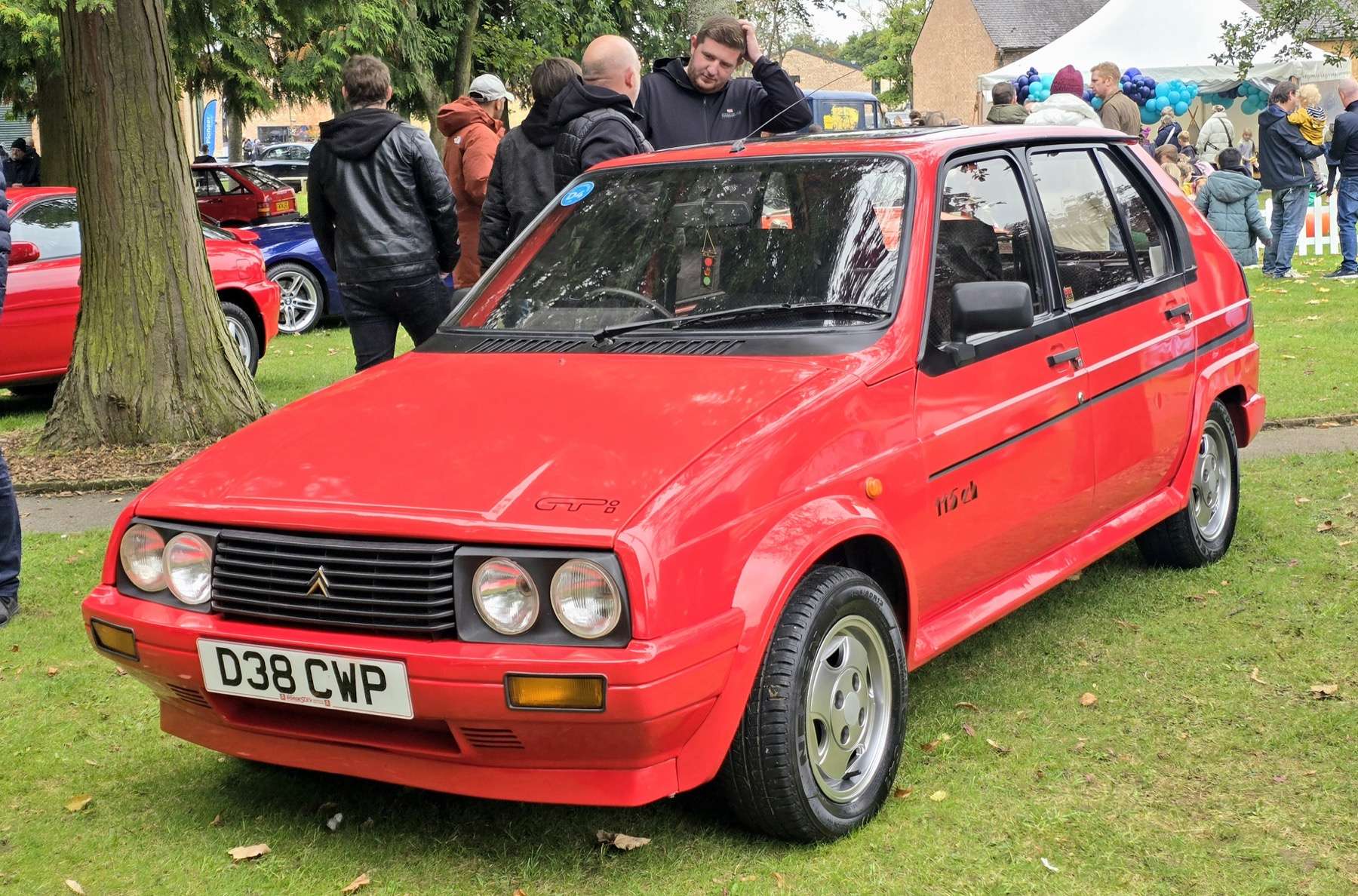
The Citroën Visa GTI borrowed proven Peugeot hot-hatch power but wrapped it in one of the least glamorous shapes of the 1980s. That contrast is exactly what makes it special: a practical five-door with serious pace, compliant French chassis tuning and a motorsport family tree far more dramatic than its appearance suggests.
1. It shared its engine with the Peugeot 205 GTI
The Visa GTI used PSA’s fuel-injected 1.6-litre XU engine and five-speed gearbox, closely related to the hardware that made the 205 GTI famous. Early cars produced 105PS; a 115PS version arrived in 1986 and later became standard.
2. It remained a practical five-door
Unlike the three-door 205 GTI, every Visa GTI retained five doors and a useful hatchback body. That made it one of the era’s least obvious performance cars: a family-friendly shape carrying the same basic engine as a poster-child hot hatch.

3. The suspension still felt distinctly Citroën
Although it shared major PSA mechanical components, the Visa used its own chassis tuning. Its softer, more progressive responses gave it a different character from the sharper Peugeot—less fashionable perhaps, but remarkably effective on broken real-world roads.
4. Its four-headlamp face was unique to the fast version
The GTI received paired round headlamps, deep bumpers, wheelarch extensions, side skirts and discreet spoilers. The transformation was substantial, yet the narrow cabin, upright glass and five-door outline always revealed the humble Visa underneath.
Love cars you don’t see every day?
Get forgotten cars, surprising motoring stories and the most interesting finds from Unusual Cars by email.
Free to join. No spam. Unsubscribe whenever you like. See our Privacy Policy.
5. The first version made 105PS
Launched for the 1985 model year, the original GTI used the 1,580cc XU5J engine with 105PS. With little more than 900kg to move, it was brisk rather than brutal and could reach roughly 115mph.
6. The 115PS engine involved more than a simple tune
The later XU5JA brought revised cylinder-head, camshaft, piston, intake and exhaust details. Power rose to 115PS and the engine delivered its performance over a broader rev range, cutting acceleration times without changing the car’s discreet nature.
7. Its advertising became more famous than the car
A spectacular French television advert showed a Visa GTI being launched from an aircraft carrier and racing a jet. Directed by Jean Becker, the film won major advertising awards and gave the humble Citroën a suitably outrageous public image.

8. It had much wilder relatives
The road-going GTI sat beside the Visa 1000 Pistes, a four-wheel-drive homologation special created for rallying. The 1000 Pistes and brutal works competition cars were mechanically very different, but their success added credibility to the whole sporting Visa range.
9. The dashboard had already become conventional
Early Visas were famous for their bizarre “satellite” controls and single-spoke steering-wheel thinking. By the GTI’s arrival, a facelift had brought a much more conventional dashboard, so the fastest Visa was less eccentric inside than the earliest basic models.
10. Very few survive in Britain
The Visa was never common in the UK and the GTI sold in tiny numbers beside the 205. Rust, low values and the temptation to use its engine as a donor finished many cars, making an original right-hand-drive GTI exceptionally scarce today.
Why it matters
The Visa GTI deserves more than to be described as a strange-looking 205 GTI relative. It offered similar performance through a more practical, more compliant and unmistakably Citroën package. Its obscurity now makes it one of the most intriguing—and rarest—French hot hatches of its period.
Join the Unusual Cars Club
Get more forgotten performance cars, surprising motoring stories and new 10 Things articles by email.
Free to join. No spam. Unsubscribe whenever you like. See our Privacy Policy.