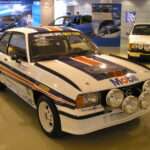
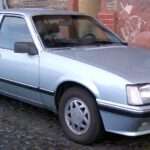
The Opel Rekord E1 is a largely forgotten part of Britain’s late-1970s executive-car market. Closely related to the first Vauxhall Carlton, it was sold here through Opel dealers while General Motors still allowed its two European brands to compete. Today the Rekord is far rarer than its Carlton relative and offers an unusually discreet route into classic rear-wheel-drive Opel ownership.
Quick answer: buy the most complete and structurally sound Rekord E1 you can find. Mechanical parts are often manageable, but corrosion, missing trim and model-specific glass or panels can make a cheap project uneconomic.
What is the Opel Rekord E1?
Opel launched the Rekord E in 1977 to replace the Rekord D. The first version is now known as the E1, distinguishing it from the smoother E2 facelift introduced in 1982. It used a conventional front-engine, rear-wheel-drive layout and was offered in saloon and Caravan estate forms with a broad range of four-cylinder engines.
In Britain the story was unusually complicated. Vauxhall introduced the Carlton, based on the same engineering but with its own droop-snoot front styling. For several years the Opel Rekord E1 and Vauxhall Carlton appeared in overlapping dealer networks. When GM rationalised the ranges in 1982, the Rekord disappeared from the UK while the Carlton continued under Vauxhall badges.
Why the Rekord E matters in the UK
The Rekord sat between mainstream family cars and prestige saloons. It offered generous accommodation, straightforward mechanicals and German motorway manners without the price or image of a Mercedes-Benz. Its rarity now is not evidence that it was exotic when new; it reflects decades of low values, hard use and rust.
That history makes a surviving UK-market Opel especially interesting. It documents the period when a buyer could compare closely related Opels and Vauxhalls in British showrooms before the brands were effectively merged.
Typical UK-market specifications
| Production | Rekord E1, 1977–1982 |
|---|---|
| Layout | Front engine, rear-wheel drive |
| Engines | Four-cylinder petrol and diesel units; 1.9- and 2.0-litre petrol versions are most relevant to UK survivors |
| Transmission | Manual or automatic, depending on model |
| Body styles | Two- and four-door saloons and Caravan estate, depending on market |
| UK relationship | Closely related to the Vauxhall Carlton Mk1 |
Specifications varied considerably by year, trim and country. Use the chassis plate, engine number and period paperwork to establish exactly what a particular car was when new rather than relying on a later badge.
What is it like to own?
A well-sorted Rekord E1 is spacious, comfortable and mechanically straightforward. The long-travel suspension and rear-wheel-drive layout suit relaxed touring more than aggressive driving. A 2.0-litre car has enough performance for modern classic use, although gearing, wind noise and braking feel are unmistakably from the period.
The challenge is not complexity but scarcity. Service parts may cross-reference with other Opel and Vauxhall models, while exterior trim, interior fittings and correct body panels can require patient searching through European specialists and owners’ clubs.
Common problems
Structural corrosion
Inspect the sills inside and out, jacking points, floorpans, chassis rails, front crossmember, suspension pick-up points, inner wings, wheelarches, rear spring areas and boot floor. Pay particular attention to the windscreen and rear-window surrounds, where trapped water can spread beneath seals. An apparently tidy car deserves examination on a lift.
Previous welding and paint
Many survivors have already been repaired. Good welding is an asset, but patches over rust or thick underseal can conceal problems. Look for continuous seams, correct drainage, consistent panel gaps and evidence that corrosion was removed rather than covered. Restoration photographs are extremely useful.
Cam-in-head engines
Opel’s CIH petrol engines are durable when maintained. Check cold oil pressure, timing-chain noise, smoke, breathing and oil leaks. Cooling systems can suffer from blocked radiators, tired water pumps, corroded pipes and old hoses. Confirm that the engine reaches and holds a normal temperature without pushing coolant out.
Carburettor, ignition and fuel supply
Hesitation or poor hot starting may come from carburettor wear, air leaks, ignition faults or contaminated fuel systems after storage. Inspect the tank, lines and rubber hoses. Recommissioning a little-used car properly is safer than attempting to drive it on decades-old components.
Gearbox, axle and steering
Test every gear, listen for bearing noise and check for propshaft vibration. A whining differential or clonk on taking up drive should be investigated. Steering play can come from several joints rather than one obvious component, so inspect the complete linkage.
Brakes and suspension
Seized calipers, tired cylinders, corroded pipes and perished flexi-hoses are common on stored classics. Worn bushes and dampers make the car wander. Budget to renew tyres regardless of tread if their date codes show they are old.
Trim and originality
Check bumpers, lamps, grille, badges, door handles, window seals, dashboard, instruments, seats and headlining. The Rekord’s low historic value encouraged owners to improvise, and a missing item can now be disproportionately difficult to replace. A sympathetic upgrade is not necessarily a problem, but it should be safe, documented and reflected in the price.
Confirm whether the car is a genuine UK-market Opel, a later import or a rebadged relative. Imports can be excellent cars, but their specification and paperwork should be described accurately.
Buying checklist
- Inspect the entire underside and suspension mountings.
- Check screen surrounds and hidden floor edges for corrosion.
- Verify the chassis, engine and registration history.
- Start from cold and monitor oil pressure and temperature.
- Test gearbox, axle, steering and brakes on the road.
- Confirm that model-specific trim is present.
- Ask for photographs and invoices for previous restoration.
- Price transport and recommissioning before buying a non-runner.
Is an Opel Rekord E1 worth buying?
Yes, if rarity and historical interest matter more than performance or easy parts availability. It is a comfortable, honest classic with a strong connection to the Vauxhall Carlton, but it rewards buyers who prioritise shell condition and completeness. A sound car is likely to be far cheaper overall than a cosmetically attractive project needing structural work.
Frequently asked questions
Is the Opel Rekord E the same as a Vauxhall Carlton?
They share their core body structure and mechanical layout, but early UK versions used different front styling, badges and trim. Check the individual specification.
When did the Rekord leave the UK market?
The Rekord was dropped here around the 1982 E2 facelift as GM concentrated on the Vauxhall Carlton.
Are parts available?
Many service parts can be sourced through Opel specialists, but unique body and trim pieces are much harder. Completeness should strongly influence the purchase decision.
Sources and further reading
Specifications differ by engine, year and market. Inspect and verify any individual car before purchase.