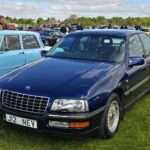
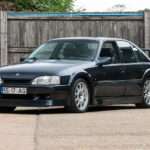
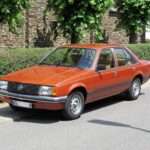
The Opel Senator A2 3.0E was one of the last large Opels officially offered to British buyers before General Motors consolidated its UK range under the Vauxhall badge. It combined a smooth fuel-injected straight-six, rear-wheel drive and understated executive-car styling at a time when most prestige buyers automatically looked towards BMW, Mercedes-Benz or Jaguar.
Quick answer: the Senator A2 is a spacious, refined and surprisingly capable classic, but UK survivors are exceptionally scarce. Buy on structural condition, completeness and evidence of cooling-system, fuel-injection and transmission maintenance. A cheap incomplete car can be far more expensive to restore than a sound example.
What is the Opel Senator A2?
The original Senator arrived in 1978 as Opel’s flagship saloon, sharing its basic architecture with the Monza coupé. The A2 was the comprehensively facelifted version introduced for the 1983 model year. Its smoother nose, larger headlamps, reduced chrome and better-integrated bumpers cut the drag coefficient from roughly 0.45 to 0.36, while a revised cabin and updated engines made the car feel more modern.
Britain received the facelifted model first as an Opel. During 1984 the same car adopted Vauxhall badges, making the short-lived UK-market Opel Senator A2 particularly interesting. It represents the moment when Opel was positioned here as a German performance-luxury marque, just before the two General Motors dealer networks were fully rationalised.
Senator A2 3.0E specifications
| Engine | 2,968cc fuel-injected inline six |
|---|---|
| Power | Approximately 180PS in non-catalyst 3.0E form |
| Drive | Rear-wheel drive |
| Transmission | Five-speed manual or automatic, depending on specification |
| Body | Four-door executive saloon |
| Production | A2 facelift, 1983–1986 |
Figures vary by year, market and emissions equipment, so confirm the exact engine code and original specification of any car. Later catalyst-equipped 3.0i versions were tuned differently from the early non-catalyst 3.0E.
What made it special?
The Senator was not simply a stretched family saloon. Its long wheelbase, independent rear suspension, disc brakes and straight-six engine gave it genuine long-distance ability. Contemporary road testers praised the balance of ride, steering and high-speed stability. The cabin offered generous space and equipment without the visual formality of a traditional luxury marque.
That discreet character is now central to its appeal. An A2 does not advertise its performance, yet the 3.0-litre engine provides effortless progress and a distinctive six-cylinder soundtrack. It also forms an important bridge between the earlier Commodore and the later Carlton, Omega and Lotus Carlton story.
Common problems
Rust and previous body repairs
Corrosion is the first concern. Inspect the sills, jacking points, floor edges, chassis rails, inner and outer wheelarches, front suspension mounting areas, bulkhead, boot floor and screen surrounds. Lift carpets where possible and examine the underside on a ramp. Fresh paint or underseal is not proof of poor work, but it makes photographs and invoices for previous repairs especially valuable.
Cooling and straight-six maintenance
Start the engine from cold and watch for smoke, timing-chain noise, uneven idle, coolant loss and oil contamination. Check the radiator, water pump, hoses, viscous fan and heater operation. Overheating can turn an apparently minor recommissioning job into a costly engine repair.
Fuel injection and electrics
Ageing Bosch injection components, vacuum leaks, relays, earths and brittle wiring can cause difficult starting or inconsistent running. Test every switch, instrument, window, central-locking function and heater control. A complete but non-working system is usually preferable to missing or improvised parts.
Gearbox, automatic transmission and driveline
On a manual car, check clutch operation, synchromesh and gearbox noise. An automatic should select drive promptly, change smoothly when cold and hot, and have evidence of fluid servicing. Listen for propshaft vibration, differential whine and worn wheel bearings during a road test.
Suspension, brakes and tyres
Worn bushes and dampers make the Senator feel vague rather than composed. Check ball joints, steering play, brake pipes, calipers and tyre age. Correct-quality tyres matter on a large rear-wheel-drive saloon, especially if it is used in wet conditions.
Originality and rare parts
Model-specific trim can be harder to find than mechanical service items. Inspect lamps, bumpers, mouldings, badges, wheel trims or alloys, dashboard plastics, seat fabric and door cards. Confirm that the VIN, registration document and engine specification agree. A car wearing Vauxhall badges may be a later UK car, a rebadged Opel or a mixture assembled during restoration, so establish its history rather than judging by emblems alone.
Buying checklist
- Inspect the shell and suspension mounts on a lift.
- Confirm whether it is an original UK-market Opel A2.
- Start from cold and verify stable temperature and oil pressure.
- Test the gearbox or automatic when fully warm.
- Check every electrical accessory and instrument.
- Price missing trim before agreeing a deal.
- Review restoration photographs, invoices and MOT history.
- Budget for tyres, hoses, fluids, bushes and brake work after purchase.
Is the Opel Senator A2 worth buying?
For the right owner, yes. It offers the refinement and performance of a serious 1980s executive car without the predictable badge. The challenge is scarcity: finding a complete, structurally sound example matters more than chasing a particular colour or gearbox. A specialist inspection is sensible because the purchase price can be only a small part of the cost of correcting corrosion or sourcing unique trim.
Frequently asked questions
Was the Senator A2 sold in Britain as an Opel?
Yes. The facelifted A2 initially reached the UK with Opel badges before becoming a Vauxhall during 1984.
Is it related to the Opel Monza?
Yes. The Senator saloon and Monza coupé share their platform, engines and much of their running gear.
Which version is most desirable?
The 3.0E is the headline model, but condition and completeness should outweigh transmission choice or equipment level.
Sources and further reading
- Opel/Stellantis heritage material
- UK sales-brochure archive
- Lancaster Insurance: Senator and Monza UK context
Specifications vary by year and market. Verify the identity, condition and paperwork of any individual car before purchase.