The Ford Escort Harrier was one of those special editions that looked as though it had escaped from a rally stage. Beneath the stripes it was closely related to the Escort 1600 Sport, but its rarity, colour scheme and connection with Ford’s competition success have made it one of the most desirable sporting Mk2 Escorts.
1. It celebrated a world championship
Ford introduced the Harrier after the Escort RS1800 helped secure the 1979 World Rally Championship for Makes. Rather than build another full RS model, Ford created a limited-edition road car that borrowed the visual drama of its rallying Escorts and brought it within reach of ordinary showroom customers.
2. Only 1,500 were produced
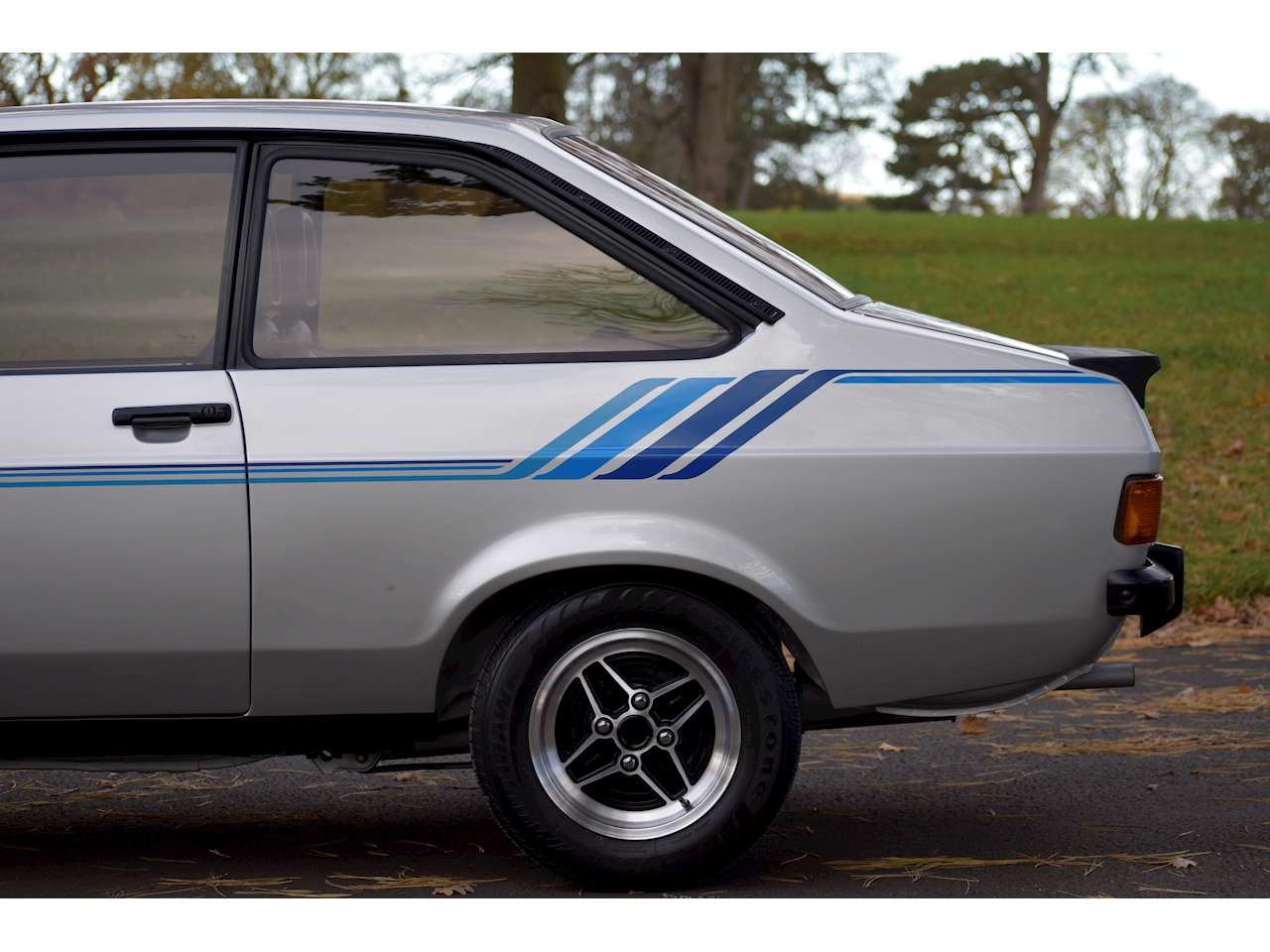
The accepted production total is 1,500 cars. About 1,000 were finished in Diamond White and the remaining 500 in Strato Silver, making the silver version particularly scarce. Survival is far lower because Mk2 Escorts were vulnerable to corrosion, accidents and later modification.
3. It was based on the 1600 Sport, not an RS
The Harrier used the Escort 1600 Sport as its mechanical starting point. That meant rear-wheel drive, a four-speed manual gearbox and the familiar 1.6-litre Kent Crossflow engine. It was lively and entertaining rather than an outright homologation special.
4. The stripes were much more than a small badge
Three shades of blue swept along the flanks and across the boot, transforming the simple two-door Escort shape. Black bumpers, auxiliary lamps, a boot spoiler and RS-style alloy wheels completed a look that was far more theatrical than the car’s modest mechanical specification suggested.
Love cars you don’t see every day?
Get forgotten cars, surprising motoring stories and the most interesting finds from Unusual Cars by email.
Free to join. No spam. Unsubscribe whenever you like. See our Privacy Policy.
5. Its engine was deliberately straightforward
The 1,599cc Crossflow used a single twin-choke Weber carburettor and produced roughly 86bhp in period specification. Those numbers sound mild today, but the Escort was light, responsive and easy to work on. The engine’s huge tuning potential also explains why finding a standard Harrier is now difficult.
6. The interior received proper sporting seats
Ford fitted supportive Recaro front seats trimmed in distinctive black Beta cloth, along with matching rear upholstery. A sports steering wheel and comprehensive instruments helped the Harrier feel more special than a normal Escort even when the car was standing still.
7. Bronze-tinted glass was part of the package
One easily overlooked factory detail was bronze-tinted glass. Together with the dark exterior trim and bold blue graphics, it gave the Harrier an unusually coordinated appearance for a late-1970s limited edition.
8. The name inspired a memorable television advert
Ford played on the Harrier jump jet connection in its advertising. Rally footage and a road-going Escort taking flight over a crest were accompanied by the invitation to “take off in a Harrier”, neatly linking military drama, rally success and the special edition’s name.
9. Genuine cars require careful identification
Because ordinary two-door Mk2 Escorts can be recreated with paint, stripes and readily available trim, provenance matters. Buyers look for a convincing chassis history, correct period components, original colour and documentary evidence rather than relying on decals alone.
10. Its appeal now goes far beyond performance
A modern family hatchback would easily outrun a standard Harrier, yet that misses the point. Its scarcity, rear-wheel-drive Escort character, unmistakable graphics and direct link with Ford’s rallying golden age make it a highly prized piece of British motoring nostalgia.
Which would you choose: Diamond White or Strato Silver? Share your memories, then explore every 10 Things article in the Unusual Cars hub →