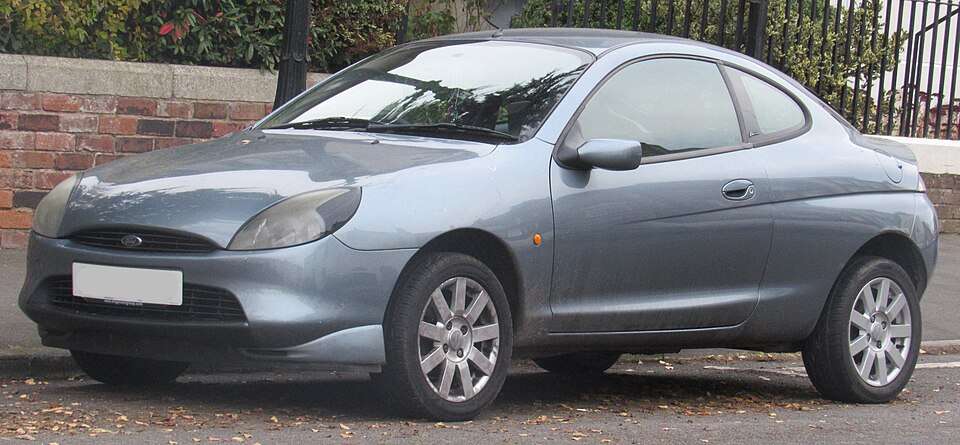
The original Ford Puma combines a compact coupe body, a responsive 1.7-litre engine and a chassis that makes ordinary roads enjoyable. Buying one well now depends on much more than finding a tidy-looking example. Corrosion, cambelt evidence, cooling health and the availability of Puma-specific parts determine whether an inexpensive purchase remains affordable. This guide covers the 1997–2002 coupe, with special-edition context and practical UK ownership checks.
Our buying verdict
Choose the best documented shell you can afford, then verify the 1.7’s belt service and engine health. A standard car with sound inner structure is usually a better starting point than a cheaper example with cosmetic arch repairs and uncertain history. Pay a special-edition premium only after condition and identity are established.

Which original Ford Puma should you buy?
Ford launched the small front-wheel-drive Puma coupe in 1997. Fiesta-derived running gear helped make it accessible, but its body, driving position and 1.7-litre engine gave it a character of its own. The naturally aspirated 1,679cc engine uses variable cam timing and is generally described as producing 125PS. It drives through a five-speed manual gearbox.
| Version | What changes | Buying implication |
|---|---|---|
| Standard 1.7 | Variable-cam-timing engine, compact coupe body, manual gearbox | The core recommendation; prioritise structure and maintenance. |
| Millennium | Distinctive yellow paint and special trim including leather Recaro seats | Authenticate specification; numbering alone does not prove provenance. |
| Thunder and other editions | Equipment and trim packages differ | Check completeness and the condition of difficult-to-replace trim. |
| Racing Puma | Wider body, altered engine, suspension and specialist brakes | A separate ownership proposition requiring an FRP specialist inspection. |
| 1.4 and 1.6 | Different engines and performance | Some chassis checks overlap; do not use 1.7 service parts or intervals blindly. |
The 1.7 is the natural choice for buyers attracted by the original Puma’s reputation. Its appeal is how the controls work together, rather than spectacular straight-line speed. A car that wanders, crashes over bumps or feels reluctant to rev should not be excused simply because the model is old.
Special editions can be attractive, particularly when their seats and trim survive intact. The ProjectPuma community notes that Millennium numbering was not a simple universal factory sequence. Treat a plaque or keyring as supporting memorabilia, not conclusive proof that a car is more valuable than a better standard example.
The Racing Puma needs its own cost assumptions. Its wider panels, specialist brakes and other unique components mean a standard-car parts budget is unsuitable. This article identifies the distinction rather than claiming to provide a complete FRP inspection manual.
For a first purchase, favour an example close to standard with a clear record of careful maintenance. Modifications are not automatically a problem, but every change creates another compatibility and quality question. Obtain an insurance quotation with the actual wheels, suspension, exhaust and any engine changes disclosed.
Ford Puma 1.7 prices and current market evidence
Car & Classic listings checked on 3 November 2026 included a 2001 1.7 Lux with 80,500 miles advertised at £1,795, a 2002 Thunder with 113,000 miles at £2,795, a 1998 1.7 with 43,000 miles at £5,950, and a Millennium advertised with 32,163 miles at £8,995.
These are seller descriptions and asking prices, not verified sold values or independently graded cars. They illustrate how widely mileage, presentation, edition and seller expectations can separate adverts. They do not establish that every car between those figures is fairly priced.
Compare structural condition before mileage. A low-mileage car can still have hidden corrosion, an overdue belt or deterioration from storage. A higher-mileage example with documented repairs may be easier to assess, but the repair quality still needs inspection.
Ask for photographs of sills, rear arches, boot floor and suspension mounting areas before travelling. Request the actual belt invoice, not just a service-book stamp. If the advert claims restoration, ask what metal was removed and replaced, who did it and whether photographs show the work before paint and protection.
Build an all-in figure covering purchase, transport, overdue servicing, tyres and any body repair. A seemingly cheap car becomes a poor buy if it requires several trades and scarce trim before it can be enjoyed. The best value is the car whose remaining needs you can understand and fund.

Rust: rear arches, sills and the structure behind them
Corrosion is the first inspection priority. Rear wheelarches are a familiar warning point, but visible bubbling is only the accessible part of the assessment. Check the inner arch, sill end and adjoining structure rather than assuming an outer repair panel resolves everything.
Inspect the full sill length, jacking points, floor and structural seams on a lift. Look at rear suspension mounting areas and the boot floor. Ask an experienced repairer to distinguish superficial corrosion from weakened metal and to explain what access will be needed for a lasting repair.
Fresh paint, textured coating or a neat outer sill can conceal earlier work. These finishes are not evidence of wrongdoing, but they limit what can be seen. Repair invoices and photographs should show the underlying scope. A seller who allows a proper inspection helps remove expensive uncertainty.
Check around the fuel filler, lower doors, hatch and accessible seams. Inspect brake pipes and their clips as well as exhaust mountings. The cost of dealing with multiple corroded fasteners and adjoining panels can exceed the price of the obvious replacement part.
Open the boot, lift accessible coverings with permission and look for damp, distorted seams and repair marks. Check cabin carpets and the spare-wheel area. A leak needs its source identified; drying the interior is only one part of putting it right.
Accident damage deserves a separate check. Compare panel gaps, paint finish, chassis alignment clues and tyre wear. Low suspension and oversized wheels may also leave grounding or rubbing damage. Obtain a geometry assessment if the car does not track properly.
Match VIN and registration documents, review the MOT chronology and investigate repeated corrosion advisories. An advisory disappearing from a later test does not itself explain the repair. Ask for the work that sits between the two records.

Engine, cambelt, cooling and transmission checks
Cambelt history is a buying condition
The 1.7 uses a timing belt, not the wet-belt arrangement associated with some much later Ford engines. The period PistonHeads guide gives five years or 80,000 miles for belt replacement. Use that as an age-and-distance warning, then have a Puma specialist confirm the appropriate current schedule and job specification for the installed engine.
An invoice should identify the date, mileage and components replaced. A handwritten note saying “belt done” leaves too many questions. If credible evidence is missing, budget for the complete appropriate service before relying on the car, even if it has covered few miles.
The variable-cam-timing engine needs the correct procedure and tools. Ask whether the workshop knows the 1.7 specifically and what tensioner, fasteners, seals and related work are included. Buying a cheap belt online is not a substitute for accurate timing and a correctly completed job.
Oil use and engine condition
Check the oil level before the first start and ask about measured consumption. Observe cold starting, idle and behaviour once fully warm. Persistent smoke, difficult starting, uneven running or abnormal mechanical noise requires diagnosis rather than an assumption that a sensor will cure it.
Look for leaks around the engine and inspect the coolant condition. The 1.7’s particular engine construction makes a casual replacement-engine plan unwise. Confirm availability, provenance and the scope of any proposed repair before committing to a car with suspected internal wear.
Ask about the oil specification used and service frequency. A specialist should advise on the correct specification for the engine and its condition. A thick oil chosen to conceal symptoms is not reassuring maintenance evidence.
Cooling and running faults
Watch the temperature as the engine warms, during a road test and after a short stationary period. Check fan operation, hoses, radiator, thermostat behaviour and signs of coolant loss. Temperature fluctuation has several possible causes; investigate rather than replacing the cheapest component by guesswork.
Test the heater across its range. A heater-control-valve fault may be manageable, but poor heat can also accompany other cooling issues. A seller’s confident diagnosis should be supported by testing. Do not open a pressurised hot cooling system.
Inspect ignition leads and their surroundings for contamination, damage and signs of arcing. A hesitation or misfire can involve ignition, fuelling, sensors, air leaks or mechanical condition. Establish the cause before valuing the car as needing only leads or a throttle-position sensor.
Gearbox, clutch and chassis
Try every gear from cold and after warming. Listen for bearing noise, test for difficult engagement and check that the clutch disengages cleanly. Avoid forcing a reluctant shift. Ask a workshop to assess the full clutch and hydraulic job if replacement is proposed, including any components whose access adds labour.
Worn bushes, dampers, mounts and tyres undermine the handling that makes the Puma special. Look for uneven tyre wear, clunks and steering play. Replacement with sound original-type components can restore control; harder aftermarket bushes are a preference rather than an automatic improvement.
Inspect power-steering pipes, reservoir and visible connections for leaks. Listen for abnormal assistance noise and assess consistent steering effort. Check brakes for pulling, vibration, sticking and corroded pipes. A shiny front disc does not establish the condition of the rear brakes or the rest of the hydraulic system.
Interior, electrics and scarce trim
Test windows, mirrors, central locking, ventilation, heated screens where fitted, lighting and instruments. Confirm warning lamps illuminate at the appropriate check and then extinguish normally. A covered or disabled lamp conceals information rather than fixing a fault.
Check seat adjustment, runners, belts and mounting security. On special editions, look closely at the condition of unique upholstery and seat fittings. Recovering worn leather or sourcing correct trim may cost more effort than replacing a routine mechanical part.
Inspect the windscreen, lamps, exterior plastics, door seals and parcel shelf. ProjectPuma owners report increasing difficulty with model-specific items. Availability changes, so verify current supply rather than assuming every old Ford component is available next day.
Check for damp under accessible carpets and ask why wiring has been altered. An aftermarket stereo is common; poorly supported wiring or unexplained switches deserves attention. Confirm that spare keys work and that any immobiliser issue has a documented solution.
Maintenance costs and parts planning
Affiliate disclosure: eBay parts links below are affiliate links using our campaign. We may earn a commission if you buy, at no extra cost to you. Links open search results rather than a verified individual product. Check engine, year, part number, seller, condition and returns; search results can contain incompatible items.
Parts searches checked on 3 November 2026 showed a BGA belt kit advertised for the 1997–2002 1.7 at £52 before any separate delivery or installation charge. This is an illustrative seller asking price, not an endorsement, verified fitment or a complete cambelt-service quote. A belt-only listing is not equivalent to a kit, and the search also returned irrelevant modern 1.0 EcoBoost parts.
| Item | What to allow for | Compare model-specific parts |
|---|---|---|
| Timing-belt service | Kit contents, correct procedure, labour and any related seals or fasteners; obtain a written complete quote. | Compare 1.7 timing-belt kits |
| Alternator | Diagnose charging, wiring and battery first; compare rating, connections and exchange terms. | Compare 1.7 alternators |
| Cooling system | Identify leaks and temperature-control faults before ordering. | Compare thermostat and housing listings |
| Heater control | Confirm the valve or control diagnosis; do not ignore wider cooling symptoms. | Compare heater-control valves |
| Ignition service | Correct plugs, leads and sound connections; investigate recurring misfire. | Compare plugs and leads |
| Clutch | Ask what hydraulic components and access-related work are included. | Compare clutch and hydraulic parts |
| Suspension | Price bushes, dampers, fasteners and alignment together. | Compare suspension bushes |
| Brakes | Identify standard or converted equipment; FRP brakes are different. | Compare standard 1.7 brake parts |
| Routine service | Correct filters and fluids, plus a recorded baseline inspection. | Compare service filters |
Verify engine, build date, part number and fitted hardware with the supplier. Marketplace search results are not a compatibility guarantee. Check manufacturer, seller, warranty, returns, delivery and whether a price includes VAT or requires a surcharge. Avoid ordering from a generic Puma label alone.
Ask a workshop for separate parts and labour figures, the extent of inspection and the price of additional work if seized fasteners or damaged threads are found. For body repairs, obtain an itemised scope that includes inner metal, preparation, paint and protection.
Create a baseline after purchase: confirm the belt record, inspect fluids and leaks, check brakes and tyres, establish charging and cooling health, and document any developing corrosion. A dated record makes future maintenance and eventual resale easier to explain.
Do not replace working components just because a search link is available. Diagnose the actual fault, and consider refurbishment where it is appropriate and supported. Keeping receipts, photographs and part numbers is particularly useful as model-specific supply becomes less predictable.
Hidden ownership costs
Set a first-year budget before making an offer. Add the purchase price, fees and collection, independent inspection, immediate servicing, diagnosed repairs, insurance, storage and a reserve for unresolved work. Use quotations for the car in front of you; a percentage of the purchase price is a poor substitute for knowing what needs doing.
- Puma-specific glass, lamps, panels and trim may require searching, collection or specialist repair; verify availability before accepting damage as trivial.
- An outer-arch quote may grow once inner corrosion is exposed. Agree how additional work will be authorised.
- A Racing Puma needs separate body, brake and suspension cost assumptions; standard-car prices are unsuitable.
- Cambelt labour and correct setup can outweigh the headline kit price. Compare complete jobs, not loose parts.
- Parts are only part of the bill. Access, diagnosis, fluids, alignment, seized fasteners and VAT can change the total. Ask the workshop what its quotation includes and how additional work will be agreed.
- Exchange units and delivery. Alternators, starters and other rebuilt components can require a returnable old unit. Compare the surcharge, return postage, deadline and warranty before choosing a supplier.
- Insurance and downtime. Obtain a quote for the actual specification and declared modifications. Allow for recovery and alternative transport if this will be your only car.

Viewing and test-drive checklist
Before travelling
- Confirm registration, exact version, seller identity and ownership history. Ask about accidents, insurance write-offs, engine changes and modifications.
- Read the MOT chronology and request invoices, not just a stamped service book. Agree a cold start, inspection access and a properly insured test drive.
- Get a written list of included keys, original parts and any outstanding faults. For a distant car, request current underside and engine-bay photographs.
At the car
- □ Obtain the actual 1.7 cambelt invoice with date, mileage and job scope.
- □ Inspect inner and outer arches, sills, jacking points, floors and suspension mounts on a lift.
- □ Measure oil consumption through records; observe a genuine cold start and fully warm running.
- □ Watch cooling temperature and test heater and fan operation.
- □ Check every gear, clutch operation, steering leaks and suspension control.
- □ Price missing Puma-specific trim and glass before agreeing a purchase.
- □ Compare identification with documents, check panel alignment and inspect accessible structure on a lift. Never go beneath a car supported only by a jack.
- □ Try lights, wipers, washers, heater, locks and warning lamps. Inspect tyres for age and damage as well as tread.
- □ Drive from cold to fully warm, using gears and brakes progressively. Note smoke, overheating, vibration, warning lights or hesitant acceleration; stop if a serious fault develops.
- □ Recheck hot starting and visible leaks afterwards. Record unresolved faults and obtain specialist estimates before paying a deposit.
Proceed when identity, structure and maintenance evidence fit the description. Investigate when a fault has a plausible cause but no diagnosis. Walk away when crucial inspection is refused, identity remains uncertain or the budget depends on a serious fault being cheap. Put any inspection condition and deposit terms in writing.
Buying questions answered
Does the original Puma 1.7 have a wet belt?
No. This original coupe uses a conventional timing-belt arrangement. Do not apply later EcoBoost Puma advice or parts to it. Confirm the correct 1.7 service procedure and schedule with a specialist.
How often should the 1.7 cambelt be changed?
The period buying source reviewed gives five years or 80,000 miles. Have a specialist confirm the appropriate schedule and complete job for the car; missing credible evidence means budgeting for it immediately.
Are rusty rear arches an easy repair?
Only an inspection can establish the scope. Outer bubbling can accompany inner-arch or sill deterioration. Ask for a repair plan covering all affected layers.
Is a Millennium worth more than a standard Puma?
It may attract a premium for specification and condition, but identity, completeness and structural health matter first. A plaque alone does not authenticate a universal factory numbering sequence.
Are Puma parts still available?
Many routine wear parts are listed, while body panels, glass and unique trim can be harder to find. Verify current stock and exact compatibility before buying a car that needs them.
Also compare our Fiesta ST150 buying guide and Celica Gen 7 buying guide for other accessible performance cars with different ownership priorities.
Sources and research method
Independently written desk research by Unusual Cars UK, checked on 3 November 2026. We have not road-tested or inspected the illustrated cars or independently authenticated sellers’ claims. Buying recommendations and inspection priorities are our editorial assessment. Historical guides inform technical context; their old price bands are not current valuations. Confirm service requirements against the actual vehicle and suitable workshop information.
- ProjectPuma owner discussion — Primary community experience of rust, edition details and parts availability; individual reports are not failure-rate data.
- PistonHeads original Puma guide — Period technical cross-check. Its 2018 prices are not used as current values.
- Car & Classic Puma 1.7 listings — Dated asking-price observations, not completed-sale evidence.
- GOV.UK used-car checks and MOT history — document and test-history checks.
Images are illustrative surviving vehicles, not the advertised cars discussed in the market section. Individual credits and licence links accompany each photograph. No endorsement by a photographer, club, supplier or seller is implied. Prices and availability can change.