Buying Guides / Hyundai i20 N · UK edition
The Hyundai i20 N is a small hot hatch whose appeal depends on the details: a proper manual gearbox, a lively turbo engine and a chassis that makes an ordinary road interesting. Buying a good one means looking beyond colour, mileage and an impressive exhaust note. Establish whether the car is genuinely standard, whether its servicing matches its use, and how much usable life remains in the tyres, brakes and clutch.
This guide covers the petrol i20 N, not the less powerful i20 N Line. It is written for a UK used-car purchase. Specifications in an international launch document are useful for understanding the engineering; the VIN, original order details and UK handbook settle what a particular car should have. The checks below are a practical inspection plan, not evidence that every i20 N suffers each fault mentioned.
Our buying verdict: choose the car with a transparent ownership story, a clean cold-to-hot test drive and documented maintenance. Pay for an inspection before committing to a modified car, unexplained warning lights or a claim that a mechanical noise is simply “normal for an N”. Leave room in the budget for consumables even when the seller says the next service is months away.
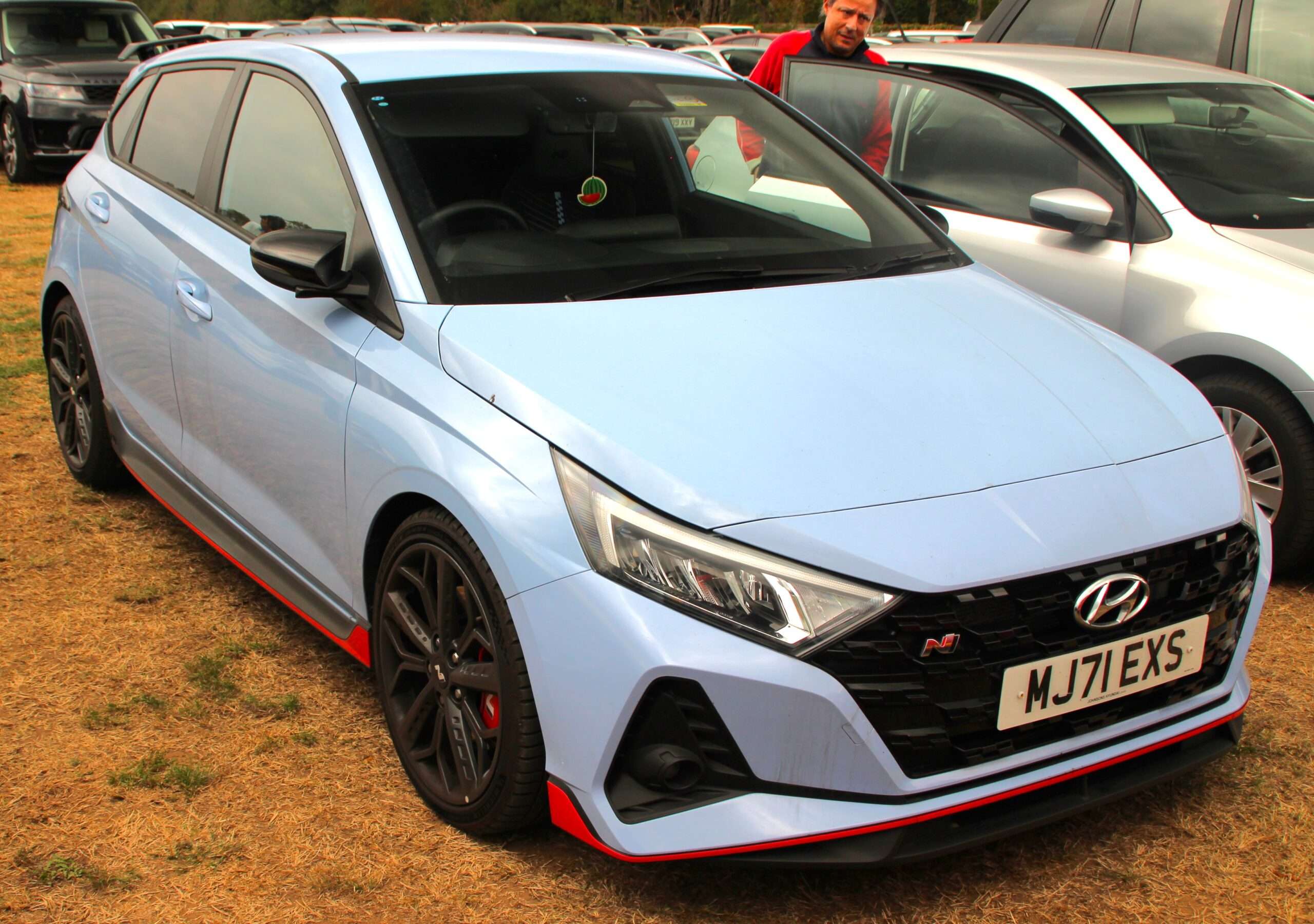
Which Hyundai i20 N should you buy?
Hyundai’s launch specification describes a 1.6-litre turbocharged petrol engine producing 204 PS and 275 Nm, connected to a six-speed manual gearbox. Those are useful identification points when a classified advert groups an N Line and a full N together. The mechanical specification matters more than badges or red trim, which can be changed. Ask the seller for the registration and VIN before travelling, then reconcile the documents with the actual vehicle.
The factory describes a mechanical N Corner Carving limited-slip differential as equipment available for the model. Confirm the UK car’s original specification rather than treating an overseas equipment list as proof. Likewise, check navigation, camera equipment, driver assistance and factory options on the individual car. A retrofit screen or a steering-wheel button does not establish the original build. Obtain written confirmation if an option is a major reason for paying a premium.
There is no automatic gearbox in the launch specification covered here. An advert offering an i20 N “DCT” needs clarification before it goes onto your shortlist. It may be a listing error, an N Line, or confusion with another Hyundai N model. Do not use an i30 N automatic service schedule, gearbox price or transmission diagnosis for this manual car.
The i20 N’s driving modes can change the engine response, steering assistance, exhaust character and stability-control settings. That does not make it an i30 N with the same electronically controlled suspension. For a road buyer, the useful test is whether the car rides and tracks consistently in everyday driving, not whether a seller can demonstrate a louder mode. Inspect any aftermarket springs or coilovers as a separate modification with their own specification and setup requirements.
Low mileage, later registration or better condition?
A later registration can be attractive for equipment, remaining cover or resale, but it does not cancel deferred maintenance. Compare the build information, service dates and tyre dates. A lower-mileage car used for short cold journeys can have a different maintenance history from one used regularly on longer trips. Neither pattern proves a fault; the evidence should explain the condition you see.
Shortlist on total purchase cost. A slightly more expensive car with a coherent history, recent correct tyres, healthy brakes and two keys can cost less in the first year than a cheap example needing all four items. Make a written list of work due on each candidate. Keep optional cosmetic improvements separate from essential mechanical spending so a desirable colour does not disguise an expensive starting point.
Service history, ownership and modifications
Request invoices rather than accepting “full history” without detail. Build a timeline with date, mileage, workshop, oil specification, parts used and additional work. A stamp proves less than an invoice showing what actually happened. Ask about services performed outside the dealer network, obtain the supporting paperwork and check that the vehicle identity on each document matches.
Check the current MOT record where the car is old enough to have one, looking for repeated tyre, brake, suspension or lighting advisories. The absence of an advisory is not a guarantee of condition, and an MOT is not a performance-car inspection. Compare the recorded mileages with the service record and seller’s account. A discrepancy deserves an explanation supported by documents rather than an assumption of wrongdoing.
Use an independent history check to establish outstanding finance, recorded write-off status and other available provenance. Check the seller’s identity and their connection with the vehicle. The V5C is a registration document, not proof that a car is free of finance. Do the checks before paying a substantial deposit, and agree in writing any conditions relating to the result of an inspection.
Ask directly about tuning and track use
Ask about ECU software, piggyback devices, intake and intercooler changes, exhaust components, engine mounts, suspension and brake modifications. “Returned to standard” should start a conversation about the removed parts and previous use. It is not proof that the car has never been tuned. Keep photographs and invoices supplied by the owner with your inspection notes, and disclose the specification to your insurer before purchase.
A reputable tuner’s invoice is more useful than a power claim, but it still does not establish the engine’s present health. Request the software provider, required fuel, supporting hardware and any subsequent updates. Look for damaged connectors, improvised wiring, loose hose joints or missing heat shields. If the seller cannot explain what is fitted, budget for diagnosis rather than assuming a remap can simply be deleted without further checks.
Track use is a condition question, not an automatic rejection. Ask about events, brake-fluid changes, pads, tyre replacements, alignment and any off-track incident. Inspect the car accordingly. Equally, a seller who says it has never been on a circuit does not remove the need to inspect the brakes. For any warranty claim involving modifications or circuit use, obtain the actual applicable terms and written guidance from Hyundai; a forum comment is not a guarantee of cover.
Engine, turbo and cooling: inspect from cold
Arrange for the engine to be cold when you arrive. Feel for obvious warmth only where safe, ask when the car was last started and compare that account with diagnostic coolant temperature if an inspector is involved. A seller may have a reasonable reason for moving the car, but you should still get a genuine cold start before making a final decision.
Before starting, inspect fluid levels using the handbook’s procedure. Look for an unexplained low coolant level, oil contamination, recent cleaning concentrated around a leak, and staining at hose joints. Do not remove a hot expansion-tank cap. An unusually clean engine bay is not evidence of a fault, but it can make a second inspection after the drive particularly valuable.
Start without revving to create a performance demonstration. Watch the warning lights complete their normal sequence, listen for persistent mechanical rattling, and note any uneven running. Some operating sounds require an experienced comparison; a general internet recording cannot diagnose this car. A persistent noise or misfire needs investigation before a sale, with the cause recorded rather than guessed.
During a fully warmed road test, look for smooth response at modest throttle before asking for stronger acceleration where legal and safe. Hesitation, surging, warning lights or power reduction need a fault-code scan and proper diagnosis. Do not assume every hesitation needs an ignition coil. Air leaks, fuel quality, software, sensors and mechanical condition can require different work. Replacing parts at random is an expensive purchase strategy.
Inspect the radiator and intercooler area for impact damage, heavy debris and poorly repaired mounting points. Check the undertray and lower bumper because a small-looking front-end impact can affect components hidden behind them. A damaged cooling stack deserves a written estimate including the associated pipework, clips and alignment, not just the price of a radiator found online.
What a useful diagnostic inspection includes
Ask the workshop to scan the relevant vehicle systems, record codes before clearing anything and explain any return after a road test. A blank code list on its own does not establish mechanical health. Ask whether there is evidence of recently cleared faults and whether all systems could be interrogated. An inexpensive generic code reader may not access every module you need checked.
Compression, leak-down or other invasive tests should be driven by symptoms and an inspector’s judgment. They are not a ritual requirement for every healthy standard car. If oil use is alleged, request a measured account over a known mileage using a consistent checking method. “They all use a bit” is not a substitute for establishing what this particular engine is doing.

Love cars you don’t see every day?
Get forgotten cars, surprising motoring stories and the most interesting finds from Unusual Cars by email.
Free to join. No spam. Unsubscribe whenever you like. See our privacy policy.
Six-speed gearbox, clutch and differential
Try every gear when cold and again when fully warm. The shift should be evaluated at ordinary road speeds as well as under moderate load. Persistent resistance, grinding, jumping out of gear or a new noise on overrun warrants specialist investigation. Do not let a short enthusiastic drive hide a difficult first-to-second change or a problem selecting reverse.
Assess clutch engagement smoothly on a safe level surface. Look for judder, an inconsistent bite, difficulty disengaging and unusual pedal or release noises. Under suitable conditions, an inspector can assess whether engine speed rises without the matching road-speed increase that might suggest slip. Repeated full-load or abusive stall tests are unnecessary and can damage the vehicle.
A clutch quote should identify the exact kit, associated release components, any flywheel decision, gearbox oil, seals where required, labour and VAT. A parts-only kit allowance is not a fitted price. If the gearbox must come out for diagnosis, agree what happens if additional worn components are found before the workshop starts. That prevents a cheap headline quote becoming an open-ended bill.
Listen for unusual transmission noise on acceleration and overrun and feel for vibration through the controls. Check for leakage from the engine-to-gearbox area and driveshaft seals on a lift. A wet joint may need cleaning and tracing before its source can be established. Do not assume a leak is harmless because a seller says the level has recently been topped up.
The limited-slip differential is a reason to buy a correctly specified i20 N, but you do not need a high-speed cornering test to assess a used car. Check for consistent steering, suitable matching tyres and unexplained noises. Allow an N-experienced specialist to investigate concerns. Torque effects, a damaged tyre and a suspension fault should not be confused with proof that the differential needs replacing.
Tyres, brakes, steering and suspension
The factory launch tyre specification was 215/40 R18. Confirm the correct size, load and speed rating against the car’s approved specification and the actual wheels. Read all four sidewalls, not just the brand visible at the front. Look for mixed patterns across an axle, age, repairs, cuts, bulges and uneven wear on the inner shoulders.
A different reputable tyre is not automatically wrong because it lacks the original supplier’s marking. The buyer’s job is to establish suitability, condition and consistent fitment. Ask why tyres were replaced, check invoices and assess how the car drives. A very fresh pair can be perfectly sensible, but it may also conceal the wear pattern that would have helped explain an alignment problem.
Inspect wheel rims for buckling, cracks and repairs, including the inner barrels on a lift. A cosmetic refurbishment can improve appearance without proving structural soundness. Vibration should be diagnosed rather than dismissed as balancing: tyres, wheels, hubs, brakes and suspension can all require investigation. Price the remedy after the cause is known.
Measure brake-disc condition against the correct minimum thickness and inspect both faces where accessible. Look for cracks, pronounced heat damage, an uneven pad surface or contamination. A small wear lip is not enough to determine remaining service life. Check pad thickness on both sides of the axle and ask whether the fitted compound suits the way you intend to use the car.
During a safe test, assess the pedal, straight-line braking and any vibration or pulling. Avoid repeated hard stops on an unfamiliar car or public road. A brake quote should specify the axle, disc dimensions and brand, pads, fitting hardware, fluid work if needed and VAT. A single-disc internet price cannot be compared directly with an axle-set fitted estimate.
Listen for knocks over ordinary low-speed bumps, check for steering free play and look for damaged dust covers, leaking dampers or non-standard mounting hardware. Ask a workshop to distinguish a bush, joint or top-mount problem from a loose trim noise. If suspension parts have been changed, request alignment evidence and make sure the tyres are not compensating for an unresolved geometry issue.

Bodywork, cabin and equipment
Inspect paint and panel fit in daylight on a clean, dry car. Check the bumper-to-wing joins, bonnet fasteners, door apertures, sill edges and boot floor. Look for overspray on seals, disturbed fixings, inconsistent sealant and damaged underbody points. A repair can be entirely acceptable when documented and properly executed; unexplained structural concerns need an independent inspection.
Look underneath for crushed lifting points, scraped exhaust parts and damaged shields. Check the boot for dampness and lift the floor where the seller permits it. Inspect the interior after rain if possible, because a dry-day viewing can miss intermittent water entry. A scented cabin does not tell you whether a leak has been cured.
Test the seats, adjustment mechanisms, belts, heating if fitted, windows, mirrors, locks, air conditioning and rear-seat access. Wear on the driver’s bolster should be considered alongside mileage and use. Check the steering-wheel controls and the normal operation of the N settings while stationary; you should not be learning a menu while driving.
Pair your phone with permission, try navigation and audio, and test camera and parking assistance where fitted. Delete your personal pairing before leaving if you do not buy. A screen that lights up is not the same as a system that works reliably. Ask about updates and make sure the seller demonstrates a recurring concern rather than promising a future software fix.
Confirm two working keys, manuals and any locking wheel-bolt key. If a key is missing, obtain a replacement-and-programming quote for the actual vehicle. Check aftermarket alarms, trackers and subscriptions, including how ownership will be transferred. A security accessory is less useful when nobody can provide its credentials or explain its operation.
Maintenance: build a real first-year plan
Use the correct UK handbook and Hyundai’s vehicle-specific schedule to establish time and mileage requirements. Record when each item is next due, not simply the last service stamp. Ask about oil and filter, plugs, air and cabin filters, brake fluid, coolant and gearbox requirements. Severe use may need different attention; discuss the actual use pattern with a competent N specialist.
This is a timing-chain engine, so a routine cam-belt replacement allowance copied from another small hatchback is not an appropriate scheduled service. That does not mean chain-related symptoms should be ignored or that every chain lasts indefinitely. A persistent abnormal noise or relevant diagnostic finding calls for assessment, with the repair scope determined by evidence.
Keep oil specification and fill procedure separate from the price of a service kit. Buying the wrong oil cheaply is not a saving. Ask whether the quoted service includes the correct quantity, filter, new sealing items where required, waste disposal, inspection, service-record update and VAT. A workshop may decline to fit customer-supplied parts or offer different warranty terms; establish that before ordering.
What published UK prices actually tell you
Brindley Hyundai advertises an older-car Core service from £199 and Major service from £299, with an MOT add-on at £40. Its page describes these as options for vehicles over five years old and no longer under the five-year warranty. These are service-package starting prices, not itemised i20 N repair quotations. The page does not establish a labour-only rate or confirm every N car’s eligibility. Ask the dealer to quote against the VIN and current required work before using either figure in a purchase calculation.
The useful distinction is scope: a basic oil service does not automatically replace plugs, renew worn brakes or resolve a clutch concern. We have not presented an ordinary i20 clutch quote as an i20 N fitted cost, nor invented a labour split from a service total. For repairs without a confirmed model-specific published price, obtain written parts, labour and VAT lines. That makes a local estimate far more useful than an apparently precise national average.
The retained table below is a set of broad parts-only planning allowances from the earlier guide, not newly verified supplier offers. Prices, brands, availability and exact fitment vary. The eBay links search for the relevant i20 N component; check the OE reference and seller’s returns terms. An alternator listing for an ordinary i20 or a clutch kit described only as “Hyundai 1.6” is not enough evidence of compatibility.
Affiliate disclosure. We may earn a commission on purchases through the eBay links below. These are indicative UK parts-only allowances. Confirm the OE number and get fitted quotes separately.
| Part | Allowance | Fitment check |
|---|---|---|
| Oil service kit | £50–£115 | Confirm oil approval. |
| Spark plugs | £45–£105 | Verify engine and tune. |
| Ignition coils | £30–£80 each | Diagnose misfires first. |
| Alternator | £145–£410 | Match OE number and connector. |
| Auxiliary belt | £35–£115 | Confirm routing. |
| Air filter | £18–£45 | Check airbox. |
| Front pads | £55–£155 | Match caliper and compound. |
| Front discs | £130–£340 | Verify dimensions. |
| Rear pads | £35–£100 | Confirm rear fitment. |
| Clutch kit | £180–£490 | Price flywheel separately. |
| Cabin filter | £12–£35 | Match filter dimensions. |
A specific i20 N brake-parts example
PowerBrakes lists a Pagid OE front pad set for the i20 N at £49.99 and a pair of 320 mm front discs at £99.99: £149.98 combined for those two parts listings. These are displayed parts prices, not Hyundai genuine-part prices or a fitted offer. Confirm current VAT treatment, delivery, fitment and stock with the supplier; labour and any caliper repairs are additional. Compare i20 N front brake pads and 320 mm front disc pairs only after confirming the car’s actual brake specification.
Source: PowerBrakes Pagid i20 N front pads and front disc pair. This lower-priced example also shows why an older broad allowance is not a quotation: brand, compound and exact package change the comparison.
Ask for these job scopes before agreeing a price
- Oil service: approved oil and correct quantity, filter, required sealing parts, inspection, labour, disposal and VAT.
- Front brakes: the correct N axle-set discs and pads, hardware, condition of calipers, fitting and VAT. Keep optional upgrades separate.
- Clutch concern: diagnosis first, then the kit and release components, flywheel decision, fluids and labour. Ask what additional work requires approval.
- Charging fault: battery and charging-system tests before an alternator order, then the correct unit, belt-related work if needed and fitted total.
- Tyres: suitable size and ratings, fitting, balancing, valves and disposal; add alignment only where justified and specify the checks included.
A car advertised as “just serviced” may still need tyres, brakes and brake fluid. Equally, a modest service invoice need not imply neglect if the correct items were due. Match the invoice to the schedule and inspection rather than judging maintenance by the number of pounds spent.
Hidden ownership costs and negotiating a budget
Build the first-year budget from the actual car. Start with the purchase price and inspection, then add essential work due immediately, the next scheduled service, an insurance quote using the real specification, tax for the registration, and expected tyre or brake spending. Put a separate contingency alongside that total. The contingency is your risk allowance, not evidence that the i20 N will need a particular repair.
A cheaper car needing a tyre set, front brakes, a missing key and overdue maintenance should be compared with a ready-to-use example after written quotes for all four items. Do not subtract a parts-only allowance from the asking price and assume you have covered a fitted repair. The workshop’s labour, additional consumables and VAT can materially change the calculation.
There are small costs that are easy to overlook: wheel repair, a damaged undertray, air-conditioning diagnosis, a tracker subscription or suitable winter tyres if your use calls for them. Decide which are essential and which are preferences. You should not pay a premium for modifications you plan to remove, particularly when returning to standard requires parts the seller no longer has.
Previously advertised asking prices are historical examples, not a current valuation range. For a purchase now, compare genuinely comparable UK cars by registration, mileage, documented condition, equipment, seller type and warranty terms. Record asking prices separately from completed transactions. A car sitting unsold at an optimistic figure does not establish its market value.

A practical i20 N viewing checklist
Before travelling
- Obtain registration, VIN, service-document photographs and the original specification. Confirm it is a full N.
- Check MOT history where applicable, independent provenance and any finance position.
- Ask about modifications, track use, previous repairs, keys and the reason for sale.
- Arrange a cold start, adequate test-drive insurance and permission for an independent inspection.
At the car
- Reconcile identity and paperwork, inspect body joins and underbody condition, and read all four tyre sidewalls.
- Check fluids safely, start from cold and observe warning lights, running quality and persistent noises.
- Test equipment while stationary, including air conditioning, phone connection, keys and driving-mode controls.
- Inspect brakes and wheel condition, then use a safe road test to assess gear selection, clutch, steering and braking.
- Once warm, recheck for leaks, smells and warnings. Let an inspector scan and document concerns.
Buy, investigate or walk away?
Buy when the specification and history reconcile, the car behaves properly cold and hot, and the cost of work due fits your budget. A documented repair or sensibly maintained track history can be evaluated on its merits.
Investigate a persistent noise, warning light, vibration, questionable tuning history or unexplained uneven tyre wear. Make any offer conditional on a satisfactory diagnosis and a written estimate. An unresolved issue does not become cheaper simply because the seller names a plausible part.
Walk away if identity does not reconcile, the seller obstructs reasonable checks, finance cannot be resolved properly, or you cannot afford the uncertainty in a major mechanical problem. There will be other cars; buying the right one matters more than completing the first viewing.
Hyundai i20 N buying questions
Is an i20 N Line the same as an i20 N?
No. Confirm the full N’s engine and drivetrain from the VIN and paperwork. Styling, seats and an advert’s category are not sufficient identification.
Should I avoid a modified i20 N?
Not automatically, but establish exactly what changed, who did the work, how it was maintained and whether your insurer accepts it. Budget for specialist assessment and do not assume standard-looking hardware proves standard software.
Does the i20 N need a timing-belt kit?
The engine uses a timing chain. Follow the correct maintenance schedule and investigate symptoms; a chain is not a reason to ignore abnormal persistent noise.
Are track days covered by the warranty?
Check the applicable terms and obtain written Hyundai guidance for the car and intended use. Do not treat a seller’s assurance as confirmation that competition, modifications, wear or every circuit-related repair is covered.
What is the most useful pre-purchase expense?
An independent inspection by someone who understands the N, with a cold start, lift inspection, diagnostics and a useful written account of work due. Agree the scope in advance; a basic history report cannot replace those physical checks.
Sources and further checks
- Hyundai i20 N launch technical information — engineering and launch specification; individual UK equipment needs confirmation.
- Brindley Hyundai fixed-price servicing — older-car package scope and advertised starting prices; N eligibility and VAT breakdown require a quote.
- Hyundai vehicle history check — check the relevant vehicle information and ask a Hyundai dealer about outstanding campaigns.
- GOV.UK MOT history — recorded tests and advisories, where applicable.
More about this model
Hyundai i20 N for sale on eBay UK

See more Hyundai i20 N cars on eBay UK
Love cars you don’t see every day?
Get forgotten cars, surprising motoring stories and the most interesting finds from Unusual Cars by email.
Free to join. No spam. Unsubscribe whenever you like. See our privacy policy.