UK history and buying guide · Noble M10
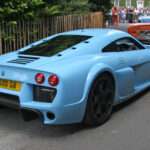
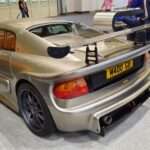
The Noble M10 is where the modern Noble story began. Launched in 1999, it was a compact, mid-engined two-seat roadster conceived by Lee Noble and assembled in Leicestershire. Only a handful were completed before the faster, more resolved M12 took over, making the M10 one of the rarest British sports cars of its period.
Why the Noble M10 matters
Lee Noble already had extensive experience with lightweight performance cars when Noble Automotive was formed. The M10 established the essentials that would define the marque: a steel spaceframe, composite bodywork, a mid-mounted Ford engine, rear-wheel drive and minimal electronic interference. Unlike the closed M12, the M10 was an open roadster and used a naturally aspirated engine.
The car appeared in Britain at the end of the 1990s, when specialist manufacturers such as Lotus, TVR and Marcos still offered distinct alternatives to mass-produced performance cars. The M10 was never produced in commercial numbers; contemporary accounts generally put total production at about five cars. That makes individual history more important than broad model-year distinctions.
Noble M10 specifications
| Production | 1999–2000; approximately five cars |
|---|---|
| Layout | Rear-mid engine, rear-wheel drive, two-seat roadster |
| Engine | 2.5-litre naturally aspirated Ford Duratec V6 |
| Power | About 168 bhp (170 PS) |
| Torque | About 220 Nm |
| Gearbox | Five-speed manual |
| Kerb weight | Approximately 960 kg |
| Construction | Steel spaceframe with composite body |
What is an M10 like to drive?
The paper figures look modest beside later Nobles, but the M10’s low mass, compact size and mid-engined layout are the point. Performance is brisk rather than brutal, with period figures placing 0–60 mph at roughly six seconds. Steering feel, balance and immediacy matter more than outright speed. There is little isolation and no modern electronic safety net, so condition, geometry and tyres have an unusually large influence on how a car behaves.
What to check before buying
Identity and provenance
Confirm the chassis number, registration history and documentary chain before judging cosmetics. With so few cars made, photographs, invoices, previous keepers and correspondence with marque specialists can help establish whether a car retains its original identity and specification. Check that the V5C description agrees with the car.
Spaceframe and accident repairs
The composite panels do not rust, but the steel structure beneath them can corrode. Inspect suspension pick-up points, floor edges, door apertures and areas where moisture may collect. Uneven panel gaps, fresh underseal or mismatched paint can indicate repair work. Any previous accident damage should be assessed by someone familiar with fabricated spaceframes.
Composite body and hood
Look for crazing, star cracks around fasteners, bubbling beneath paint and poor repairs. Check the soft-top, seals and drainage carefully: water entry can damage trim and electrics, while replacement bespoke pieces may require specialist fabrication.
Engine, cooling and fuel system
The Ford Duratec V6 gives useful parts availability, but the installation is unique. Start the car from cold and listen for timing, bearing or auxiliary-drive noise. Check coolant condition, radiator fans, hoses and evidence of overheating. Old fuel hoses, pumps and electrical connectors deserve particular attention on a car that may have spent long periods stored.
Gearbox, brakes and suspension
The five-speed manual should select cleanly without baulking. Inspect driveshaft boots, engine mounts and gear linkage. Seized calipers, aged flexible hoses, leaking dampers and perished suspension bushes are plausible storage-related faults. Old tyres should be replaced regardless of tread depth.
Ownership and servicing
There is no normal service schedule that substitutes for condition-led maintenance. Annual fluid changes, frequent checks and a specialist familiar with low-volume British sports cars are sensible. Ford engine components may be obtainable, but body, trim, glass and installation-specific parts can be difficult. Before buying, identify who will maintain the car and whether replacement components can be repaired or reproduced.
Noble M10 buying checklist
- Verify chassis identity and continuous UK history.
- Commission a specialist inspection of the spaceframe and repairs.
- Test cooling fans and inspect every hose and fuel line.
- Check the roof, seals, interior and electrical system for water damage.
- Budget for age-related recommissioning even on a low-mileage car.
- Value originality, documentation and engineering integrity above cosmetic perfection.
Frequently asked questions
How many Noble M10s were built?
Contemporary references generally cite about five completed cars, although the history of any individual example should be verified independently.
Was the Noble M10 sold in the UK?
Yes. It was a British-built model launched by Noble Automotive in Leicestershire, not an overseas-only derivative.
Is the M10 related to the M12?
It introduced Noble’s core mid-engined formula, but the M12 was a substantially developed closed coupé with twin-turbo power and much higher performance.
Research sources
This guide was cross-checked against Noble Cars, period and retrospective reporting from Autocar, and archived model specifications. Exact details should be confirmed against the individual car and a Noble specialist.