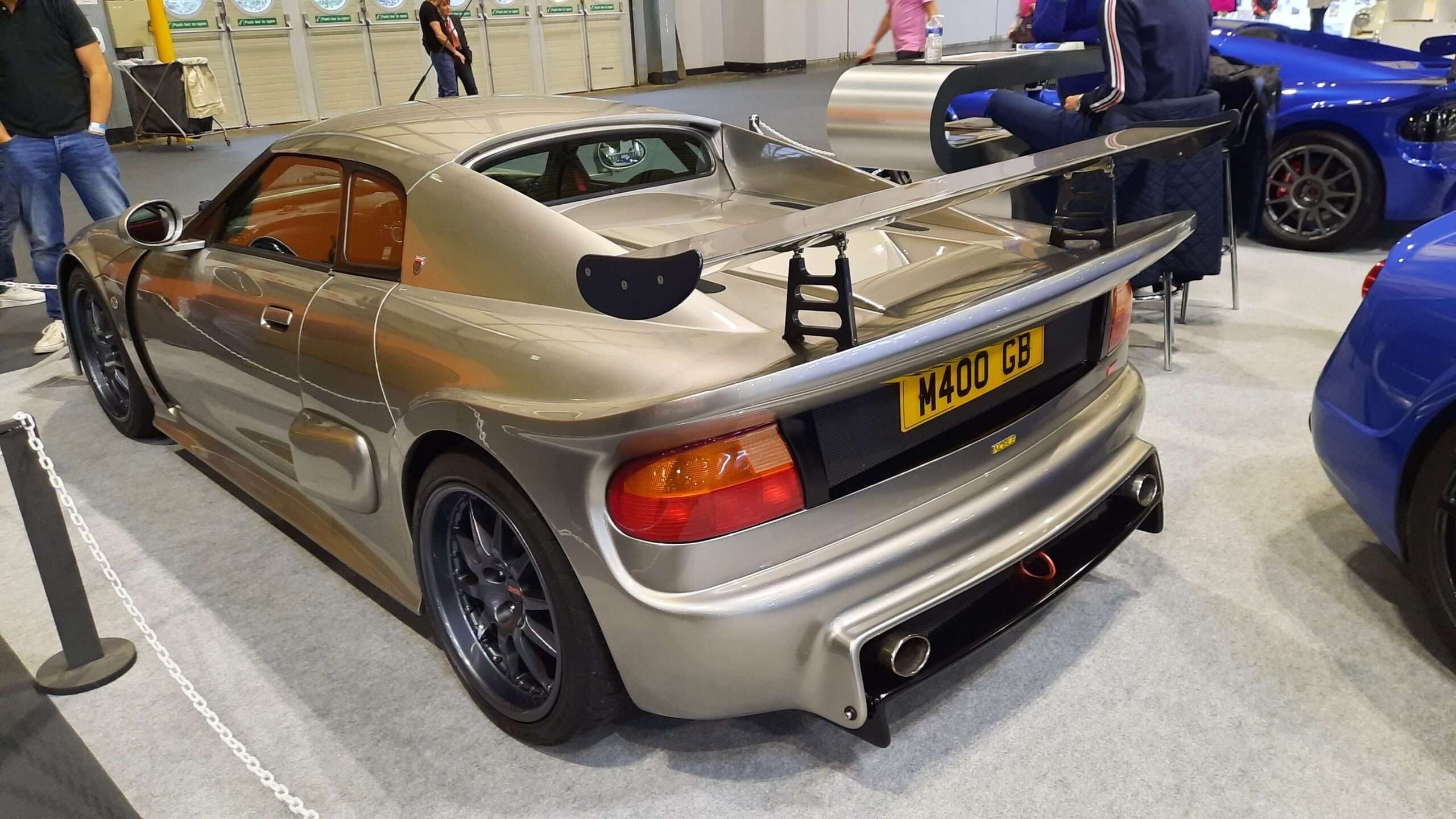
UK history and buying guide · Noble M400
The Noble M400 is the most focused production development of the M12 platform. Named for its target of roughly 400 bhp per tonne, it combined a 425 bhp twin-turbo V6 with a kerb weight of about 1,060 kg, sharper suspension and an intentionally analogue driving experience. Production was tiny, making a correctly identified and well-documented example an important modern British performance car.
What made the M400 different?
Introduced in the mid-2000s, the M400 retained the M12’s steel spaceframe and composite body but used a heavily developed 3.0-litre Ford Duratec V6 with twin Garrett turbochargers, forged internal components and revised camshafts. A six-speed Getrag manual transmission drove the rear wheels through a limited-slip differential. There was no ABS or traction control.
| Production | 2004–2007; approximately 75 cars frequently cited |
|---|---|
| Engine | 2,968 cc twin-turbo Ford Duratec V6 |
| Power | 425 bhp at approximately 6,500 rpm |
| Torque | 390 lb ft |
| Gearbox | Six-speed Getrag manual |
| Kerb weight | Approximately 1,060 kg |
| 0–60 mph | About 3.5 seconds |
| Top speed | Approximately 185 mph |
Driving the Noble M400
The M400 is fast even by modern standards because there is so little mass to accelerate. Turbo response is forceful, steering is unassisted and feedback is immediate. The track-biased set-up is firmer than an ordinary M12 but the car remains usable on suitable roads. Its lack of electronic driver aids places a premium on tyres, alignment, smooth inputs and mechanical sympathy.
Common problems and inspection points
Confirm it is a genuine M400
Because M12s can be modified towards M400 specification, verify the chassis identity, factory build information and original equipment. Check the engine number, gearbox, suspension, seats, harnesses, wheels and documentation against specialist or club records. Provenance is central to both value and insurability.
Spaceframe and body
Inspect the powder-coated frame for corrosion, especially around suspension pick-ups, floor edges and stone-chipped areas. Composite panels can suffer stress cracks, microblisters and poor accident repairs. A four-wheel alignment report can reveal damage or worn components that panel gaps alone may not show.
Engine and turbo installation
Demand evidence of regular oil changes and warm-up or cool-down discipline. Check for smoke, oil leaks, boost leaks and unstable idle. Inspect intercooler hoses, clamps, wastegates and heat shielding. Many cars have been tuned; a dynamometer printout is less important than invoices showing who built, mapped and maintained the package.
Cooling, fuel and electrics
Confirm stable temperature in traffic and correct operation of both fans. Examine fuel pumps, wiring and hoses, plus fuse and relay boxes for moisture. Engine-bay heat can degrade connectors and insulation. Any intermittent misfire, low-voltage behaviour or fuel smell warrants diagnosis rather than assumption.
Gearbox, clutch and driveline
The six-speed transmission should engage cleanly when cold and hot. Check for clutch slip under full boost, differential noise, worn mounts and driveshaft problems. A heavy or inconsistent pedal may indicate wear or hydraulic issues.
Brakes, handbrake and suspension
UK MOT data shows parking-brake efficiency and emissions among recurring failure themes, so test the handbrake on an incline and examine the record carefully. Inspect discs for cracking or corrosion, calipers for sticking and dampers for leakage. Uneven tyre wear or nervous behaviour can point to geometry or bush problems.
Servicing and ownership
Annual specialist servicing is sensible regardless of mileage. Cars used on track need more frequent fluid, brake and fastener checks. Keep a record of boost settings, ECU software, spring and damper specifications and wheel alignment. Parts based on Ford components can be obtainable, but Noble-specific body, chassis and trim items may require specialist sourcing.
Noble M400 buying checklist
- Authenticate the chassis and factory M400 specification.
- Inspect the entire spaceframe and obtain a geometry report.
- Verify engine build, boost level and ECU mapping with invoices.
- Check cooling fans, fuel pumps, wiring and heat shielding.
- Test clutch, gearbox, limited-slip differential and parking brake.
- Prefer documented, reversible upgrades over undocumented power claims.
Frequently asked questions
How rare is the Noble M400?
Published estimates commonly place production at roughly 75 cars, though exact market splits and individual histories should be checked with marque records.
Is an M400 just a modified M12?
It is based on the M12 architecture, but the factory M400 received substantial engine, chassis and equipment changes. Authentication matters because later modifications can blur the distinction.
Does it have ABS or traction control?
No. Correct tyres, brakes, geometry and driver judgement are fundamental to safe use.
Research sources
Specifications and history were cross-checked against Noble Cars, Car Collector International, evo and UK MOT patterns. An individual car should always receive a specialist inspection.