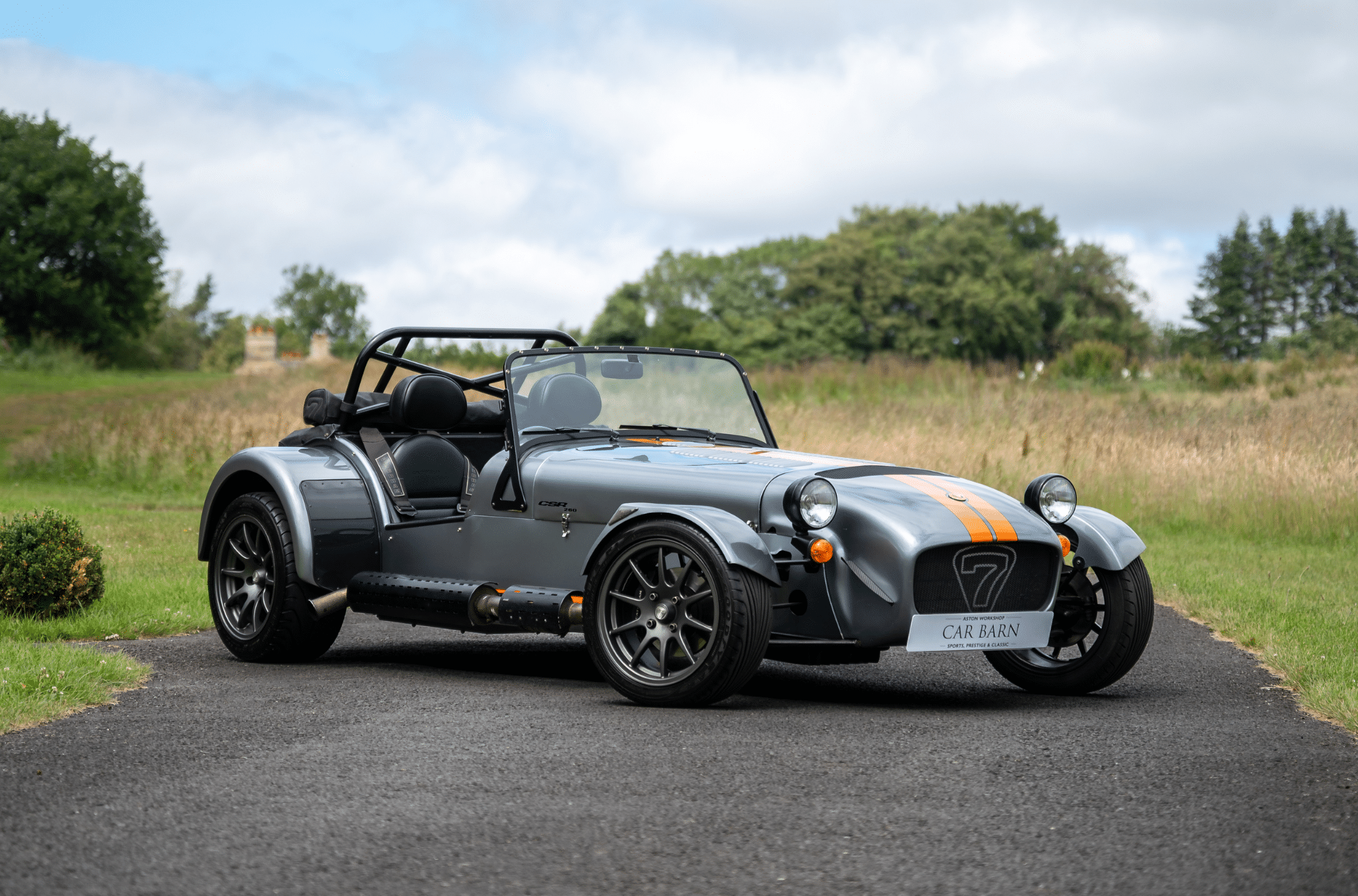
The Caterham CSR 260 was a rare moment when the Seven formula changed in several directions at once. Introduced in the mid-2000s, it combined a wide-body chassis, a 260bhp Cosworth engine and fully independent suspension with the familiar immediacy of an open Caterham.

A different kind of Seven
Traditional Sevens used a live rear axle or De Dion layout, depending on age and specification. The CSR replaced that familiar arrangement with independent double wishbones at the rear and an inboard, pushrod-operated front suspension system. The aim was not simply more grip; Caterham wanted better wheel control, improved ride and greater stability at the very high speeds the new engine made possible.
The chassis was longer and wider than a standard Seven, giving more room in the cockpit and a broader track. Aerodynamic front wings and revised body details were also used to reduce lift. Even so, the CSR still looked unmistakably like a Seven rather than a clean-sheet sports car.
Cosworth power
The flagship CSR 260 used a 2.3-litre Cosworth-developed four-cylinder engine producing 260bhp at 7,000rpm and 200lb ft of torque at 6,200rpm. Caterham quoted 0–60mph in 3.1 seconds and a top speed of 155mph. With a weight of about 575kg, those figures were believable—and demanded a chassis with more composure than earlier high-powered Sevens.

On road and track
The CSR 260’s most distinctive quality was the way it combined huge performance with a more settled platform. It remained physically direct—there was no heavy layer of assistance or insulation—but the suspension allowed each wheel to deal with bumps more independently. That made the CSR less nervous on imperfect British roads without turning it into a conventional grand tourer.
At the same time, the Cosworth engine supplied a broader spread of torque than many highly tuned smaller units. The result was a Seven that could be driven rapidly without constantly chasing the final few hundred revs, yet still delivered the explosive response expected of the badge.
Specifications
| Engine | 2.3-litre Cosworth four-cylinder |
|---|---|
| Power | 260bhp at 7,000rpm |
| Torque | 200lb ft at 6,200rpm |
| Weight | About 575kg |
| 0–60mph | 3.1 seconds |
| Top speed | 155mph |
| Suspension | Independent double wishbones; inboard front springs and dampers |
Why the CSR 260 matters
The CSR did not replace every other Seven. Instead, it demonstrated how far Caterham could modernise the underlying concept while preserving its essential feel. It offered more space and sophistication, yet avoided the weight that usually comes with greater refinement.
That makes the CSR 260 an important branch of Caterham history: not merely a faster derivative, but a serious re-engineering of the Seven around contemporary suspension thinking and a muscular normally aspirated engine.
Enjoy unusual British performance cars?
Join the Unusual Cars newsletter for new model histories, forgotten-car features and specialist guides.
Frequently asked questions
What does CSR mean?
Caterham used CSR for this extensively revised, independent-suspension branch of the Seven range.
Was the CSR 260 sold in the UK?
Yes. It was offered to UK customers as Caterham’s flagship road and track model.
How is it different from a standard Seven?
It has a wider and longer chassis, independent rear suspension, inboard front suspension and the 2.3-litre Cosworth engine.
Research sources include Caterham technical literature and contemporary CSR road tests.