The Ford Capri 2.8 Injection is a compelling classic when its shell, mechanical fuel injection and V6 installation are healthy. Early cars, the Injection Special and the final 280 have different buying attractions, but all deserve more scrutiny than a familiar badge and a fresh respray. This UK guide explains the differences, the inspection priorities, parts availability and the costs that can turn an apparently affordable Capri into a major project.
The buying verdict
Buy the soundest, most complete and best documented car you can inspect properly. A genuine 280 needs evidence to justify its premium; an ordinary Injection can be the better road purchase when condition is stronger. Prioritise structural metal, correct identity, cold and hot starting, cooling and the drivetrain before colour or low indicated mileage.
Retain money for an experienced inspection and a maintenance baseline. Avoid cars described as needing only tuning or a little welding until the work has been diagnosed and priced. A usable, honestly repaired example can make more sense than an incomplete restoration with attractive paint and an unknown history.
Early Injection, Injection Special or Capri 280?
The 2.8 Injection uses the Cologne V6 and Bosch K-Jetronic mechanical fuel injection. It is not simply a carburetted 3.0 Capri with different badges. An early four-speed, a later five-speed Injection, the better-equipped Injection Special and a final 280 should be compared as distinct specifications.
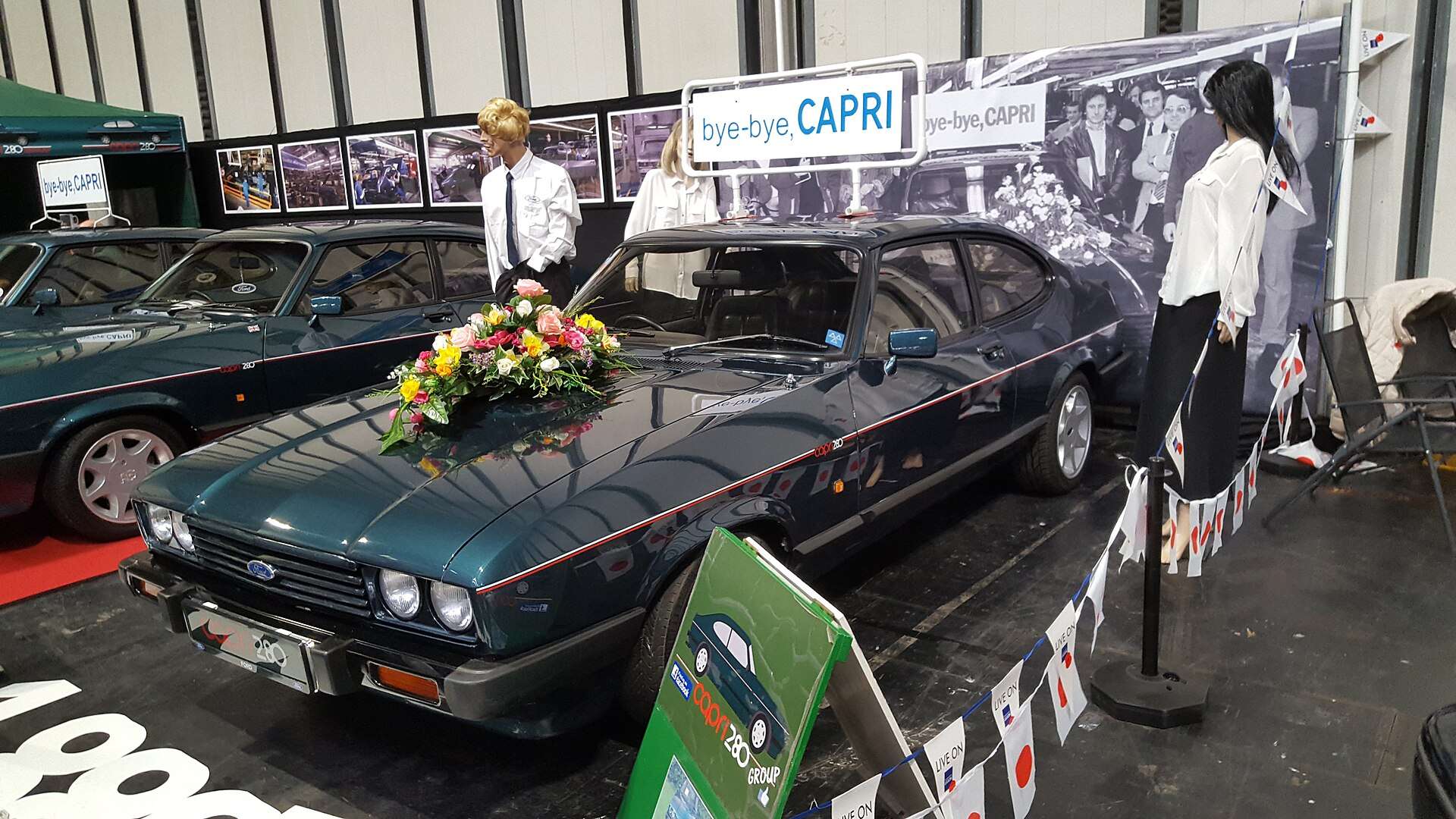
The Special is associated with a five-speed gearbox, limited-slip differential, seven-spoke wheels and half-leather Recaro trim. The final 280 adds its distinctive Brooklands Green presentation, full-leather Recaros and 15-inch wheels. Those features help describe the derivatives, but they can be transplanted. Establish the original build and current equipment together.
| Choice | Why buy it? | What to establish |
|---|---|---|
| Early 2.8 Injection | The original version’s character and specification. | Build details, four- or five-speed installation, correct interior, wheels and mechanical history. |
| Later Injection / Injection Special | Practical road appeal and desirable equipment. | Whether the car is genuinely a Special, current gearbox and axle, trim completeness and modifications. |
| 280 | The final-edition identity and specification. | Factory provenance, original colour and equipment, numbers and restoration evidence; green paint is not authentication. |
| Modified or converted car | May suit a buyer wanting different performance or road behaviour. | Full engine, injection, transmission, brake and suspension specification, workmanship and insurance acceptance. |
Decide whether you want an original-feeling driver, a collector car or a project. The same example may be attractive for one purpose and unsuitable for another. A high-quality modification can suit use without preserving collector originality. Conversely, correct trim cannot compensate for structural weakness or poor engine condition.

Authenticity: use records, not just appearance
Match VIN, documents, engine identity and available build evidence. Inspect the surrounding metal and identification areas for consistency with the repair history. Ask about shell, engine, gearbox and axle replacements. A specialist should help reconcile what was originally supplied with what is fitted now.
A set of 280 wheels does not make an Injection Special a 280. The Trade Classics example discussed below explicitly had later 15-inch wheels while remaining an Injection Special. That is a useful reminder to describe changes accurately rather than interpreting each desirable component as a model upgrade.
For a premium-priced car, establish original colour, trim, major numbers and restoration timeline. If the shell or engine was replaced, obtain the invoices and appropriate documentation. Do not treat several matching visible numbers or a genuine-looking badge as a substitute for a coherent identity assessment.
UK price evidence: separate sales from asking prices
Trade Classics records a published sold price of £11,524 for its 1986 2.8 Injection Special, sale date 9 July 2026. The catalogue described long ownership, repainting, some body blemishes, a sunroof that tilted but would not slide and later 15-inch wheels. It displayed approximately 53,444 miles on the clock, while older service entries recorded mileage above 98,000. That makes it a particularly useful reminder not to equate the dashboard reading with lifetime mileage.
This is a result for one specifically described car, not a universal valuation. Do not relabel the published figure as hammer price without checking fee presentation. The listing’s condition observations and seller statements are attributed descriptions; we have not inspected the car.
The live Car & Classic search included a 1987 Injection Special in Woking at a £14,000 buy-it-now price, plus 1985 and 1984 2.8-litre cars advertised at £20,000 and £26,950. A much higher Ramsgate advert also appeared. These are individual asks, not completed sales or a reliable market average.
Build separate comparisons for early cars, Specials and 280s. Record originality, steering position, restoration quality, mileage evidence and immediate requirements. A rare colour or low indicated mileage may be desirable, but it should not obscure poor structural repairs or an unresolved fuelling problem.
Calculate the whole entry cost: purchase, inspection, transport, fees where relevant, immediate work and a reserve. For a project, include workspace and the time a workshop can actually allocate. A cheaper distant car may cease to be cheaper after collection and several necessary installed jobs.
Make an offer from evidence
Ask for repair estimates covering actual findings. A diagnosed fuel-pressure problem and a bodyshop’s assessed sill repair can be budgeted. A vague promise that the car only needs a service leaves a different level of uncertainty. Put unresolved investigation on its own line instead of disguising it as a small fixed expense.
Keep the advert, description, inspection and agreed work in writing. If the seller will repair something before collection, specify the workshop and evidence expected. Verify the finished result. A verbal commitment that a sunroof or hot-start issue will be sorted is not the same as a completed repair.
Rust: examine the structure before the body kit and paint
Arrange a lift inspection. Examine front strut tops and surrounding inner wings, chassis rails, crossmember and mounting areas, floor, inner and outer sills, jacking points and rear spring mounting areas. Follow seams and past patches. An experienced inspector should identify whether the visible repair reaches sound structure.
Look at the battery tray, headlamp bowls, wing edges, wheelarches, lower rear corners, door bottoms and tailgate areas. External bubbling can be the visible end of a larger problem. Check around screen seals and accessible luggage areas for damp, corrosion and signs of previous repair.
Compare paint, panel gaps, shut faces, seam treatment and fasteners. Replacement wings and repaired front structures are not automatically unacceptable, but their fit and workmanship matter. A freshly coated underside needs an explanation of the preparation and what the coating covers.
Read MOT history and repair invoices together. Repeated corrosion comments should prompt examination of the actual work. A pass is useful evidence of a test, but it cannot establish that every concealed cavity or old restoration is sound. Even where a vehicle may qualify for exemptions, continue to assess roadworthiness and maintenance properly.
Repair panels are available; fitting them is the larger question
The capri280 Group describes reproduction and original parts including sills, arches, suspension-top repair panels, wings, drip rails, floor sections and fuel tanks. That is useful support, but availability of a panel does not establish its fit, the labour required or the strength of the surrounding shell.
For a restoration, obtain photographs showing the stripped car, cut-out corrosion, replacement metal and protective treatment. Ask who carried out the welding and paint, how hidden areas were protected and whether the car was checked for alignment after major work.
Budget access, broken trim, seals, clips, preparation, paint and reassembly alongside welding. A workshop may discover a wider repair after removing a panel. Agree how that extra work will be reported and authorised before committing to a project with a supposedly fixed small repair allowance.
A known, documented repair can be preferable to cosmetic concealment. Do not demand that every old car has never been welded; demand that necessary work was done competently and can be understood. If the seller refuses access to a critical area, the missing information remains a buying risk.
Love cars you don’t see every day?
Get forgotten cars, surprising motoring stories and the most interesting finds from Unusual Cars by email.
Free to join. No spam. Unsubscribe whenever you like. See our privacy policy.
Cologne V6: cold start, oil history and cooling
Ask for the engine to be cold when you arrive. Inspect oil and coolant safely, look for leaks and evidence of repeated cleaning, and establish the actual engine fitted. Watch warning-lamp operation and assess starting, idle, persistent smoke and abnormal mechanical noise.
The 2.8 Cologne uses a gear-driven camshaft, so a routine cambelt-kit recommendation from another Ford engine is inappropriate. Gear-drive condition, valve-train maintenance and auxiliary drives need their own assessment. Ask about previous internal work and the parts used rather than accepting a generic claim that the engine has been rebuilt.
Request oil-service records and ask about measured consumption and top-ups. A brief start cannot establish lubrication history or internal condition. Further tests should answer a specific concern, with the workshop explaining their limits. Avoid condemning an engine from one noise or certifying it because it sounds pleasant for a minute.
Check valve-train service evidence and have any clearance-related or mechanical noise assessed using the correct procedure. Ignition timing, fuelling and mechanical condition interact. A tune-up is not a repair for worn components, and a replacement exhaust cannot establish that the engine is producing standard performance.
Cooling and previous overheating
Inspect radiator, pump area, hoses, fan equipment, tank and cap as fitted. Look for staining, perished hoses, damaged fins and improvised repairs. Ask about temperature behaviour in traffic, coolant loss and any history of overheating. A recent radiator invoice is useful, but ask why it was needed.
Allow a meaningful warm drive, including normal traffic conditions, and recheck for leakage afterwards. Check heater output separately from the dashboard gauge. Never open a hot coolant system or reach near moving fans and belts. A short drive on an open road can miss a fault that appears when stationary.
Unexplained coolant loss requires diagnosis. A specialist can decide whether pressure testing, combustion-gas testing or other investigation is justified. A seller’s confident explanation that the cap is at fault should be supported by findings. Where overheating has occurred, assess the engine as well as the component replaced.
Compare 2.8 Injection cooling components by actual installation and part identification. A 2.9 conversion, carburetted engine or modified cooling arrangement may require a different list. Do not buy a generic Capri pump before establishing the engine.

Bosch K-Jetronic: cold and hot starting both matter
K-Jetronic is a mechanical continuous-injection system. Buying a car with poor starting or uneven response means assessing fuel delivery, control and residual pressures, air leaks, ignition and mechanical condition together. It should not begin with random mixture adjustment or a string of guessed replacement parts.
Observe a genuine cold start, normal warm-up, idle and a fully warm restart after an appropriate stop. Ask how the car behaves after standing for a few days and whether long cranking is a recent change. A seller warming the engine before every viewing can conceal the conditions in which a fault appears.
Check fuel lines, injector connections, pump installation, tank condition and visible leakage. Petrol smell needs investigation. Do not continue a routine drive with evidence of fuel leakage. The system works under pressure, so testing and depressurising belong with someone using the right equipment and procedure.
Insist on measurements before buying expensive injection parts
A specialist should determine whether symptoms arise from supply, pressure retention, control pressure, injector condition, intake leaks, ignition or the engine itself. Similar starting complaints can have different causes. Replacing a warm-up regulator or fuel distributor because a forum post sounds familiar may add cost without curing the car.
Ask what a previous overhaul included and whether components were tested afterwards. A cleaned engine bay, a used distributor and an adjusted mixture are not a documented injection rebuild. Obtain the workshop, parts, findings and subsequent running evidence.
The capri280 Group’s parts information specifically describes injection fuel tanks with an internal swirl pot. That highlights the need for the correct fuel-system installation, rather than assuming any visually similar Capri tank is equivalent. Inspect tank straps and surrounding metal as part of the lift inspection.
Useful comparison searches include 2.8 Injection fuel pumps, correct injection fuel filters and K-Jetronic control and pressure-retention parts. Match original references, specification and condition. Remanufactured, tested used and untested used parts are different propositions.
Four-speed, five-speed and rear axle checks
Establish which gearbox belongs to the car’s build and what is fitted now. A later conversion can be useful if properly executed, but it should be disclosed and supported by records. Test every gear, reverse and clutch engagement cold and warm at appropriate speeds.
Notice crunching, reluctance to engage, jumping out of gear, slipping or abnormal noise. The cause may involve the clutch, linkage, mounts or internal transmission condition. A seller’s promise that an oil change will fix it should not be priced as a confirmed repair.
Inspect gearbox, axle and related seals for leaks, and check propshaft joints and mountings. Listen for changes under normal load and on overrun. Distinguish axle noise from tyres and wheel bearings before condemning an assembly. Have a specialist assess play and condition safely.
Verify limited-slip claims by records and the installed axle, particularly on cars assembled from several specifications. Do not use public-road wheelspin as an authentication test. For a rebuilt unit, establish the workshop, ratio, components and oil used.
Compare 2.8 Injection clutch kits and appropriate axle components after confirming the installation. Include related seals, fluid and labour in the repair scope. A clutch plate or used differential alone is not the cost of a finished job.
Suspension, steering, brakes and tyres
Assess whether the Capri feels consistent and controlled rather than merely firm. Check steering play, braking vibration, pulling, knocks and uneven ride height. Inspect front struts, arms, joints, bushes, rear leaf springs, shackles and mounting structure on a lift.
Lowering, larger wheels and stiffer dampers can alter clearance and road behaviour. Obtain component details and inspect tyre contact, spring travel and exhaust clearance. A familiar brand name does not prove the setup suits your roads. Ask for retained original parts if returning to standard matters.
Examine front discs, rear drums, pads or shoes, cylinders, calipers, hoses and rigid lines as applicable to the installed brakes. Confirm any conversion and the supporting equipment. A new set of front pads does not establish the condition of rear brakes or old lines.
Check tyre age, full tread width, condition and suitability for the actual wheels. Standard and 280 wheel sizes should not be mixed without thought to the whole installation. The Trade Classics example retained a 13-inch spare while wearing 15-inch road wheels: check the practical spare arrangement on the car you buy.
Use 2.8 Injection brake-part searches and suspension components once the required dimensions and specification are confirmed. Compare axle sets with axle sets and account for fitting hardware and seized components.
Interior, sunroof and electrical checks
Correct Recaro trim, dashboard, switches, door cards and small fittings affect completeness. Inspect bolster repairs, cracked dashboards, seat frames and secure latching. Price the correct material and components rather than assuming an ordinary Capri interior can restore an Injection Special or 280 cheaply.
Test the sunroof if fitted, including its normal functions, seals and signs of damp. Do not force a mechanism that binds. A roof that tilts is not necessarily one that slides, as the completed-sale example shows. Water stains need a cause identified before carpets or headlining are replaced.
Demonstrate lights, heater blower, wipers, washers, instruments, locks and every supplied key. Check charging, starting, earths and wiring. Aftermarket audio, alarms, electric fans and engine modifications should be installed neatly and documented rather than spliced into unexplained circuits.
For a charging fault, have the battery, cables, connections and output assessed before buying 2.8 Injection alternators. Match original identification, mounting, pulley and output. Note exchange surcharges and new, remanufactured or used condition. A low price for a regulator is not a complete alternator price.

UK maintenance costs: parts, labour and fitted budgeting
Classic-car work needs an agreed scope. The capri280 Group publishes member parts references including £19.70 for its described Bosch injection fuel filter and £260 for a reproduction injection tank. Its parts-availability article is dated November 2021 and current stock, membership terms, tax and delivery require confirmation. Treat these as published references, not a promise that the item can be bought today at that price.
For labour context, The Village Classic Car Company publishes £75 plus VAT per hour, or £90 inclusive. It is a general classic-car workshop rate, not a Capri job quotation or a national average. The business explicitly says it does not offer pre-purchase inspections. Use it to understand the scale of labour, then obtain a Capri-capable workshop’s actual quote.
| Common work | Parts comparison | What the fitted quote must include |
|---|---|---|
| Routine service | Injection filters, plugs and service parts. | Correct oil, quantities, checks, valve-train work if due and any ignition adjustment. Define what “full service” means. |
| Fuel filter / supply fault | Correct filter and pump searches; club filter reference £19.70, confirm current availability. | Diagnosis, pressure testing, safe access, fittings, leak checks and labour. A filter replacement is not an injection overhaul. |
| Fuel tank | Injection-specific fuel tanks; club reproduction reference £260, confirm terms. | Tank, straps, lines, sender condition, access and safe handling of fuel. |
| Alternator | Correct alternator comparison. | Charging diagnosis, belts or connections if needed, fitted unit and any exchange surcharge. |
| Clutch, cooling or brakes | Engine- and installation-specific kit or component list. | Parts, access labour, fluids, associated wear, VAT and warranty. |
| Corrosion and paint | Repair panel availability does not establish installed cost. | Strip-down, structural work, preparation, finishing, trim and protection. |
At the published £90-inclusive hourly reference, two labour hours equal £180 and four equal £360, before parts. These are arithmetic examples, not claimed times for the jobs above. The actual workshop must estimate the hours. If a quote specifies a part at £150 and two hours at that rate, the arithmetic total is £330 before any other agreed items; it is not a universal alternator or pump price.
This distinction prevents a cheap parts listing from becoming a misleading fitted budget. Do not invent labour times or subtract unrelated retail parts from a package. Obtain the full payable figure, clarify VAT and delivery, and agree how additional work will be authorised once access improves.
Hidden ownership costs
Restoring identity and completeness. Correct seats, wheels, trim, badges and small fittings can be slower to obtain than mechanical service parts. Establish availability before buying an incomplete Special or 280.
Injection diagnosis. A car that starts when warm may still need significant work. Budget an assessment of pressures, air leaks and ignition rather than a speculative tuning allowance.
Structural repair consequences. Wings, sills or suspension-top work can involve paint, adjacent metal, trim and protection. Buying a panel is only one part of the job.
Long storage. Old tyres, degraded fuel, perished hoses, sticking brakes and a tired battery can affect an apparently preserved car. Recommissioning is different from washing, polishing and obtaining an MOT.
Insurance and everyday use. Obtain a quote for the actual value and modifications. Budget fuel, storage, servicing and tax for your circumstances. Confirm eligibility for any historic-vehicle or emissions-zone treatment using the car’s actual records and the current rules; do not infer it from a rounded age description.
Plan the first year before the first drive home
Ask the inspector to separate immediate safety work, overdue maintenance, repairs needing diagnosis and optional improvements. Fuel leaks, weak structure and brake faults should not be placed on the same timetable as worn trim. If the car cannot be assessed safely for a drive, arrange transport.
Keep the initial plan realistic. A sound shell needing a known service can be a sensible purchase. A beautiful car with uncertain identity or unresolved structural work requires a different decision. A project needs workspace and a workshop slot as well as money for the first parts order.
Record future work with dates, mileage and component details. Keep photographs of hidden repairs and document any gearbox, axle or engine change. Clear history is useful to the next owner and helps your own workshop maintain a car whose specification may have evolved over forty years.
Capri 2.8 Injection viewing checklist
- Establish genuine identity, derivative, original colour, engine, gearbox and axle, including conversion records.
- Read mileage records for rollover or unit changes; the displayed figure is not automatically lifetime mileage.
- Arrange cold start, hot restart, fully warm drive and specialist lift inspection.
- Check strut tops, inner wings, rails, floors, sills, spring mounts, lines and concealed repairs.
- Assess cooling, oil history, K-Jetronic operation, fuel leakage, clutch, all gears and axle noise.
- Test sunroof, electrics and keys; inspect damp, Recaros, dashboard and correct small trim.
- Get repair scopes, fitted quotes, insurance and collection arrangements before agreeing the total price.
Capri buying questions
Is a 280 mechanically a completely different car?
It is a distinctive final derivative of the 2.8 Injection family. Authenticate its identity and equipment. Do not pay a 280 premium simply because an ordinary Injection wears green paint and larger wheels.
Does the 2.8 need a timing-belt kit?
The Cologne 2.8 has a gear-driven camshaft. Use engine-specific maintenance advice, including valve train and auxiliary drives, rather than a cambelt schedule for another Ford.
Is difficult hot starting just a tuning issue?
It needs diagnosis. Fuel-pressure retention, control, ignition and other causes should be assessed before parts are replaced or mixture is altered.
Can a restored car be a better buy than an original one?
Yes, when structural and mechanical work is competent, documented and suitable for your use. Originality and condition are separate questions.
Should I trust low indicated mileage?
Verify the entire record. Older odometers and component changes can make the displayed number incomplete. The July 2026 sale example shows why earlier mileage entries matter.
Sources and related reading
Completed-sale evidence and a useful disclosure-rich example: Trade Classics, 1986 Injection Special. Current asking-price examples: Car & Classic. Parts support and published member references: capri280 Group. Published general classic-workshop labour reference: The Village Classic Car Company. Read our separate Injection and 280 history feature. Seller claims are attributed; this is desk-researched advice rather than an inspection of the listed cars. Photographs illustrate the models and are credited individually.
Some parts links are eBay affiliate links. We may earn a commission from qualifying purchases. Search results are comparisons, not a fitment guarantee or an endorsement of every seller. Confirm the engine, part number, condition and kit contents before ordering. Prices and availability change.
Ford Capri 2.8 Injection for sale on eBay UK

See more Ford Capri 2.8 Injection cars on eBay UK
Love cars you don’t see every day?
Get forgotten cars, surprising motoring stories and the most interesting finds from Unusual Cars by email.
Free to join. No spam. Unsubscribe whenever you like. See our privacy policy.