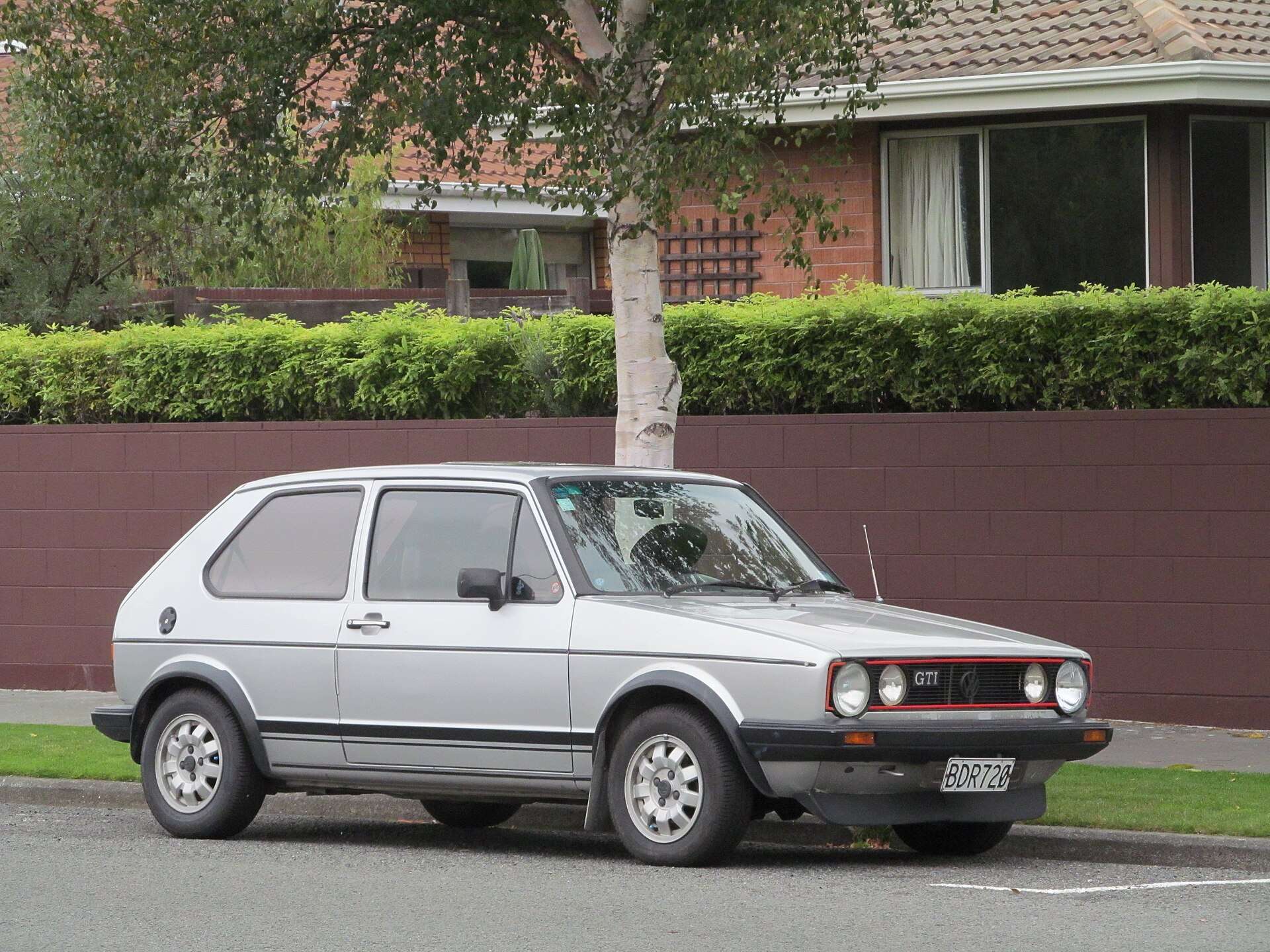
Featured photograph: Riley / Wikimedia Commons, CC BY 2.0. 1982 GTI photographed in New Zealand. Resized for display.
A good Mk1 Golf GTI makes its case through lightness, visibility and the way an ordinary journey becomes interesting. Buying one now requires rather less romantic judgement. The shell is more than four decades old, original trim can carry a premium, and a fuel-injection fault may originate at the back of the car rather than beneath the bonnet.
This guide covers the original European-style 1.6 and 1.8 GTI hatchback, including UK Campaign claims. The longer-lived Cabriolet, North American Rabbit GTI, South African Citi Golf and engine-swapped cars need separate identification. We link to the Mk1 GTI history article for the development story; here the priority is a sound purchase and a realistic ownership plan.
The buying verdict
Buy the best documented shell you can afford, then judge originality and mechanical condition together. An honest, correctly described 1.8 with a good underside is usually a more manageable purchase than a freshly painted project sold on rare wheels and a Campaign story. A desirable early 1.6 deserves its premium only when identity and condition justify it.
Arrange a cold start, a complete warm road test and an independent lift inspection by somebody familiar with Mk1s. Prioritise inner structure, the steering-rack area, fuel-system contamination, clutch-cable bulkhead damage and previous alterations. Obtain fitted estimates before using a parts price to negotiate.
1.6 versus 1.8: choose the car you want to use
The original 1,588cc GTI is normally identified with the EG engine, while the later European 1,781cc car commonly uses DX. Confirm the installed engine and original market rather than applying those codes universally to imports. Both are eight-valve injected fours; neither should be confused with a later 16-valve conversion simply because it wears GTI trim.
The 1.6 is the choice for buyers who especially want the early car’s character and appearance. The 1.8 adds useful flexibility rather than a dramatic change in peak output. Volkswagen’s familiar figures are 110 PS and 112 PS respectively. Published bhp figures differ slightly because the units differ; an advert using one or the other has not established that the engine has been tuned.
| Car | Why buy it? | What changes the decision? |
|---|---|---|
| Early 1.6 | The original appearance and rev-hungry character | Shell originality, rare correct trim, engine identity and the cost of restoring missing details |
| Later 1.6 | A useful alternative when condition is better than the fashionable earliest cars | Actual build specification, gearbox, rust repairs and service history |
| 1.8 | More flexible road use and later equipment | Injection health, body condition, MFA operation and documented alterations |
| UK Campaign claim | Run-out specification and collector interest | Option evidence and a consistent collection of details, rather than a wheel set alone |
| Converted or heavily modified car | Potentially good value if you want the installed configuration | Engineering, legality, insurance, parts identification and structural changes |
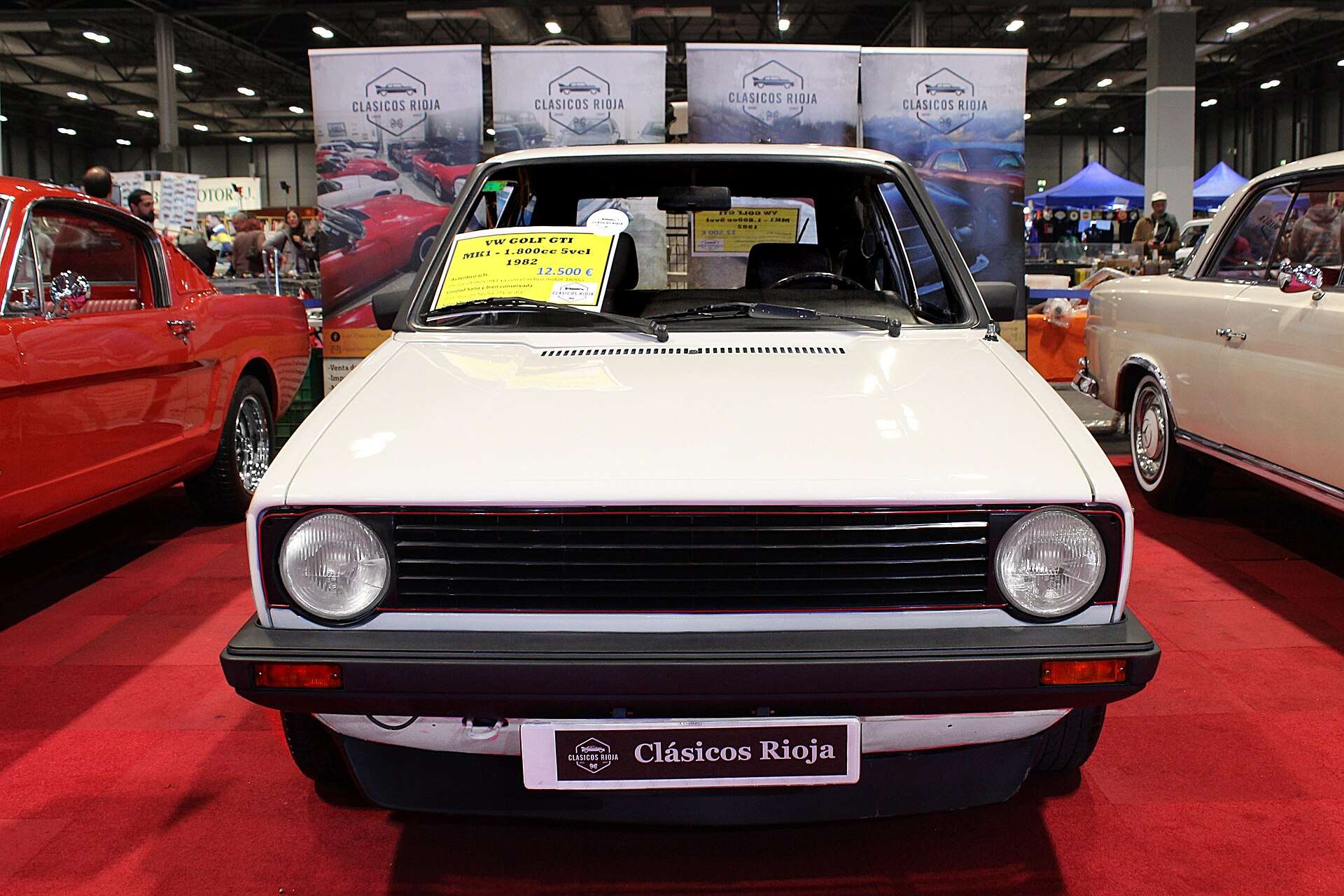
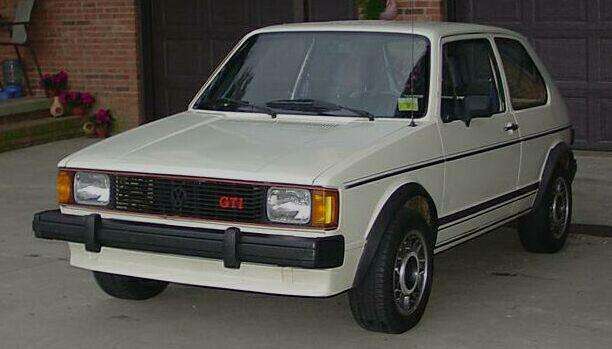
Early cars and later cars differ in lighting, dashboard and detail specification. Do not reject a sound car because a generic online checklist describes a different production period. Equally, do not accept a mixture of early and late parts as proof of a rare factory transition without documents. Photograph the identification and ask a knowledgeable club member or specialist to assess the claimed build.
Keep the hatchback and Cabriolet markets separate
A later soft-top can be advertised as a Mk1 GTI, and it shares much of the basic visual identity, but its age, shell and ownership concerns differ. Check body style and build date before using an advert as a price comparison. The same caution applies to a Citi Golf, a rebuilt non-GTI shell or a Mk1 with a modern engine. They can be appealing cars without being equivalent to an original UK hatchback.
What is a Mk1 Golf GTI worth in the UK?
Use live asking prices as evidence of availability, not achieved values. Car & Classic’s search checked for this guide included a 1983 RHD 1.8 at £9,000 with an advertised 172,885 miles, a Leatherhead 1983 example at £16,995 and 142,050 miles, and an Ormskirk 1982 1.6 at £8,995 and 174,903 miles. These are different cars with different histories, not a neatly controlled condition ladder.
The same results contained Cabriolets, later-generation Golfs, overseas cars and an auction Campaign advertised from £13,000. That starting figure is not an auction result. Do not call the complete result count the number of UK hatchbacks available or describe an asking-price spread as a guaranteed valuation band. Select genuine comparables individually and retain their dates, photographs and descriptions.
For each comparable record engine, body style, original market, steering position, originality, restoration standard, mileage evidence and selling route. Clarify whether fees are additional at auction. A low odometer reading without continuity is less persuasive than a higher figure supported by old invoices and inspection. Replaced clocks and periods abroad require a chronology, not an assumption that every missing year conceals wrongdoing.
How to turn the inspection into an offer
Divide the findings into safety work before use, overdue servicing, diagnosed faults and unresolved risks. Tyres, brakes with measured wear and a known belt job can be priced. A suspicious sill or contaminated fuel system needs a defined investigation. Do not convert an unknown restoration problem into a confident £500 deduction merely to make the purchase affordable.
Compare total entry cost: purchase, inspection, transport, immediate work and a reserve. Then compare that total with another car that already has evidence for the same work. A restored car is not automatically better value; the invoice scope and present condition must agree. Nor does a large modification bill mean the next owner should reimburse every pound the seller spent.
Is it a genuine GTI—and a genuine Campaign?
Start with the VIN, registration document, body markings and a coherent account of the car’s age and origin. Ask for old registration records, service books, invoices and restoration photographs. Check engine and gearbox identification and any recorded replacement. A registration lookup can help find a starting point for parts but cannot authenticate a shell or tell you what has been fitted during forty years of repairs.
Look for consistent factory details and competent repairs around identification areas. A newly attached plate, disturbed metal or unexplained discrepancy needs professional clarification before payment. Do not attempt to resolve identity by choosing whichever number makes the advert more attractive. If a replacement shell or substantial reconstruction is involved, ask for the documentary and registration basis and obtain suitable specialist advice.
Campaign checks require several pieces of evidence
The Mk1 Golf Owners Club identifies S707 as the Campaign equipment package and S750 as the Pirelli-wheel option. A surviving original option sticker is valuable supporting evidence. Missing stickers and disputed edge cases mean the club also assesses the car’s specification. Registration date by itself is insufficient: an A-registration does not prove that every A-reg GTI is a Campaign.
Compare the factory sunroof, tinted glass, steering-wheel trim, supplementary lamps and correct Pirelli wheels with the club’s detailed guide. Wheel casting references matter because Mk2 P-slots can be substituted. Do not copy a chassis-pattern rule into a promise of authenticity: other Mk1s can share the same year identifier. Imported Pirelli or Plus editions should not automatically be described as the UK Campaign.
If the premium depends on that identity, commission a written assessment and retain the evidence with the purchase. A car with all the cosmetic pieces fitted later may be a desirable GTI but belongs in a different comparison group. Decide whether you want a collector-specification car or an enjoyable road car before paying for details you do not particularly value.

Where to inspect for rust and poor repairs
The most expensive mistakes are often behind paint, seals and trim. Ask for a lift inspection and sufficient lighting, and agree in advance what can be removed without damage. The report should describe both what was visible and what remained concealed. A clean MOT record or an attractive underside photograph is useful context, not confirmation that every seam is sound.
Front structure, windscreen and steering-rack area
Examine the inner wings and the upper edges where outer wings attach. Look for repair seams, corrosion around mounting areas, uneven sealant and differences between the two sides. Inspect the lower windscreen surround and A-pillar bases, especially where water can sit beneath the rubber. A bubbling edge may represent more work than a cosmetic scab suggests once the glass is removed.
On a right-hand-drive car, pay particular attention to the rack mounting area and surrounding metal. Have the specialist inspect for corrosion, cracking, previous reinforcement and movement. A new steering rack cannot compensate for unsound mounting structure. Ask how any repair was carried out and whether the relevant geometry and attachment were checked afterwards.
Sills, floor and rear suspension attachments
Inspect inner and outer sills, the seam with the floor, jacking damage and floor repairs. Jacking on the wrong section can crush a seam and start corrosion. Ask whether an outer-sill repair included damaged inner structure or simply covered it. Thick underseal should prompt questions about the surface beneath, especially when no pre-repair photographs exist.
Check ahead of the rear arches and follow corrosion underneath towards mounting areas. Remove nothing without permission, but ask whether wheelarch extensions conceal the extent of a repair. Inspect rear axle attachments and nearby metal from below. On the road, uneven tyre wear or an odd stance is a reason for further inspection, not merely an alignment booking after purchase.
Boot, tailgate, roof and water traps
Lift the boot carpet and inspect the spare-wheel well, rear panel and accessible seams for corrosion, moisture and impact repair. Check the tailgate aperture, window rubbers and signs of water tracking. Look at the sunroof opening and internal condition where fitted, operating the mechanism carefully. A roof panel that closes is not proof that the cassette and surrounding structure are sound.
Inspect door bottoms and the underside of each door, and compare gaps with the rest of the car. A badly fitting door may involve worn hinges, replacement panels or structural alignment; the cause needs establishing. If new seals have been fitted, ask whether they addressed a leak and whether the painted metal underneath was inspected first.
The fuel filler is part of the running-cost inspection
A rusty filler neck is not just a cosmetic issue. Debris can enter the tank and travel into a sensitive injection system. Ask the inspector to assess the filler, tank condition, lines, filter and any evidence of contamination. An invoice for a new neck does not prove that a contaminated tank and downstream components were cleaned or replaced.
If the car has intermittent poor running, put the fuel-system history beside the body findings. Have the specialist decide the safe test and cleaning procedure. Do not start disconnecting pressurised fuel lines during a viewing or assume an additive will remove accumulated rust. A seller who has tackled the complete contamination pathway should be able to explain what was found and what was done.
Love cars you don’t see every day?
Get forgotten cars, surprising motoring stories and the most interesting finds from Unusual Cars by email.
Free to join. No spam. Unsubscribe whenever you like. See our privacy policy.
How to judge a restoration
Ask for photographs before strip-down, with corrosion exposed, after metalwork and before paint or protection. Match invoices to the areas shown. A receipt reading ‘body restoration’ says little about inner sill reconstruction, rack-area repairs or the condition of enclosed sections. Ask what original metal was retained, what replacement panels were used and how cavities were protected.
Separate structural competence from paint quality. Excellent polishing can coexist with poorly fitted panels; a sound documented repair may have minor cosmetic imperfections. Have the body specialist explain any limitations of the inspection, including inaccessible cavities and paint-depth readings. A magnet, a single gauge reading or a finger tapped against a sill cannot establish repair quality by itself.
For a project, obtain a parts inventory before agreeing a budget. Price missing trim, glass, lamps, dashboard pieces, seat material and the correct exterior details. Check actual supply and lead times. Reproduction parts may improve availability compared with old club articles, but their existence does not guarantee that every version, colour and finish is covered.
Engine health: cold start, warm running and smoke
Arrange to see the engine genuinely cold. Confirm this with the seller beforehand and assess temperature without touching hot components. Observe cranking, idle, warning lamps, smoke and fuel smells. Do not let a seller warm away a starting fault and then substitute a demonstration of how smoothly it revs. Equally, one imperfect start should lead to diagnosis rather than a confident remote conclusion about the engine’s internals.
Inspect oil and coolant condition cold and ask about consumption, top-ups and previous overheating. Look for leaks around the engine, hoses and cooling components. Repeat the inspection after driving, because oil can travel and a recently cleaned engine can conceal the original source. Smoke on start, after idling, on overrun or under load gives the inspector different clues; it does not identify a failed component with certainty.
If symptoms or records justify compression or leak-down testing, obtain results by cylinder with an explanation of test conditions. Ask whether further head or block examination is required. For an early engine rebuild, confirm what pistons, machining, clearances and compression specification were used. The cost and suitability of rebuilding an original 1.6 are different questions from fitting a convenient later engine.
K-Jetronic: diagnose pressures before turning screws
The original injection is a mechanical continuous-injection system with electrical supporting functions. It should not require the owner to nurse the throttle at every junction. A specialist should distinguish intake leaks, ignition problems, fuel supply and control-pressure faults before altering mixture settings. Marked adjustment screws and a box of replaced components are reasons to ask for the actual diagnostic findings.
Request a cold-running and fully warm demonstration, followed by a restart after an ordinary stop. Note whether difficult starting occurs only cold, immediately hot or after heat soak. Relevant checks can include delivery, system and control pressures and residual-pressure behaviour, using the correct equipment and specification. A new pump does not establish that the accumulator, injectors, metering components or electrical supply are healthy.
Inspect rubber intake parts, hose routing and signs of improvised repairs. Ask whether injectors or the metering unit were professionally tested, what was rebuilt and whether the correct matched application was retained. If the tank was contaminated, confirm that work covered the whole affected system. Avoid buying on the promise that a second-hand metering head will certainly cure an unresolved fault.
Cooling and the first long journey
Check radiator condition, hoses, clamps, expansion components and evidence of leaks with the engine cold. During the warm drive assess gauge behaviour and ask the workshop to confirm fan operation and temperature control where appropriate. Never open a hot coolant cap. A newly fitted fan switch is not proof that the cause of a previous overheat was resolved.
Before a long drive, establish the correct coolant specification and whether the system has been properly serviced. Check belts, fluids, tyre age, brake hoses and fuel lines. A car returning from storage needs recommissioning appropriate to its actual condition, not merely fresh petrol and a battery charge. Arrange transport if the belt history, fuel safety or brakes are uncertain.
Timing-belt history and useful maintenance records
Both original GTI engines have a timing belt. Ask for an itemised invoice showing date, mileage, engine application and tensioner work. Heritage’s specialist guide gives four years or 40,000 miles as its replacement recommendation; confirm the schedule appropriate to the fitted engine and component supplier. A belt that has covered little mileage can still be old in calendar terms.
Check the difference between a belt kit, a complete fitted job and a wider cooling overhaul. On a standard Mk1 GTI the water-pump arrangement is not the familiar modern cambelt-driven package, so do not copy a later Golf’s ‘belt and pump always together’ assumption. Have the workshop price work that is actually due and explain any shared access or additional seals.
A useful service file records oil and filters, ignition parts, coolant, brake fluid, gearbox lubricant, belt dates and repairs with original references. If parts were supplied by the owner, retain those receipts with the workshop invoice. Modified brakes, a swapped engine or a different alternator should be documented so the next service does not begin with an incorrect registration lookup.
Gearbox, clutch and the bulkhead
Test the gearbox from cold and again warm. Use ordinary deliberate shifts and note crunching into second, difficulty selecting first or fifth, noises and any tendency to jump out of gear. Ask the specialist to distinguish worn external linkage or adjustment from internal wear. A sloppy lever does not automatically mean a rebuilt gearbox is required, while persistent crunching should not be dismissed as normal character.
Check clutch release, take-up and slip safely on the road without abusive tests. Inspect the cable route and where it passes through the bulkhead. Damage or a poor repair there can change pedal effort and release behaviour. A new clutch kit cannot rectify a cable cutting into unsound metal. Ask for photographs and repair details if reinforcement has been fitted.
For a gearbox or clutch estimate, identify the installed gearbox and clutch diameter, then include release components, relevant seals, lubricant and linkage work as appropriate. A five-speed conversion or later gearbox may need a different parts selection. Get the diagnosis first; do not add every available kit to a shopping basket and assume the result is a properly scoped overhaul.
Brakes: right-hand-drive pedal feel needs interpretation
The RHD layout uses a cross-linkage arrangement which affects feel compared with a modern car. Have the linkage, servo operation, hoses, fluid, front discs and rear drums assessed rather than accepting an excessively poor pedal as inevitable. The standard GTI’s rear brakes are drums; a rear-disc conversion needs identification, installation evidence and an assessment of the complete system.
Check for straight braking, consistent response, leaks and warnings in normal safe conditions. Ask for measured wear and condition of pipes and flexible hoses. If the pedal travels too far or operation is inconsistent, investigate before driving further. A pad-only quote is not an allowance for seized hardware, poor linkage operation or incorrectly assembled converted brakes.
Suspension, tyres and altered geometry
Look at springs, dampers, top mounts, bushes and attachment areas on the lift. Establish the make and specification of lowered components and check available travel and wheel clearance. Heavy lowering can create compromises that are not visible in a flattering parked photograph. Ask whether chassis sections have been modified to achieve the stance and have that work assessed independently.
Inspect inner wheel faces, tyre dates, wear and signs of rubbing. Confirm suitability of wheel width, offset, bolts, spacers and tyres for the actual car. A set of desirable alloys with poor tyres is not a completed purchase benefit. Geometry should follow sound structure and joints, not be used to conceal a mounting or accident-repair concern.
Interior, electrics and water ingress
Inspect the passenger-side fusebox area and wiring for dampness, corrosion and old alarm or stereo alterations. Windscreen leaks can create electrical trouble below. A clean new fusebox is encouraging only if the source of water and any damaged connections were addressed. Ask what was repaired and test after the car has been driven, not just with the ignition initially switched on.
Operate wipers, washers, lights, horn, indicators, heater speeds, demister, interior lamps and instruments. On a later car, check MFA functions rather than valuing a display because it illuminates. Slow wipers or weak lights need a supply, earth and mechanism assessment. Any relay improvement should be competently fused and installed, with a diagram or invoice retained.
Seat condition, dashboard cracks, door cards, headlining and small trim pieces affect restoration cost. Verify the correct material and style for the build if originality matters. The interior photograph in this guide is an illustration, not a specification chart for every year. If a car has been retrimmed, judge workmanship separately from claims that the material is factory original.
Original, restored or modified: describe it accurately
There is no single best answer for every buyer. A well-engineered modified car may deliver the experience you want for less than recreating it yourself. Request a complete specification, invoices, setup information and evidence that the changes have been declared to the insurer. Check engine installation, fuel and brake compatibility, wiring, exhaust security and structural alterations.
For an originality-led car, ask which components are original, correct replacements, reproduction or later upgrades. A restored car can be excellent without being untouched. Retain removed factory parts where supplied, but inspect their condition before assigning value. Returning a heavily altered car to standard can involve more than wheels, springs and an airbox, particularly if body or loom changes are involved.
Mk1 Golf GTI maintenance costs and eBay parts
Separate the component price from diagnosis, labour and the complete repair. Heritage’s UK page listed the 051-198-119 belt-and-tensioner kit at £36.50, with EG and DX among its stated applications. Its charging catalogue listed a 65-amp 1.6–1.8 GTI alternator, 049-903-017/CX, at £237.95 for the listed late-Mk1 fitment. Confirm current tax display, delivery, availability and exact application before ordering.
| Work or component | Published reference / quote basis | Useful model-specific search |
|---|---|---|
| Timing kit | £36.50 listed for 051-198-119; fitting and other work separate | Compare Mk1 GTI timing kits |
| Alternator | £237.95 listed for late 65A GTI reference 049-903-017/CX; not all Mk1s use the same unit | Search the identified alternator reference |
| Routine service | Quote oil, filters and engine-correct ignition parts, then labour | Service kits and filters |
| Clutch and release work | Identify engine/gearbox and inspect cable/bulkhead before quoting | Matching clutch kits |
| Cooling repair | Diagnose leak or temperature fault; include coolant and testing | Cooling parts |
| Fuel contamination | Inspect the complete pathway; a filler neck alone may be insufficient | Filler-neck availability |
| Brakes and suspension | Measure wear and identify any conversion before buying | Front brake parts and suspension bushes |
There is no verified Mk1-specific fixed fitted tariff in those parts listings. For a transparent labour reference, Village Classic Car Company publishes £75 plus VAT, or £90 inclusive, per hour. It is a general classic workshop rate, not a Golf job-time quotation, and that business explicitly does not offer pre-purchase inspections. Use it only to understand how labour affects a budget.
Illustrative arithmetic: if your chosen workshop separately quoted two hours at £90 inclusive and supplied the listed £36.50 kit at that price, the subtotal would be £216.50 before any other items. Two hours is an example, not a verified Mk1 belt time. A proper fitted quote must confirm hours or fixed labour, tax, consumables, access, related parts and a post-work check.
Alternators and charging faults
Test the battery, terminals, earth straps, belt drive and charging performance before replacing the unit. Confirm output rating, mounting, pulley, regulator and connectors. Ask whether the supplied alternator is new or exchange and whether a surcharge, carriage or return deadline applies. A cheap unit with the wrong pulley or bracket can create additional labour rather than solve the original fault.
Similarly, do not treat the cheapest fuel pump, injector or thermostat in a search result as the repair cost. Use the workshop’s identified reference, compare the correct component and retain its warranty information. eBay’s broad compatibility labels can include unrelated engines. A listing marked for Golf is not proof that it matches an original EG, DX or an undocumented conversion.
Hidden ownership costs
- Restoration access: glass, trim and body-kit removal can expose work beyond the visible corrosion.
- Original details: correct seats, dashboard, lamps and wheel parts can cost more than ordinary service items.
- Fuel-system cleaning: contamination can involve tank, lines and injection equipment rather than one new neck.
- Recommissioning: tyres, fluids, hoses, brakes and seals age while the odometer stands still.
- Transport and downtime: a specialist appointment and parts lead times can affect when the car is usable.
- Ownership arrangements: obtain insurance and storage prices for your mileage, declared changes and agreed-value requirements.
Build a first-year worksheet with purchase and transport, work before use, maintenance due within twelve months, monitored wear and optional cosmetics. Get written fitted prices for the first two work groups and keep a reserve beyond them. If buying the rarest specification uses that reserve, choose a less fashionable but better documented car.
A practical viewing and test-drive checklist
Before travelling
- Obtain the VIN, registration, engine and gearbox details and a description of every significant change.
- Request dated belt invoices, body-repair photographs and evidence for Campaign or originality premiums.
- Check recorded MOT history where available and arrange a specialist lift inspection.
- Agree that the car will be cold and that there will be enough time for a warm drive and restart.
At the car
- Compare identity and paperwork, inspect paint and panel fit, and check tyre dates and specification.
- Inspect structure, filler-neck condition, fuel lines, clutch-cable bulkhead area and accessible drainage/wiring.
- Observe the cold start and idle without masking a fault with repeated throttle inputs.
- Test cabin functions and record each symptom precisely.
During and after driving
Use an ordinary route that includes town driving, a representative uneven surface and safe braking opportunities. Let the engine warm normally before using more load. Check all gears, steering consistency, braking and any vibration. Return for a warm restart, a leak check and a discussion with the inspector. A brief drive around the seller’s block does not establish reliable hot starting or complete gearbox behaviour.
Buy, investigate or walk away?
Buy when identity, shell, maintenance and current operation support the price, with an affordable work plan. Investigate a defined symptom when the seller permits the tests needed to price it. Walk when structural or identity concerns remain unresolved, a collector premium relies on cosmetic accessories, or inspection is refused. There is no need to turn a poorly understood project into your first lesson in Mk1 restoration.
Common buying questions
Is the 1.8 better than the 1.6?
The 1.8 is a flexible road-car choice; the 1.6 offers early character and collector appeal. Condition and documentation can outweigh that preference. Drive both before paying for a version you have only read about.
Does every late GTI count as a Campaign?
No. Use option and specification evidence with the owners’ club guidance. Registration year, P-slot wheels or a twin-lamp grille alone cannot establish it.
Should a rusty filler neck stop a purchase?
It should trigger assessment of the tank and injection system as well as the body part. Proceed only when the scope, cost and present running condition are understood.
Does a clean MOT prove the shell is good?
No. It records the test outcome and relevant observations at that time. An independent buying inspection should assess restoration quality and areas that the routine test does not expose.
Can I use this guide for a Cabriolet or converted car?
Some inspection principles carry across, but specification and market comparisons differ. Identify the actual car and obtain advice appropriate to its body and installed engine.
Sources and further research
- Mk1 Golf Owners Club: buying a GTI and Campaign checks. Use the technical observations with present-day inspection; historical prices and old tax comments are not current guidance.
- Heritage Parts Centre: Mk1 technical buying background.
- Heritage UK catalogue: 051-198-119 belt kit and 049-903-017/CX alternator; supplier references underpin the parts examples above. Purchase-comparison links in the maintenance section go to eBay UK.
- Village Classic Car Company: published labour rate and service limits.
- Car & Classic: individual asking-price evidence; adverts and auction starts are not completed sales.
- GOV.UK MOT history.
Some parts links are eBay affiliate links. We may earn a commission from qualifying purchases. Search results are comparisons, not a fitment guarantee or an endorsement of every seller. Confirm the engine, part number, condition and kit contents before ordering. Prices and availability change.
Volkswagen Golf GTI Mk1 for sale on eBay UK

See more Volkswagen Golf GTI Mk1 cars on eBay UK
Love cars you don’t see every day?
Get forgotten cars, surprising motoring stories and the most interesting finds from Unusual Cars by email.
Free to join. No spam. Unsubscribe whenever you like. See our privacy policy.