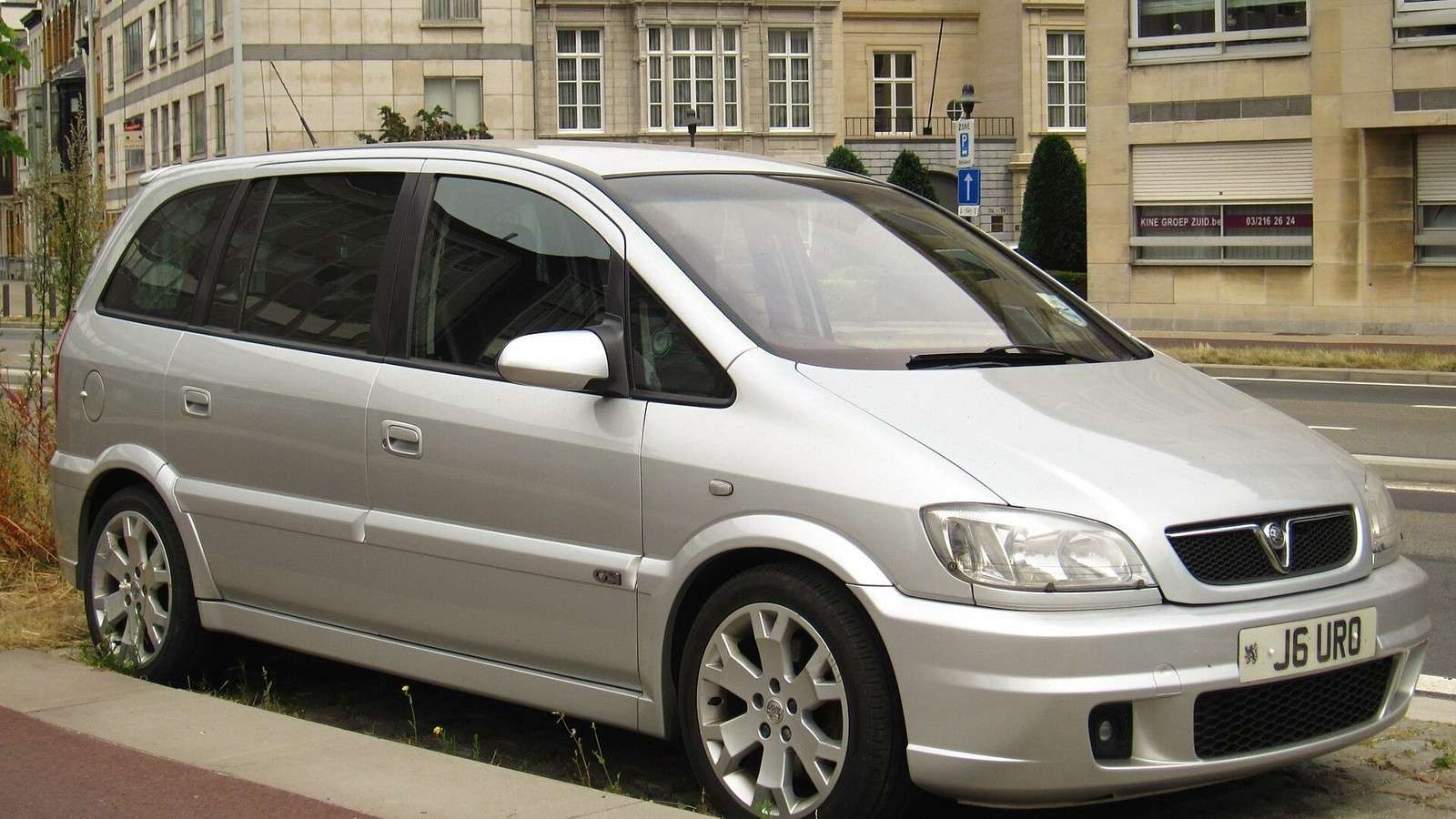
The original Vauxhall Zafira GSi looked like an ordinary seven-seat family carrier that had wandered into the wrong parts department. In reality, its turbocharged engine, uprated chassis and remarkable packaging created one of the most surprising performance cars of the early 2000s.
Here are ten things you probably didn’t know about the Vauxhall Zafira GSi.
1. It kept all seven seats
The GSi retained the original Zafira’s Flex7 seating system. Both rear rows could be folded into the floor without removing a seat, so the same car could carry seven people or become a large, flat-floored load carrier. Vauxhall did not sacrifice the feature that made the Zafira useful simply to create the performance flagship.
2. Its engine came from the Astra Coupé Turbo
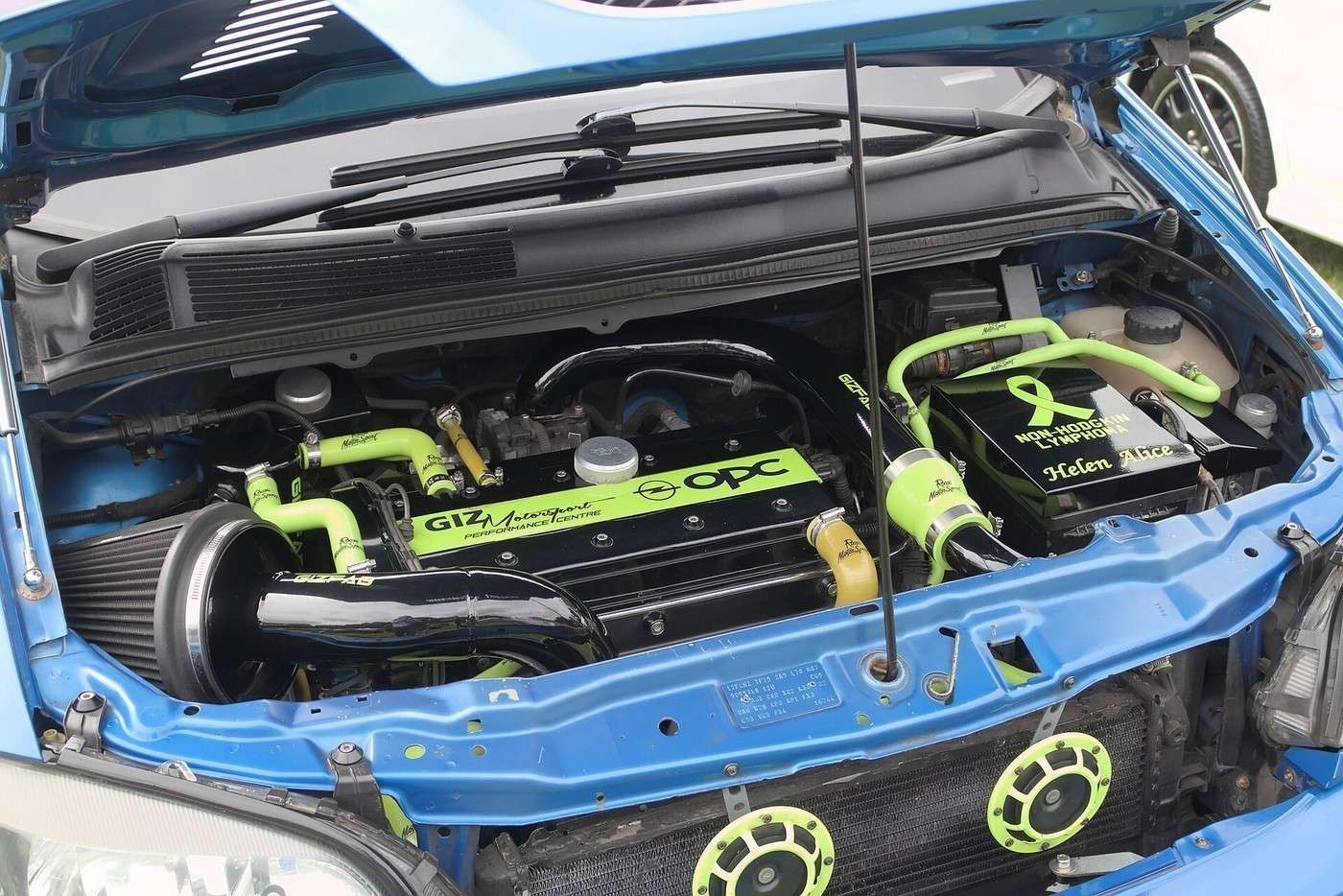
Under the short bonnet sat the 1,998cc Z20LET: a turbocharged, intercooled, 16-valve four-cylinder also used in the Astra Coupé Turbo. Early UK literature quoted 190bhp, while other official specifications use 192PS; later cars are often listed at approximately 197bhp. The important point is that this was a genuine performance engine, not a mildly tuned family-car unit.
3. It was called the OPC outside Britain
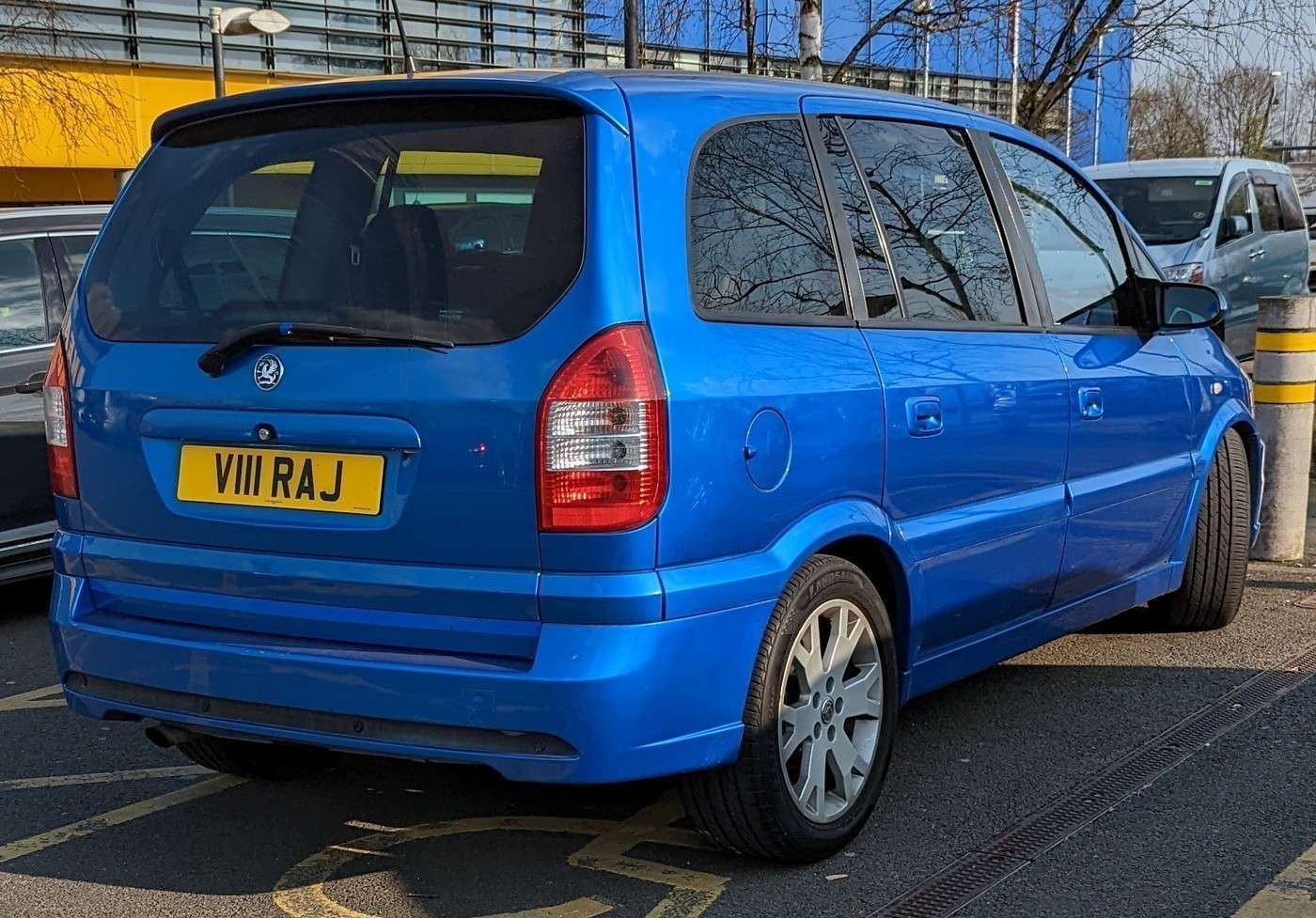
British cars wore GSi badges, but the closely related continental model was the Opel Zafira OPC. OPC stands for Opel Performance Center, the European counterpart to the performance identity Vauxhall would later express through VXR. The blue Opel version therefore belongs to the same family even though its name and badges differ.
4. At launch it was described as Europe’s fastest MPV
With roughly 190bhp and 184lb ft, Vauxhall quoted 0–60mph in 7.6 seconds and a 137mph maximum. Those figures were extraordinary for a compact seven-seater in 2001. Contemporary road tests called it the first serious high-performance mini-MPV, effectively creating a class before buyers had decided such a class ought to exist.
Join the Unusual Cars Club free
Get forgotten cars, surprising motoring stories and the most interesting finds from Unusual Cars by email.
Free to join. No spam. Unsubscribe whenever you like. See our Privacy Policy.
5. The chassis changes went well beyond large wheels
Vauxhall fitted uprated springs and dampers, larger front brakes and 17-inch multi-spoke wheels wearing 225/45 tyres. Recaro sports seats held the front occupants in place. The result was firmer and more controlled than the standard Zafira, yet it still had to ride acceptably and carry a full family rather than behave like a stripped track car.
6. It cost about £20,000 when new
The GSi’s launch price placed it well above ordinary Zafiras, but the standard equipment helped explain the number. Climate control, cruise control, sports seats, ABS with electronic brake-force distribution and the distinctive body treatment were included. It offered family-car space and performance-coupé pace in one purchase, which made the value calculation unusually complicated.
7. All that power went through the front wheels
There was no four-wheel-drive system and no modern torque-vectoring rear axle. A five-speed manual sent the turbo engine’s output to the front tyres, so hard acceleration could expose wheelspin and tug at the steering. That slightly unruly character is part of the GSi’s appeal: it feels like a very powerful Astra-era hot hatch carrying an extra row of seats.
8. The bodywork was functional as well as theatrical
Deeper bumpers, sill extensions, a roof spoiler and enlarged front openings distinguished the GSi from the school-run versions. The front treatment also helped feed the intercooler, radiator and larger brakes. Unlike the later Zafira VXR, the first GSi remained restrained enough that an untrained eye could still mistake it for an ordinary family MPV.
9. It paved the way for an even faster Zafira
Vauxhall repeated the idea with the second-generation Zafira VXR. Its 2.0-litre turbo engine produced 240PS, making the sequel faster and more overtly aggressive. The VXR is better known today, but the original GSi proved that a seven-seat Vauxhall could support a credible performance model without abandoning everyday usefulness.
10. Standard survivors are much harder to find than the sales brochures suggest
The shared Z20LET engine attracted tuners, and many cars received remaps, larger intercoolers, exhausts or Astra-derived upgrades. Others simply endured hard family use. Correct Recaros, wheels, body trim and an unmodified engine installation now matter almost as much as outright condition, making a complete standard GSi a genuine modern-classic curiosity.
Why it matters
The Zafira GSi matters because it turned the least likely body style into an entertaining performance car without discarding its seven-seat practicality. It is equal parts hot hatch, family workhorse and early-2000s engineering joke—except Vauxhall was entirely serious.
Enjoyed this one?
Join the Unusual Cars Club free for more forgotten performance cars, surprising motoring stories and new 10 Things articles.
Free to join. No spam. Unsubscribe whenever you like. See our Privacy Policy.