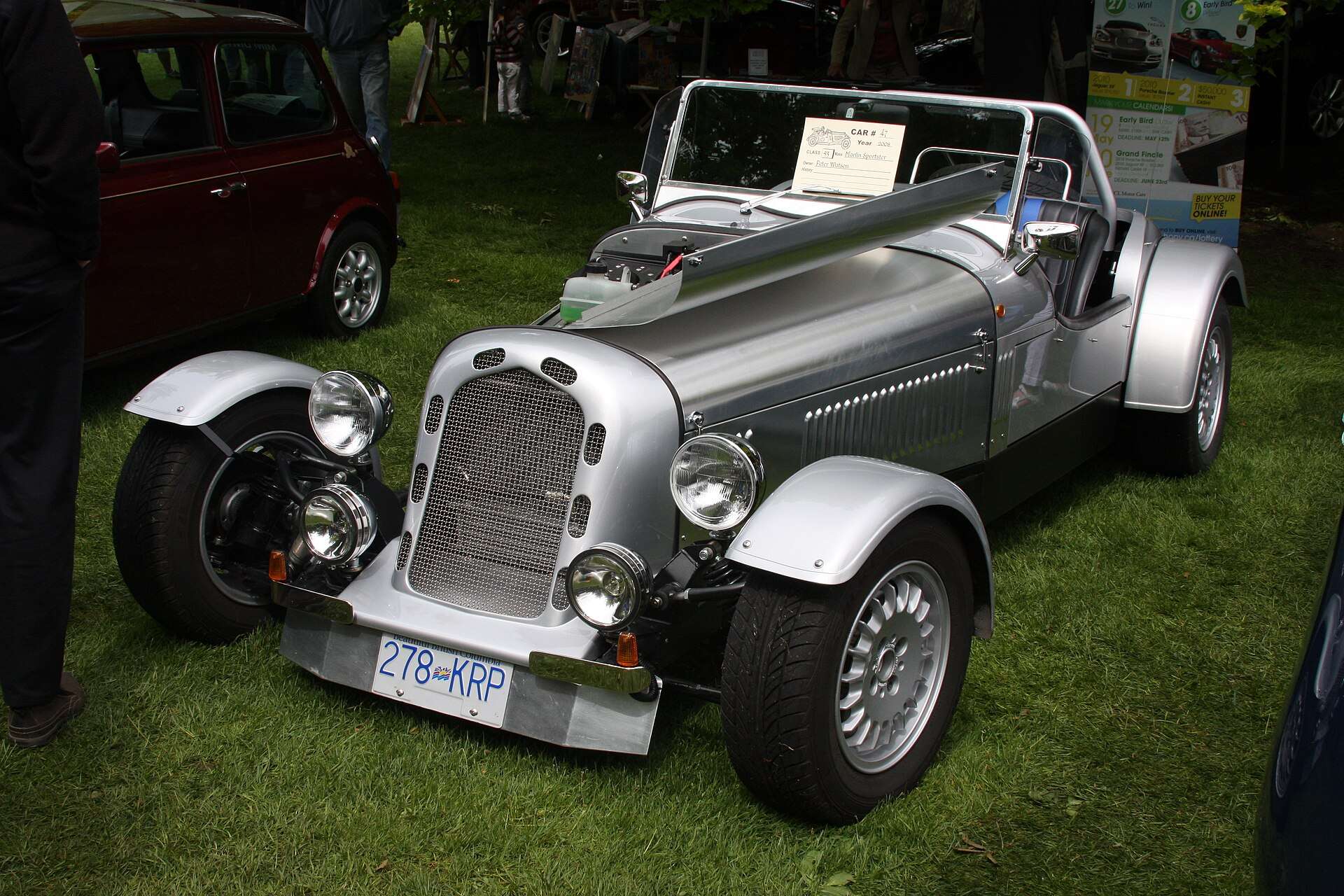
The Marlin Sportster puts an unusual twist on the traditional British roadster. Its long bonnet and exposed front wheels suggest a stripped-back weekend toy, but the design also makes room for touring equipment and, in many examples, a BMW straight-six. That combination is the attraction: classic proportions with a very different mechanical character from an old-fashioned side-valve special. Buying one successfully means understanding the particular build, rather than treating every Sportster as the same car.
Ford origins and the BMW change
The Marlin Owners Club dates Sportster kit production to 1997, initially using Ford components. It records a major change in 2002, when BMW 3 Series mechanicals replaced the earlier donor package. Marlin’s own description of the BMW version identifies a front-mounted six-cylinder engine, rear-wheel drive, aluminium body panels, wishbone front suspension and BMW-derived rear components. Weather equipment and a heater were part of the car’s touring appeal. Those descriptions establish the design’s direction; they do not prove the specification of an individual example.
Identify the engine before comparing cars
Ask for the engine code, donor details, gearbox identification and receipts for any rebuild or conversion. A registration date is not a reliable guide to donor age. Nor does a BMW badge tell you which management system, brakes or differential have been fitted. Make a component list during the viewing and photograph identification labels with the owner’s permission.
Choose the complete installation before choosing the biggest engine. Look at radiator capacity, fan control, hose routing, exhaust clearance and access to service items. A powerful conversion that cannot be maintained without dismantling much of the car may be less appealing than a modest engine with good access and a documented history. Confirm what work is due for the exact engine rather than applying one service schedule to every BMW-powered Sportster.
Chassis, panels and suspension
Inspect the chassis from below, particularly mounting brackets, welds and areas hidden by trim or panels. Look for corrosion, impact distortion and repairs that have not been documented. Where different materials meet, examine the joints and fasteners rather than assuming that attractive outer panels mean the structure is equally sound. Ask a kit-car specialist to investigate questionable repairs.
Check front wing stays, steering clearance and tyre clearance through the available movement. At the rear, inspect bushes, driveshaft boots, mounts and brake plumbing. A recent wheel-alignment printout is useful, but it should accompany sound components. Uneven tyres or a steering wheel that sits off-centre justify investigation before a spirited test drive.
Road manners and touring equipment
Start from cold and watch the temperature as the car warms up. Check that the clutch engages progressively, the gearbox selects cleanly and the car stops straight under ordinary braking. Listen for driveline knocks when gently moving between acceleration and overrun. Harshness should not automatically be excused as part of kit-car ownership.
Try the hood and any side screens yourself. Check visibility, wiper coverage, demisting and how easily you can get in and out with the roof fitted. Inspect seat and belt mountings and establish whether the driving position works in your normal shoes. If touring is the aim, bring a typical weekend bag and check where it can be secured without obstructing controls.
Which Sportster should you buy?
The best choice is a car with a specification you understand, a sound structure and evidence of regular use. A photographed build record, sensible parts list and clear registration history are more useful than an optimistic power claim. For an unfinished project, establish exactly which bespoke components are missing and obtain supply quotations before agreeing a price. The Sportster’s appeal is its combination of individual style and usable engineering; a carefully finished example lets you enjoy both.
Ford-based and BMW-based cars need separate identification
The change in donor package is more significant than an engine badge. A Ford-origin Sportster and a later BMW-based car can differ in suspension, drivetrain and supporting components. Some earlier cars may also have received BMW engines without acquiring every feature of a later kit. Establish the chassis generation and the actual assemblies before comparing specifications.
Ask for the original kit invoice, build manual and photographs. Record the donor vehicle separately from the registration and completion dates of the Sportster. If the car has been rebuilt or converted, create a chronology showing what changed and when. This makes it easier to understand which instructions and replacement parts apply.
A period manufacturer-hosted road test describes the BMW package as using modified donor front uprights and extensive rear donor hardware, alongside Marlin-specific components. That historical description is useful context, but it is not a universal parts list for every car. Later kits and owner modifications need their own evidence.
The BMW donor is more than an engine
Marlin’s donor-information page discusses several BMW possibilities, including E39 six-cylinder packages, and emphasises retaining the engine management, wiring, sensors and associated key or security components. The implication for a buyer is straightforward: a loose engine or a running car with undocumented wiring is not equivalent to a complete, understood donor installation.
Identify the engine code, gearbox, differential, rear suspension and brakes. Ask which donor supplied each assembly and whether the car was built from one vehicle or several. Mixed components are not automatically wrong, but their compatibility and service references should be recorded. A single donor registration cannot answer every question once parts have been changed.
Ask the seller to demonstrate diagnostic access where applicable. Establish which control unit and immobiliser arrangement are present and whether the necessary keys and supporting components accompany the car. If aftermarket management is used, obtain its identification, setup information and the details of the specialist who worked on it.
Inspect the wiring installation rather than judging only the engine bay’s appearance. Look for supported looms, protected openings and sensible routing away from exhaust heat or moving parts. Added relays, switches and earth connections should have an explained purpose. A clear wiring record can be more valuable than an expensive cosmetic engine cover.
M20, later six-cylinders and individual engine development
The long-running MSportster build log documents an E30-derived project and years of subsequent development. It is a useful example of an owner maintaining and refining a specific car rather than preserving one unchanging factory specification. Read such a record as evidence about that build, not as instructions that automatically apply to every Sportster.
For your prospective purchase, establish what the engine is now. An externally familiar unit may have internal changes, different induction or revised management. Ask for invoices and measurements supporting claims about capacity or tuning. A rolling-road sheet should relate to the current setup and be treated as one piece of evidence rather than a complete health report.
Use the correct maintenance requirements for the identified engine. Do not apply a single BMW service schedule to every six-cylinder installation. Ask what age-sensitive work is due and whether access in the Marlin changes the labour involved. A modest engine with a clear history may be a better ownership proposition than a more powerful one whose details are uncertain.

Inspect the structure beneath the panels
Arrange a proper underside inspection. Examine the chassis and panel interfaces, suspension pickup areas, engine and gearbox mounts, seat attachments and restraint mountings. Look for corrosion, impact damage, cracked joints and alterations made to accommodate a different powertrain.
Where materials meet, inspect fasteners and joints for movement, fretting or corrosion. Attractive aluminium panels do not establish the condition of concealed steel or the quality of the attachments. Check accessible areas behind trim and ask for build photographs showing what is hidden. Obtain specialist advice if structural repairs or modifications are not clearly documented.
Look for evidence of grounding, particularly at low points and around vulnerable underbody components. Ask how the car is lifted and maintained. A car that sits well in photographs may have practical clearance problems on ordinary roads or your driveway. Assess the structure and the usable setup together.
Enjoy cars you don’t see every day?
Get unusual car stories, kit-car guides and interesting finds from Unusual Cars by email.
Free to join. Unsubscribe whenever you like. Read our privacy policy.
If repairs have been made, request photographs before paint or trim was applied and ask whether alignment was checked. A repair should have an understandable scope and method. Do not estimate substantial chassis work from the visible size of a damaged patch; access, dismantling and reinstatement can be the greater part of the cost.
Front suspension, wing stays and steering clearance
Inspect the front wishbones, joints, bushes and damper attachments. Identify any components that differ from the original build specification and ask why they were changed. Look for looseness, damaged protection, distorted brackets and evidence that settings have moved. A recent alignment report is useful only when the underlying components are sound.
Check the cycle-wing supports and their attachments carefully. Look for cracks, repairs and signs of contact between the tyre and wing. Assess clearance through steering movement and consider suspension travel, rather than relying on the visible gap while parked. Non-standard wheels can change the relationship between several components at once.
Inspect the steering column, joints and rack installation for secure mounting and clearance. Ask about changes made during construction or later engine work. Binding, unusual play or contact with nearby components needs investigation. A heavy or inconsistent steering feel should not simply be attributed to wide tyres without checking the system.
On the road, use sensible speeds and assess consistency over ordinary surfaces. Wandering, knocking or a sudden reaction to bumps should lead to inspection and measurement. Avoid altering several settings at once after purchase. Establish the mechanical condition and a documented starting point before trying to tailor the car’s response.
Rear suspension, differential and brakes
Identify the rear assembly and its donor generation. Inspect bushes, mountings, driveshaft joints and boots, and look for leaks or damage. Ask what was refurbished during the build and what has been renewed since. Components that were serviceable in the donor may now be much older than the Sportster’s apparent mileage suggests.
Listen for driveline knocks during gentle changes of load and note vibration through the seat or floor. These can have several causes, so obtain a diagnosis rather than assuming one familiar BMW fault. Check the complete installation, including mounts, joints and clearances.
Inspect brake pipes, hoses and accessible components for corrosion, leakage or rubbing. Identify the master cylinder, assistance arrangement and any pressure-control components actually fitted. The MSportster owner log includes later attention to brake-hose routing and a rear pressure regulator, illustrating why a completed build can still require thoughtful review. It is one owner’s experience, not proof of a universal defect.
During a safe test drive, braking should be progressive and consistent. Pulling, vibration or an unusual pedal needs investigation. Check the parking brake as well. An expensive donor or a powerful engine does not establish that the brake installation was correctly completed and maintained.
Cooling and heat management
Inspect the radiator, fan, expansion arrangement, hoses and supports as a complete installation. Ask about overheating, repeated topping-up and recent cooling work. A replacement radiator or hose is useful history, but the cause of an earlier problem should be understood rather than assumed resolved.
Observe a cold start, full warm-up and hot restart. Include ordinary traffic conditions in the assessment rather than only a short run at speed. Check for leakage after the drive and ask how the system is filled and bled. Modified layouts need their own clear servicing procedure.
Look at exhaust clearance from wiring, hoses, brake components and body panels. Inspect heat shielding and supports for damage or movement. A small gap when cold may not remain adequate under load and temperature. Assess cockpit heat after the car has been driven, because discomfort may not appear during a brief stationary viewing.
Consider access for routine maintenance. Ask the owner to show how filters, belts, fluid checks and other service points are reached. A polished installation that requires unnecessary dismantling for ordinary tasks can be frustrating to own. Record bespoke hose and bracket details while the seller is available to explain them.
Gearing, clutch and road-use character
The engine, gearbox, final drive and tyres determine how the Sportster feels as a road car. Ask for the actual ratios where known and confirm any claimed limited-slip differential with evidence. A description such as BMW rear end is not enough to establish internal specification.
Try low-speed manoeuvring, ordinary acceleration and steady cruising. Check clutch engagement and every gear when the drivetrain is warm. A car that feels dramatic during a short demonstration may be less appealing in traffic or on a longer trip. Choose a specification that matches your use rather than the largest advertised output.
Ask whether the speedometer was checked after drivetrain or tyre changes. Listen for transmission noise and investigate vibration rather than accepting it as normal. A successful conversion should feel coherent at everyday speeds, not merely produce strong acceleration.
Weather equipment and the touring promise
Marlin’s published factory-build information described different weather-equipment approaches, including a screen-and-roof arrangement and an aeroscreen with tonneau. A used car may have either, a modified arrangement or incomplete equipment. Establish exactly what is included and try it in place.
Fit the hood and side screens where supplied. Check fastenings, seals and visibility, and try entering and leaving with the equipment installed. Inspect fabric and flexible windows for damage or ageing. Missing bespoke supports can be more troublesome than a routine mechanical service item, so obtain replacement quotations before purchase.
Operate wipers, washers, heater and demister where fitted. Check the driving position with the roof up and normal footwear on. The seat, wheel and pedals may reflect the original builder’s preferences, so published comments about cabin space are no substitute for trying this car.

What a long-term owner record adds
The MSportster maintenance archive includes ordinary ownership issues such as aged tyres, handbrake work and an earth-strap connection that had failed in a way not immediately obvious. These examples are useful because they concern the finished car in service, not just the initial construction. They show why ongoing inspection matters even after many successful miles.
Ask the seller what has needed attention recently and what remains on the job list. A candid account of maintenance is more useful than a claim that nothing ever goes wrong. Distinguish faults that were diagnosed and repaired from symptoms merely managed with a workaround.
Keep your own record after purchase. Document the actual component references, settings and service work, and preserve the builder’s photographs. A specialist car becomes easier to maintain when information accumulates rather than being lost each time it changes hands.
Paperwork to take away with the car
Make a handover list before agreeing the purchase. Include the build manual, donor details, engine and gearbox references, wiring information, alignment report, spare keys and receipts for major work. Ask for photographs in a usable form rather than relying on an old website remaining available. Keep a note of the specialists who have worked on the car and what they actually did.
Check that the vehicle identity and description match the documents and that significant changes have an understandable history. Separate the donor’s age from the Sportster’s construction and registration dates. If the car has been substantially altered or remains unfinished, resolve the relevant documentation questions before treating it as a straightforward road-ready purchase. A complete history does not remove the need for inspection, but it makes the findings easier to interpret and future maintenance much less dependent on guesswork.
Buying a project or a completed Sportster
For an unfinished car, inventory the chassis-specific suspension pieces, body panels, steering components, glazing, weather equipment and controls. Confirm what is missing and whether it is available for the correct donor generation. A collection of BMW parts is not a complete Sportster kit.
Obtain quotations for specialist work and investigate the applicable approval and registration route before spending heavily. Historical build times and old price lists are not reliable estimates for completing a partly assembled car today. Allow for correcting earlier work and replacing components that have aged during storage.
For a runner, prioritise sound structure, a documented donor package, dependable cooling and brakes, and a driving position that suits you. Establish a maintenance baseline before adding power or cosmetic accessories. The Sportster’s character is most rewarding when its individual engineering can be understood and supported.
Sources and further reading
- Marlin: Sportster donor and supporting-component information
- Period Kit Car road test hosted by Marlin: BMW package and chassis development
- MSportster: firsthand build and long-term development log
- MSportster: firsthand maintenance archive
- Marlin: published weather-equipment information
Explore more kit cars
Compare models in our Kit Cars hub. Planning a build? Read our donor-vehicle guide and UK registration and approval guide.
Photo: dave_7, CC BY 2.0. Resized for display; hub thumbnails may be cropped.
Kit cars for sale on eBay UK
Browse kit cars from different makers, from unfinished projects to road-going builds.

Browse more kit cars on eBay UK
Enjoy cars you don’t see every day?
Get unusual car stories, kit-car guides and interesting finds from Unusual Cars by email.
Free to join. Unsubscribe whenever you like. Read our privacy policy.