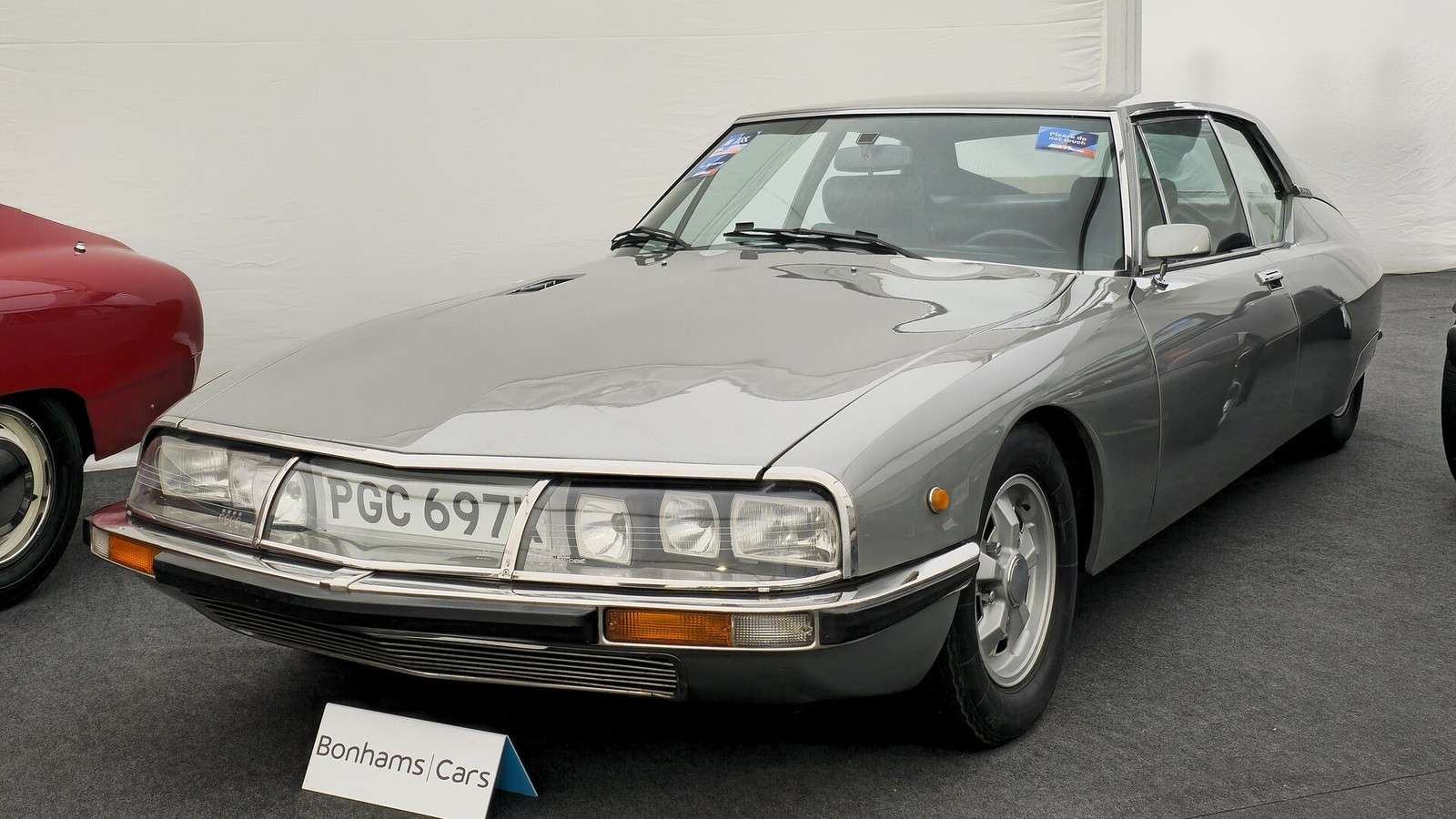
The Citroën SM united a Maserati V6 with hydropneumatic suspension, self-centring steering and one of the most aerodynamic shapes of the 1970s. Few production cars have combined so many unconventional ideas at once.
Here are ten things you probably didn’t know about the Citroën SM.
1. It grew from Citroën’s relationship with Maserati
Citroën took control of Maserati in 1968 and used the Italian firm’s engine expertise to realise a long-held ambition for a high-performance front-wheel-drive grand tourer. The SM debuted at Geneva in 1970.
2. The V6 was compact because it had to fit
Maserati developed a 2,670cc all-aluminium four-cam V6 short enough to sit ahead of the SM’s transmission. European carburettor cars produced about 170 DIN hp, while later versions included fuel injection and a larger 3.0-litre engine.

3. It drove the front wheels
Mounting the engine and gearbox longitudinally while driving the front axle gave immense traction and preserved Citroën’s established layout. The long front overhang looks dramatic, but the packaging was dictated by the powertrain and suspension as much as styling.
4. DIRAVI steering actively returned to centre
The high-pressure hydraulic steering varied assistance with speed and forced the wheel back towards straight ahead. It felt startlingly light and quick to newcomers, yet gave the SM remarkable high-speed stability once the driver adapted.
Join the Unusual Cars Club free
Get forgotten cars, surprising motoring stories and the most interesting finds from Unusual Cars by email.
Free to join. No spam. Unsubscribe whenever you like. See our Privacy Policy.
5. Its six headlamps could look around corners
European cars placed six lamps behind a glass cover. The inner pair swivelled with the steering, while hydraulic self-levelling kept the beams at the correct height as the suspension moved—technology denied to American-market cars by contemporary regulations.
6. The suspension maintained a constant ride height
Citroën’s hydropneumatic system provided self-levelling, selectable ground clearance and exceptional ride comfort. High-pressure hydraulics also powered the steering and sophisticated braking system, making correct maintenance fundamental to the whole car.
7. It was extraordinarily aerodynamic for its era
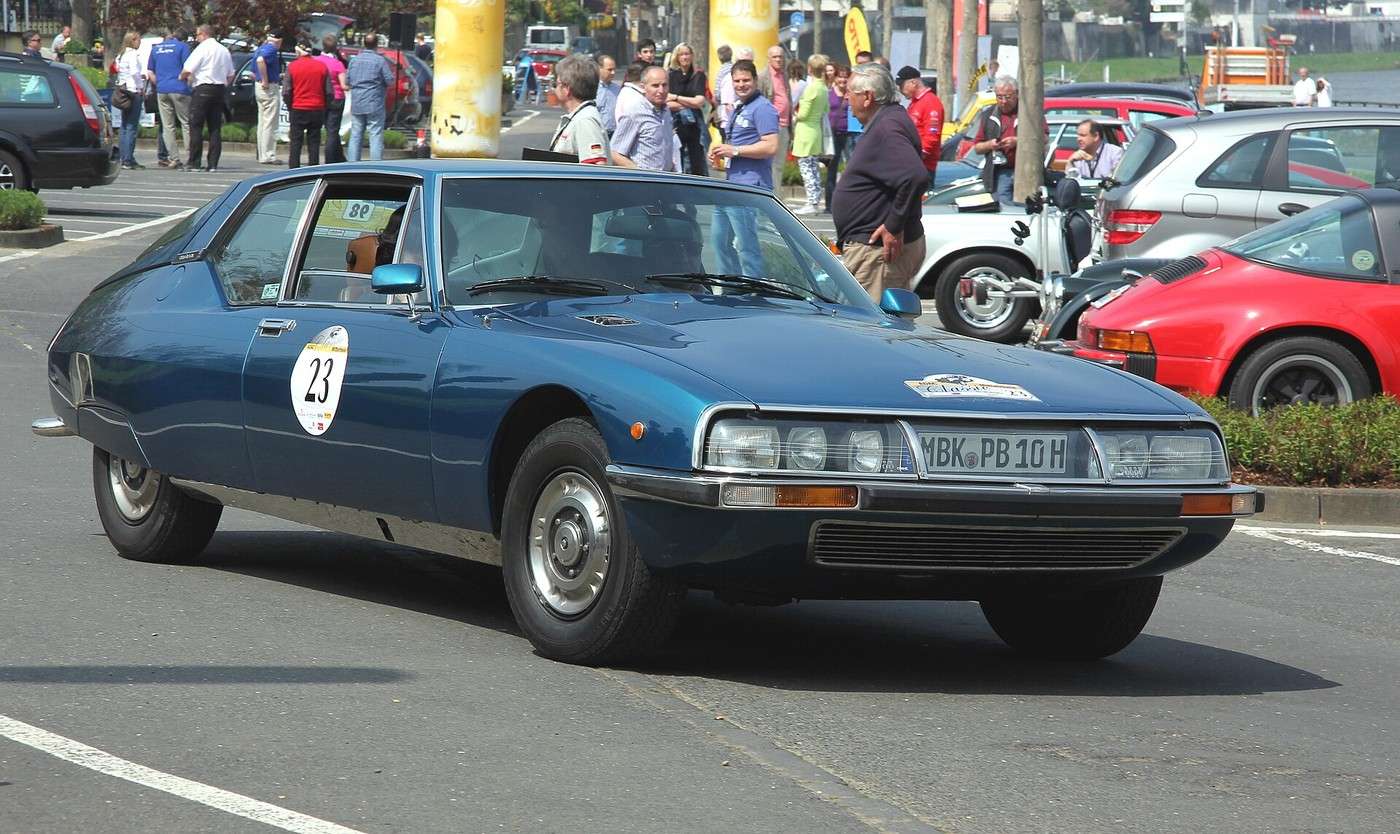
Robert Opron’s tapered body, covered nose and enclosed rear wheels produced a remarkably low drag figure for a luxurious 1970 coupé. The shape was not decorative futurism; stability and efficient high-speed travel drove many of its strangest details.
8. Four-wheel disc brakes included unusual control logic
The front discs sat inboard to reduce unsprung weight, while load-sensitive hydraulic pressure altered braking force. Instead of a conventional pedal, the driver pressed a small floor-mounted button-like control that required a delicate touch.
9. It competed successfully despite its luxury brief
An SM won the 1971 Rallye du Maroc, demonstrating the traction, suspension travel and durability of the basic concept. The result seems improbable for a complex front-drive grand tourer weighing far more than a purpose-built rally car.
10. Its short life involved more than the fuel crisis
Oil prices damaged demand, but Citroën’s financial problems, its absorption into Peugeot and the end of the Maserati relationship were equally important. Production finished in 1975, leaving a car whose complexity no longer fitted the newly rationalised company.
Why it matters
The SM matters because it may be the most complete expression of Citroën’s willingness to reject convention. It combined comfort, speed, aerodynamics and hydraulic engineering in ways no rival attempted—and perhaps no manufacturer would dare repeat.
Enjoyed this one?
Join the Unusual Cars Club free for more forgotten performance cars, surprising motoring stories and new 10 Things articles.
Free to join. No spam. Unsubscribe whenever you like.
Explore every 10 Things article in the Unusual Cars hub →