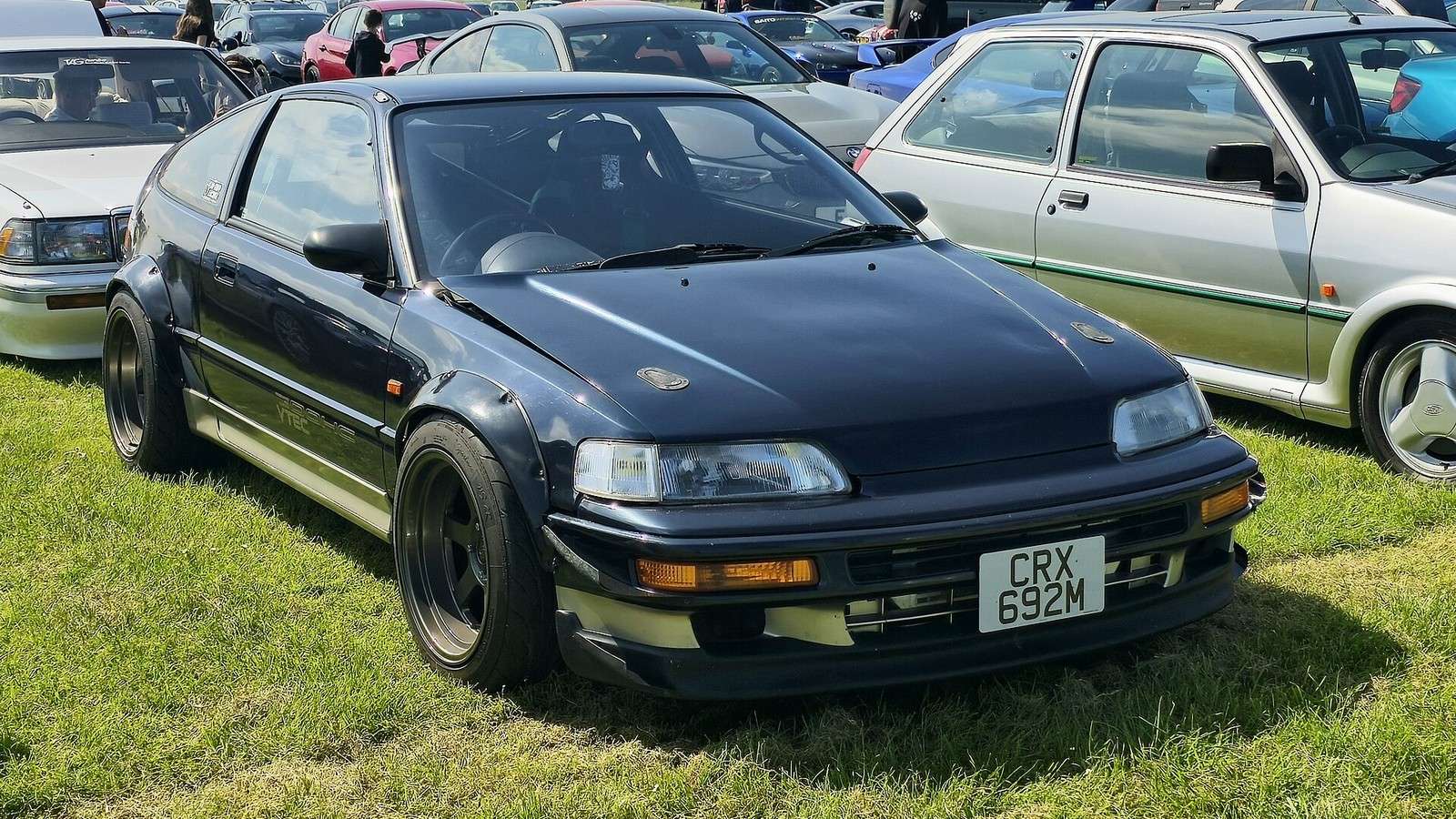
The second-generation Honda CR-X VTEC combined a tiny footprint, double-wishbone suspension and a 1.6-litre engine capable of 100PS per litre. It looked like a simple economy coupé, but the European EE8 became one of Honda’s purest demonstrations of high-revving engineering.
Here are ten things you probably didn’t know about the Honda CR-X VTEC.
1. The VTEC model arrived after the second-generation CR-X
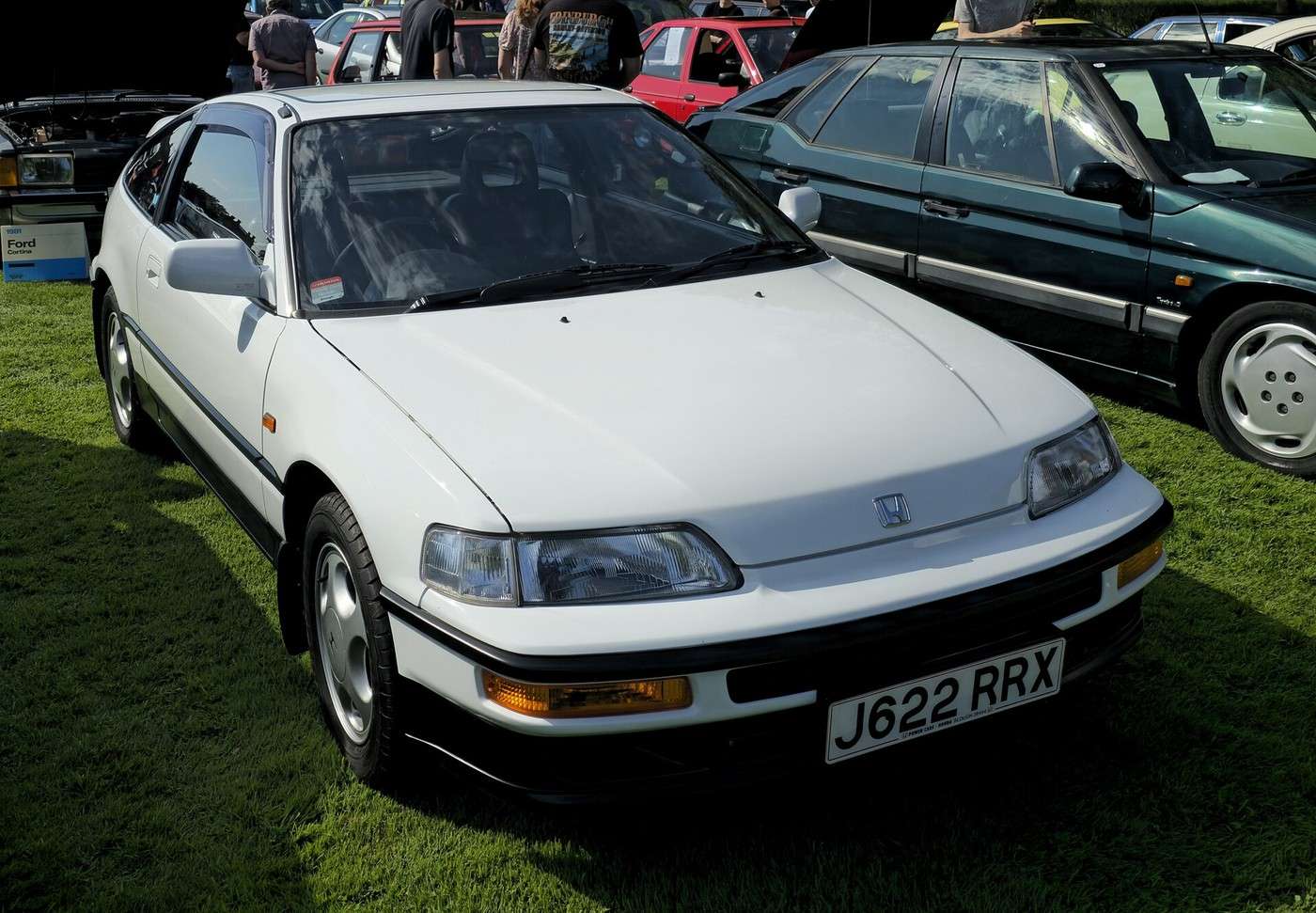
Honda launched the redesigned CR-X before the VTEC flagship appeared in 1989. Earlier versions used conventional SOHC or DOHC engines, so the familiar wedge-shaped body does not automatically identify a VTEC car. European examples carry the EE8 model code and detail differences that separate them from Japanese EF8 derivatives.
2. Its engine achieved 100PS per litre
Honda’s B16A became one of the first mass-produced naturally aspirated engines to deliver 100PS per litre. Japanese CR-X SiR versions were rated at 160PS, while the European B16A1 was quoted at approximately 150PS. The difference reflected market specification and emissions requirements rather than an entirely unrelated engine.
3. VTEC changed lift and timing—not merely the timing
The DOHC VTEC mechanism used separate low- and high-speed cam profiles. Hydraulic locking pins joined the rocker arms at higher engine speed, allowing the valves to follow the more aggressive central cam lobe. Honda’s system therefore changed valve lift and duration as well as effective timing, combining tractable low-speed running with exceptional high-rpm breathing.
4. Honda introduced the B16A in three cars during 1989
The engine first reached the Japanese Integra in April 1989, then the CR-X and Civic in September. Honda describes it as the world’s first production valve mechanism able to change both timing and lift on the intake and exhaust sides. The CR-X was therefore an early member of the VTEC story, not a later recipient of familiar technology.
Join the Unusual Cars Club free
Get forgotten cars, surprising motoring stories and the most interesting finds from Unusual Cars by email.
Free to join. No spam. Unsubscribe whenever you like. See our Privacy Policy.
5. It had double-wishbone suspension at both ends
The front-wheel-drive CR-X used compact double-wishbone geometry rather than simple front struts. The arrangement helped maintain tyre contact and gave engineers useful control over camber through suspension travel. Together with the low seating position and modest weight, it produced steering and balance that remain central to the car’s reputation.
6. The roof and rear glass were designed to improve visibility
A dark glass panel below the rear spoiler reduced the enormous blind area that a high tail could have created. The split rear view became a signature feature and later appeared in other Hondas. It also allowed the aerodynamic tail to remain high without making the compact car feel completely enclosed from the driver’s seat.
7. European cars were technically 2+2s
The tiny rear seats made the CR-X more versatile on paper than a strict two-seater, although adult accommodation was extremely limited. Market regulations produced different seating arrangements elsewhere. The folding backrest and large glass hatch were more useful, giving the car surprising luggage capacity for something with sports-car proportions.

8. The CR-X name predates VTEC by several years
The first-generation CR-X appeared in 1983 as a lightweight sporting offshoot of the Civic family. It earned its reputation through efficiency, low mass and eager engines before VTEC existed. The EE8 did not invent the formula; it completed it by combining the mature second-generation chassis with Honda’s most advanced small engine.
9. Rust is now a greater threat than the engine
Rear arches, sills, floor edges, suspension mounting areas and the structure around the windscreen and sunroof deserve careful inspection. B-series engines can cover high mileages when serviced correctly, but an apparently strong drivetrain cannot compensate for a poorly repaired shell. Original trim, lamps and VTEC-specific components have also become difficult to replace.
10. Its lightness is the performance secret
Depending on equipment, a European CR-X VTEC weighed only around one tonne. That meant 150PS delivered vivid performance without turbocharging, enormous tyres or complex electronics. The modest dimensions also let the driver use more of the engine’s rev range on ordinary roads—one reason the experience can feel more intense than the raw figures imply.
Why it matters
The CR-X VTEC matters because it expresses Honda’s late-1980s confidence in its clearest form: ingenious valve gear, sophisticated suspension and very little unnecessary mass. It is fast through intelligence rather than brute force.
Enjoyed this one?
Join the Unusual Cars Club free for more forgotten performance cars, surprising motoring stories and new 10 Things articles.
Free to join. No spam. Unsubscribe whenever you like. See our Privacy Policy.
Explore every 10 Things article in the Unusual Cars hub →