
The Audi A6 C7 3.0 TDI is an appealing used long-distance car: a refined V6 diesel, a well-finished cabin and, in Avant form, genuinely useful load space. The BiTDI adds considerable performance. The purchase only works, however, if you understand which engine, gearbox and emissions system the individual car has—and budget for maintaining them.
This guide covers the C7/4G A6 saloon and Avant with the 3.0-litre V6 diesel, including BiTDI. It is separate from the S6 and RS6, and from the later C8. The allroad shares some engine hardware but adds its own suspension and body considerations; do not use an ordinary Avant inspection or cost estimate as a complete allroad assessment.
Some parts links are eBay affiliate links. If you purchase through them, Unusual Cars may earn a commission at no additional cost to you. Confirm VIN, engine code, gearbox code and brake specification before ordering.
Audi A6 C7 3.0 TDI: the buying verdict
For most buyers, a standard single-turbo 3.0 TDI with a coherent history is the sensible starting point. It gives the relaxed six-cylinder character without making maximum performance the priority. The BiTDI is compelling if you specifically want its extra pace and can fund its twin-turbo hardware, transmission servicing and suitable tyres. Neither engine badge compensates for neglected maintenance.
We would buy on invoices, a genuinely cold start, an extended road test and a VAG-capable diagnostic inspection. Timing noise, coolant loss, transmission judder or a recurring emissions warning should be diagnosed before purchase. A car that looks excellent and drives well for five minutes can still be carrying an expensive fault that appears only when fully warm or during a regeneration attempt.
Prefer a car that remains close to its factory specification. A remap, emissions deletion or undocumented gearbox software change makes assessment more complicated and can affect insurance and future saleability. There are enough A6s to justify comparing several rather than accepting an unresolved warning because the specification looks ideal.
Know the version: 3.0 TDI does not identify the gearbox
The C7 arrived in the early 2010s and was updated during its production life. Single-turbo V6 diesels were offered in several outputs, with front-wheel-drive and quattro versions depending on year and market. BiTDI models use a two-turbo arrangement and quattro. UK adverts commonly show the original 313 PS BiTDI and later 320 PS versions; special versions and converted bhp figures can complicate comparisons.
The crucial distinction is transmission. Earlier front-drive applications can use Multitronic, many quattro single-turbo cars use seven-speed S tronic, and the BiTDI uses eight-speed Tiptronic. Later specifications need their own identification. Do not treat all three as different names for the same automatic, or assume that every car described as “3.0 TDI quattro automatic” takes an identical service kit.
| Transmission | What it is | Main buying questions |
|---|---|---|
| Multitronic | A continuously variable transmission on applicable front-drive cars | Correct service history, smooth take-up, no judder, unexplained rev flare or transmission warning. |
| S tronic | A dual-clutch transmission; identify the actual code and version | Oil/filter history appropriate to the unit; smooth creeping, reverse, hot changes and clutch/mechatronic assessment where symptoms exist. |
| Tiptronic | A conventional torque-converter automatic; eight-speed on the BiTDI | Correct fluid/pan service, controlled engagement, no light-load shudder or slip; do not buy an S tronic kit for it. |
Audi’s UK February 2015 technical-data document distinguishes the single-turbo S tronic application from the BiTDI Tiptronic application. Use the actual build record and gearbox code when booking work; the workshop menu below demonstrates how much the scope and price change with the transmission.
Pre-facelift, facelift and emissions equipment
Compare by build specification rather than registration date alone. Facelift styling can be retrofitted, while a car registered around an update may have been built earlier. Check engine code, factory power, drivetrain and emissions certification. A photograph of a newer grille is not proof of an updated engine or clean-air-zone eligibility.
AdBlue/SCR equipment depends on the actual version. Where fitted, examine it as a complete system, not just a consumable tank that needs filling. NOx-sensor, dosing, heater or other control faults can trigger warnings even with fluid present. Do not transfer an AdBlue diagnosis to a car that does not have that hardware, or ignore a fault because an earlier A6 did without it.
SE, S line, Black Edition and wheel choices
Buy the specification that suits your roads and use. Large wheels and firm suspension may look excellent in an advert but deserve a proper drive on uneven surfaces. Price suitable tyres in the exact sizes before deciding that a cosmetic upgrade adds value. Inspect the inner wheel faces for cracks, buckling or repairs, as well as checking visible kerb damage.
Check the factory option list and demonstrate the equipment. S line does not prove that every desirable lighting, sound, navigation or suspension option is fitted. Retrofits can be useful, but ask for installation details and test their integration with parking sensors, cameras, audio and vehicle settings. A large aftermarket display should not hide missing or malfunctioning factory functions.

Choosing a car and setting a realistic purchase budget
Compare cars of the same body, age, mileage range, transmission and history standard. A high-mileage front-drive saloon with an unresolved warning is not a direct value comparison with a carefully maintained later quattro Avant. Advertised prices describe seller expectations rather than achieved sales. Read beyond the screen price and calculate the immediate work each candidate needs.
A car with recent correct tyres, documented gearbox work and a clean inspection may be cheaper to own than one that is several hundred pounds less but needs all three. Conversely, do not pay heavily for a list of replacements unless the invoices explain the work and the symptoms have been resolved. A new DPF with the original temperature or EGR fault still present is not a clean bill of health.
History that matters
Look for dated engine-service invoices with the right oil approval, quantities and mileage. Check that transmission work identifies the gearbox and fluid rather than saying only “automatic service”. Ask about cooling-system work, intake repairs, DPF cleaning, AdBlue faults where applicable and timing-chain assessment. If a garage diagnosed a fault, ask for the report as well as the final receipt.
Review MOT history as a pattern. Repeated tyre, suspension and brake advisories can indicate deferred spending. A subsequent clear test should be supported by repair evidence when substantial work was needed. Check VIN consistency, mileage, finance status and accident history before travelling far. Two working keys and a complete set of relevant documents are practical advantages rather than decoration.
Is a V6 diesel suitable for your journeys?
These cars make most sense for regular longer trips. Repeated short journeys can leave the engine and exhaust too cold for the conditions the emissions system needs. A low-mileage urban example may therefore need closer DPF and temperature-control assessment than its odometer suggests. If the car will mainly make short local trips, consider whether a diesel is the right choice at all.
Check tax, insurance and clean-air access on the exact registration before buying. Do not infer eligibility from “facelift”, a dealer’s generic description or another car’s screenshot. The particular certification and your intended destinations matter. A six-cylinder diesel bought for occasional motorway economy can be poor value if normal use exposes it to repeated emissions problems or access charges.
3.0 TDI engine checks: a cold start is non-negotiable
Arrange for the car to be cold and inspect before it is started. Look at fluid levels, obvious staining, disturbed covers and accessible hoses. Listen to startup and the transition to a steady idle without revving hard. Persistent metallic rattle, uneven running, heavy smoke or delayed starting should lead to expert investigation before a purchase decision.
Repeat the assessment when fully warm and after a hot restart. Some faults become more obvious with temperature; others are masked by a seller warming the engine before you arrive. A brief video of a cold start is useful background but does not replace seeing the actual car and checking that the sound corresponds with its condition and diagnostic results.
Timing chains and tensioners
The V6 diesel’s chain assembly is at the rear of the engine, towards the gearbox. Access makes diagnosis and repair scope particularly important. Audi Engines’ 3.0 TDI repair guidance explains that substantial component removal, and sometimes engine or gearbox removal depending on the application, can drive the bill. Do not apply the price of a four-cylinder cambelt service to this engine.
A metallic startup rattle can justify timing-chain investigation but is not, on its own, a definitive tensioner diagnosis. Ancillaries and other sources of noise should be distinguished. Correlation faults, rough running or persistent noise make the investigation more urgent. The absence of a warning light does not certify chain condition, and a quiet engine at one viewing cannot establish its entire future service life.
If chain work has been carried out, request the invoice identifying the engine, components, access work, fluids, seals and warranty. Ask whether the repair was tensioner-only or included worn chains and guides, and whether it followed a failure. A preventative job and a repair after internal damage are not equivalent. There is no credible universal replacement price or mileage at which every C7 V6 must receive the same repair.
Coolant loss, the engine’s V and oil leaks
Inspect for coolant staining and oil contamination, and ask whether the owner tops up either fluid. A specialist should examine accessible connections and investigate leakage around the engine’s centre and lower areas rather than accepting the first wet surface as the source. Fluid can travel before it appears beneath the car, while an undertray may hold it out of sight.
Cooling components, seals and related pipework can be labour-intensive because access is restricted. Obtain a pressure test or other appropriate investigation for an unexplained drop in level. A quoted inexpensive seal tells you little about the fitted repair unless removal, reassembly, coolant and any associated components are included.
During the drive, review operating-temperature behaviour rather than relying solely on a reassuring gauge position. Poor temperature control can affect cabin comfort and emissions operation. After the drive, check for fresh leaks or smells without opening the hot expansion tank. Recent cooling work needs a clear scope and a confirmed resolution of the original complaint.
EGR, DPF and regeneration evidence
A proper emissions-system check considers fault codes, differential-pressure behaviour, regeneration information and the engine’s ability to reach working temperature. These should be interpreted together by someone familiar with the engine. One soot estimate from a generic phone app is not enough to decide whether a DPF is healthy or needs replacement.
Ask whether the car has repeatedly needed forced regeneration and whether the underlying cause was corrected. EGR operation, sensors, pressure pipes, intake faults and temperature-control problems can all affect the diagnostic picture. Cleaning a filter cannot repair a physically damaged substrate, and replacing a filter will not necessarily solve the cause of repeated loading.
Inspect for non-standard exhaust work and ask directly about emissions software. Do not accept DPF removal, disabled EGR or an AdBlue delete as a desirable feature. Establish that the correct system remains functional. A recent MOT is one piece of evidence, not a full inspection of the engine’s emissions hardware and calibration.
AdBlue and SCR, where fitted
A low-fluid message and a system fault are different. Where an AdBlue system is present, confirm that warnings clear through the correct process and are not being hidden by repeated resets. Investigate any no-restart countdown before purchase. The seller saying the tank was filled does not establish that dosing, heating or NOx feedback is working.
Check for crystallised deposits or evidence of recent work where accessible, then relate the inspection to actual codes and test results. A sensor-only diagnosis should be supported rather than guessed from the wording on the dashboard. Quote the confirmed repair using the exact engine and emissions configuration, because a generic A6 part listing can cover multiple systems.
Intake flaps, boost leaks and the BiTDI
Request checks of intake-flap operation and any relevant actuator or position faults. Do not regard every reduced-power complaint as a turbocharger failure. Intake restrictions, control problems, damaged hoses and sensor issues can overlap. Replacement manifolds should have an invoice and a reason for the work, with the original symptom demonstrably resolved.
On a warm road test, acceleration should be progressive and repeatable. The BiTDI’s two-turbo setup adds hardware and control relationships that deserve a specialist’s attention if there is a flat spot, surging, unusual whistle or limp mode. Compare requested and actual values under appropriate conditions rather than proving the car by repeated hard acceleration.
Check pipe joints and hoses for damage and leakage, and ask about oil consumption. A light oil film in the charge-air system is not sufficient to condemn a turbo, but heavy smoke, substantial leakage or excessive consumption needs investigation. Recent turbo work should include consideration of why the original unit failed and whether oil supply or contamination issues were addressed.
Fuel system and starting quality
Observe both cold and hot starting, idle quality and the smell or appearance of any leakage. Injector data can inform diagnosis but should not be read as a stand-alone verdict. A specialist may need further tests before identifying an injector, pressure problem or another cause of poor running. Avoid buying on a promise that an expensive warning is “just glow plugs”.
When substantial fuel-system work is recorded, ask what contamination or pressure checks were made and whether all affected components were considered. A partial repair may be entirely correct, but the invoice and diagnostic explanation should support it. A smoothly idling engine remains only one part of the purchase assessment.
S tronic, Multitronic and Tiptronic: test the right gearbox
Identify the gearbox before interpreting its behaviour. The same gear selector does not establish what is underneath. Ask for the code from the vehicle record and compare it with the service invoices. The Audi Specialists gearbox menu lists separate services for Multitronic, longitudinal S tronic and ZF eight-speed units; the differences are material, not a pricing technicality.
S tronic checks
Assess smooth take-up, creeping and reverse engagement when cold. Once warm, repeat low-speed manoeuvres and normal shifts as well as safe moderate acceleration. Judder, hesitation, harsh engagement or a flashing gear display needs diagnosis. Clutch wear, mechatronic issues, mounts and engine-running problems can produce overlapping symptoms; a fluid change is not a guaranteed cure for all of them.
Service evidence should identify the applicable oil circuit, fluid and filter work for that specific unit. “DSG serviced” is not enough when the badge spans very different transmissions. Ask what the workshop actually did and whether the vehicle’s schedule was followed. Adaptation procedures should be used when appropriate to the job, not sold as an automatic solution for every drivability complaint.
Multitronic checks
A CVT will not feel identical to a conventional stepped automatic. That difference does not excuse judder, delayed engagement, shudder under load or warning messages. Test from cold and after a long enough drive to reveal heat-related behaviour. Look for documented correct fluid maintenance and obtain a specialist assessment of any unusual change in engine speed or take-up.
A front-drive car can be a reasonable purchase if it suits your needs and its gearbox is healthy. Do not reject or endorse one solely on an internet reputation. The condition and service history of the individual transmission matter. If the seller has already obtained a repair quote, read its exclusions and confirm whether it addresses the diagnosed fault.
BiTDI Tiptronic checks
Check prompt, controlled drive and reverse engagement and smooth changes at light and moderate load. Watch for rev flare without matching acceleration and feel for a repeated light-throttle shudder. Assess behaviour fully warm, not only during a spirited demonstration. A torque-converter or internal fault can require a different repair from a routine pan/filter and fluid service.
Do not order the S tronic kit because an advert says both cars have an Audi automatic. ZF service parts, correct fluid and a temperature-controlled filling procedure need to match the actual unit. The workshop’s 0BK/0BL menu example below is a service reference, not certification that either code applies to every car on your shortlist.
quattro and driveline inspection
Inspect the driveline and differential areas for leakage, damaged covers and joint wear. On the drive, listen for load-dependent whine, vibration and knocks. A wheel-bearing hum, tyre noise and differential noise can be difficult to distinguish from the driver’s seat, so put the symptom in the inspection report rather than assigning the most expensive or cheapest cause yourself.
Record all four tyre sizes, make/model and tread condition. Approved staggered arrangements, where relevant, should be checked against the car’s specification, while unsuitable combinations and uneven wear deserve attention. The longitudinal A6 quattro system should not be given a generic transverse-Audi Haldex service merely because the workshop also services A3s. Ask the technician to identify the actual hardware and maintenance needs.
Love cars you don’t see every day?
Get forgotten cars, surprising motoring stories and the most interesting finds from Unusual Cars by email.
Free to join. No spam. Unsubscribe whenever you like. See our privacy policy.
Body, suspension, brakes and cabin checks
The A6 is a substantial car whose suspension and braking costs remain those of a premium model even when its asking price has fallen. Have the underside inspected for arm and bush wear, ball joints, dampers, springs, brake pipes, leaks and accident damage. Identify any adaptive or air-suspension equipment on the actual car before accepting the price of ordinary replacement dampers.
On the road, assess tracking, steering feel, vibration and noises over small bumps. A recently fitted set of tyres can conceal the wear pattern left by a suspension problem. Check inner edges and wheel faces carefully and review alignment invoices. An off-centre steering wheel is not automatically resolved by a cheap tracking adjustment if there is worn or damaged hardware.
Brakes and electronic parking brake
Identify the brake package before comparing prices. Record the relevant part numbers or dimensions and use the VIN-based specification; S line trim alone does not establish the discs or calipers. Check both disc faces, pad wear, caliper operation and warning messages. Brake vibration can involve wheels and suspension as well as the discs.
Operate the electronic parking brake normally and investigate any warning, abnormal noise or failure to release cleanly. Replacement work needs the appropriate procedure and diagnostic support. An inexpensive pad listing is not the cost of putting right a seized caliper, damaged actuator or broader brake fault. Price those separately once the inspection identifies them.
Accident repairs and Avant water ingress
Examine panel gaps, paint finish, lamp fit, exposed fixings and the boot floor. Look for overspray, uneven sealant or trim that has been repeatedly removed. Minor cosmetic repair can be acceptable; structural damage or an inconsistent repair history needs more careful consideration. Check the underside for impact damage as well as corrosion and fluid leaks.
In an Avant, operate the tailgate fully and test any powered function repeatedly. Inspect the load-area floor and side recesses for dampness, damaged wiring or staining. Test the rear washer and wiper and check around seals and trim. Water can enter some distance from where it is found, so a dry visible carpet is not sufficient reassurance if lower recesses are wet.
Where a panoramic roof is fitted, test its operation and inspect the headlining and pillars for water marks. Investigate drainage and seals if necessary. Do not accept an air freshener or a recent carpet shampoo as a solution for a musty cabin. Dampness combined with intermittent electrical issues deserves diagnosis before purchase.

MMI, screens, lighting and optional equipment
Test the MMI screen, controller, navigation, audio sources and phone connection. Look for repeated restarts, missing functions, display problems and awkward behaviour after retrofits. Check every parking sensor and camera, seat adjustment, heater, window and mirror. Demonstrate optional equipment rather than relying on the original new-car specification list.
Climate control should produce the expected temperatures after sufficient running time. A seller’s claim that it only needs a recharge is not a confirmed diagnosis. Check lighting systems, including levelling and any adaptive functions, and look for condensation or damaged housings. An expensive headlamp can be a significant hidden cost on an otherwise tidy car.
A battery test is sensible if the car has intermittent warnings, but low voltage should not be used to dismiss every fault. Ask about battery replacement and appropriate registration/coding where required. Obtain both keys and test them. Confirm which connected functions still work today rather than paying a premium for services described in an old brochure.
Diagnostic inspection: go beyond an engine-code reader
Use a tool with appropriate VAG coverage and a technician who understands the engine and transmission. A pre-purchase report should cover engine, gearbox, ABS/chassis, parking brake and relevant body/assistance modules, with faults saved before clearing. Our A6 C7 diagnostic scanner guide explains the distinction between generic OBD and broader vehicle coverage.
Ask for interpretation of live data related to the symptoms, including temperature, emissions and transmission behaviour where appropriate. A long code list is not automatically a disastrous car, while an empty code list after a recent reset is not proof of health. Compare the report with invoices, warning messages and the road test, then obtain written estimates for unresolved problems.
UK maintenance, parts, labour and fitted costs
The following service figures come from Audi Specialists in Burwell’s published menu. Its V6 column covers multiple Audi applications, including the A6; these are useful references but need confirmation against your registration, engine and brake package. The main service page does not clearly settle VAT for every row, so ask for a final VAT-inclusive quote. Its separate gearbox menu explicitly labels prices plus VAT.
| Job | Published menu reference | How to use it |
|---|---|---|
| V6 10K service | £267 | Confirm service contents, correct oil approval/quantity, model applicability and VAT. |
| V6 20K basic inspection service | £430 | A larger menu item, not proof that every filter and additional scheduled job is included. |
| V6 diesel fuel filter | £83 up to 2012; £117 for 2012–2015; £134 for 2015 onwards | The menu’s date bands are a starting point; identify the exact car and confirm scope/VAT. |
| V6 front brake discs and pads, fitted | £519 | Confirm the brake package and any seized hardware; it is not a universal BiTDI brake quote. |
| V6 rear discs and pads, fitted | £316 | Check parking-brake/caliper work is not being assumed included. |
| Brake-fluid change | £58 | Confirm the written all-in price. |
| 0B5/0B5F S tronic service examples | £289 plus VAT: £346.80 at 20% VAT | Identify the code; scope/filter details vary by the menu row and actual unit. |
| 0CK front-drive S tronic example | £316 plus VAT: £379.20 at 20% VAT | Do not apply this to Multitronic or BiTDI Tiptronic. |
| 0AW Multitronic with filter | £370 plus VAT: £444 at 20% VAT | Applicable unit only; establish the actual transmission. |
| 0BK/0BL ZF eight-speed service with pan/filter and ZF kit | £599 plus VAT: £718.80 at 20% VAT | Confirm the car’s code and full fluid/service scope. |
The gearbox menu states that its published prices were correct in February 2026, may change and are general guides with some upgraded items quoted separately. Verify the price when booking. These are supplied-and-fitted services; no separate gearbox labour-only figure is published there. Do not subtract the cheapest unrelated retail kit from a menu total and call the remainder a labour quote.
For timing-chain work, Audi Engines’ repair guidance explains why engine code, access and repair scope determine the cost but does not provide a reliable universal fitted price. Obtain an itemised quote for chains, guides, tensioners, seals, fluids, access labour, VAT and any consequential damage. A four-cylinder timing-belt menu or a loose tensioner price would materially understate the risk.
Parts searches that match this guide
Use the following searches to compare actual components after diagnosis. Results are not certified fitment, and displayed retail prices are not the workshop’s fitted cost. Agree with the garage whether it accepts customer-supplied parts and what warranty applies before ordering.
Service parts and maintenance shopping checklist
Use these Audi A6 C7 3.0 TDI searches to compare parts availability. A search result is not a fitment guarantee: confirm the exact vehicle specification and original part numbers before ordering.
| Maintenance item | What to check before buying | eBay parts search |
|---|---|---|
| 3.0 TDI service kits | check oil approval and quantity and whether air, fuel and cabin filters are included. | Compare 3.0 tdi service kits on eBay |
| 3.0 TDI alternators | confirm output, connections, pulley and exchange surcharge. | Compare 3.0 tdi alternators on eBay |
| V6 timing-chain and tensioner kits | match engine code and complete repair scope; fitting is a major part of the cost. | Compare v6 timing-chain and tensioner kits on eBay |
| S tronic service-kit candidates | for the relevant identified S tronic only. | Compare s tronic service-kit candidates on eBay |
| BiTDI Tiptronic service-kit candidates | confirm actual transmission code and fluid specification. | Compare bitdi tiptronic service-kit candidates on eBay |
| 3.0 TDI brake discs and pads | match brake specification rather than S line styling. | Compare 3.0 tdi brake discs and pads on eBay |
| 3.0 TDI thermostats | and EGR cooler candidates: buy against a confirmed fault and part number. | Compare 3.0 tdi thermostats on eBay |
| A6 C7 suspension arms | identify which joint or arm is worn and include alignment if required. | Compare a6 c7 suspension arms on eBay |
Affiliate disclosure: we may earn a commission from qualifying eBay purchases, at no additional cost to you. Listing prices are for the advertised contents only; fitting, diagnosis, fluids and associated work may cost extra. Check availability, seller reputation and returns terms.
Set up a sensible maintenance plan
Follow the correct Audi schedule for the VIN and transmission. Service indicators are a starting point, supported by invoices, rather than proof that the right work was done. For an older V6 diesel, we favour a cautious annual engine-oil-service habit where appropriate to use; that is an ownership recommendation, not a claim that Audi specifies one identical interval for every car.
Gearbox service requirements depend on the unit. Confirm mileage/time requirements, approved fluid, relevant filters and the correct procedure instead of repeating a generic internet interval. Include differential/driveline checks, brake fluid, cooling-system condition, filters and auxiliary-drive inspection in the plan. No oil or fluid described as suitable for “all Audi automatics” should be ordered without verification.
Keep a log of date, mileage, part numbers, oil approval and diagnostic results. Investigate changes in coolant or oil consumption rather than merely topping up indefinitely. On a car with costly access work, an early confirmed diagnosis can be more useful than repeatedly buying inexpensive sensors in the hope of clearing a warning.
Hidden ownership costs and the first-year reserve
Large wheels, premium tyres and sizeable brakes are predictable expenses. Price the actual required sizes and brake package before viewing and inspect wheels before replacing tyres. A set of legal tyres is not automatically a good matched setup. Alignment should follow correction of worn suspension, not be sold as a substitute for it.
Lighting, MMI equipment, parking systems, powered tailgates and adaptive suspension can create significant bills outside the engine service. Test everything you intend to pay for. A broken optional feature may be tolerable if priced properly, but several such defects can turn a well-equipped car into a costly restoration of everyday functions.
Reserve funds according to the inspection report. The sourced gearbox examples alone range substantially with transmission type. Add actual tyre, brake and scheduled-service quotes before comparing cars. Do not combine a price for the wrong transmission with the lowest online part listing to make the budget look affordable.
Insurance must reflect modifications, and clean-air access should be checked for the exact registration. Include the cost of a second key, missing load equipment and any confirmed cooling or emissions work. For a car used daily, consider workshop downtime and alternative transport. A purchase that leaves no reserve is vulnerable to even an ordinary age-related repair.
A practical A6 C7 viewing checklist
- Before travelling: obtain VIN, engine/gearbox identification, service invoices and MOT history; check finance, emissions eligibility and outstanding manufacturer actions through the appropriate channels.
- Cold inspection: check fluid levels, leaks and staining, listen to startup and idle, and confirm the engine was not warmed for the appointment.
- Specification: verify transmission, drivetrain, brake package, emissions equipment, options and modifications against the car’s records.
- Body and equipment: examine repair quality, load-area recesses and roof staining; test MMI, climate, lights, seats, parking systems and tailgate.
- Wheels and underside: inspect all tyre details and inner edges, wheel condition, suspension wear, brake hardware, leaks and structural areas.
- Extended drive: assess gearbox behaviour cold and warm, low-speed take-up, light-load shudder, acceleration, braking, temperature and hot restarting.
- Specialist report: save faults before clearing, interpret relevant live data and obtain written repair estimates.
- Purchase terms: record known faults, agreed repairs and included keys/equipment in writing.
Defined wear with a confirmed quote is negotiable. An unidentified chain noise, transmission fault or coolant loss is uncertainty that needs resolving first. A seller who refuses proper inspection or attempts to clear warning lights before showing the report should send you back to the shortlist.
Frequently asked questions
Does every A6 C7 3.0 TDI have S tronic?
No. Transmission depends on the application. Multitronic, S tronic and Tiptronic are different designs. Identify the actual gearbox, with particular care around front-drive cars and the BiTDI, before interpreting service history or ordering parts.
Does the 3.0 TDI use a cambelt?
The V6 diesel covered here uses timing chains. A four-cylinder diesel cambelt quote is not an appropriate estimate for rear-chain work on this engine. Confirm the engine code and scope with a specialist.
Is the BiTDI worth buying?
It can be an excellent long-distance performance car if its condition and running budget support the choice. Buy it for the performance you want, with evidence that the twin-turbo system, Tiptronic and emissions equipment are healthy. A documented single-turbo car is often the more straightforward starting point.
Is a brief cold-start rattle harmless?
Do not assume so. It warrants specialist assessment to distinguish timing-chain issues from other sources. The absence of a warning light does not settle the question, and no universal safe remaining mileage can be inferred from the sound alone.
Will a gearbox service fix judder?
Sometimes maintenance improves operation, but judder can have several mechanical and control causes. Diagnose it cold and warm and obtain a repair assessment before buying on a fluid-change promise.
Can I use one service kit for S tronic and BiTDI Tiptronic?
No. Match the actual transmission code, fluid and filter/pan requirements. The gearbox names describe different hardware, not interchangeable service products.
Sources and image credits
Key repair and cost sources: Audi Engines’ V6 timing-chain repair guidance, Audi Specialists’ general service menu and its gearbox-code service menu. Prices are examples subject to scope and change. Workshop fault guidance describes diagnosis and repair practice, not a measured failure rate for all A6s.
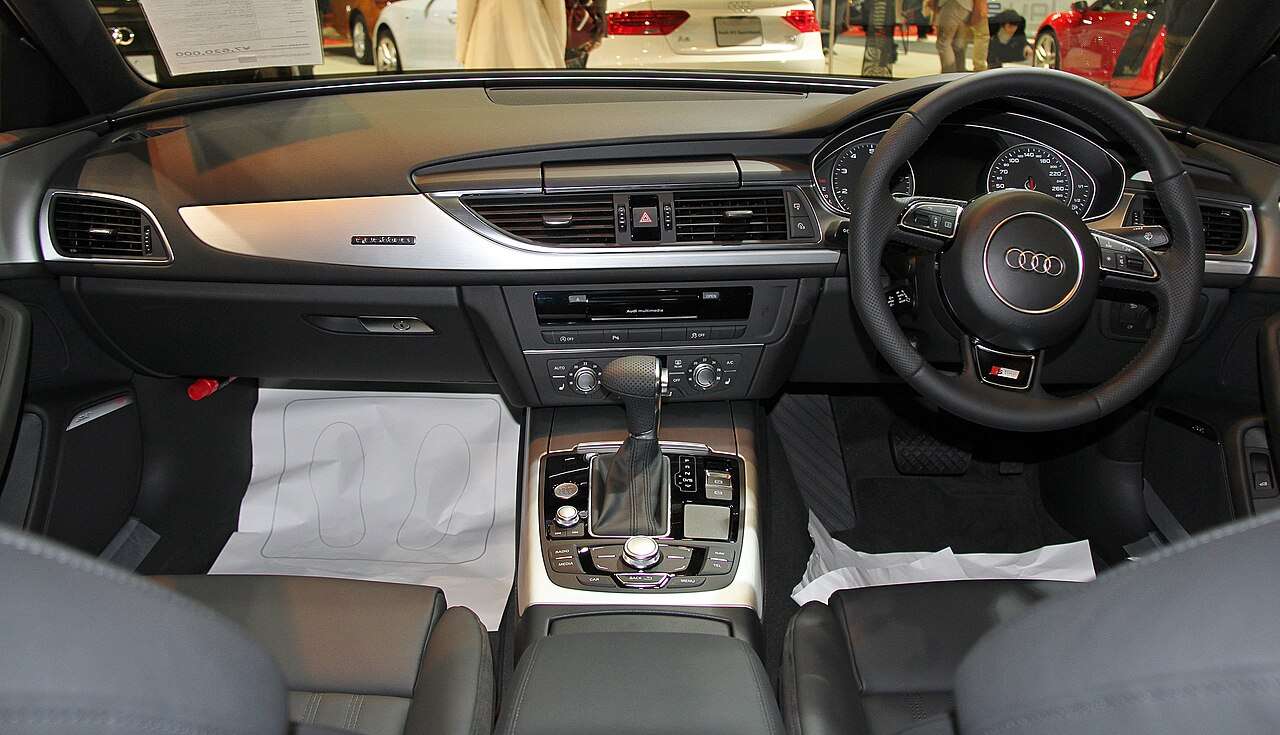
Featured photo: M 93, CC BY-SA 3.0 DE, resized. Other credits accompany each photograph. Explore the Buying Guides hub for more models.
Audi A6 C7 3.0 TDI and BiTDI cars for sale on eBay UK
Compare current asking prices, mileage and service history. Unusual Cars may earn a commission from qualifying purchases through these eBay links.

See more Audi A6 C7 3.0 TDI and BiTDI cars on eBay UK
Love cars you don’t see every day?
Get forgotten cars, surprising motoring stories and the most interesting finds from Unusual Cars by email.
Free to join. No spam. Unsubscribe whenever you like. See our privacy policy.