The Citroën C3 Picasso is a practical family car, but its diagnostic needs depend on the engine, gearbox and equipment fitted. A basic engine-code reader can be useful for an emissions warning. It should not be bought on the assumption that it also diagnoses ABS, airbags, body electronics or every diesel maintenance operation.
This guide covers the UK and European C3 Picasso compact MPV, rather than the C3 hatchback or the later C3 Aircross. It explains how to choose a Citroën C3 Picasso diagnostic scanner, what to record when a warning appears, and which questions help avoid buying the wrong tool.
Which scanner makes sense?
Choose a reputable generic EOBD reader if your aim is to preserve supported engine codes and basic data. For faults outside engine emissions, look for confirmed enhanced C3 Picasso coverage. If the job involves a repair routine, ask for that routine by name and separately from ordinary fault-code access.
The iCarsoft FR V3.0 is an option to investigate alongside other supported handhelds. Confirm the actual C3 Picasso engine, controller and function with the supplier. Where a repair needs factory-level configuration, specialist equipment or physical testing, a workshop diagnosis can be the more useful purchase.
C3 Picasso is a separate model
Do not select an ordinary C3 menu simply because the names are similar. The Picasso has its own model identification and equipment combinations. A seller should know that you mean the tall five-seat MPV, and not a C4 Picasso either.
Keep a note of the VIN, build/year, fuel type, engine designation and gearbox. Include whether the car has Stop & Start and any relevant optional equipment. Engine choices changed during its life: Citroën’s 2015 manufacturer material, for example, includes the C3 Picasso among models receiving its turbocharged three-cylinder PureTech engine. An earlier petrol car should not inherit that engine’s diagnostic assumptions.
On a diesel, distinguish HDi, e-HDi and BlueHDi using the actual vehicle information. Do not infer the complete emissions system from a trim name or assume that every diesel carries the same fluid reservoirs and service counters.
Match the tool to the warning
| Concern | Useful information | Buying question |
|---|---|---|
| Engine light or reduced power | Full engine codes, status and available operating data | Does it cover the exact petrol or diesel ECU? |
| DPF or additive-related message | Fitted-system identification and relevant data | Which reading and repair functions are supported? |
| AdBlue/SCR warning on an equipped car | Exact dashboard wording and emissions fault report | Can it interrogate this BlueHDi system? |
| ABS or airbag light | Report from the affected controller | Is enhanced access confirmed for this vehicle? |
| Body-electrical fault | Relevant body-controller faults and inputs | Does it support this equipment, beyond engine OBD2? |
Start with an untouched fault report
Before clearing a warning, save what the car is telling you. Record the code in full, the ECU that reported it, its status and the exact text. Add any available freeze-frame information. A screenshot of the dashboard is useful because a paraphrased message can lose an important distinction.
Note when the fault occurs: the first cold start, a warm restart, acceleration, rain, a long journey or immediately after maintenance. Include changes in starting, power, gear selection or electrical behaviour. This gives the fault report context that a scanner cannot invent.
Multiple stored faults do not necessarily mean multiple failed components. A technician may need to identify a common supply, communication or operating-condition problem. Conversely, deleting several codes at once does not show that the underlying problem has disappeared.
HDi: DPF information and additive information are different
Where a particulate filter is fitted, ask which relevant readings the scanner can actually display. Depending on the installed system, useful information may include exhaust-pressure-related readings, temperatures or regeneration-related values. Treat those as diagnostic evidence to interpret with the correct vehicle information, rather than as a universal pass/fail number.
A filter-loading estimate is not a direct inspection of the filter. A reading may also be misleading if a related sensor, hose or input is faulty. An expensive filter replacement should follow a reasoned diagnosis rather than the first line of a scanner report.
If the vehicle uses a separate particulate-filter additive system, identify it properly before discussing a refill or counter operation. That fluid and its servicing requirements must not be confused with AdBlue or with an aftermarket bottle of fuel treatment.
Ask separately whether a tool can read the relevant information and whether it supports any required post-repair acknowledgement or counter procedure. Resetting a counter without completing the corresponding physical work creates misleading information for the next investigation.
Do not select forced regeneration just because the menu offers it. The fault, filter condition and safety prerequisites must first be assessed. A regeneration command is a maintenance procedure with conditions, not a general cure for every loss-of-power complaint.
BlueHDi and AdBlue: identify the message first
The later C3 Picasso handbook includes SCR and AdBlue guidance for equipped versions. It distinguishes a dedicated AdBlue supply from diesel fuel and warns against putting AdBlue in the fuel tank. Use the handbook that matches your build for any owner refill procedure.
For diagnosis, distinguish a low-fluid message from a system malfunction. Record any remaining-distance or starting-related message exactly. A top-up may address a genuine low level, but it cannot be assumed to repair a pump, sensor, wiring or other system fault.
“AdBlue reset” is too vague a requirement to use when buying a scanner. Ask which ECU it reaches and which named routine it supports for your car. A seller’s claim that the tool reads engine codes is not a promise that it can complete every emissions repair.
If a warning returns after clearing, preserve the new report and compare the conditions with the first one. Repeated clearing can make the history harder to understand while the actual fault remains present.
Petrol diagnosis: make the data useful
For a petrol C3 Picasso with rough running or an engine light, the first useful scan is one which preserves evidence. Save misfire-related or mixture-related codes with their status and operating conditions, then investigate rather than ordering the first named part.
A complaint during a cold start may need a cold inspection. A fault which appears only under load may require a different test. Static engine data viewed on the driveway cannot reproduce every driving condition, and a passenger or a proper recording method should handle data collection during an appropriate road test.
Mechanical symptoms still need mechanical checks. Oil-pressure warnings, abnormal noises, overheating or severe running problems are reasons to follow the handbook and arrange suitable help. The absence of an engine code does not establish that continuing to drive is safe.
ABS, stability control and airbags
A generic engine reader can return no faults while an ABS warning remains illuminated. This is not a contradiction: the reader may never have accessed the brake controller. Confirm that the scan report identifies the relevant system.
For an ABS complaint, useful controller data can help compare wheel-speed inputs and other signals where supported. The code may identify a circuit or implausible signal, rather than prove that the sensor itself needs replacement. Wiring and mechanical condition can be part of the investigation.
An airbag warning requires SRS access and the correct repair methods. Do not probe restraint components or fit bypass devices. A scanner clearing a repaired fault is different from making a damaged or disconnected restraint system safe.
Body systems, battery history and intermittent faults
For problems with locking, lights, wipers or other cabin equipment, ask about the relevant body-system access. A full scan can help show which modules are communicating, but it does not replace fuse, supply, earth and wiring checks.
Tell the repairer about a recent flat battery, jump start, replacement battery or water ingress. These details can change the order of investigation. A momentary voltage display on a scanner should not be treated as a complete battery health test.
Do not experiment with body configuration or programming to see whether it cures an intermittent symptom. Preserve the existing information and establish the fault first. Factory software and hardware compatibility also need proper checking; buying an unverified interface is not the same as obtaining supported access.
Gearbox and service-function checks
Give the supplier the exact gearbox rather than just saying “automatic”. On an electronically controlled transmission, reading faults, viewing data and performing adaptations are separate capabilities. On a manual car, clutch and gear-selection symptoms may need physical inspection without a helpful electronic fault code.
A service reminder is also different from a malfunction warning. Reset a maintenance reminder only after the relevant work, following the correct instructions. Do not assume that an oil-service feature provides injector coding, battery procedures or transmission learning.
A sensible buying checklist
- Identify the C3 Picasso engine, build and gearbox.
- Write down the actual job: for example, read ABS faults or investigate a diesel additive warning.
- Ask for confirmation of the ECU and function on that specification.
- Check reporting, updates, support and return arrangements.
- Compare the total tool cost with a specialist diagnosis for a one-off problem.
- Keep the compatibility response and save the first scan before clearing anything.
Can I use a cheap Bluetooth adapter?
It may be useful for supported engine data with the right app. Confirm the adapter/app/phone combination; the adapter alone does not establish enhanced C3 Picasso access.
Does “all systems” include every reset?
No. A scan of supported controllers and a service routine are different features. Ask about the particular repair operation.
Will a code tell me which part to buy?
Usually it identifies a detected condition that needs testing. Use the code, symptoms and physical findings together before making a parts decision.
Find related models in our Citroën diagnostic scanner hub.
Sources and coverage notes
- Citroën’s 2015 Frankfurt manufacturer information, including C3 Picasso PureTech availability.
- Citroën C3 Picasso handbook reproduction: AdBlue guidance. Select the correct issue through Citroën’s handbook service.
- iCarsoft FR V3.0 product information and coverage references.
This guide explains diagnostic scope and buying checks. It is not a hands-on test or a guarantee that a particular scanner supports your vehicle.
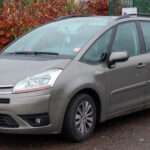
Featured photograph: Vauxford, 2010 Citroen C3 Picasso VTR Plus HDi 1.6 Front, CC BY-SA 4.0. Resized for display. Scanner banner: illustrative artwork.
Love cool cars? Join Unusual Cars Club FREE!
Get forgotten motoring finds, stories, helpful car content and more.
Free to join. No spam. Unsubscribe whenever you like. See our privacy policy.