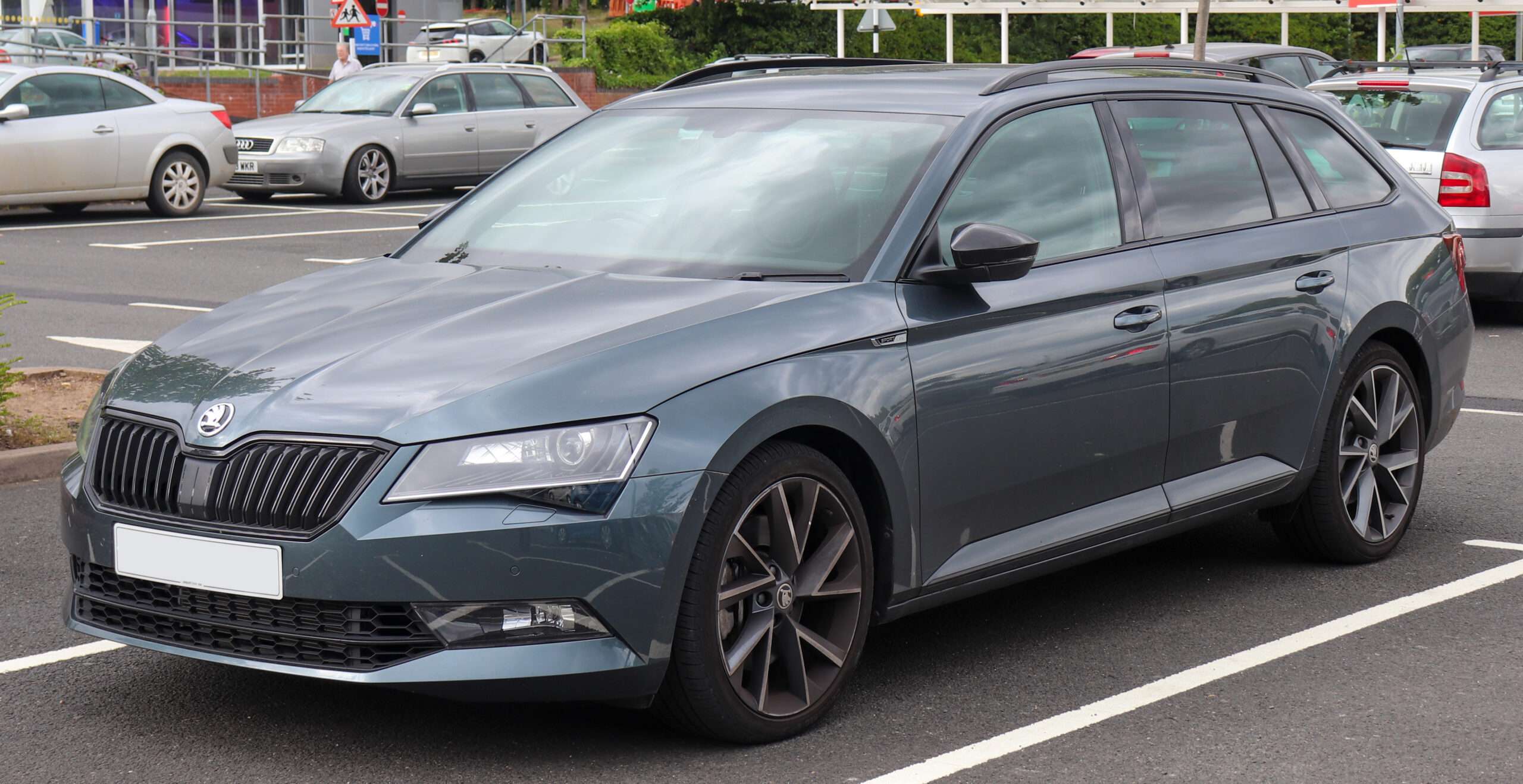
The Škoda Superb Mk3 2.0 TSI 280/272 4×4 is a convincing fast family car because it hides its performance inside an exceptionally useful hatchback or estate. It offers the appeal of a quick Volkswagen Group petrol drivetrain with generous rear space and a less conspicuous image than many performance alternatives. The best purchase is a standard, properly maintained car with sound cooling, smooth DSG operation and documented four-wheel-drive maintenance.
The danger is buying it as though it were an ordinary low-cost family hatch. A reduced used price does not reduce the cost of a transmission fault, adaptive dampers, four correct tyres or an overheating engine. SportLine styling and a service-book stamp cannot establish that the expensive mechanical systems have been maintained.
This guide covers the third-generation Superb, type 3V, with the high-output 2.0 TSI petrol engine in 280 PS and 272 PS form. It includes hatchback and Estate. It excludes the earlier Mk2 3.6 V6, lower-output TSI versions, diesel, plug-in iV and subsequent-generation cars. Confirm the original output, engine and gearbox codes on the actual vehicle: changes do not always line up neatly with its registration year or visible facelift.
Affiliate disclosure: qualifying purchases through our eBay links may earn us a commission at no extra cost to you. Search results can include wrong engines and transmissions. Confirm VIN, engine code, gearbox code, brake dimensions and part numbers before ordering.
Identify the right Superb before comparing prices
SportLine is a trim description, not a guarantee of the high-output engine or four-wheel drive. A 2.0 TSI badge is also insufficient because the range includes other outputs. Check the registration, VIN and factory data against the advertisement, and verify that the car has the claimed drivetrain.
The high-output petrol uses the EA888-family turbocharged four-cylinder engine. It is a different proposition from the older 3.6 V6 Superb: there is no reason to transfer V6 servicing instructions or parts lists to this car. Likewise, the Mk3 iV’s hybrid hardware and transmission requirements should not be confused with those of the 280/272.
| Version or feature | Buying significance |
|---|---|
| Early 280 PS | Associated with the six-speed wet-clutch DSG and four-wheel drive. Confirm gearbox identification and the applicable maintenance schedule. |
| 272 PS revision | Later emissions-era specification with seven-speed DSG. The official 2019 engine chart gives 200 kW/272 PS, 350 Nm and standard 4×4. |
| 2019 facelift | Exterior, lighting, cabin and assistance updates. Do not assume a mechanical revision happened only when the body styling changed. |
| SportLine / SportLine Plus | Sportier presentation and equipment, but check the engine separately. Wheel and seat condition matter as much as appearance. |
| Laurin & Klement | More comfort and technology. The UK facelift launch specification includes DCC; verify the equipment and operation of the actual car. |
| Hatchback or Estate | Choose for load shape and access. Both are useful; the Estate’s additional utility needs balancing against its individual condition and price. |
280 versus 272: do not buy on the number alone
The output change is less important to a used buyer than identity, condition and maintenance. Confirm the gearbox and emissions equipment by build data. Ask a specialist to identify the fitted transmission rather than deciding which service kit to buy from the number of gears mentioned in an advert.
Škoda’s 2019 manufacturer chart confirms seven-speed DSG for the 272 PS 4×4. Its figures give 0–100 km/h in 5.6 seconds for the hatch and 5.7 for the estate, illustrating the performance available without a conspicuous sports-car body. These are manufacturer figures, not a promise that an aged or modified example performs identically.
Registration dates can be misleading around revisions and old stock. A car advertised as a later model may retain earlier features. A photograph caption is also not build evidence. Use the VIN, original specifications and workshop identification before assigning value to a particular revision.
Which specification would we choose?
Start with correct tyres, sound brakes, a clean inspection and a coherent file of engine, DSG and 4×4 maintenance. Then choose the seats, wheels, lighting and convenience equipment that matter to you. A modestly specified healthy car can be the better buy than a highly equipped example needing several expensive jobs.
For comfort, drive the actual wheel and suspension combination on broken local roads. A drive-mode selector does not prove that adaptive dampers are fitted. If DCC is present, confirm that its settings work and obtain a model-specific replacement quote for any leaking or malfunctioning damper.
The UK facelift release gives 625 litres of boot capacity for the hatch and 660 for the Estate. Those figures do not establish whether your particular load fits. Try pushchairs, dog crates or bulky equipment, check the rear-seat arrangement and inspect the boot floor and supplied accessories.
UK prices and what makes a sensible offer
The high-output petrol is a relatively specific search. A broad Superb results count includes many diesels and lower-output cars, so it should not be presented as the number of available 280s or 272s. Search by engine, output and drivetrain, then verify each advertisement.
As one checked example, Cornerhouse Garage advertised a 2018/68 272 PS SportLine Plus hatchback, with 60,350 miles, at £18,995. That is an individual asking price, not a sold result or a market average. The advert’s existence also illustrates why the 272 designation should not automatically be treated as proof of facelift bodywork.
Compare similar age, body style, output, mileage and history. Include the cost of immediate tyres, brakes, fluid servicing and diagnosed repairs. A dealer warranty can add value when the terms are useful, but it does not remove the need to understand the car before purchase.
Price defined work; diagnose uncertainty
Measured worn brakes can support a written allowance. An unexplained coolant loss or warm gearbox judder needs diagnosis before it can support a sensible price. Do not turn a seller’s optimistic explanation into a repair budget without independent evidence.
Keep enough money after purchase to cover the work identified and a realistic reserve for your use. Four-wheel-drive servicing, DSG servicing and ordinary engine servicing are separate operations. A general “fully serviced” statement should not be treated as proof that all three have been done.
History, ownership and modifications
Request the VIN, registration and invoices before travelling. Review MOT mileage progression and recurring advisories. Match the identity to the V5C and use appropriate finance, theft and recorded-damage checks. Where repairs have been significant, ask for photographs, invoices and an explanation of what was damaged.
Read digital history alongside workshop paperwork. An electronic service entry can establish chronology, while an invoice identifies the oil, filters, plugs and additional work. A missing digital entry does not prove no work occurred; equally, a screen full of service stamps does not prove that the DSG or Haldex was serviced.
Ask Škoda to check the VIN for outstanding recalls and campaigns. Establish completion rather than assuming a fresh MOT covers it. For an import, confirm market specification, emissions status, insurance and service support before committing.
Tuning and load history
Ask directly about engine and gearbox software, exhaust changes, intake modifications and lowering. A standard-looking car can have altered software. Obtain invoices, supplier details and a clear insurance position. Returning software to standard does not erase previous use or guarantee the condition of the drivetrain.
Performance modifications change the assessment of cooling, clutches and traction hardware. Have the specialist review the combination rather than evaluating each modification in isolation. Do not pay a premium for a claimed power figure without understanding how it was measured and what supporting work exists.
For towing, inspect the towbar, wiring and rear structure and confirm the actual vehicle’s plated limits. A neat towbar is not proof of abuse; equally, a car used regularly with heavy loads deserves an inspection reflecting that work. Ask about trailer equipment, maintenance and any overheating or drivetrain warnings.
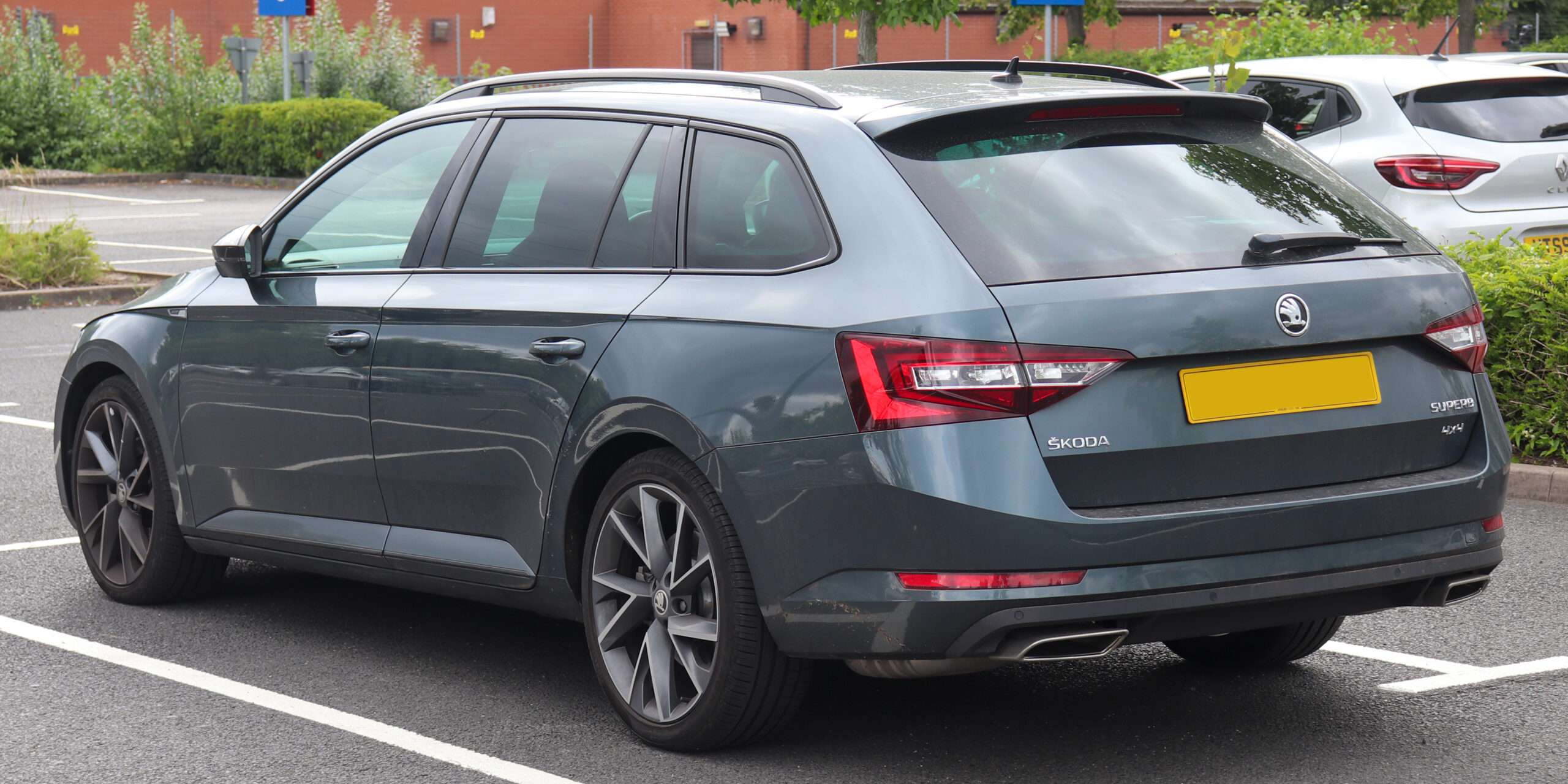
EA888 engine: cold start, cooling and oil
Arrange to see the car genuinely cold. A seller who starts it before you arrive removes useful evidence about starting, noises and smoke. Let it settle, watch the warning sequence and assess running before asking for any load. The first hard acceleration of a viewing should not happen on a cold engine.
Have a Volkswagen Group specialist scan the relevant modules and interpret the results with the physical inspection. A code naming a component does not prove that component has failed. Conversely, an absence of stored faults cannot rule out a leak, mechanical wear or recently cleared codes.
Water pump and thermostat housing
The cooling module deserves deliberate attention. Awesome GTI identifies the EA888 Gen 3/4 pump and thermostat assembly as a recurring repair item and supplies a kit containing the assembly, coolant coupler and belt kit. That workshop observation supports checking the area; it is not a measured failure percentage for every Superb.
Look for low coolant, dried residue, dampness and a history of topping up. Ask the inspector to examine concealed areas and pressure-test where appropriate. An undertray can hide evidence from a casual viewing. Check the system only under the handbook’s safe cold conditions and never remove a hot pressurised cap.
Ask what previous cooling work included. A pump-only invoice may describe a different scope from a complete thermostat assembly replacement. Check seals, coupler, belt, coolant, labour and the subsequent test. The important evidence is that the diagnosed leak was repaired and the system remains stable.
Unexplained coolant loss, overheating or contamination needs investigation before purchase. Do not assume every loss is the familiar housing, and do not accept repeated topping-up as a maintenance routine. A known repair can be priced; an unknown overheating history is a different risk.
Oil history, leaks and ventilation
Check the oil level and ask how often oil is added between services. Inspect accessible areas and have the underside examined. Look for evidence around covers, filter-related components and the engine-to-transmission area, but let the technician establish the source rather than naming it from where oil finally drips.
Verify the VW oil approval required for the actual engine and service regime. A familiar viscosity on an invoice is only part of the specification. If history is incomplete, plan a correctly specified baseline service and ask whether the car’s use suits its existing service regime.
Whistling, unstable idle, unusual crankcase behaviour or running faults can warrant checking ventilation and related pipework. These symptoms can have several causes. Do not treat a cheap PCV listing as proof that an unresolved running issue has a cheap cure.
Timing chain, auxiliary drive and ignition
The 2.0 TSI uses a timing-chain drive. Do not apply a diesel Superb cambelt package or an older petrol engine’s schedule to it. Persistent abnormal start-up noise or timing-related faults call for diagnosis. Chain parts, access, associated seals and verification need a complete quotation if work is required.
The small belt associated with the water-pump arrangement is a separate item from the engine’s timing chain. Ask exactly what a workshop means when an invoice refers to a belt. This prevents both unnecessary cambelt budgeting and the mistaken belief that a chain-driven engine contains no serviceable belts.
Check spark-plug history against the actual schedule, especially on tuned cars. Under safe warmed-up acceleration, assess hesitation and misfiring. Coils, plugs, fuel delivery and boost control can create overlapping symptoms. Ask for diagnostic evidence before replacing a collection of parts.
Turbocharging and emissions equipment
Assess whether the engine delivers smoothly once warm and whether boost-related warnings, smoke or unusual noises appear. Inspect pipework and connections for damage or poor modification work. A boost fault does not automatically mean the turbo itself must be replaced.
Identify the actual emissions equipment by build. Later petrol particulate-filter arrangements and earlier exhausts are not interchangeable simply because both cars are called Superb 2.0 TSI. Avoid cars with unexplained emissions alterations or software intended to conceal warnings. Confirm the implications with the inspecting specialist and insurer.
Love cars you don’t see every day?
Get forgotten cars, surprising motoring stories and the most interesting finds from Unusual Cars by email.
Free to join. No spam. Unsubscribe whenever you like. See our privacy policy.
DSG: service evidence and a proper warm test
These high-output models use a wet-clutch dual-clutch transmission. Earlier six-speed and later seven-speed applications need the correct identification, fluid and service procedure. Do not transfer dry-clutch DSG advice from a smaller-engined car or order a kit simply labelled “seven speed”.
Ask for dated, mileage-recorded gearbox-service invoices specifying the work. If the history only says “automatic serviced”, clarify the transmission involved, fluid specification and whether its required filter operation was included. The engine’s oil service is not evidence of a DSG service.
Cold and warm behaviour
Check engagement of drive and reverse, gentle take-up, manoeuvring, ordinary upshifts and downshifts, and safe acceleration after warming up. Finish with slow parking movements when hot. Repeated judder, banging, long engagement delays, slipping or warning messages need diagnosis.
A DSG can feel different from a torque-converter automatic in low-speed operation. That does not justify dismissing every harshness as normal. Ask an experienced specialist to distinguish characteristics from clutch, control, mounting or flywheel-related problems using the actual symptoms and diagnostic findings.
Do not assume an oil service or adaptation reset will repair an existing mechanical fault. Maintenance can be appropriate without being a cure. If the seller says a software update has resolved a problem, request the invoice and verify the result during a meaningful drive.
Intervals and gearbox identity
Use the VIN and transmission code to obtain the correct schedule. The widely quoted 40,000-mile figure for some wet-clutch DSG applications should not become a universal instruction for every seven-speed unit. A specialist may recommend a preventative interval different from the manufacturer’s schedule; ask them to explain that recommendation.
When buying a car with uncertain history, obtain a quotation for the correct service alongside the inspection findings. If it already has serious symptoms, diagnose those first. Budgeting a routine fluid change cannot establish the cost of repairing a faulty mechatronic unit or clutch assembly.
Haldex 4×4: separate maintenance from the gearbox
The rear-drive coupling, rear differential and DSG are different systems. Ask which fluids have been changed and which components inspected. A single invoice line saying “drivetrain service” needs clarification, particularly if the seller assumes one operation covers everything.
For the Haldex generation fitted, ask the specialist about the pump intake screen and whether its inspection or cleaning is included. An oil change alone may not describe the same scope. Do not assume a service with the word “filter” refers to the same hardware on every generation.
Prove operation without abusing the car
A 4×4 badge does not prove the coupling is functioning. Have the system checked by a specialist with appropriate diagnostic equipment and a suitable procedure. Deliberate wheelspin, hard launches or improvised tests on a public road are unnecessary and do not replace diagnosis.
Ask about past pump, controller or coupling repairs and request the findings that justified them. If four-wheel drive is unavailable, establish the cause before deciding it merely needs fresh oil. A pump-related code and a failed coupling are not interchangeable repair scopes.
Check the four tyres for suitable matching specification, condition and rolling-size consistency. Uneven wear or an inappropriate combination can affect how the car behaves. Price the necessary set rather than assuming one replacement tyre is enough.
Factory schedule versus specialist recommendations
Obtain the build-specific factory requirements. Awesome GTI’s published workshop guidance recommends Haldex maintenance every 20,000 miles, which is its preventative recommendation rather than a universal Škoda schedule. It also distinguishes coupling oil from rear final-drive oil.
Use that distinction when comparing quotations. Ask which housing is being drained, what fluid is used, whether the pump screen is addressed, and whether diagnostics and a road test are included. A cheaper quote may cover fewer operations without either workshop being wrong about its own price.
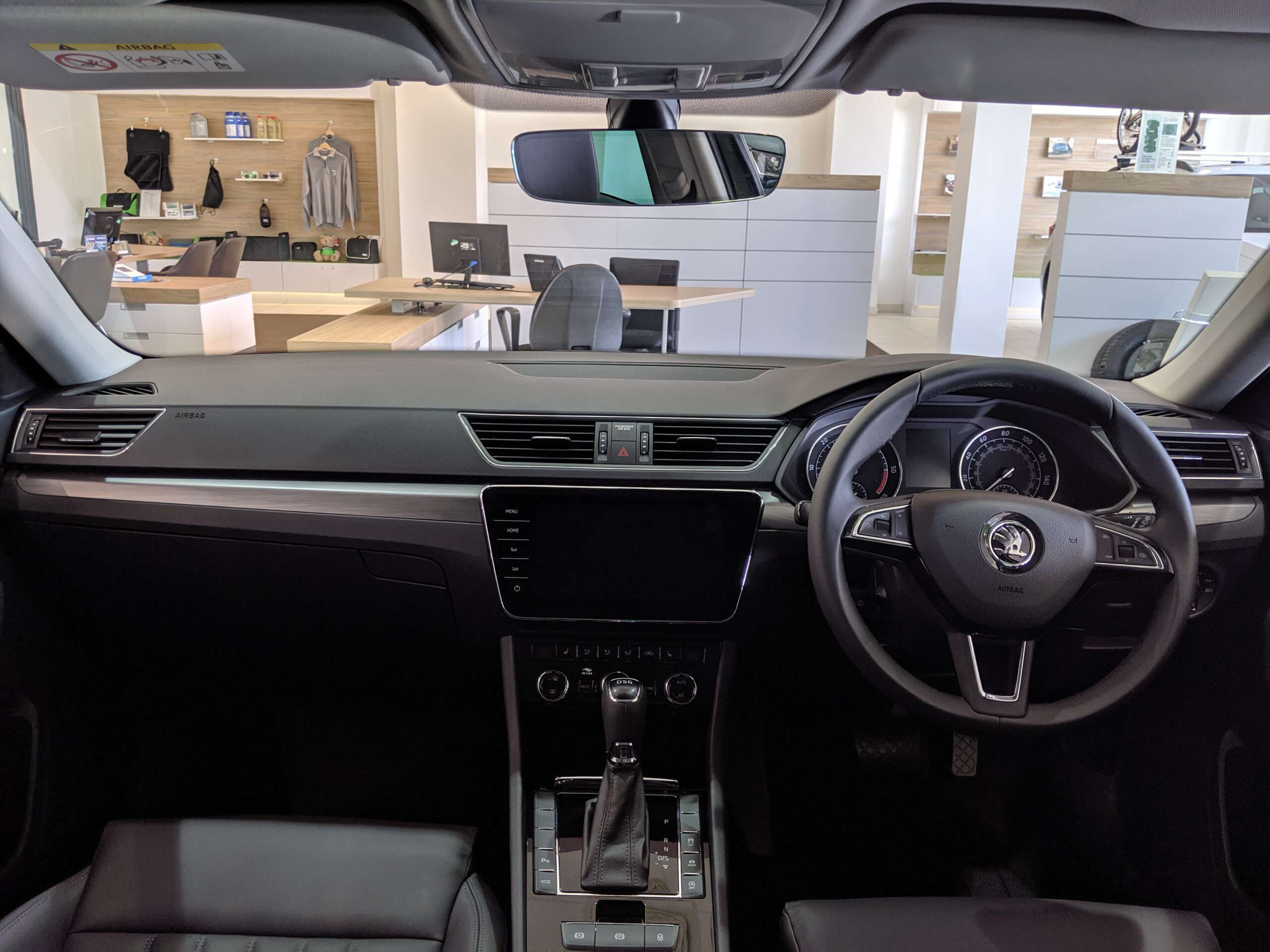
Suspension, brakes and tyres
The Superb’s family-car role can disguise accumulated chassis wear. Check front and rear arms, bushes, joints, springs, dampers and wheel bearings on a lift. Listen on broken surfaces, assess steering response and look for uneven tyre wear. A smooth motorway drive alone does not test every joint.
If DCC is fitted, confirm its identity and operation. Check for damper leaks and relevant faults and compare the modes on suitable roads. Adaptive replacements can cost more than ordinary dampers; an inexpensive conventional listing may not be a compatible repair. Ask whether a proposed conversion changes the equipment and insurance position.
Large SportLine wheels need close examination of the inner rims as well as their visible faces. Look for distortion, cracks, repairs and unsuitable tyres. A cosmetic refurbishment does not establish that a wheel is straight. Include alignment after any necessary suspension or tyre work.
Measure the brakes
Have disc thickness and pad condition assessed against the relevant limits. Inspect inner faces, calipers, hoses and the electric parking brake. A lip on a disc is an observation, not a complete wear measurement. Repeated vibration or pulling needs diagnosis rather than an assumption that pads alone will fix it.
Confirm the brake specification using the vehicle’s data and actual dimensions. A kit for a lower-output diesel or a different PR code may appear in a broad search. Ask whether fitting, hardware, wear sensors where applicable and parking-brake procedures are included in a complete quote.
Body, practicality and cabin equipment
Inspect paint, panel gaps, sills, jacking areas, underside damage and the quality of any previous repairs. Check boot trim and carpets for dampness. Water ingress needs diagnosis at the entry point; replacing stained trim does not resolve a blocked drain or damaged seal.
On panoramic-roof cars, operate the mechanism and blind and inspect accessible seals and drainage. Listen for abnormal noises and look for staining around the headlining. Avoid a viewing in which a seller refuses to demonstrate the roof while insisting it only needs lubrication.
Test the powered tailgate where fitted, including its controls and obstruction response according to the handbook. Check rear-seat release mechanisms, boot cover, variable floor, spare-wheel equipment and load restraints. Missing practical accessories can be inconvenient and costly to replace after purchase.
Infotainment and assistance systems
Pair a phone, try navigation, audio, USB connections and cameras, and operate the parking sensors. Verify the actual smartphone functions rather than assuming that every touchscreen supports the same software. Aftermarket interfaces should have installation evidence and work without disrupting original controls.
Test climate control, heated seats and any ventilated seats, mirrors, windows and both keys. Verify advertised Canton audio rather than assuming a speaker badge proves every channel works. A premium specification adds value when functioning, not merely when listed in an advert.
Inspect headlamps for damage, moisture and correct operation. Facelift Matrix lighting and assistance equipment need the appropriate diagnosis if warnings occur. Ask for calibration evidence after relevant windscreen, body or sensor work. Do not test emergency interventions by deliberately creating a hazard.
UK maintenance costs: parts, labour and fitted packages
Use these checked published prices as comparison points, then obtain a current quote against the actual car. A dealer’s broad Škoda menu is not a promise that every engine, gearbox or extra operation qualifies. Confirm age restrictions, VAT and the precise scope.
| Job | Published figure | Scope and limitations |
|---|---|---|
| Oil change, over-three-year vehicle | From £310 | John Clark Škoda menu; registration-specific eligibility and extra operations need confirmation. |
| Oil and inspection | From £371 | John Clark explicitly notes that additional servicing items may be needed. |
| DSG service | From £269 / £369 | Vantage / John Clark published menus. Identify the gearbox and compare included operations. |
| Haldex service | From £149 / £109 | Vantage / John Clark. Ask whether pump removal and screen cleaning are included. |
| Brake fluid | From £65 / £78 | Vantage / John Clark menu prices. |
| Diagnostic time | £115 for one hour; £150 menu entry | Vantage’s hour and John Clark’s diagnostic entry are different advertised scopes. |
| Published hourly labour | £138 per hour | John Clark’s listed rate; confirm applicability and VAT treatment in your written quote. |
| EA888 pump/thermostat repair kit | £355 parts only | Awesome GTI observed kit listing, including coupler and belt. Confirm part-number fitment; fitting, coolant and delivery are additional. |
Sources: John Clark Škoda fixed-price menu, Vantage Škoda service prices and Awesome GTI kit listing. Vantage states its applicable menu includes standard parts, labour, oil and VAT, with age and participation conditions. We have not derived a pump fitted price by multiplying an invented labour time.
Build a quote that answers the buying question
For cooling work, request the assembly, seals, coupler, pump belt as applicable, coolant, access labour and final checks. For DSG work, request the correct fluid and required filter procedure. For Haldex, clarify screen work and diagnostics. Complete scopes make the differences between prices intelligible.
Do not add the cost of two overlapping jobs twice. A cooling repair may already include coolant renewal; a scheduled service may include plugs or filters that another package excludes. Equally, do not omit extras because the headline price says “full service”.
Model-specific eBay parts searches
For routine maintenance, compare 280/272 service kits, spark plugs and front brakes. Verify oil approval, plug application and brake dimensions before buying. A diesel kit can appear in the same results.
For drivetrain work, use early DQ250 service-kit searches only after identifying the unit, or later DQ381 application searches with the same caution. Compare Mk3 Haldex service kits separately from DSG and differential oil.
For diagnosed repairs, check water pump and thermostat assemblies, timing-chain applications and alternator applications. These searches show availability, not guaranteed fitment or a fitted repair bill. Agree warranty and customer-supplied-parts arrangements with the garage first.
Maintenance after buying
Reconcile the history with the build-specific schedule, including engine oil, filters, plugs, brake fluid, DSG and coupling requirements. Inspect tyres, cooling and brakes before relying on the car for a long trip. Reset service information only after the relevant work has actually been completed.
Keep detailed invoices and record dates, mileage, fluid approvals and part numbers. This is particularly valuable when the car has a transmission revision or optional chassis equipment. It saves the next workshop from guessing and gives a future buyer evidence of proper care.
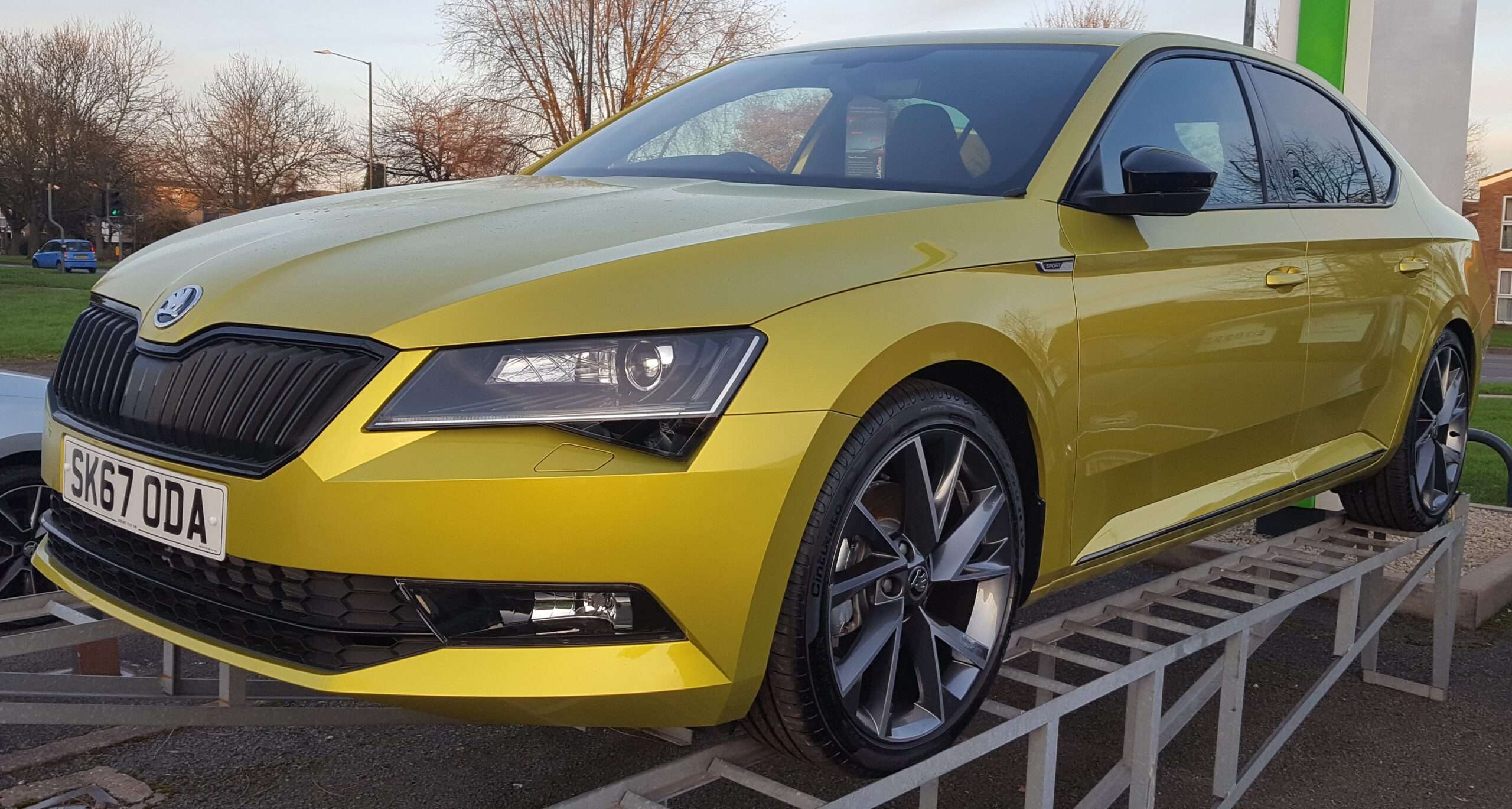
Service parts and maintenance shopping checklist
Use these Škoda Superb Mk3 280/272 searches to compare parts availability. A search result is not a fitment guarantee: confirm the exact vehicle specification and original part numbers before ordering.
| Maintenance item | What to check before buying | eBay parts search |
|---|---|---|
| 280/272 service kits | Match engine code and production date; compare kit contents and the manufacturer approvals for any included fluids. | Compare 280/272 service kits on eBay |
| spark plugs | Match the engine and ignition specification. Diagnose running faults before replacing components; modified cars may need a different approved specification. | Compare spark plugs on eBay |
| front brakes | Match axle, fitted brake assembly, dimensions and wear sensors; compare a complete axle set and confirm whether hardware is included. | Compare front brakes on eBay |
| early DQ250 service-kit searches | Confirm the exact gearbox or coupling code, approved fluid and complete filter/seal contents; these are separate service circuits. | Compare early dq250 service-kit searches on eBay |
| later DQ381 application searches | Confirm the exact gearbox or coupling code, approved fluid and complete filter/seal contents; these are separate service circuits. | Compare later dq381 application searches on eBay |
| Mk3 Haldex service kits | Confirm the exact gearbox or coupling code, approved fluid and complete filter/seal contents; these are separate service circuits. | Compare mk3 haldex service kits on eBay |
| water pump and thermostat assemblies | Identify the failed component first; match engine and housing references, seals and the correct coolant specification. | Compare water pump and thermostat assemblies on eBay |
| timing-chain applications | Confirm engine code and the diagnosed scope with a specialist. Check tensioners, guides, seals and associated parts; this is not a universal replacement interval. | Compare timing-chain applications on eBay |
| alternator applications | Match the original part number, output rating, electrical connector and pulley; check exchange surcharges. | Compare alternator applications on eBay |
Affiliate disclosure: we may earn a commission from qualifying eBay purchases, at no additional cost to you. Listing prices are for the advertised contents only; fitting, diagnosis, fluids and associated work may cost extra. Check availability, seller reputation and returns terms.
Hidden ownership costs
Tyres: price a complete correct set and any alignment or suspension work explaining uneven wear. A fast estate’s tyres are not inexpensive simply because the car looks restrained. Ask which wheel sizes are approved and whether aftermarket wheels have appropriate specification.
Tax: check the registration record and any applicable expensive-car supplement period. The original invoice price, options and first-registration date can matter. Do not transfer the tax shown for another Superb or rely on an old advertisement.
Fuel: budget for your route and the specified grade. The manufacturer lists different laboratory figures under different tests, which should not be compared indiscriminately. Short cold trips, towing and sustained performance driving can change consumption substantially.
Equipment: DCC dampers, powered tailgates, panoramic roofs, lighting and driver-assistance sensors add potential repair and calibration expense. Check warranty exclusions and limits against the equipment fitted. A broad warranty headline is not evidence of comprehensive cover.
Insurance and tuning: obtain a personal quote reflecting modifications and previous damage. An undisclosed remap is not just a bargaining point; establish the insurance position and the mechanical implications before purchase.
Downtime: diagnosis, transport, parts availability and alternative travel can add to the bill. Ask how the garage authorises further work and whether the quote covers testing after repair. A low parts price alone is not an ownership budget.
Superb 280/272 viewing checklist
Before travelling
- Confirm Mk3/type 3V, output, original engine and transmission identity, body style and 4×4 specification.
- Review MOT, ownership, finance/damage checks, service chronology and campaigns.
- Request separate evidence for engine, DSG and Haldex servicing.
- Ask about coolant top-ups, warnings, software changes, towing and previous drivetrain repairs.
- Arrange a cold start, varied warm test and independent specialist lift inspection.
At the car
Check identity and documents, then inspect body repairs, water ingress, tyres, wheels and accessible fluids. Have the engine’s cooling module and underside examined. Test seats, roof, tailgate, climate, infotainment, lights and both keys. Record missing equipment rather than assuming it will be supplied later.
Ask for brake measurements and suspension findings, with photographs where useful. If the car has DCC, identify it and assess it as an adaptive system. If the seller claims recent work, inspect the invoice and verify its result.
During and after the drive
Warm the car gently, then assess engine response and ordinary shifts under safe conditions. Include reversing, low-speed manoeuvring, broken surfaces and a steady cruise. Finish with hot parking movements. Note when symptoms occur: road speed, engine load, gear, temperature and steering angle help the technician investigate.
Have the workshop verify 4×4 function through an appropriate procedure. Recheck for leaks and ask for relevant codes to be interpreted. Recently cleared faults, an untested hot condition or concealed areas are limitations to record, not reasons to describe the whole car as proven healthy.
Making the decision
Separate safety defects, unresolved reliability issues and routine servicing. Price defined work using fitted quotes. Require diagnosis for coolant loss, transmission symptoms or absent rear-drive operation before making an offer based on a speculative repair.
Record the agreed specification, mileage, keys, promised work and warranty terms. At collection, verify the repairs and retain the evidence. Buy when the history and inspection support the car; walk away when serious symptoms are dismissed without tests or inspection is refused.
Frequently asked questions
Is every SportLine a 280 or 272?
No. SportLine is a trim level. Confirm engine output and drivetrain from the actual vehicle records.
Does every 272 have facelift bodywork?
No. The 272 specification can precede the visible update. Use build information and gearbox identification rather than registration alone.
Is a Haldex service the same as a DSG service?
No. The coupling, gearbox and final-drive housings have separate requirements. Ask exactly which operations an invoice covers.
Does the 2.0 TSI need a cambelt?
Its timing drive uses chains. The pump-related belt is a different component; clarify what a workshop’s belt description means.
Should I choose 280 or 272?
Prioritise condition, accurate identity, maintenance and the specification you need. The output badge is less important than a sound cooling system and healthy drivetrain.
Sources and image credits
Manufacturer information: UK facelift specification release and the 2019 press kit, including its engine overview chart. Workshop guidance: Awesome GTI Haldex servicing. Cost and asking-price sources are linked in their relevant sections.
Inspection advice is editorial judgement, not measured failure-rate data. The cabin photograph is explicitly a TDI trim illustration. Compare other cars in our buying guides by make.
Featured photograph: Vauxford / Wikimedia Commons, CC BY-SA 4.0. Images resized for display.
Škoda Superb Mk3 280/272 for sale on eBay UK

See more Škoda Superb Mk3 280/272 cars on eBay UK
Love cars you don’t see every day?
Get forgotten cars, surprising motoring stories and the most interesting finds from Unusual Cars by email.
Free to join. No spam. Unsubscribe whenever you like. See our privacy policy.