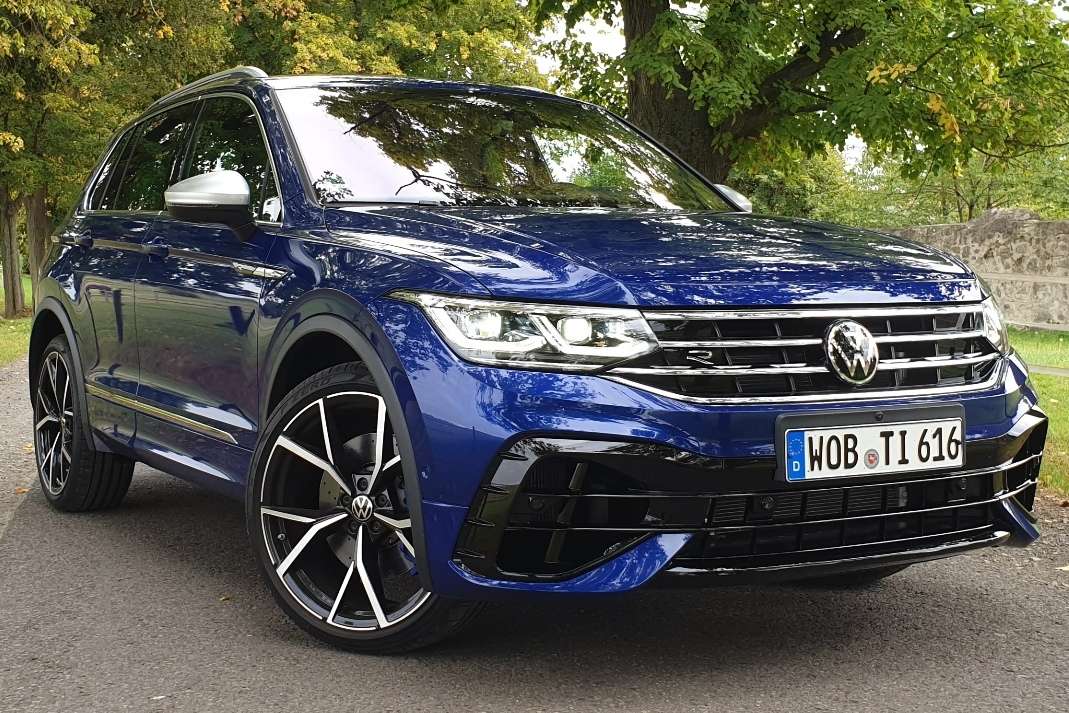
The Volkswagen Tiguan R is a practical family SUV with a genuinely different mechanical specification from an R-Line. Its 320 PS petrol engine, seven-speed DQ500 gearbox, adaptive chassis and rear torque-vectoring system make it an appealing way to combine everyday space with serious performance. Those features also mean that a generic Tiguan maintenance budget can be badly misleading.
This guide covers the second-generation facelift Tiguan R, introduced in late 2020. It excludes R-Line trim, diesel Tiguans, eHybrid versions, the Allspace and the newer-generation Tiguan. An advert or parts search that includes “Tiguan”, “2.0” and “R” can still be describing a different car. Confirm the VIN, engine code and exact components before buying or ordering parts.
Our recommendation: choose a standard, well-documented R with a clean diagnostic assessment, smooth cold and hot DSG operation, sound brakes and tyres, and a clear maintenance plan for the rear drive unit. Inspect the actual car on a lift. A desirable exhaust or wheel option should come after evidence that the expensive mechanical systems are healthy.
What makes a genuine Tiguan R?
Volkswagen identifies the R’s engine as the EA888 evo4 2.0-litre turbocharged four-cylinder petrol, producing 235kW/320 PS and 420Nm. Its launch material specifies the high-torque DQ500 seven-speed wet-clutch DSG. This is an important detail: do not assume it uses the DQ381 merely because another contemporary performance Volkswagen does.
The rear drivetrain is equally distinctive. Volkswagen describes a rear final drive with two multiplate clutches, distributing drive not just between front and rear but also variably between the individual rear wheels. This is called R-Performance Torque Vectoring. It is not simply the conventional coupling/differential arrangement of an ordinary AWD Tiguan or first-generation T-Roc R.
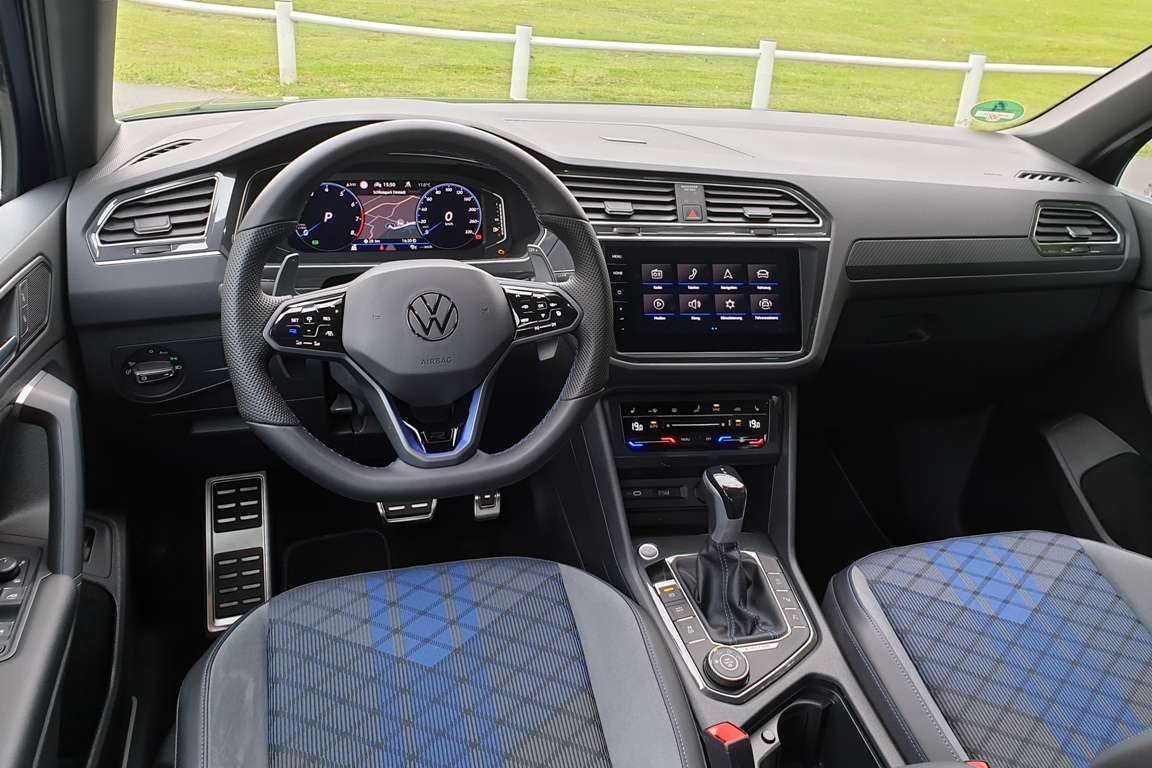
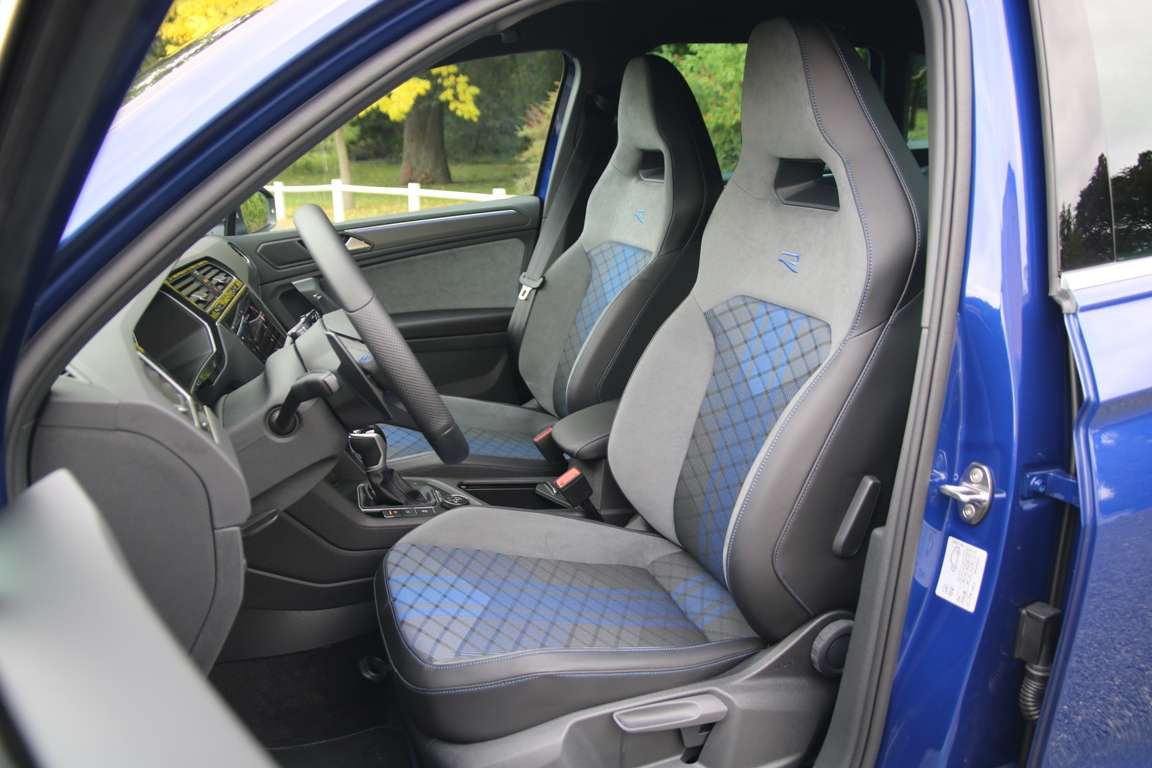
Other R-specific equipment includes adaptive DCC suspension lowered by 10mm, progressive steering, a performance braking system, R sports seats, R-specific instruments and selectable driving profiles. The launch specification offered a titanium Akrapovič exhaust and larger wheels in some markets. Equipment packages and standard wheels vary by market and year, so obtain the actual UK build specification rather than assuming an overseas photograph describes every UK example.
Why R-Line is a separate purchase
R-Line supplies a sporting appearance with other engines and drivetrains. It does not establish that the car has the 320 PS engine, DQ500 or torque-vectoring rear unit. Some online adverts and automated parts catalogues use loose descriptions that combine them. Check the VIN and documentation, especially if the car has replacement badges, wheels, exhaust tips or a modified body kit.
The R is based on the facelift Mk2 rather than the earlier Tiguan body specification. A newer registration is still not enough to prove the engine or option list. Check the actual production details, import history where relevant and service records. If the seller cannot identify the vehicle consistently, resolve that before comparing price or arranging finance.
Options and daily usability
Prioritise the equipment you will use: parking camera, assistance features, seat heating, roof and infotainment. Test each item. A navigation icon, an app logo or a connected-services menu is not proof that the function is currently available without an account, compatible phone or subscription. Ask the seller to demonstrate it rather than assuming a brochure promise still applies.
Try the sports seats for more than a few minutes, with the steering and seat adjusted properly. Check rear passenger space in that position and test your child seats. The Tiguan’s adjustable rear bench is useful, but load-space figures depend on the seating position and measurement method. Take your pushchair, dog crate or usual luggage if fit is central to the purchase.
Buying budget: avoid ordinary-Tiguan comparisons
Compare genuine Rs with similar year, mileage, history, options and seller support. A diesel R-Line, older 2.0 TSI or eHybrid may appear in the same search but is not a direct guide to the R’s value or repair costs. Likewise, an advertised performance upgrade does not automatically add the amount its owner spent.
Make a total-cost comparison: purchase price plus confirmed immediate work, the next scheduled maintenance and a repair reserve. Measure the brakes and tyres rather than judging them by the mileage or the car’s clean appearance. A family SUV can have spent much of its life on short trips, while a performance car may have seen track use or repeated hard acceleration. Neither can be judged from the badge alone.
A seller’s “full service” statement needs a scope. Engine oil and filters do not prove the DSG and rear unit have been maintained correctly. Ask for itemised invoices and the current Volkswagen requirements for the VIN. If the car needs diagnostic investigation, establish that before agreeing a price based on an optimistic repair assumption.
Documents to request
Obtain registration and VIN details, a service-record printout and supporting invoices. Check date/mileage continuity and ask which oil approval and parts were used. Record additional work such as gearbox servicing, spark plugs, brake fluid, rear-unit work, cooling repairs and software updates where relevant. A single digital entry may not show everything required to judge a major repair.
Ask about ECU and DSG software, tuning boxes, exhaust/downpipe changes, intake modifications, suspension and wheels. A car returned to standard hardware can still have a modified history. Ask the inspecting specialist what can be established from physical and diagnostic evidence, and understand that no quick scan proves everything about the car’s past use.
Check MOT history, finance and write-off status, VIN consistency and the seller’s right to sell. Insurance and vehicle tax should be quoted for the actual registration and modifications. If you need a towbar, verify suitability, approved installation and the particular car’s plated limits. Do not apply a general Tiguan towing figure to the R without checking its documentation.
EA888 evo4 engine: inspect the actual generation
Cold start and warm road test
Arrange to inspect the car before the engine has been run. Watch starting behaviour and the warning-light sequence, listen for persistent unusual noise and assess idle quality. A warmed-up car removes a useful part of the assessment. If it cannot be seen cold, make that part of the independent inspection before committing.
Check oil and coolant according to the handbook, with the cooling system cold. Look for leaks around the engine, hoses and undertray, then inspect again after a proper drive. Ask about top-ups and recent cleaning. A spotless engine bay does not establish that a leak has been fixed, and a stable gauge on a brief test does not prove the cooling system is sound.
After warming through, accelerate progressively within legal speeds. Response should be consistent, without misfire, persistent smoke, hesitation or a reduced-power message. Arrange a VAG-capable scan and relevant live-data assessment, particularly if there are intermittent warnings or recently cleared faults. A code read is a starting point; the workshop should explain what testing supports its diagnosis.
Cooling system: do not order an older EA888 package blindly
The evo4 has electronically controlled thermal management, described in Volkswagen’s own technical material. Inspect for coolant loss, dried residue, damaged hoses and evidence of previous repairs. If the level falls, have the system pressure-tested and the source established rather than assuming the familiar pump problem from another engine generation explains it.
Parts searches for “Tiguan R water pump” can return earlier Tiguan and Golf assemblies. During research, the results included multiple older EA888 listings despite the R-specific query. That is why this guide does not present their low prices as a verified evo4 repair budget. Match the original number and VIN, then quote the complete applicable assembly, seals, coolant and labour.
Use Tiguan R 320 water-pump and thermostat searches as a way to compare candidates after identification. Check the seller’s written compatibility confirmation and return terms. A “fits Tiguan” banner is not sufficient evidence. Ask whether the fitter accepts customer-supplied parts and what happens if a new component fails after installation.
Oil, plugs and ignition
Confirm the approved engine oil for the actual engine and service regime. The name “EA888” covers several generations and specifications. Do not select oil purely because it appears in a Golf R package, or assume that a six-litre retail bundle is the engine’s fill instruction. The invoice should identify oil approval and the work performed.
Ask for the spark-plug replacement history and specification. If the car is tuned, obtain the tuner’s requirements and discuss them with an informed specialist. A randomly selected colder plug or aggressively shortened interval is not a replacement for understanding the calibration. Use R 320 spark-plug searches with verified component references.
A misfire can involve a plug or coil but also air leaks, fuelling, software or mechanical condition. Price a rough-running car only after diagnosis, not after the seller has suggested the least expensive component. If a repair has already been performed, request the findings and invoice and test the car fully afterwards. A cleared fault memory is not repair evidence.
Timing chain and auxiliary drive
The R’s EA888 uses a timing chain. Generic Tiguan cambelt packages can refer to different petrol or diesel engines and should not be applied here. Persistent timing-related noise or fault codes need investigation. Chain-driven does not mean every timing component is immune to wear, and evidence of incorrect servicing deserves particular attention.
The auxiliary drive is a separate system. Have the belt, pulleys and tensioner checked for noise, damage and contamination. A charging warning requires battery, wiring, control and alternator diagnosis rather than automatic replacement. Alternator searches for the R 320 also return diesel and other petrol units; match output, connections, pulley and original part number before ordering.
Turbo, breather system and modifications
Inspect intake and boost connections for poor fitting, leaks and non-standard parts. Investigate unusual turbo noise, persistent smoke or inconsistent response rather than accepting “normal for a tuned car”. A replacement turbo invoice should explain the original fault and associated work, not simply list a part.
Ask about oil consumption and whether the breather system has been repaired. Do not assume that every consumption complaint is a PCV issue: leaks, turbocharger condition and internal engine problems can require different investigation. A specialist can advise whether further testing is appropriate when the viewing evidence raises concern.
Avoid removed emissions hardware and software used to hide warnings. A modified exhaust can affect noise, insurance, future testing and the cost of restoring the car. If considering a tuned example, obtain the full hardware/software list, tuner, fuel requirements and maintenance plan. A claimed power figure is not a condition report.
DQ500 DSG: the right gearbox, the right service
Volkswagen’s Tiguan R material explicitly identifies the DQ500. A generic “seven-speed DSG service” quotation can therefore be incomplete. Ask the workshop to confirm the gearbox code, required fluid, service scope and current VIN-based maintenance requirement. Do not apply an interval or kit for a smaller dry-clutch DSG or a different performance Volkswagen.
With the car cold and your foot on the brake, check engagement into Drive and Reverse. Excessive delay, a heavy impact or a warning needs explanation. Assess gentle pulling away, reversing and low-speed control on a sensible incline. A dual-clutch transmission feels different from a torque-converter automatic, but repeated shudder, slipping and erratic engagement should not be dismissed as character.
Drive long enough to warm it properly. Test light-throttle changes, progressive acceleration and slowing down, then repeat the parking checks. Watch for engine-speed flare, missed shifts, harsh downshifts and changes in behaviour with temperature. Do not request a launch-control demonstration: normal road behaviour and a diagnostic assessment are more useful buying evidence.
VAG Manchester’s published menu lists the DQ500 service at £350. That is a gearbox-type reference, not a complete quotation for every Tiguan R or a promise that it repairs an existing fault. Confirm VAT, oil/filter procedure, any additional parts and the manufacturer schedule applicable to your car. Its generic menu mileage should not override a VIN-based requirement.
If the gearbox already behaves badly, obtain a diagnosis before changing fluid or resetting adaptations. A service may be overdue and still not be the cause of the symptom. Ask the specialist to separate software/adaptation matters from clutch, mechatronic or internal mechanical faults. A small purchase discount can be poor compensation for an unresolved transmission problem.
Love cars you don’t see every day?
Get forgotten cars, surprising motoring stories and the most interesting finds from Unusual Cars by email.
Free to join. No spam. Unsubscribe whenever you like. See our privacy policy.
R-Performance Torque Vectoring: a separate inspection priority
The R’s rear final drive uses two multiplate clutches to vary drive between the rear wheels as well as between axles. Volkswagen describes this as a new system compared with the familiar 4MOTION arrangement of other Tiguan versions. An invoice headed simply “Haldex” does not establish that the correct R-specific maintenance was performed.
Ask for the actual rear-unit service requirements and work record using the VIN and fitted assembly. The DSG, front drive components and rear unit are separate systems. Do not assume an engine service or gearbox oil change includes them all. Ask the garage to identify the fluid circuits, specified products and any filters or associated procedures that apply.
Do not use a Generation 5 Haldex oil-and-pump-cleaning menu from another model as the price for this rear unit. During research, generic Tiguan search results repeatedly described conventional Haldex servicing. Those figures are not presented here as a verified torque-vectoring service quote. A clear written quotation for the actual system is worth more than an attractive but inapplicable headline.
Inspect the rear drivetrain for leaks, impact damage and poor repairs. Investigate rumbling, vibration, warning messages and unusual binding in slow turns. The car moving forward normally is not proof that every rear-drive function is healthy. Use workshop diagnosis and relevant control-unit data where there is doubt, rather than trying to provoke wheelspin or a handling demonstration on public roads.
Check all four tyres for compatible size, specification, condition and wear. Mismatched tyres are a warning about maintenance priorities and can complicate diagnosis. AWD does not compensate for unsuitable tyres in braking or every wet-weather situation. Budget for a complete quality set if the fitted tyres are poor, rather than replacing only the most visibly worn one.

DCC suspension, steering, brakes and wheels
Adaptive suspension
The R’s standard DCC sports chassis is lowered by 10mm in Volkswagen’s launch description. Test the available settings on a route with varied surfaces and confirm there are no chassis warnings. Look for leaking dampers, uneven ride height, abnormal bouncing or knocks. Ask the specialist to inspect arms, bushes, ball joints, bearings and mountings on a lift.
Confirm the correct adaptive parts remain fitted. A cheaper conventional damper or an electronic workaround can change the specification and introduce future problems. If the car has coilovers, lowering springs or spacers, establish who fitted them, whether alignment and clearance were checked and how the changes were disclosed to the insurer. Lower is not automatically better for a family SUV.
Assess ride comfort with your passengers. Large wheels can make a car look attractive in photographs but transmit more road imperfections. Try a smooth road and a broken one, and check that the seat support suits you after more than a quick sit. The R’s breadth of ability is valuable only if its everyday compromises suit your use.
Performance brakes
The R has a performance brake package distinct from many ordinary Tiguans. Identify the actual disc and pad specification by VIN/PR code and physical measurement. Searches can return smaller diesel or R-Line components at much lower prices, which should not be used to budget this car’s overhaul.
Have both faces of the discs, remaining pad material, caliper condition and signs of overheating checked. Investigate vibration, pulling, grinding and warning messages. If there is evidence of track use, request appropriate wear measurements and maintenance records. A shiny caliper and recently painted wheel are not evidence of healthy friction components.
Research found R-labelled 357mm front disc/pad packages advertised at £429.99 and £535.93 before temporary coupons. They are different aftermarket offers, not a universal parts price or proof of compatibility. Confirm disc construction, pad type, hardware and warranty with the fitter. Use Tiguan R 357mm front-brake searches with the actual component details.
Wheels and tyre wear
Inspect the inner rims as well as the visible faces for cracks, welds, distortion and impact damage. Ask whether wheel repairs were structural or cosmetic. Check tyre tread across the full width, pressures, sidewalls and date codes. Uneven wear requires a cause—alignment, a bent wheel or worn suspension—not merely another tyre.
Get a complete tyre quotation in the fitted size, load and speed specification before buying. An optional larger wheel can change the ownership budget appreciably. The cost of four tyres and brake work together is more relevant than a tempting oil-service promotion. Retain the locking-wheel-bolt key and check the puncture kit or spare arrangement.
Body, cabin, technology and family practicality
Inspect paint, panel gaps, lamps, bumpers and disturbed fasteners for repairs. Look below the car for undertray damage, corrosion and impact evidence. A family SUV may have towbar or parking damage as well as performance-related wear. Have significant structural concerns assessed independently before relying on a seller’s description of a minor accident.
Check the boot floor, carpets, headlining and storage areas for damp, staining or musty smells. Test the panoramic roof if fitted. A water leak needs its entry point and affected electronics assessed; drying the interior before sale does not establish the repair. Operate the tailgate repeatedly and check the load cover, rear-seat adjustment and folding mechanisms.
Test climate control from a cold cabin, heated seats, seat adjustments, windows, locks, mirrors, parking sensors, camera and displays. Try the touch controls and steering-wheel functions yourself. Confirm phone integration with your device and ask about recurring infotainment faults or software updates. A restart that temporarily clears a problem is not the same as a completed repair.
Check assistance-system warnings and ask for relevant calibration paperwork following windscreen or collision repairs. Use assistance equipment normally and within its limits; do not deliberately trigger an emergency system during a viewing. Obtain both keys and test them, including the emergency-key arrangement.
Check practical fit rather than a brochure headline. Position the driver’s seat for your height, fit child seats, move the rear bench through its usable range and load the items you normally carry. The car should work as a family vehicle before its performance becomes a reason to buy it. If you regularly tow, confirm the actual approved setup and limits in writing.
UK ownership costs: parts, labour and fitted references
The figures below distinguish a verified menu or observed parts listing from a job requiring a quotation. No R-specific labour hours or fitted repair totals were verified for the unpriced jobs, so ordinary diesel Tiguan estimates have not been relabelled as R figures. Supply the VIN and ask for a complete parts/labour/VAT breakdown before budgeting.
| Job | Parts evidence / link | Labour and fitted reference | What to check |
|---|---|---|---|
| DQ500 oil service | Workshop-specified fluid and applicable components | VAG Manchester menu £350; hours not separately published | Tiguan R applicability, VAT, fluid/filter scope and current VIN schedule |
| Front discs and pads | Observed R-labelled 357mm packages £429.99 and £535.93; compare R front-brake parts | Fitting and hardware quote required | PR code, exact discs, pads and warranty; excludes smaller R-Line brakes |
| Rear discs | Observed EBC 310mm pair listed for Mk2 R 320 at £243; compare rear brakes | Pads, fitting and parking-brake procedure extra as quoted | A disc pair is not a complete axle overhaul |
| Oil, filters and plugs | Compare correctly identified R service parts | VIN-specific service quotation required | Correct oil approval, plugs, filters and quantities; no verified complete R kit price obtained |
| Cooling-system repair | Compare R cooling components after diagnosis | Diagnosis, applicable assembly, coolant and labour quote required | Do not apply earlier EA888 pump prices without compatibility confirmation |
| Rear torque-vectoring unit maintenance | Fluids/components to actual assembly specification | R-specific quote required; no verified fixed price obtained | Not a generic Haldex pump-clean package |
| Alternator or charging fault | Compare candidate alternators | Diagnosis and fitted quote required | Search results include other engines; match the original number and output |
| Adaptive damper replacement | Compare R DCC damper candidates | Parts, labour, associated work and alignment quote required | Correct adaptive specification, axle/side and relevant setup procedure |
Parts listings are price snapshots, not recommendations of particular sellers. Coupons, delivery, stock and exact kit contents change. Do not add an arbitrary labour allowance to an unverified component and call the result a fitted cost. Ask the workshop whether it will fit supplied parts, what happens if compatibility is wrong and who covers labour if a part fails.
Generic service-price pages deserve care. The ClickMechanic Tiguan table checked for this guide principally listed older, non-R cars and did not verify this 320 PS model’s service cost. Group 1’s fixed-price page defines eligibility by age, engine and service regime, with job-specific exclusions; request a registration-based R quotation. A generic “Tiguan full service” figure is not sufficient evidence of the work your R needs.
Hidden ownership costs
Tyres, brakes and wheel damage can become the first large bill. Check them together before negotiating. A car may have enough tread to pass a minimum inspection while still leaving you with four unsuitable or ageing tyres to replace. The performance brake package should be costed by the fitted specification, not another Tiguan’s cheaper parts.
DCC, roof mechanisms, cameras, multimedia, powered tailgate and a missing second key can add substantial costs beyond routine servicing. An optional exhaust may be expensive to replace correctly after damage. “Only a sensor” and “just needs a regas” are seller descriptions, not diagnoses or binding quotations.
Budget fuel, insurance and tax for the actual car. A 320 PS petrol SUV’s laboratory consumption is not a forecast for short local journeys or enthusiastic driving. Check the handbook’s fuel requirement. Vehicle tax and any relevant supplement depend on registration and original details; obtain the actual figure. Disclose modifications accurately to the insurer before purchase.
A practical viewing and ownership plan
- Before travel: confirm genuine R identity, VIN, engine/gearbox, options and modification history. Request service and major-repair invoices.
- Cold assessment: check fluids safely, start from cold and observe lights, idle, noise and leakage.
- Equipment: test all controls, keys, climate, roof and parking aids; inspect damp areas and family practicality.
- Road: assess engine response, DSG cold/hot, DCC behaviour, steering, braking and vibration without launch-control demonstrations.
- Workshop: request a lift inspection, relevant diagnostic testing, brake/tyre measurements and rear-unit assessment where indicated.
- Decision: obtain itemised quotes, confirm repairs in writing and keep a reserve for the first year.
Turning the inspection into a sensible purchase
Separate findings into urgent defects, scheduled maintenance and optional improvements. An active leak or warning message needs a different decision from a cosmetic wheel mark. Ask the inspecting specialist to explain any uncertainty and whether additional testing is needed. A written report should state access or test limitations rather than implying that a quick inspection guarantees every component.
Negotiate using confirmed work. If brakes are worn, request the correct parts and fitted quote. If the rear unit makes noise, establish the diagnosis before assuming an oil change will cure it. If the car has been tuned, decide whether the history and setup suit your intended ownership. A lower price does not make an uncertain major fault more predictable.
Read warranty terms for diagnostic charges, authorisation, claim limits, labour-rate limits and exclusions. Ask how existing symptoms will be repaired before collection. Keep the advert and written agreement. On collection, inspect the completed invoices, recheck the warning-light sequence, confirm both keys and photograph mileage/condition.
During the first month, establish a maintenance record with dates, mileage and the next scheduled items. Check cold fluid levels and tyre pressures using the handbook. If a symptom appears, record whether it occurs cold or hot, under acceleration or steady speed, and the exact warning. Useful observations help a workshop diagnose the cause more effectively than replacing the part most often mentioned online.
Volkswagen Tiguan R buying questions
Is the Tiguan R the same as an R-Line?
No. This guide covers the 320 PS EA888 evo4 performance model with DQ500 and R-Performance Torque Vectoring. R-Line is a sporting trim with other powertrains.
Which DSG does it use?
Volkswagen’s launch technical material specifies the seven-speed DQ500. Confirm the individual gearbox code and required service before ordering fluid or a kit.
Does an ordinary Haldex service cover the rear drivetrain?
Do not assume so. The R has a different rear torque-vectoring arrangement with two multiplate clutches. Ask for the actual assembly’s requirements and itemised work, separately from DSG servicing.
Does it have a timing belt?
The R’s EA888 uses a timing chain. Generic Tiguan cambelt offers can relate to different engines. Investigate abnormal noise and maintain the separate auxiliary drive.
What would make us reject one?
Unresolved transmission slip/shudder, rear-drive warnings or noise without diagnosis, persistent misfire, unexplained coolant loss, serious damage, removed emissions hardware or refusal of an independent inspection. Choose a car whose condition can be explained and maintained.
Sources and photo credits
Primary specification: Volkswagen UK Tiguan/R technical press pack and Volkswagen Tiguan R launch release. Workshop menu: VAG Manchester DSG services. Service-package qualification: Group 1 Volkswagen fixed-price terms. Current prices and individual applicability require confirmation.
All four photographs: DanielPrzygoda / Wikimedia Commons, CC BY-SA 4.0. Featured image original; inline original links accompany the other photographs. Images illustrate an overseas-market R and do not establish every UK equipment detail.
Affiliate disclosure: we may earn a commission from qualifying purchases through eBay links at no extra cost to you. Verify compatibility and seller terms; a search result is not a guaranteed fit.
Volkswagen Tiguan R for sale on eBay UK

See more Volkswagen Tiguan R cars on eBay UK
Love cars you don’t see every day?
Get forgotten cars, surprising motoring stories and the most interesting finds from Unusual Cars by email.
Free to join. No spam. Unsubscribe whenever you like. See our privacy policy.