
A first-generation Volvo XC90 D5 can still be an excellent family workhorse: comfortable, versatile and powered by the characterful 2.4-litre five-cylinder diesel. The good buys have evidence of belt maintenance, a healthy gearbox and functioning all-wheel drive. The expensive mistakes merely have seven seats and a cheap asking price.
This buying guide covers the Mk1, also known as the P2/P28 XC90, with the 2.4 D5 diesel. It does not cover the later SPA-generation four-cylinder D5. We explain how to choose an example, inspect the engine and Geartronic transmission, investigate AWD faults, compare UK repair costs and budget for the maintenance that can turn an apparently affordable SUV into an expensive first year.
Some parts links are eBay affiliate links. Purchases through them may earn Unusual Cars a commission at no extra cost to you. Match parts to the VIN, engine code and transmission; the D5 badge alone is not a compatibility check.
The XC90 D5 buying verdict
Buy the best documented car you can afford, leaving money for tyres, suspension and drivetrain maintenance. We would choose a standard car with an invoice trail and a competent Volvo specialist’s inspection over a newer or lower-mileage example with vague history. A complete belt invoice, smooth hot gearbox and properly checked AWD system matter more than an R-Design badge or a large wheel package.
The D5 suits regular longer journeys and buyers who will use the space. It is less convincing as a short-trip urban car bought only because it is cheap. A heavy older SUV still requires SUV-sized tyres, brakes and suspension work. Depreciation reduces the purchase price without proportionally reducing repair costs. Establish the condition of the entire vehicle rather than relying on the five-cylinder engine’s reputation.
Our strongest reasons to leave are an unidentified gearbox fault, unexplained coolant loss, serious corrosion or accident damage, and a seller who refuses a cold start or independent inspection. An AWD fault can sometimes have a contained cause, but do not price it as a pump or sensor until that has been demonstrated. A Volvo that drives pleasantly on dry tarmac can still have lost rear-wheel assistance.
Which XC90 D5 are you looking at?
The original XC90 was introduced in the early 2000s and remained in production for a long model life, with styling, equipment and powertrain changes along the way. The D5 name covers different calibrations, emissions equipment and transmission arrangements. A registration year is useful but does not replace the build specification. Ask for the VIN and engine code before discussing service intervals or ordering a belt kit.
Early and later cars need to be compared fairly. Do not take gearbox information from the petrol T6, V8 or a newer four-cylinder XC90 and assume it applies to a 2.4 D5. Some earlier D5 cars have different automatic arrangements from later six-speed Geartronic examples; manual cars introduce clutch and flywheel checks. Identify the actual unit, then use the appropriate fluid specification and service advice.
| Choice | Why it may suit you | What to verify |
|---|---|---|
| Earlier D5 | Lower purchase cost and the original five-cylinder experience | Age-related hoses, belts, corrosion, gearbox type and exact emissions equipment. |
| Later Mk1 D5 | Updated equipment and appearance, often a more appealing everyday specification | Do not assume the additional equipment or later emissions hardware is maintenance-free. |
| Geartronic automatic | Relaxed family and longer-distance driving | Cold and fully warm shifts, fluid history and specialist diagnosis of any flare or shudder. |
| Manual, where fitted | May appeal to buyers who prefer direct control | Clutch slip, flywheel noise, gear selection and the total fitted cost of repairs. |
| Seven-seat family car | Useful occasional extra seating and adaptable load space | Every seat, belt, head restraint and folding mechanism must be present and functional. |
Equipment, wheels and the right kind of practicality
Take the people and equipment you expect to carry into account before buying. Raise the third row, adjust the second row and try the access route. Check what luggage space remains with all seats in use. A seven-seat label does not guarantee that your family, child seats, pushchair and holiday bags fit together in the way you expect.
Smaller sensible wheels can make an older XC90 easier to live with than an expensive large-wheel setup. Test ride quality on a rough surface, inspect tyre costs in the actual sizes and check what is available as a spare or repair provision. A trim upgrade is not worth paying for if worn tyres and damaged wheels immediately require a substantial catch-up bill.
Diesel suitability and clean-air-zone checks
A car that routinely gets warm on longer trips is a more natural fit than one used exclusively for school runs. Where a DPF is fitted, interrupted regeneration can lead to further diagnosis and maintenance. Even without an active warning, the combination of cold use, poor temperature control and an incomplete service history should influence the inspection.
Check the exact registration with the authorities for any clean-air zones you enter. Do not accept “old Volvos are exempt” or “it is a diesel so it is fine” as evidence. The later Mk2 D5’s certification tells you nothing reliable about an earlier 2.4. Tax, insurance and access charges should be checked before a deposit, because a cheap car is less useful if it is expensive to use where you live.

Finding value in the UK market
Auto Trader’s XC90 D5 listings are a useful starting point, but the results span generations. Filter to the first-generation 2.4 before comparing prices. Separate mileage, age, transmission, trim, seller type and history quality. Asking prices are not proof of completed sale values, and a later-generation four-cylinder car should not set your expectation for a Mk1.
Put prospective purchases into three practical groups. A documented, inspected car with no immediate major needs can justify a premium. A sound car requiring defined wear-and-tear work is negotiable using written estimates. A car with uncertain gearbox, engine or AWD faults is a project whose maximum cost is not established. Calling the third group “cheap transport” does not make its uncertainty disappear.
Read the MOT history for repeated brake, tyre, suspension and corrosion advisories. Check whether they were actually resolved, and ask for the receipts. A clean recent test is helpful but cannot establish belt age, automatic-transmission condition or the operation of every AWD component. Equally, an old advisory that was repaired properly need not condemn an otherwise good car.
Documents to request before travelling
Ask for the belt invoice with date and mileage, not just a photograph of a service book stamp. Request engine-service records, gearbox-fluid invoices and any Haldex, angle-gear or differential work. If a major component was replaced, ask why and whether the original cause was identified. “Reconditioned gearbox” needs a supplier, scope and warranty history, not merely a line in the advert.
Confirm that the VIN matches the documents and body, check for outstanding finance and review mileage records for consistency. Clarify whether the seller owns the car, what keys and accessories are included, and which defects remain. A cooperative seller who sends coherent records saves both parties time; missing records should affect the inspection plan and price rather than being filled in with assumptions.
D5 engine inspection: cold start, belts and cooling
Arrange a genuinely cold start. The engine should start without excessive cranking and settle into consistent running. Listen for abnormal metallic sounds, auxiliary-drive squeal or roughness, watch for heavy persistent smoke and note warning messages. Do not rev a cold engine hard to demonstrate that it “pulls well”. An engine already warm when you arrive removes a useful opportunity to assess it.
Examine the engine bay before the drive, then again when warm. Look for fuel leakage, coolant staining, split hoses, oil leaks and damaged pipe connections. A freshly washed engine is not itself a fault, but it can temporarily hide leakage. Check underneath on a lift where possible; an undertray can collect fluids and conceal their source.
Timing-belt evidence is essential
The five-cylinder diesel uses a timing belt. Replacement is governed by age as well as mileage, so a low-mileage car can still be overdue. Obtain the exact Volvo schedule for the engine and model year rather than applying one number to every D5. NS Motor Works’ Volvo servicing guidance specifically emphasises age and mileage and recommends checking the registration for the correct interval.
A persuasive invoice identifies the kit and associated work, with the date and odometer reading. Ask whether tensioners and idlers were renewed and whether the water pump was included or assessed. Do not equate a receipt for a loose belt with a complete belt service. If the history is unknown, obtain a written quote and treat the work as immediately required rather than postponing it because the engine sounds healthy.
The auxiliary drive deserves separate attention. Inspect the belt, tensioner, pulleys and alternator pulley arrangement for noise, wobble, fraying or misalignment. Ask the specialist whether that work was included in the last belt visit. “Cambelt changed” does not automatically mean the auxiliary drive is fresh. A complete inspection considers the surrounding components rather than fitting another belt over a worn or seized pulley.
Cooling-system checks
Check the coolant level only when the system is cold. Look around the reservoir, hose joints, radiator area and accessible engine connections for staining or dampness. Ask how often the owner tops it up. During the drive, assess temperature behaviour and cabin heat; afterwards look for fresh leakage without opening a hot pressurised system.
Coolant loss needs its source established before purchase. A seller may be right that a small hose is responsible, but a diagnosis is worth more than the cheapest proposed explanation. Ask for pressure-test results where appropriate and for the full scope of any previous cooling repair. Recent replacement of one component does not prove that the whole system is sound.
EGR, intake and swirl-flap inspection
Later equipment varies by engine version. Where a swirl-flap system is fitted, check the linkage and its operation rather than assuming every D5 has the same intake arrangement. Rough running, reduced power and engine warnings need the relevant Volvo fault codes and live data. A disconnected linkage is a reason to investigate wear and mechanism condition, not simply push it back into place and declare the repair complete.
NS Motor Works identifies EGR, intake/swirl-flap and DPF issues among the diesel faults it diagnoses. That is workshop repair experience, not a measured statement that every XC90 will suffer them. Inspect the car on its evidence. For EGR or intake work, ask whether the fault was confirmed and whether deposits, actuator operation and related air-system problems were considered.
DPF and short-trip history
On cars fitted with a DPF, request a report that considers differential pressure, regeneration information, temperatures and relevant engine faults together. A generic app’s single soot figure is not a complete condition assessment. An obstructed pressure pipe or sensor problem can complicate interpretation; cleaning or replacement should follow diagnosis rather than the dashboard message alone.
Repeated forced regenerations without fixing the cause are a warning sign. Ask about usage, recent oil-level changes and previous DPF work. Do not accept a filter deletion or disabled emissions software as a maintenance improvement. Make sure the fitted system is correct and operational. For your own use, consider whether your regular journeys give the engine and exhaust a reasonable chance to reach working temperature.
Turbo, hoses, injectors and hot starting
Once warm, the D5 should deliver repeatable acceleration without surging, an unexpected flat spot or limp mode. Inspect charge-air hoses and joints for damage, leakage and signs of poorly finished repairs. Some oil film in an intake system does not on its own diagnose a failed turbo. Excessive oil consumption, heavy smoke or significant leakage calls for expert examination.
Fuel-system assessment should include both cold and hot starting, idle quality and visible leaks. Injector correction data can guide a specialist but does not automatically condemn an injector set. If recent injectors or turbo parts were fitted, ask what testing identified the fault and what supporting work followed. Expensive replacements do not add confidence if the original symptom remains unexplained.
Geartronic and manual gearbox checks
On an automatic, test drive and reverse engagement while cold. Look for a controlled response without a pronounced delay or bang. Drive long enough for the transmission to warm fully, then assess light-throttle shifts, steady cruising, normal downshifts and safe moderate acceleration. A short trip around the seller’s street can miss heat-related behaviour.
Watch for engine-speed flare without matching acceleration, shudder at steady load, harsh changes or repeated hunting between gears. Ask a Volvo specialist to separate transmission issues from engine, mount or driveline symptoms. Do not buy on a promise that a fluid change will cure an unidentified fault. Servicing can help maintenance-related behaviour but cannot reverse all mechanical wear.
Fluid history should specify the unit, approved fluid and method. An engine oil service is not a Geartronic service. Equally, generic “automatic flush” marketing does not identify the right procedure for the actual transmission. Obtain a written assessment, including stored transmission faults and any leakage. A recently cleared fault memory should lead to more investigation rather than reassurance.
For a manual, check clutch engagement, slip under a sensible load, vibration and abnormal flywheel noise. Assess gear selection cold and warm and listen for bearing sounds. Ask for a complete fitted clutch/flywheel quote if needed; the price of a clutch kit alone does not account for access, related parts or labour. A healthy manual and a healthy automatic are both better buys than the preferred type with an unresolved major fault.
Love cars you don’t see every day?
Get forgotten cars, surprising motoring stories and the most interesting finds from Unusual Cars by email.
Free to join. No spam. Unsubscribe whenever you like. See our privacy policy.
Haldex, angle gear and rear-drive operation
The badge on the tailgate is not proof that the AWD system works. An XC90 can remain mobile on the front wheels with an AWD problem, so a normal dry-road drive is not enough. NS Motor Works specifically identifies angle-gear and Haldex faults in the Mk1 XC90, including loss of rear drive and drivetrain noise. Make this a defined part of the independent inspection.
Ask the specialist to inspect the angle gear and its coupling arrangement, propshaft, Haldex system and rear differential. Fault-code reading, pump operation and mechanical checks need to be interpreted together. A pump or control fault is different from damaged angle-gear components or a worn drive sleeve. Do not replace one part purely because it is the most commonly mentioned cause online.
Check for fluid leakage and evidence that the appropriate components have actually been serviced. Haldex oil, angle-gear oil, rear-differential oil and automatic-transmission fluid are separate maintenance questions. An invoice for one does not cover all the others. Generation-specific filters and servicing details should be confirmed by VIN; generic kits for a newer XC90 may not suit this car.
Record the tyres on all four corners, including sizes, brands and tread depths. Use an appropriate matched setup and check approved specifications before replacing tyres individually. Investigate driveline vibration rather than attributing it immediately to wheel balance. Propshaft joints, supports, tyres and other wear can overlap in their symptoms.
A seller who says “it doesn’t need four-wheel drive anyway” is effectively selling a faulty car. If you still want it, price the actual diagnosed repair and consider the total condition. For most buyers seeking a reliable family vehicle, paying more for a verified working system is easier to justify than gambling on an inexpensive explanation.
Suspension, brakes, bodywork and water ingress
An XC90’s size and family duties make suspension condition important. Have arms, bushes, ball joints, springs, dampers and wheel bearings inspected with the car raised appropriately. A knock over bumps can have several causes; a written inspection report is more useful than a list of parts the seller thinks might cure it. Check the condition of brake pipes, subframes, mountings and jacking points while access is available.
Look at tyre wear across the full width, including inner edges. Uneven wear can reflect alignment, damaged wheels, worn suspension or a combination. A fresh pair of tyres may temporarily remove the visible evidence without fixing the cause. During the road test, pay attention to wandering, vibration and the effort needed to keep the car tracking straight.
Where self-levelling rear suspension is fitted, identify the correct equipment before accepting a generic shock-absorber price. Inspect ride height and damping, and ask whether previous replacement work retained the intended setup or converted it. A low rear end is not automatically explained by luggage. Confirm that a conversion, if present, uses suitable components and is disclosed to the insurer.
Brakes and the parking brake
Assess braking progressively on a suitable road. Investigate pulling, vibration, dragging brakes or an abnormally hot wheel. The inspection should look at both faces of the discs and the condition of calipers and hoses. Corrosion on an unused car can create a bill even when the pads are thick. Match the actual brake specification before comparing parts, because a listing that says XC90 need not cover every application.
Test the parking brake carefully in an appropriate location and ask the inspector to examine its mechanism and associated components if operation is weak, noisy or inconsistent. A dashboard light going out does not prove effective holding. Do not treat every brake concern as an adjustment job without seeing the condition of the parts.
Corrosion and accident repairs
Inspect the underside rather than assuming a Volvo’s body reputation makes corrosion irrelevant. Check exposed suspension and mounting areas, brake pipes, repairs around jacking points and any damage from off-road use. Distinguish superficial rust from deteriorated components or weakened mounting areas. Fresh underseal or unusually clean patches should prompt an explanation and closer examination.
Compare panel gaps, paint texture, lamp condition, exposed fixings and the boot floor. Look for overspray on seals and poorly refitted trim. Minor bumper repairs are common on family cars; coherent, well-executed cosmetic repair need not put you off. Unexplained structural repair, inconsistent identity or a seller who prevents an underside inspection is a different matter.
Damp carpets, tailgate and sunroof checks
Open the upper and lower tailgate sections repeatedly and check latches, support struts, seals and trim. Try the rear wiper, washer and heated glass. Lift accessible load-floor panels and feel for dampness rather than judging by the visible carpet alone. Water can collect away from the entry point, so investigate staining, corrosion on connectors and a persistent musty smell.
Where a sunroof is fitted, operate it and inspect the headlining and pillars for staining. Ask the specialist to check drainage and seals if there is any indication of water entry. Do not assume that cleaning a visible drain has resolved water trapped in the cabin. Electrical faults and dampness together deserve particular care before purchase.
Seats, safety equipment and everyday electrical checks
Fold and raise every seat yourself. Check that catches engage properly, belts retract and buckle, head restraints are present and the third row can be used as intended. Inspect seat mounts and the surrounding trim for damage. A folded seat can conceal a broken mechanism, and a seller’s promise that nobody uses the rear seats does not make missing safety equipment acceptable.
If child-seat compatibility matters, take your actual seats and consult the correct handbook for the intended seating positions and attachment points. Do not infer suitability from the presence of a badge or from another model year’s specification. Confirm the operation and condition of any integrated child booster fitted to the individual car.
Test climate control thoroughly, including the rear provisions where fitted. Give the system time to work, then check air temperature and fan behaviour. A claim that it only needs refrigerant is a diagnosis to verify; leaks, a compressor or electrical faults can cost much more. Try heated seats, all window switches, mirrors, central locking, interior lights, parking sensors and audio functions.
Watch the instrument display for missing information, intermittent operation or warning messages. Check that the relevant warning lamps illuminate for their self-check and extinguish normally after starting. A low battery can create confusing symptoms, but it should be tested rather than used as a universal explanation for faults. Ask for both keys and demonstrate their operation.
Use Volvo-capable diagnostics
A generic emissions-code reader cannot inspect the whole car. The assessment should include engine, transmission, AWD and fitted body/safety systems, with a report saved before any codes are cleared. Our XC90 D5 Mk1 diagnostic scanner guide provides related coverage. For a purchase decision, an experienced technician’s interpretation matters as much as the tool.
Ask whether fault memory suggests recent clearing and compare any stored faults with current symptoms. A list of historic low-voltage entries is not automatically serious, but active transmission, AWD or safety-system faults need a clear explanation. Retain the report and the repair estimate so that negotiation is based on the actual car, not a general list of possible XC90 problems.
UK parts, labour and fitted repair costs
The table uses ClickMechanic’s published estimates for specific first-generation 2.4 examples, not the newer 2.0 diesel. Its pages say the estimates combine third-party data and that real quotes may fall outside the ranges. Parts ranges and fitted ranges use different mixes of brands and providers, so the highest parts figure can exceed the cheapest fitted estimate. They are not components of one quote and should not be subtracted to invent a labour price.
| Job and example | Published parts estimate | Published labour time | Published fitted estimate |
|---|---|---|---|
| Timing belt, water pump and coolant: XC90 2.4, 2008 | £150–£215; compare belt/pump kits | 1–2 hours | Independent £238–£267; franchise £378–£436 |
| Timing belt, water pump and coolant: XC90 2.4, 2013 | £148–£211; compare the correct 2013 kits | 1–2 hours | Independent £235–£263; franchise £375–£432 |
| Alternator: XC90 2.4, 2008 | £200–£738; compare alternators | 0–1 hours in the estimator | Independent £249–£664; franchise £352–£851 |
| Front brake discs replacement: XC90 2.4, 2008 | £156–£271; compare front discs | 0–1 hours in the estimator | Independent £194–£264; franchise £274–£359 |
Sources: ClickMechanic’s belt/water-pump estimates, alternator estimates and front-disc estimates. These are published guide estimates, not current eBay selling prices or guaranteed local quotations. Ask for a VAT-inclusive written quote with the exact labour and components listed. The short labour bands are the estimator’s figures, not a promise that your garage can complete every job within that time.
The belt estimate explicitly includes a timing kit, pump and coolant; it does not establish that the auxiliary belt, tensioner and pulley work is included. The disc estimate is labelled front-disc replacement, so do not silently treat it as a complete pads, discs, caliper and parking-brake overhaul. Corrosion, seized fasteners and related faults can increase the work on an older car.
Useful model-specific parts searches
- Timing-belt kits: match engine code, kit contents and the applicable schedule.
- Auxiliary belt and tensioner kits: assess pulleys and alignment as part of the job.
- D5 alternators: match output, connector, pulley and part number; check any exchange surcharge.
- D5 service kits: check correct oil approval, quantity and which filters are supplied.
- Mk1 Haldex service parts: identify the coupling generation; a later XC90 kit may differ.
- Geartronic fluid searches: confirm the actual gearbox and fluid specification before purchase.
- Front discs and pads: order by actual brake specification rather than engine badge alone.
- Suspension arms: investigate the worn joint before buying a collection of parts.
Agree with the garage whether it will fit customer-supplied parts and how warranty claims will work. An apparent saving is less attractive if the wrong kit holds up a dismantled vehicle or repeat labour is excluded from the parts warranty. For timing and drivetrain work, compare complete supplied-and-fitted packages rather than the cheapest individual component.
Maintenance to establish immediately after purchase
Obtain the correct schedule for the VIN and bring undocumented safety and belt work up to date. Record the date and mileage of a baseline service with the correct oil and filters. Inspect the auxiliary drive, cooling system, battery and brakes. Do not reset service reminders merely to remove a message.
Agree a preventative maintenance plan for the actual Geartronic/manual gearbox and AWD components with a Volvo specialist. NS Motor Works’ Volvo service guidance distinguishes Haldex, angle gear, rear differential and automatic-transmission maintenance. Do not compress those into a single “AWD service done” entry without knowing which fluids, filters and checks were included.
Keep invoices with part numbers and fluid specifications. On a car whose value is influenced strongly by maintenance evidence, clear records help you monitor costs and help the next buyer assess it. A documented repair that eliminated a known fault is useful; repeated purchases of the same sensor without a diagnosis are less reassuring.
Hidden ownership costs: the first-year budget
Tyres, brakes and suspension can erase the saving on a cheap XC90 quickly. Price a suitable matching set in the actual approved size, including fitting, and have damaged wheels inspected before adding new tyres. If the alignment is wrong because of worn suspension, fix the cause first. An inexpensive tyre that wears out prematurely or compromises the setup is not a useful saving.
For towing, inspect the towbar installation, electrical socket and rear underside, and ask about previous towing use. Confirm the vehicle’s plated limits, your licence entitlement and the complete outfit rather than relying on a generic XC90 towing figure. A towbar is not evidence of abuse, but it makes transmission, cooling and rear-suspension history particularly relevant.
Check insurance, tax and clean-air access for the exact registration. Include disclosed modifications and your intended use. A newer registration within this long production run need not have the same costs as an earlier car. Budget separately for normal fuel use rather than basing everything on a best-case motorway economy claim.
Keep a reserve that reflects the inspection. Unknown belt history, weak air conditioning and an AWD warning do not form one predictable “service” bill. Price each item and consider whether you can cope if a fault needs further diagnosis. On a family car, downtime, alternative transport and arranging specialist attention can matter almost as much as the invoice.

Your XC90 D5 viewing and road-test checklist
- Before the visit: check VIN, documents, MOT history, finance status, belt invoice and service records. Confirm a cold start and access for an independent inspection.
- Cold engine: inspect fluids, visible belts and leaks; listen to startup, idle and auxiliary-drive operation. Watch smoke and warning messages.
- Seats and cabin: raise every seat, test all belts and catches, try your child seats and luggage, and operate electrical equipment.
- Body and load area: check paint and shut lines, both tailgate sections, damp recesses, carpets and any sunroof staining.
- Tyres and underside: record all tyre specifications and wear; inspect brakes, suspension, corrosion, leaks and towing installation.
- Extended drive: start gently from cold, assess the warm gearbox, check braking and steering, listen on uneven surfaces and test hot restarting.
- Volvo specialist assessment: scan relevant modules before codes are cleared, verify rear-drive operation and obtain a written repair list.
- Negotiate from evidence: separate defined wear items from unresolved faults and record agreed work and included equipment in writing.
When to negotiate and when to walk away
Worn tyres, a due belt service or tired suspension can be negotiated when the specification and fitted repair cost are known. Treat an unexplained transmission problem, coolant loss, intermittent AWD failure or serious water ingress differently. The cheapest imaginable cause is not a sound basis for setting a purchase price.
A good car’s seller should understand why a family buyer wants all seats, safety equipment and drivetrain systems checked. Refusal of sensible inspection, pressure to pay before seeing records or attempts to dismiss every warning as a battery problem are reasons to consider another example. Patience is cheaper than discovering several deferred repairs at once.
Frequently asked questions
Is the Mk1 XC90 D5 the same engine as the Mk2 D5?
No. This guide covers the first-generation 2.4-litre five-cylinder diesel. The later D5 badge appears on different four-cylinder hardware. Parts, servicing and emissions information must be matched to the actual car.
Is a low-mileage D5 automatically a safer buy?
No. Belt age, short-trip use, fluid changes, corrosion and storage conditions still matter. A higher-mileage car with consistent longer-distance use and detailed maintenance can be more convincing, provided the mechanical inspection supports it.
Does “AWD” on the boot prove the system works?
No. A car can remain drivable with a rear-drive-system fault. Ask a Volvo specialist to verify operation and inspect the Haldex, angle gear and mechanical drive path rather than relying on the badge or an ordinary dry-road test.
Should I buy one with an overdue cambelt?
Only if the rest of the car is sound, a specialist is satisfied and the deal allows immediate correct belt work. Unknown history should be priced as work required now. The absence of engine noise does not establish remaining belt life.
Will changing Geartronic fluid fix harsh changes?
It may help some maintenance-related symptoms, but it is not a guarantee. Diagnose the gearbox cold and fully warm, review fault data and obtain a realistic repair assessment before buying.
Is the D5 the best XC90 for everyone?
No. It makes sense for buyers who need the space and regularly drive longer journeys. For other engine character and ownership considerations, see our separate XC90 V8 guide. Choose around actual use and condition rather than a badge’s reputation.
Sources, handbook and image credits
Primary repair guidance: NS Motor Works’ Volvo specialist page. UK estimate sources are linked beside the cost table and describe their own limitations. For the correct operating instructions and downloadable documents, use Volvo’s 2014 XC90 handbook library, selecting documentation appropriate to your model year. Workshop fault descriptions are not measured failure rates, and an independent inspection remains the way to establish the condition of a particular car.
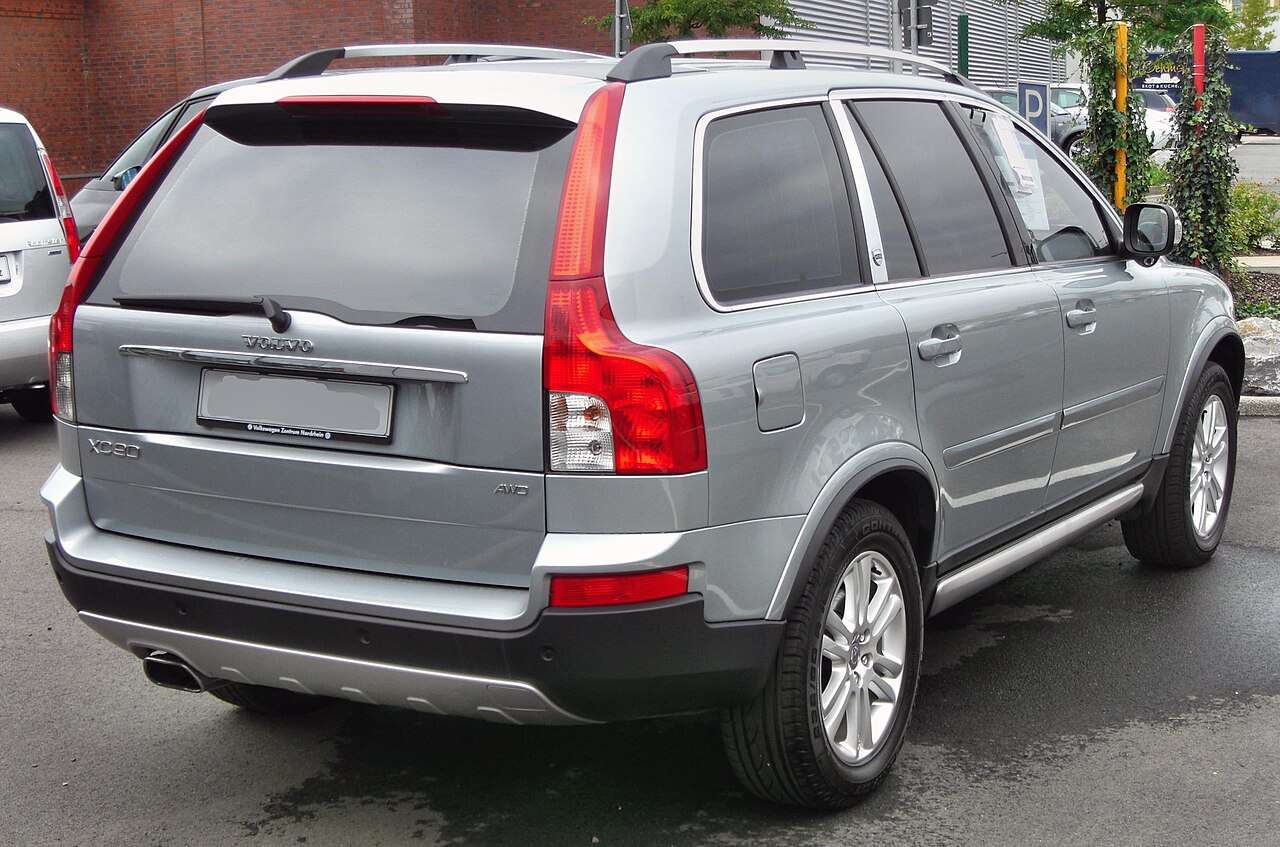
Featured photo: M 93, CC BY-SA 3.0, resized. Other image credits are beside each photograph. Explore more models in the Buying Guides hub.
Volvo XC90 Mk1 D5 for sale on eBay UK

See more Volvo XC90 Mk1 D5 cars on eBay UK
Love cars you don’t see every day?
Get forgotten cars, surprising motoring stories and the most interesting finds from Unusual Cars by email.
Free to join. No spam. Unsubscribe whenever you like. See our privacy policy.