
IN-DEPTH BUYING GUIDE · SECOND-GENERATION SPA · FOUR-CYLINDER D5 DIESEL
The second-generation Volvo XC90 D5 is a realistic used family purchase with an unusually broad brief: seven seats, a calm cabin, useful carrying space and enough long-distance ability to justify choosing diesel when the journeys suit it. Its appeal is easy to understand. The buying work is deciding whether a particular car’s engine, automatic transmission, AWD, suspension and extensive equipment have been maintained as a complete system.
This guide covers the SPA-generation 2.0-litre four-cylinder D5, including early 225 hp and later 235 hp/PowerPulse applications. It does not cover the older 2.4-litre five-cylinder, T8 plug-in hybrid, petrol or later B-badged mild-hybrid versions. Our XC90 Mk1 D5 guide deals with the older car. A D5 badge or registration date alone is not enough to choose the correct guide or parts.
The buying verdict
Our starting point: a D5 with credible oil and belt history, healthy emissions equipment, smooth cold and hot Geartronic operation and a clean specialist assessment of AWD and suspension. Choose wheel size, roof and seating equipment for your actual family use rather than paying for a long options list that has not been tested.
Pay for: a Volvo-aware inspection, invoices for major work, a dry interior, sound tyres and demonstrably working equipment. Resolve before purchase: coolant loss, unexplained oil consumption, repeated reduced-power warnings, gearbox shudder, a suspension corner that drops or a restart countdown where SCR/AdBlue is fitted. A large SUV can hide expensive work behind a comfortable ten-minute test drive.
Identify the four-cylinder D5 before comparing cars
Volvo’s original SPA XC90 overview describes the new 2.0-litre four-cylinder Drive-E powertrains and a D5 twin-turbo diesel with 225 hp and 470 Nm. It also identifies the eight-speed automatic. This is a different mechanical purchase from the earlier five-cylinder XC90, even though the D5 name continued.
Later 235 hp D5 applications use a different engine-code specification and relevant PowerPulse equipment. The genuine belt-kit supplier’s application list identifies D4204T11 for the 225 hp version and D4204T23 for the 235 hp version. Confirm the code and build date through the VIN and records; a model-year description is not the same as first registration.
| Choice | What to establish | Buying consequence |
|---|---|---|
| Early SPA D5 225 hp | Four-cylinder 2.0; actual engine code and build | Do not use a Mk1 five-cylinder kit or a later engine’s complete equipment list. |
| Later D5 235 hp/PowerPulse | Engine code and actual PowerPulse installation | Include compressed-air system/pipework in a relevant performance-fault diagnosis. |
| Momentum, Inscription, R-Design | Market/year-specific trim plus individually fitted options | Badges do not prove suspension, camera, audio or seat specification. |
| Standard chassis or optional air suspension | Actual fitted system | Different inspection and repair costs; do not budget an air-spring job for every XC90. |
| SCR/AdBlue equipment | Production/emissions specification and actual system | Inspect and diagnose it where fitted, rather than assuming all D5s are identical. |
| Seven-seat family use | Access, seat mechanisms and luggage with seats occupied | Try the actual people, child seats and luggage before paying. |
PowerPulse is not an electric hybrid system
Volvo describes PowerPulse as using stored compressed air to improve turbo response at low revs. On a car equipped with it, the compressor, reservoir, valves, connections and pipework belong in the assessment of poor response. Do not confuse it with T8 hybrid hardware or assume a later B5’s mild-hybrid equipment is fitted to a D5.
Ask whether that system has needed repairs and what symptom prompted the work. A split hose is a possibility to investigate, not a complete diagnosis for every reduced-power complaint. Air/boost leaks, turbo control, EGR, fuel supply and other engine faults can overlap in how they feel from the driver’s seat.

Does diesel suit the intended use?
Consider your journeys before the specification. Repeated short cold trips can be a poor match for a large diesel and its exhaust-treatment system. A history of appropriate longer use can be helpful, but motorway mileage is not a guarantee of good maintenance or a healthy DPF.
Test the car with the load and roads you normally use where practical. Large wheels can change ride quality and tyre bills. The most elaborate seat and audio packages are attractive only if you want them, they work and the price leaves a maintenance reserve.
Build a budget for the whole XC90
Compare the actual second-generation 2.0 D5 with similar output, age, mileage, trim, suspension and service history. The wider UK XC90 D5 market contains both generations, so its headline count or cheapest advertisement is not a valuation for a SPA car.
Record engine code, transmission, belt evidence, AWD and gearbox maintenance, tyre condition, air-suspension status and any emissions work alongside the asking price. Separate private/dealer advertisements from completed transactions. Do not count a repeatedly advertised car as several market examples.
Reserve money for inspection, overdue servicing and confirmed work. Four large tyres, brakes, a belt job and a suspension fault can add substantially to the first-year total. A cheaper car with several unexplained symptoms is not necessarily the economical route into ownership.
Read warranty terms against the systems on your shortlist. Ask how an existing defect will be repaired before collection, what diagnosis is required for a later claim and where the car must be taken. A premium SUV’s downtime and transport requirements matter alongside its repair bill.
Engine condition: start cold, then assess it warm
Arrange a cold start and establish whether the engine has already been run when you arrive. Check fluid evidence safely, observe ignition warnings, starting and idle, and look for leaks or signs of repeated topping-up. A clean engine cover says little about the condition beneath it.
Drive gently during warm-up, then assess normal acceleration, response, smoke, temperature behaviour and a hot restart. Have persistent mechanical noise, uneven running or a reduced-power message investigated. Do not accept a claimed sensor or hose as the confirmed cause until the actual fault has been found.
Review oil invoices for dates, mileage and the approval used. Ask about consumption over a stated distance, not just whether the dipstick/display is currently satisfactory. Investigate high usage or smoke rather than assuming every four-cylinder Drive-E shares the same fault or repair. Petrol-engine stories and older five-cylinder advice cannot establish this D5’s condition.
| Observation | Investigation | Buying response |
|---|---|---|
| Reduced power or hesitant response | Relevant engine data, boost/intake integrity, turbo control and PowerPulse where fitted | Do not buy on a promised inexpensive pipe without diagnosis. |
| Recurring coolant loss | Leaks, cooling operation and EGR-cooler/internal checks where indicated | Repeated top-ups are not a normal ownership plan. |
| DPF/EGR warning or repeated cleaning | Root cause, sensors, temperatures, pressures and actual use | A regeneration or clean needs a documented reason and outcome. |
| Oil consumption/smoke | External leaks, breather and mechanical assessment | Price the diagnosed work rather than a generic additive. |
| SCR/AdBlue countdown where fitted | Level versus dosing, sensing, heating, supply or control fault | Topping up is not a cure for every countdown. |
Timing belt, auxiliary drive and age-related work
The four-cylinder D5 uses a timing belt. Obtain the current age/mileage requirements for the exact engine/VIN and compare them with a dated invoice. Early SPA cars are now old enough that age deserves serious attention even when mileage looks modest.
Do not import a five-cylinder interval or an online universal Volvo mileage into the plan. Ask a Volvo specialist to confirm which belt, tensioning components, idlers, fixings and associated work are required. A visual inspection of one accessible belt surface is not proof of the remaining life of every component.
The genuine kit example in the maintenance table lists the main belt, tensioner/idler components and crank-pulley bolts. Its price does not establish that a water pump, auxiliary belt, every separate drive item or labour is included. Agree the actual job in writing before comparing fitted prices.
Have the auxiliary belt, tensioner and pulleys inspected as their own system. Noise and wear need identifying rather than assumed to be the camshaft belt. If evidence is missing, discuss immediate replacement and whether the car should be transported instead of driven. A cheap belt part does not make a timing failure an inexpensive repair.
DPF, EGR and SCR/AdBlue where fitted
A Volvo-aware diagnostic assessment should read relevant control units and interpret current/stored faults and plausible data. A generic engine-code reader is a useful starting point, but does not establish the condition of the whole emissions system or show that recent code clearing has repaired anything.
Ask about DPF cleaning, forced regenerations, EGR valves/coolers, intake work and software campaigns. Find out what caused the original symptom and whether it returned. Repeated cleaning without addressing temperature, sensing, air/boost or fuel-related problems can leave the next owner paying for the same complaint again.
Have Volvo check outstanding recalls and service campaigns by VIN and obtain evidence of completed work. An MOT pass or a seller’s statement that a software update was done is not a complete campaign record. Where repairs changed intake/EGR components, the invoice should identify the parts and reason.
For SCR-equipped cars, inspect the actual AdBlue system and warnings. Distinguish low fluid from a dosing, sensor, heater, supply or control fault. Do not pay for a car with a countdown on the assumption that a bottle of fluid will settle it. Have the cause resolved and the outcome demonstrated.
Ask directly about emissions-related software/hardware modifications. An apparently clear dashboard and a strong test drive do not verify correctly configured equipment. Have suspected bypassing assessed and corrected before buying a road car. A future buyer, inspection or repair can expose what a quick viewing missed.
Love cars you don’t see every day?
Get forgotten cars, surprising motoring stories and the most interesting finds from Unusual Cars by email.
Free to join. No spam. Unsubscribe whenever you like. See our privacy policy.
Eight-speed Geartronic and AWD checks
The SPA D5 uses an eight-speed automatic. Do not use the older five-cylinder car’s transmission or fluid assumptions without identifying the actual unit. Check the service record for what was changed, which fluid was used and whether the work was planned maintenance or an attempt to resolve a symptom.
Test drive/reverse engagement while stationary, gentle pull-away, normal changes, acceleration and low-speed manoeuvres. Repeat when fully warm, including traffic if practical. Look for persistent shudder, flare/slip, delayed engagement, harsh changes and warnings. An adaptation or software procedure may be relevant to a repair, but is not a diagnosis by itself.
Have engine and transmission behaviour assessed together. A misfire, boost problem, worn mount or driveline vibration can be felt as an apparent gearbox fault. Ask a Volvo-aware specialist to interpret the codes and live information, explain what is confirmed and quote further work where necessary.
For maintenance, agree the exact fluid, quantity, procedure and any required additional items for that unit. A generic service title promising a filter does not establish its accessibility or scope on every transmission. A fluid change is not a guarantee of curing an already damaged automatic.
AWD: confirm function and maintenance
The AWD system adds a coupling and driveline components that need assessing as part of the car. Ask about coupling, angle-gear and differential work, and have a relevant specialist check actual operation, leaks and stored faults. Strong straight-line acceleration on a dry road is not an adequate test of every AWD function.
Inspect tyre sizes, specification and wear against the approved combination. A large SUV can consume tyres quickly, and incompatible replacements or widely different wear deserve attention. Investigate vibration, binding or shudder rather than accepting a proposed oil change as proof that no mechanical repair is needed.
On a towbar-equipped car, inspect the fitting and electrical socket, confirm the car’s actual limits and discuss previous use. A polished detachable towbar does not reveal the weight or frequency of towing. Include transmission, cooling, brakes and rear suspension in the assessment of a heavily worked example.
Standard chassis versus optional air suspension
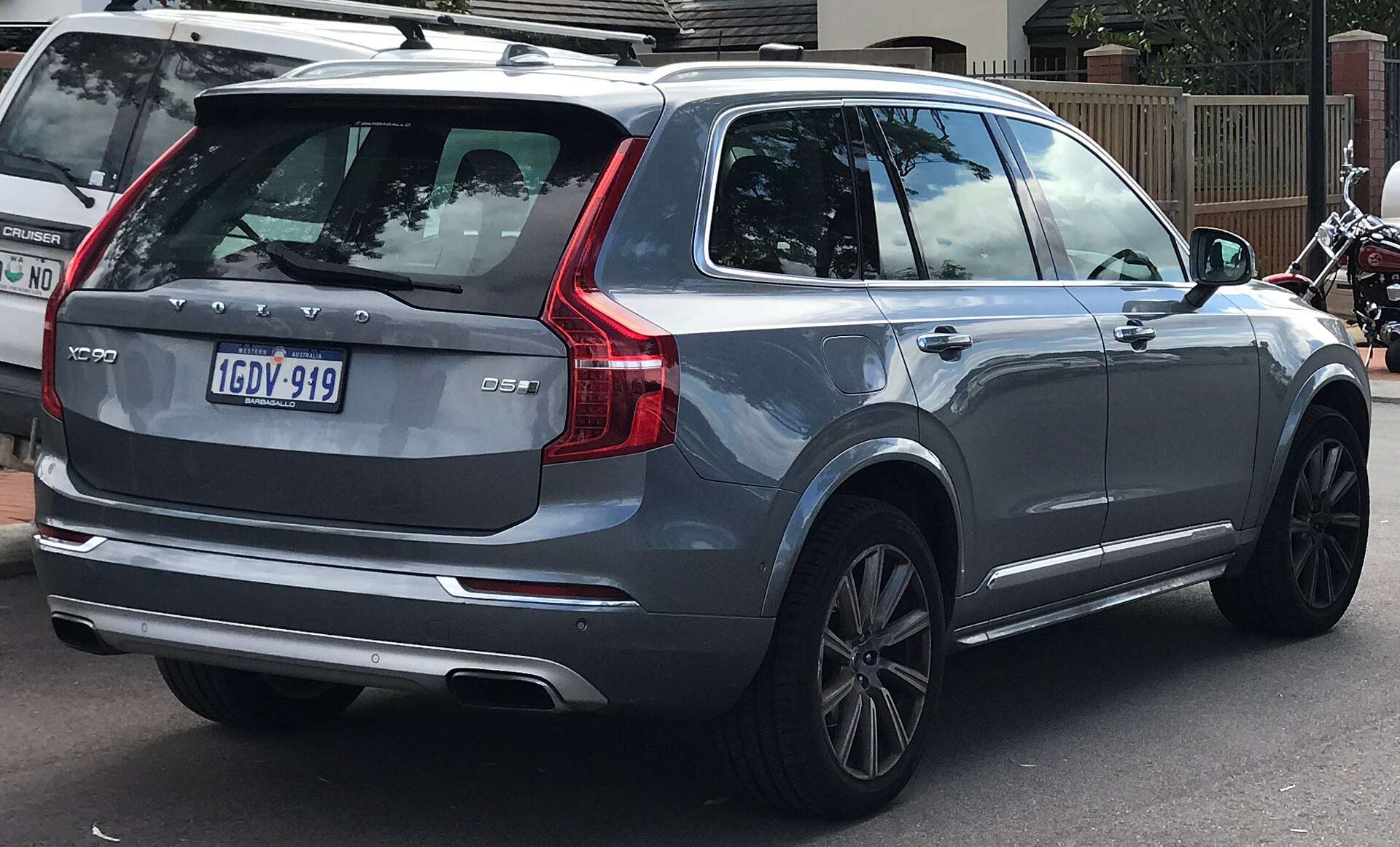
Volvo’s original technical overview describes double-wishbone front suspension and an integral-link rear arrangement with a transverse composite spring, with electronically controlled air suspension available as an alternative. Identify which system is fitted before budgeting or interpreting a warning.
For a conventional-suspension car, inspect springs, dampers, bushes, links, bearings and mounting areas. Listen for knocks and assess steering, tracking and tyre wear. A vague ride complaint needs diagnosis rather than assuming one inexpensive bush is responsible.
For air suspension, check that the car stands consistently and responds normally to its permitted height/mode controls. Ask whether it drops after standing, whether the compressor runs unusually often and whether any corner, compressor, valve/control or sensing components have been repaired.
A single low corner does not prove one air spring is the complete repair. Have leaks, system pressure/control, compressor load and relevant faults assessed. Replacing a tired compressor without resolving the leak that overworked it can leave a recurring bill. Obtain a quote for the diagnosed system, not just an online bellows.
Wheel size is an ownership choice. Try the actual car over the roads you use and price its tyres before paying a premium for large wheels. Damaged rims, irregular wear and an alignment problem can undermine both comfort and AWD operation.
Brakes and a heavy family SUV’s wear items
Assess braking progressively in safe conditions, looking for straight stopping, a consistent pedal and no marked judder. Inspect discs, pads, hoses, pipes and caliper operation, including inner surfaces where possible. The car’s size and use matter more than a fresh coat of paint on visible brake components.
Identify the actual brake dimensions and equipment before ordering. The electronic parking brake requires the appropriate service procedure; a parts-only rear-pad price is not the whole job. Ask whether a quote includes discs, necessary fixings, parking-brake procedures and checks after installation.
Inspect tyres on their inner edges and look for wheel damage. A set close to replacement, combined with brakes and an overdue belt, can turn a modest discount into a large first-year bill. Put those items on a separate list rather than allowing an attractive interior to dominate the viewing.
Seven seats, Sensus and expensive cabin equipment
Use all seven seats and their mechanisms. Fold, slide and latch the relevant sections as the handbook directs, check belts and head restraints and try your actual child seats. Assess access for the people who will occupy the third row and luggage space with those seats in use.
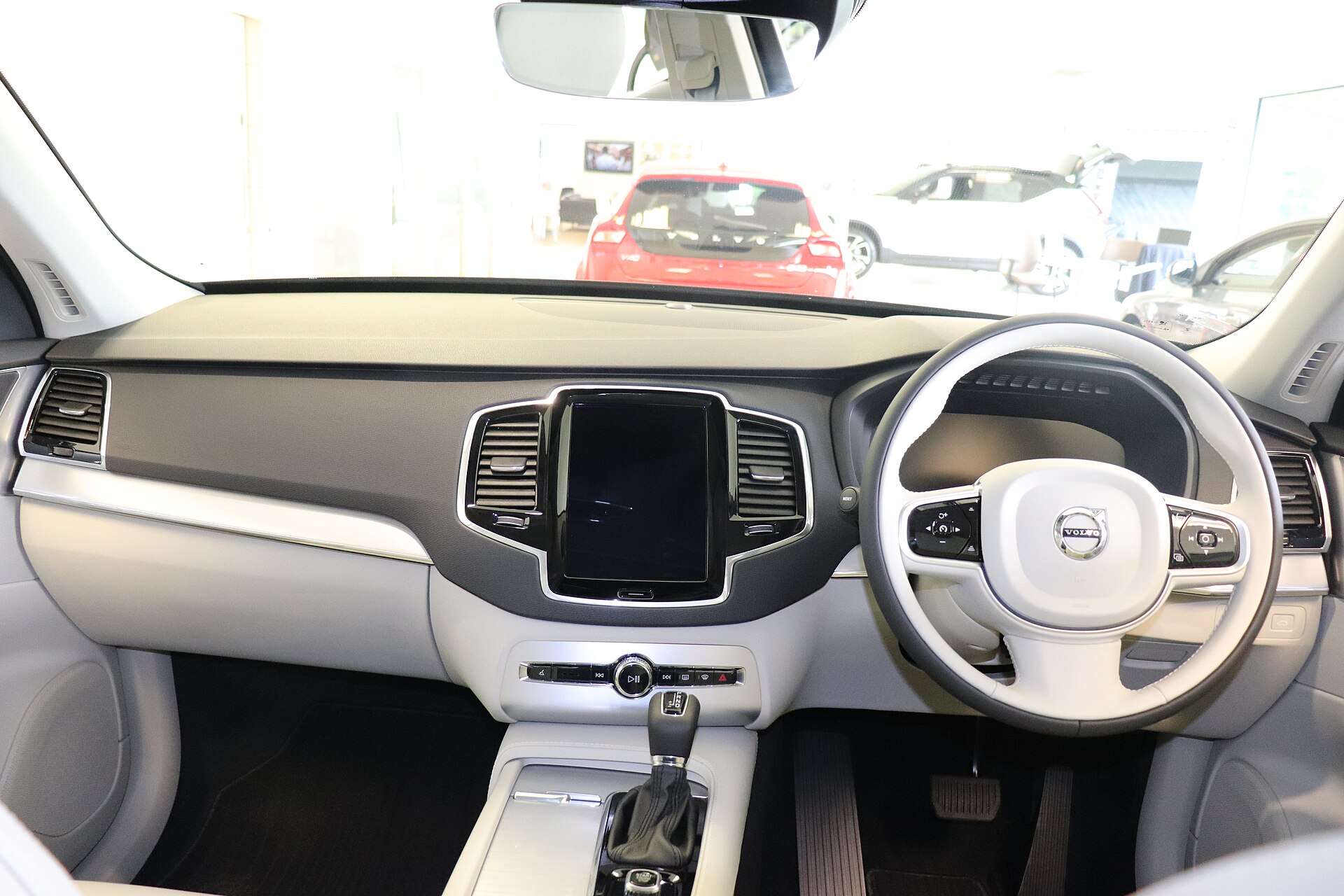
Check the Sensus screen, steering controls, displays, audio, navigation and phone integration with your own device. A functioning home screen does not prove that every menu, camera or amplifier works. Ask about software updates, module replacement and any recurring black-screen or restart complaint.
Operate climate controls for every fitted zone and assess cooling after a proper run. Rear-zone equipment and different refrigerant systems need identifying. A recharge price does not cover every condenser, compressor, pipe or evaporator fault. Ask what a previous air-conditioning repair addressed and whether the result lasted.
Test seat heating, ventilation, massage and adjustment where fitted, both keys, mirrors, locks, windows, tailgate and parking equipment. Try cameras and assistance features during normal safe use. Do not intentionally create an emergency-braking event to test a safety system.
Historic brochure descriptions of connected apps and Volvo On Call do not establish current support, transfer arrangements or subscriptions. Confirm what works now. A module or screen retrofit needs competent installation and any required coding; appearance alone should not add its full claimed value to the car.
Water entry, panoramic roof and body repairs
Feel accessible carpets, inspect lower storage compartments and look for staining in pillars and headlining. Ask permission before lifting loose mats or trim. Water can travel away from its entry point, so diagnose dampness rather than assuming the nearest seal is responsible.
Where a panoramic roof is fitted, operate it normally and inspect fabric/trim, visible seals and accessible drainage areas. Do not force a reluctant mechanism or aggressively probe drains during a viewing. A roof, water-management and interior-drying job can extend well beyond the price of a small visible part.
Check panel gaps, paint finish, doors, tailgate and accessible front/rear structure. Ask for photographs and itemised invoices for substantial accident repairs. Windscreen or front-end work can also affect camera/radar equipment, so verify calibration and normal operation where relevant.
Use lift access for sills, jacking points, subframes, mounting areas, brake pipes and the underside. An SUV is not immune to corrosion, road damage or poor lifting. Heavy underbody coating and new trim can conceal areas that remain unassessed; record those limits honestly.
UK parts, labour and fitted-cost evidence
The following references were observed in November 2026. Retail parts, computed service estimates and a written workshop quotation are different things. Confirm the actual engine, job contents, VAT, fluids, additional work and location before booking.
| Job/reference | Parts-only evidence | Labour/fitted reference | Important limit |
|---|---|---|---|
| Genuine timing kit 32298328 | PartsForVolvos £297.36 (£247.80 excluding VAT) | Labour not included | Supplier lists D4204T11/T23 applications; belt, tensioner/idlers and crank-pulley bolts. Check VIN and contents. |
| 2.0 D5 AWD timing-belt replacement | Fixter does not itemise its parts figure separately | Computed range £392–£616; average labour range 3h42m–4h22m | Supplier says pump replacement included if necessary. Confirm the actual booked scope, not a universal pump promise. |
| 2.0 D5 AWD full service | Package contents must be agreed | Fixter computed range £121–£190 | Generic full-service package is not necessarily every Volvo-scheduled item. |
| 2.0 D5 AWD major service | Package contents must be agreed | Fixter computed range £200–£315 | Confirm filters/fluids and the engine’s due items. |
| 2.0 D5 AWD routine-service time | Not a parts quote | Provider’s model table: 54 minutes–1h34m | Indicative service time, not a timing-belt, gearbox or diagnostic labour allowance. |
| Rear discs/pads with electronic parking brake | Not itemised separately | Fixter 2.0 D5 AWD range £346–£543 | Confirm brake specification, parking-brake procedure and inclusive final quote. |
Sources: PartsForVolvos genuine four-cylinder kit; Fixter’s timing-belt, service and brake tables. Fixter describes prices as computed estimates affected by the car and location. Use the explicit 2.0 D5 AWD rows, not the older 2.4 D5 figures elsewhere on those pages.
Do not subtract the genuine retail kit from Fixter’s fitted estimate to invent a labour rate: they are different suppliers and potentially different contents. Request specific quotations for Geartronic/AWD work, air suspension, PowerPulse and emissions repairs after identification and diagnosis. A low generic service price is not a budget for those jobs.
Plan a documented baseline after purchase
Read oil, filter, fuel-filter, brake-fluid and belt records alongside major repairs. Obtain the actual service-history printout and supporting invoices. A reset service indicator cannot prove the right oil was used or a due belt was renewed.
Discuss the current Volvo schedule and the car’s use with a relevant specialist. Resolve gaps with an agreed inspection and preventive plan. Keep routine servicing, transmission/AWD maintenance and diagnosed repair work separate so the next invoice answers a clear question.
eBay service-parts table: early and later four-cylinder D5
Affiliate disclosure: these model/engine searches use campaign 5339238906. We may earn a commission from qualifying purchases at no extra cost to you. Search results are not fitment certification. Verify VIN, engine code, dimensions and installer requirements; Mk1 2.4 parts are outside this table.
| Part | Choose engine/application | Before ordering |
|---|---|---|
| Oil/filter service kit | 225 hp application · 235 hp application | Use the correct Volvo oil approval, not viscosity alone. |
| Air filter | 225 hp application · 235 hp application | Match the four-cylinder housing and engine code. |
| Diesel fuel filter | 225 hp application · 235 hp application | Check housing, connections and application. |
| Cabin filter | 225 hp application · 235 hp application | Confirm filter type and replacement access/scope. |
| Main timing-belt kit | 225 hp application · 235 hp application | Check belt, rollers/tensioner, bolts and exact kit contents. |
| Auxiliary belt/tensioner | 225 hp application · 235 hp application | Separate from the camshaft drive and identify the actual layout. |
| Water pump/cooling parts | 225 hp application · 235 hp application | Diagnose loss and establish pump/housing application. |
| Front discs/pads | 225 hp application · 235 hp application | Brake size and vehicle specification must match. |
| Rear discs/pads | 225 hp application · 235 hp application | Electronic parking-brake procedures and exact parts matter. |
| Battery | 225 hp application · 235 hp application | Check capacity, technology and any auxiliary battery. |
| Alternator | 225 hp application · 235 hp application | Confirm output, pulley, connectors and exchange terms. |
| AWD-coupling service parts | 225 hp application · 235 hp application | Identify actual coupling, correct fluid and service scope. |
For main timing-kit searches, compare contents with the written job. The PowerPulse pipework search applies only to equipped cars after diagnosis. For eight-speed transmission fluid and AWD service parts, establish the precise unit and procedure before ordering.
An alternator search should follow charging-system diagnosis, with output, pulley and connections matched. Check exchange/core charges, delivery and returns. Agree parts supply and warranty responsibility with the garage instead of buying a cheap unknown assembly and expecting it to resolve a warning.
Hidden ownership costs
Tyres and brakes: price the actual wheel size and brake hardware, not a small Volvo hatchback’s parts. A complete set plus rear brake work can be a meaningful purchase allowance.
Options: air suspension, panoramic roof, sophisticated seats, lighting, cameras and premium audio add separate repair exposure. A lower-spec car with working equipment may better suit the budget than an elaborate example with faults.
Usage: fuel, insurance, current tax and clean-air charging status must suit your real journeys. Check the registration through the relevant official services rather than assuming one D5 advert describes every car.
Inspection and downtime: emissions or suspension faults may need time to reproduce and diagnose. Discuss recovery/transport and workshop availability when this will be the family’s only car. A service plan and a repair warranty cover different things.
The viewing sequence
- Before travel: obtain registration, VIN, engine/output, service invoices, belt evidence, gearbox/AWD history and disclosure of suspension or emissions concerns.
- Confirm identity: SPA 2.0 D5, actual early/later specification, PowerPulse and suspension/SCR equipment. Do not use registration year alone.
- Start cold: inspect fluids safely, observe warnings, starting, idle and initial response.
- Inspect hidden areas: lift access for chassis/driveline, carpets/boot compartments for damp, roof and rear-seat systems.
- Drive fully warm: normal acceleration, all automatic behaviour, braking, tracking, suspension and low-speed AWD operation.
- Use the cabin: all seven seats, child-seat/luggage arrangements, every climate zone, Sensus, cameras, keys and tailgate.
- Commission a specialist: Volvo-aware scan, interpretation of symptoms, outstanding campaign check and written repair quotes.
- Compare total cost: purchase plus immediate work and a realistic reserve, against a better-prepared example.
Choose another car if a reasonable inspection is refused or material identity, structural or running questions remain unexplained. A comfortable cabin should be the reward for buying well, not a reason to overlook a warning that will become the next owner’s problem.
Frequently asked questions
Is the Mk2 D5 a five-cylinder?
No. This guide covers the SPA 2.0-litre four-cylinder Drive-E. The older 2.4 five-cylinder is covered separately.
Does every D5 have PowerPulse?
No assumption should be made from the D5 badge alone. Confirm the engine code and actual early/later installation; include the system in diagnosis where fitted.
Does every SPA XC90 have air suspension?
No. Volvo offered a conventional chassis and optional electronically controlled air suspension. Identify the actual car before budgeting.
Is a low-mileage car exempt from belt work?
No. Check the actual age and mileage requirements for the VIN and dated replacement evidence. Appearance alone cannot establish remaining life.
Will a gearbox service cure shudder?
Not necessarily. Diagnose engine, transmission and driveline together. Maintenance is not a guaranteed repair for a damaged component.
Is a DPF clean proof the diesel system is healthy?
No. Establish why cleaning was necessary, what underlying cause was addressed and whether faults or symptoms returned.
Our recommendation
Choose a D5 because the journeys suit it, then buy the individual car whose belt, emissions, automatic, AWD and suspension history can be explained. Test the equipment and family practicality, commission a meaningful inspection and keep enough budget to maintain the specification you have chosen.

Love cars you don’t see every day?
Get forgotten cars, surprising motoring stories and the most interesting finds from Unusual Cars by email.
Free to join. No spam. Unsubscribe whenever you like. See our privacy policy.