← All Citroën diagnostic scanner guides
The original Citroën C5 needs more than a generic engine reader if your main concern is its hydraulic suspension, ABS or body electronics. The right tool depends on the exact engine, controller and operation you want to perform. Reading a suspension fault and safely carrying out a hydraulic service procedure are very different capabilities.
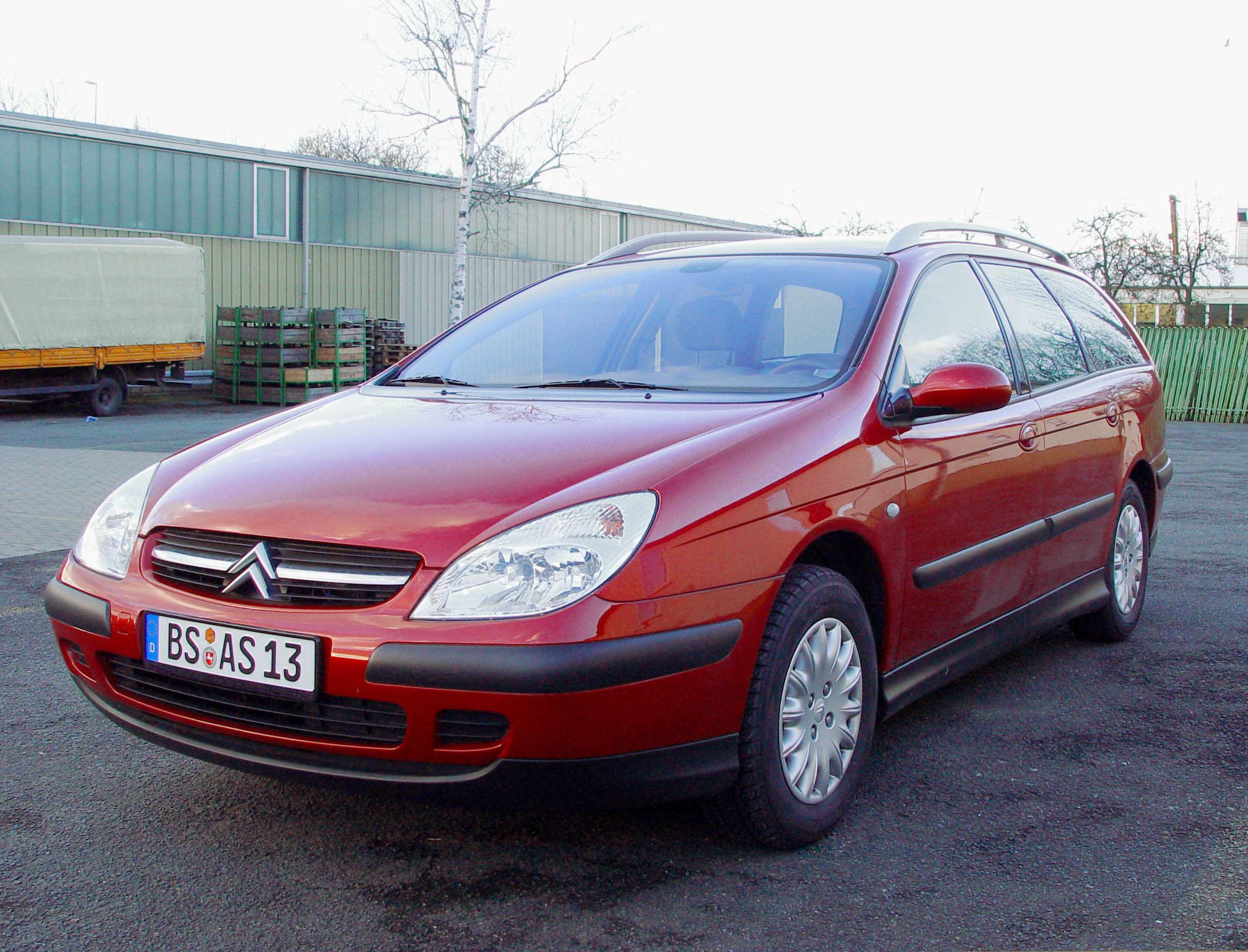
This guide covers the original C5 hatchback and estate, including the facelift, broadly the 2001–2008 generation. Some listings call the facelift “C5 II”, while others use that description for the later X7. Identify the actual car before accepting a scanner compatibility claim.
Confirm the generation, engine and suspension
Give the supplier the VIN, production period, engine and gearbox. Be explicit that you mean the original C5 or its facelift, not the later X7 saloon and Tourer. If you own the later car, use our C5 X7 scanner guide.
For an early diesel, verify the diagnostic protocol and engine-management coverage rather than relying on a universal OBD2 year claim. For suspension work, establish the fitted Hydractive system and the exact diagnostic routine required. A generic air-suspension menu is not proof of support for this Citroën hydraulic system.
| System | Buying question |
|---|---|
| Petrol or HDi engine | Does it read this engine ECU and provide the relevant data? |
| Hydractive suspension | Is the actual hydraulic controller supported, and for which operations? |
| ABS / ESP | Can it read the fitted controller and supported wheel-speed data? |
| Airbags | Does it directly access the restraint system? |
| Automatic gearbox | Does it support this transmission, separately from the engine? |
| Body electronics | Which fitted modules can it communicate with? |
Hydractive suspension is the important distinction
The C5’s hydraulic suspension is one reason owners look beyond a basic reader. A compatible diagnostic system may help report controller faults and relevant status or sensor data. However, support must be confirmed specifically for the vehicle; a feature list mentioning suspension on an unrelated model is not sufficient.
The manufacturer service information for the 2005 C5 treats hydraulic work as a specialist activity. It requires the vehicle to be supported and secured correctly and warns of sudden sinking when hydraulic connections are disturbed. Never work underneath a C5 supported only by its suspension or rely on a selected ride-height setting as a safety support.
This guide deliberately does not provide a depressurisation or height-calibration procedure. Those jobs require the correct technical instructions, equipment and competence. A scanner’s ability to display a height value does not establish that it can safely perform the required service operation.
If the car sits incorrectly, changes height unexpectedly or displays a suspension warning, record what happens and under which conditions. Electronic diagnosis may be part of the investigation, but hydraulic, mechanical and electrical checks remain necessary. Repeatedly commanding the system or changing calibration values is not a substitute for finding the cause.
Choosing a scanner for petrol and early HDi engines
A compatible generic reader can record supported emissions-related engine codes and data. For early engines, especially diesels, confirm actual compatibility rather than assuming that the presence of the socket proves full generic access. Manufacturer-specific communication can be a separate route.
For difficult starting or poor running, useful supported data depends on the engine and complaint. Engine speed while cranking, temperature plausibility, fuel-control information and other parameters may help a repairer narrow the problem. Do not use thresholds or repair instructions from a different HDi engine simply because its badge looks the same.
A scanner cannot directly establish compression, mechanical timing or real oil pressure. If there is unusual engine noise, overheating or an oil-pressure warning, deal with that condition appropriately. A car can have a serious mechanical problem without storing a conveniently specific fault code.
“Anti-pollution” does not identify one failed part
A general emissions warning describes a monitored problem, not a diagnosis. Save the full fault identifiers, status and freeze-frame information. An oxygen-sensor, fuel-pressure or airflow-related code still needs interpretation in the context of the engine and its symptoms.
On diesel versions, establish whether a particulate filter and additive system are fitted. Do not assume that all early C5 diesels share one arrangement, and do not confuse a filter additive with AdBlue used by later SCR systems. The required fluid, maintenance work and electronic counters depend on the vehicle.
If your purpose is filter maintenance, ask separately about fault reading, live data, additive counters, component replacement routines and any regeneration function. These are not interchangeable. Resetting a counter without doing the corresponding work can make the recorded state misleading and will not remove a physical fault.
Forced regeneration is not a general response to every emissions message. The repair procedure and prerequisites determine whether it is appropriate. High temperatures and unresolved engine or oil problems make improvisation a poor idea.
ABS, ESP and airbag warnings
Safety-system warnings require access to the relevant controllers. A basic engine scan with no faults does not clear the ABS or airbag system of suspicion. Check coverage for the installed system, particularly if the car has had replacement parts or its exact specification is uncertain.
Supported wheel-speed data may help investigate an ABS complaint, but a code referring to one wheel is not proof that a particular sensor must be replaced. The signal source, wiring and electrical conditions also matter. Any abnormal braking behaviour needs attention independently of what the scanner reports.
Airbag and pretensioner circuits require the correct precautions. Do not try improvised electrical tests or warning-light workarounds. Restoring the system’s intended operation is the goal, and a qualified repairer should handle work beyond safe code recording.
Automatic gearboxes and body electronics
The original C5 range spans different engines and transmissions. Confirm the gearbox identity and ask for direct transmission-controller access. A transmission-related engine code is not equivalent to reading the gearbox’s own report.
Adaptations, fluid-service procedures and replacement-component setup require separate confirmation. A tool being able to erase transmission codes does not mean it can carry out every service operation. Mechanical condition and maintenance history still matter when investigating poor shifts.
For locking, lighting, instrument or intermittent starting problems, record recent battery events and previous electrical work. Multiple warnings can have a common electrical cause, but that is something to test rather than assume. A full supported-system report helps show whether a fault is isolated or accompanied by communication problems elsewhere.
Do not undertake a body-controller reset, configuration change or replacement simply because an online discussion mentions it. Programming and configuration differ from diagnosis and can require specialist equipment and legitimate security access.
Which scanner should you buy?
A basic OBD2 reader is a sensible low-cost choice when you only need supported engine-emissions codes and a small amount of live data. It is not a substitute for manufacturer-specific access to ABS, airbags, body electronics or transmission controllers. If those are your priorities, make a list of the exact modules and functions you need before comparing prices.
The iCarsoft FR V3.0 is one option to investigate for Citroën-aware diagnostics. Its manufacturer explicitly says that service functions vary with the vehicle, production year and ECU configuration. A broad Citroën entry, an impressive reset-function count or an Amazon compatibility answer is not sufficient evidence for a particular job. These are buying guides, not a claim that we have tested this tool on every engine and controller.
Ask the seller to confirm your VIN, engine, gearbox, model generation and requested operation in writing. Separate three questions: can it read the controller, can it display the data you need, and can it perform the specific service procedure? Also check update arrangements, the computer needed for updates, support and return terms. Use a legitimate current product supplied by a reputable seller.
A sensible first scan
- Record the symptoms. Photograph the exact warning and note when it appears: cold start, acceleration, braking, wet weather or after recent work. Include any starting or battery problems.
- Prepare the vehicle. Park safely, check the 12-volt supply and locate the socket from the correct handbook. Connect and switch the ignition as the tool instructs. Do not bridge pins or force connectors.
- Confirm the selection. Check automatic identification against the actual car. If it fails, use the documented manual selection rather than a similar-looking model.
- Save the evidence. Keep a full report with codes, reporting modules, present or intermittent status, freeze-frame information and any controllers that could not be contacted.
- Investigate before replacing parts. A code records a detected condition. Wiring, supply voltage, mechanical faults and another component can produce a code naming an otherwise sound sensor.
- Verify the repair. Clear faults only when appropriate, repeat the relevant checks and rescan. Clearing engine codes may reset readiness monitors; an empty fault list immediately afterwards is not proof of a healthy vehicle.
Do not operate a handheld scanner while driving. A red STOP warning, low oil pressure, overheating or unsafe braking needs immediate attention, not repeated code clearing. Active tests and service routines should only be used with the correct repair procedure and safe working conditions.
C5 Mk1 scanner questions
Does “air suspension” support mean Hydractive support?
No. Ask explicitly about the C5 hydraulic controller and the requested operation. Marketing categories are not reliable evidence of compatibility.
Can I make the suspension safe with a scanner?
A diagnostic command is not a physical support. Hydraulic work needs the prescribed support, pressure-control procedures and specialist precautions.
Should I choose a handheld tool or specialist diagnosis?
A handheld unit can suit regular code reading when coverage is confirmed. For a one-off hydraulic, configuration or complex gearbox problem, a suitably equipped Citroën specialist may provide better value.
Our recommendation: buy on confirmed original-C5 engine and controller support. If suspension is the reason for the purchase, make Hydractive compatibility the deciding question and keep diagnosis separate from hydraulic repair work.
Sources and further reading
- Manufacturer model information or original handbook reference. Select the edition and equipment appropriate to your vehicle.
- Citroën official handbook selector.
- iCarsoft FR V3.0 manufacturer information and compatibility limitations.
Featured photograph: ArtMechanic / Wikimedia Commons, Creative Commons Attribution-ShareAlike 3.0. Resized for display; the theme may crop the photograph. Scanner banner: illustrative artwork.
Love cool cars? Join Unusual Cars Club FREE!
Get forgotten motoring finds, stories, helpful car content and more.
Free to join. No spam. Unsubscribe whenever you like. See our privacy policy.