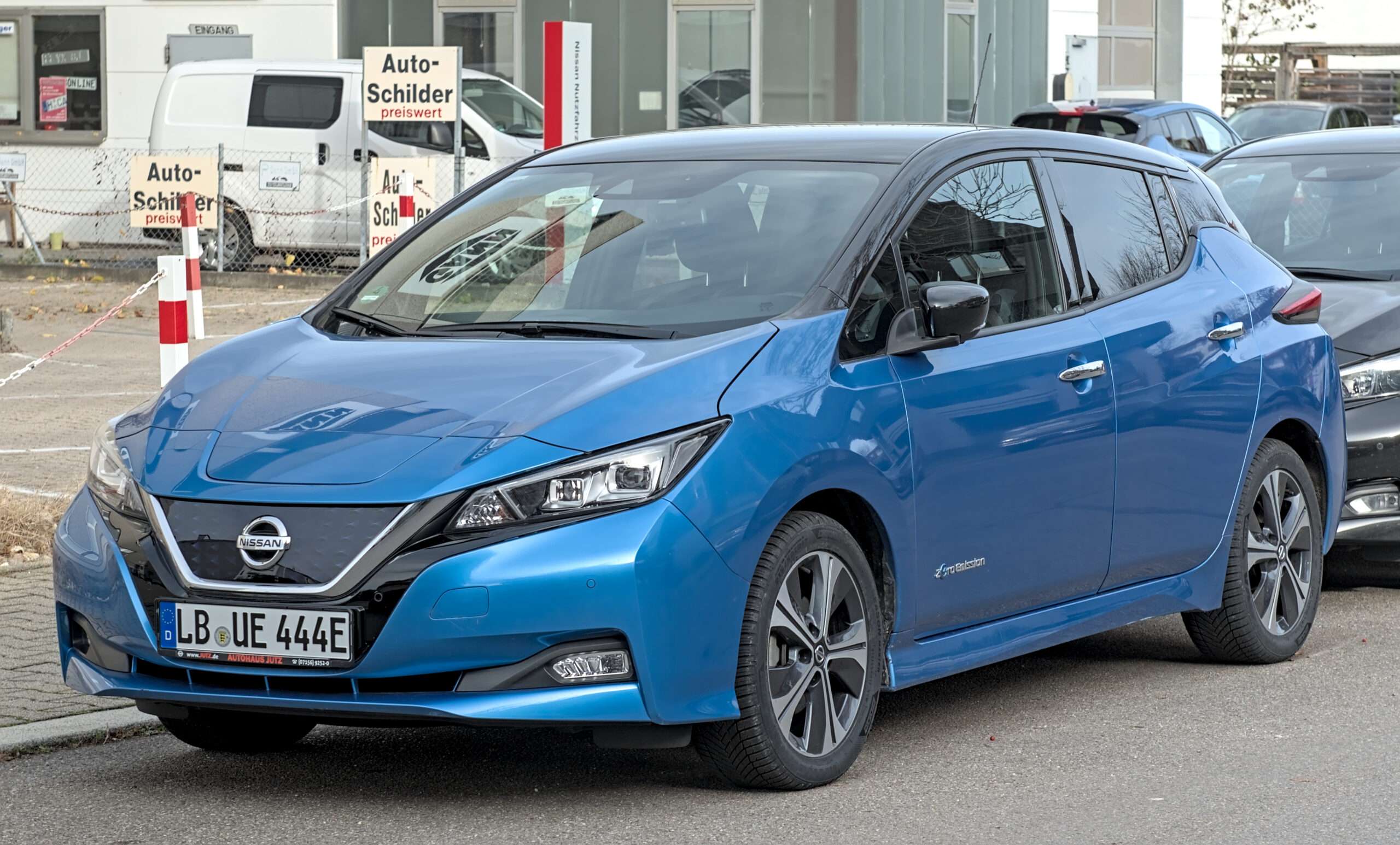
A used Leaf showing a reassuring range after a full charge can still leave a buyer with an expensive unanswered question: how much useful battery capacity remains for the journeys I actually make? A compatible adapter and LeafSpy let you read the battery controller’s estimates and look for discrepancies a dashboard range figure hides. On a ZE1 viewing, the value lies in deciding whether to proceed, ask for a specialist test or walk away before paying a deposit.
Which Leaf and which battery?
The ZE1 is the second-generation Leaf, sold in Britain from 2018. The range included the 40 kWh car and the larger-battery e+ version. Identify the original specification and ask for records of any battery replacement, repair or warranty work. Capacity printed in an advert describes a model specification. It does not measure the energy available from this particular pack today. This guide concerns the ZE1. Check developer support independently for later-generation cars.
| What you notice | What to record or confirm | What it helps you decide |
|---|---|---|
| Full dashboard range looks good | Charge, temperature, recent usage | Judge how representative the estimate is. |
| One cell pair stands out | Voltage spread and conditions | Ask for comparable evidence. |
| Battery capacity affects the offer | History and an independent assessment | Decide whether to commit to the price. |
Choose the adapter before buying the app
LeafSpy needs an interface it recognises. A handheld Nissan scanner with its own screen is a different product and cannot act as the phone’s adapter merely because it has an OBD plug. The developer’s iOS listing names the Vgate vLinker FD+ and MC+ as recommended Bluetooth LE options. Check the precise suffix, phone operating system and current developer list before ordering. A seller saying “ELM327 compatible” is insufficient evidence for this job. Android buyers should check the Android-specific guidance on the developer’s adapter page.
Get the seller’s permission before connecting and use the app’s read-only displays. Allow time to establish communication and confirm the displayed vehicle and units. If a device pairs with the phone but the app never receives vehicle data, check the adapter model, app settings and compatibility before treating that as a car fault. Do not change settings or clear diagnostic codes on a car you are viewing.
Three numbers that answer different questions
State of charge is how full the battery is now. State of health is the battery management system’s estimate of remaining capacity relative to its reference when new. Predicted range is an estimate of distance based partly on recent energy use. A seller who shows 100 per cent charge has established the first point only. A car coming off gentle town use can display a different predicted range from the same car after a cold motorway run.
For a useful viewing record, save screenshots of charge level, state of health, pack temperature and cell-pair voltages, along with the mileage, date and whether the car was resting, charging or recently driven. Record whether the climate control was running. Two photographs taken at different charge levels and pack temperatures are poor evidence that one pack deteriorated between them. The app is reporting the controller’s measurements and estimates. It is not independently measuring full usable capacity.
Reading the cell-voltage screen without inventing a pass mark
LeafSpy’s developer lists individual voltages for 96 cell pairs, together with minimum, average and maximum values. The spread is the difference between the highest and lowest. For example, readings of 3.810 and 3.790 volts differ by 0.020 volts, or 20 mV. That is an example of the arithmetic, not a universal pass limit. State of charge, temperature, recent load and whether the car is resting all matter. A well-matched display when full cannot rule out behaviour that appears lower in the charge range.
One isolated bar at a different height deserves context. Is the same pair repeatedly low under comparable conditions? Did the car show a sudden fall in indicated charge during ordinary use? Are there stored EV warnings or a history of repair? Repeated observations and a documented symptom make a stronger case for an independent EV assessment. Do not deliberately run the battery down on a viewing or attempt any work on high-voltage components.
Turn the results into a buying decision
Start with your longest routine winter journey, a realistic charging opportunity and the reserve you want at arrival. Compare the seller’s service records, the dashboard and the scan with that requirement. For illustration, a journey needing 18 kWh leaves a very different margin in a vehicle with 24 kWh available than in one with 32 kWh available. Neither figure can be established from the dash range alone. If a purchase depends on a tight margin, ask for a controlled capacity assessment or a representative accompanied drive.
When to spend on an independent test
A suspiciously tidy screenshot with no mileage or charge level is a reason to request a fresh reading. A material discrepancy between the seller’s battery claim and the report, a history of unexplained shutdowns or a markedly inconsistent cell group warrants specialist investigation. Ask what the test measures, what conditions are controlled and whether the result is accepted for the purpose you need. An owner’s LeafSpy report is useful evidence but is not a Nissan warranty decision or battery-health certificate.
Choosing a LeafSpy setup
For the actual LeafSpy purchase, use the developer’s supported adapter list. Keep the invoice and check the seller’s return policy for the exact model. If you only want one battery assessment and do not already own a compatible phone and adapter, compare the full setup cost with the cost of commissioning a report.
See dashboard range versus retrieve pack measurements; compare cell pairs versus measure usable capacity; read a fault versus obtain an assessment accepted for warranty purposes. Decide which result you need before paying for equipment.
A practical viewing sequence
Before travelling, ask the seller which battery is fitted, whether there is any documented replacement and whether they will permit a read-only scan. Check the present charge level and recent charging. A nearly full pack is convenient for a test drive, but a screenshot taken just after charging and one taken after a motorway journey describe different conditions. Arrange enough time to record what you saw without rushing the seller or handling the phone while driving.
At the viewing, compare mileage with the paperwork, capture the dashboard, then record the app screens with charge level and temperature visible. Ask about rapid charge history and typical use. Charge-connection counts can offer context but do not tell you how much energy passed through the battery at each session. A recorded connection is not a complete charging cycle. After an ordinary accompanied drive, park and review how the indicated charge changed. Explain the journey length, weather and heating demand when discussing the result.
If two cars show the same state of health, which should I buy?
Treat the number as one entry on the comparison sheet. Battery size, evidence of repeatable cell imbalance, charging behaviour, fault history, service documentation, physical condition and purchase price all matter. Two cars with the same reported percentage can have different battery specifications and serve different journeys. If the dealer offers a battery report, ask how it was produced and whether it accompanies the vehicle in writing.
What does it cost to get the answer?
If you are viewing several used Leafs, a supported adapter and the app can spread their cost across several decisions. For one car with a questionable battery, a specialist inspection may buy better evidence. Price the app and adapter together and ask the inspector what the fee includes. Treat warranty terms, battery condition and remaining range as separate questions.
Can I calculate exact usable kWh by multiplying the badge capacity by state of health?
That is a rough illustration at best. The badge figure, the controller’s estimate, operating buffers and the energy available on a cold day are different quantities. If an exact capacity is central to the price, request a measured assessment.
Sources and further checks
- LeafSpy developer’s supported adapter guidance
- LeafSpy Pro developer listing and supported measurements
Browse the Nissan diagnostic scanner guides
Photograph of the Nissan Leaf ZE1 generation by Alexander Migl, via Wikimedia Commons. CC BY-SA 4.0. Resized for display. Equipment and market specification may differ from your vehicle.
Love cool cars? Join Unusual Cars Club FREE!
Get forgotten motoring finds, stories, helpful car content and more.
Free to join. No spam. Unsubscribe whenever you like. See our privacy policy.