BUYING GUIDES / PEUGEOT 106 GTI · UK BUYING ADVICE
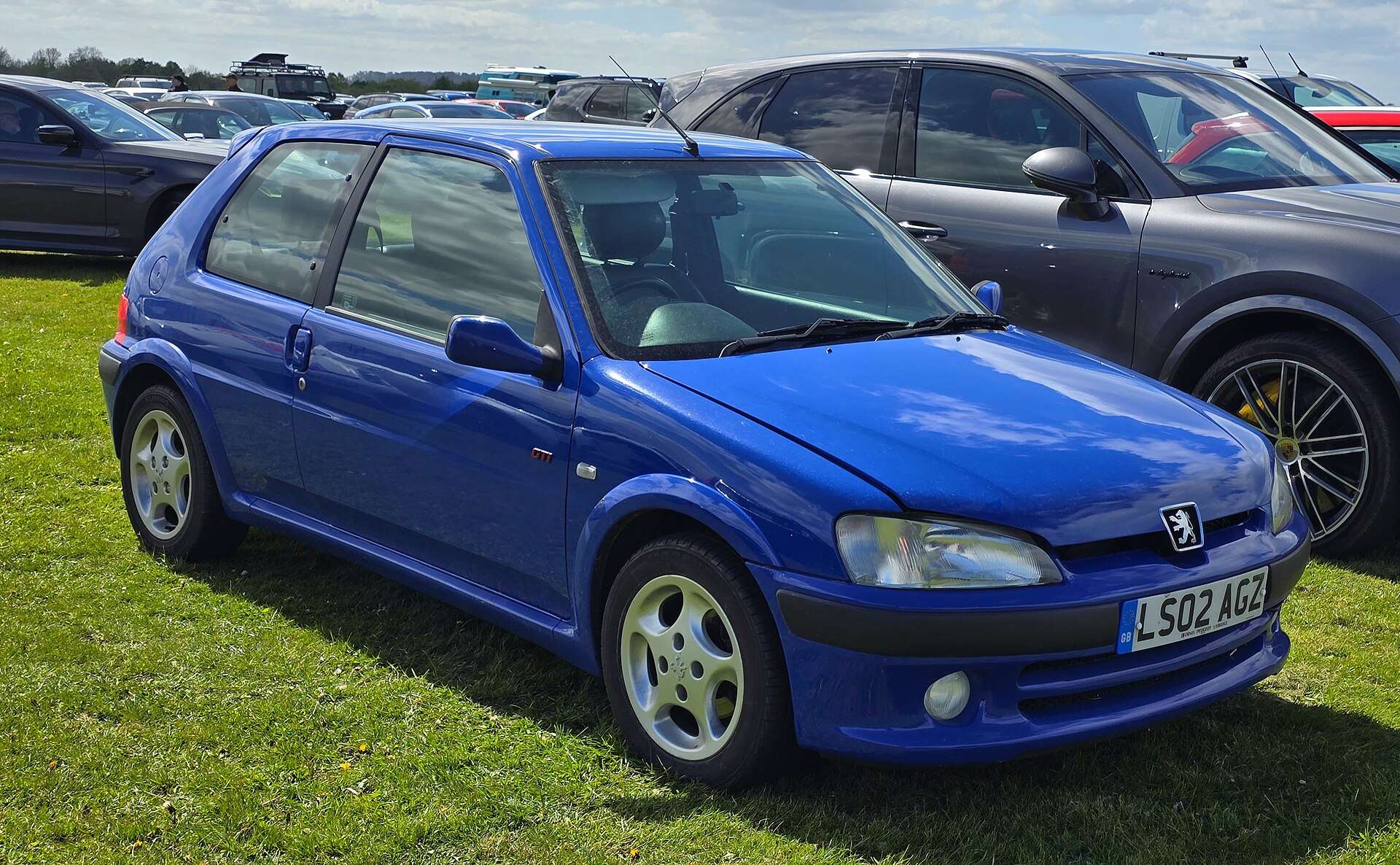
The Peugeot 106 GTI offers the compact size, rev-hungry engine and responsive chassis that make a classic hot hatch enjoyable at ordinary road speeds. Buying one successfully is less about finding the shiniest paint and more about a sound shell, a healthy rear axle, a documented 16-valve engine and a specification you can maintain. Rust and years of inexpensive modifications can outweigh an apparently attractive purchase price.
The buying verdict
We would prioritise a straight, structurally sound GTI with a complete identity, believable maintenance history and a properly assessed rear beam. Budget a correct TU5J4 belt-system service where evidence is weak, and treat engine swaps or track conversions as separate engineering propositions. An independent Peugeot specialist inspection should come before cosmetic plans or a deposit based on a quick test drive.
GTI, Rallye, XSi and S16: know which car you are buying
Peugeot’s own retrospective identifies the GTI’s TU5J4 as a 1,587 cc, twin-cam, 16-valve engine with a period output of 120 CV/PS. It describes the GTI’s arrival in 1996 and explains that S16 branding was used in some markets. Market, build date and the surviving installation therefore matter more than a seller’s broad “106 sport” description.
This guide covers the GTI road car. The 1.3 and 1.6 Rallye, XSi and ordinary 106 versions deserve their own specification checks. Engine conversions are common enough that a 16-valve engine or GTI-style bodykit cannot authenticate a shell. Foreign-market equipment and later changes also mean that a single internet trim checklist is not conclusive.
| Purchase type | What to establish | Buying implication |
|---|---|---|
| Original GTI | VIN, original model, market, TU5J4 installation and build equipment | Buy the complete car, not merely its engine cover and badges. |
| Imported S16/GTI | Market specification, import history, mileage units and actual equipment | Authenticate the car before comparing it with a UK-supplied example. |
| Rallye with a 16-valve engine | Factory-market specification or documented conversion | Do not infer identity from the engine alone; assess engineering and value separately. |
| Modified road car | Named builder/tuner, parts, calibration and maintenance needs | Check insurance, emissions position, drivability and replacement-part support. |
| Former competition or track car | Shell changes, safety equipment, repairs and road-use status | A different inspection and budget from a standard touring example. |
Confirm the actual brakes, rear beam, suspension, gearbox and wiring. A later engine or brake conversion can change the parts you need even when the registration remains the same. A conversion should have a transparent record and a coherent installation, not an explanation assembled during the viewing.
The existing 106 model-history article covers the range and its development. This dedicated guide focuses on GTI purchase inspection, maintenance evidence, cost scope and first-year ownership. It should complement that history rather than repeat it, while keeping Rallye-specific decisions separate.

UK asking prices and the evidence behind value
At the UK listing check used for this guide, Autotrader displayed two 106 GTIs advertised at £7,500 and £8,500. Those are asking-price examples, not achieved values, a market-wide range or proof that the two cars are equivalent. Small listing samples particularly reward careful comparison of condition and work due.
Record mileage evidence, ownership, corrosion repairs, timing-belt history, rear-beam work, engine modifications, brakes, tyres and trim completeness. Add immediate repair quotations in a separate column. A car with a lower advertised price can be more expensive once structural work and an axle repair are properly scoped.
Do not transfer historic price bands into a current negotiation. Older guides are useful for model context but cannot establish what a sound car should sell for today. Nor should a rare colour, low mileage or clean interior override a weak structural inspection. Ask what supports each premium and compare genuinely similar cars.
Read the history chronologically. Match invoice mileages with official test records and ask about instrument replacement or conversion on an import. Obtain an appropriate finance, theft and recorded-damage check, then examine the physical car independently. A clear database result does not certify sound metal or quality accident repairs.
Restoration needs a definition. Request photographs of corrosion before repair, replacement metal, seams and protection before the finished paint. Establish who performed the work and which parts were renewed. An invoice saying “body restoration” gives little useful detail if the hidden structure remains unassessed.
Set aside money for the first year rather than using the whole budget on purchase. A belt service, tyres, cooling repair and rear-axle assessment can coincide. A negotiated discount is useful only when the work is understood and realistically priced. An undiagnosed engine fault or hidden corrosion is not a fixed-price bargaining item.
Shell inspection: the most important first test
Darren Spooner of Spoox Motorsport, in a first-hand specialist interview published by Autocar, identifies rust as a central buying risk and warns against relying on attractive paint. Apply that advice before becoming distracted by engine sound, shiny wheels or the rarity of a surviving GTI.
Inspect sills and jacking points, particularly split or distorted seams from poor lifting. Examine floors, front inner wings, rear inner arches, boot floor and the inner faces of the rear quarters. Check mounting areas and seams with a specialist’s knowledge of where access is limited. A small visible hole may be only the accessible part of the deterioration.
Look around the ECU, washer-bottle and fuse-box areas where relevant to the actual car. Trapped moisture and previous repairs can make one side look different from the other. Inspect battery-related corrosion and the condition of brackets, fasteners and adjacent metal. A clean engine bay does not establish a sound inner wing.
Check water entry through seals, glass surrounds, lights and rear hatch areas. Lift accessible carpet edges with permission and investigate damp insulation or a musty boot. A recently dried surface does not prove the floor beneath is sound. Identify the entry path and any affected wiring before treating it as a minor seal replacement.
Assess panel alignment, seams, overspray, paint transitions and repaired rails or mounting points. A professionally repaired car can be a reasonable purchase at the right price, but the work should be transparent. Unexplained structural distortion or a seller who will not permit an appropriate inspection warrants caution.
Arrange a lift examination and agree access beforehand. Fresh underseal, paint or stone-chip coating should have a documented purpose. Do not damage a seller’s protection without permission; instead, have the report state which critical areas could not be assessed. Avoid paying a ready-to-use price for an uncertain metalwork project.
TU5J4 engine: start cold and test fully warm
Ask for a genuinely cold start. Observe cranking, idle, smoke, warning lamps and unusual mechanical sounds, then examine hot idle and restart after a complete road test. A pre-warmed engine removes useful evidence. A clean stationary idle alone does not establish healthy fuelling, ignition or cooling under load.
Peugeot’s primary account identifies the TU5J4’s 16-valve layout and Marelli/Pico injection context. Check that the fitted engine and management match the car’s history. If it has different cams, throttle bodies, ECU or internal work, obtain the component list and named tuner’s documentation rather than relying on a claimed power figure.
Read oil-service invoices and inspect for active leaks, contamination and evidence of poor maintenance. Have oil or coolant loss explained rather than accepting that every old Peugeot needs topping up. Where symptoms justify further tests, agree compression or leak-down assessment with the inspector and understand what those results can and cannot establish.
Investigate hesitation, misfire, unstable idle or difficult starting methodically. Ignition, injectors, intake leaks, sensor information, fuel delivery, wiring and grounds can produce overlapping symptoms. A fault code names an affected system; it does not prove which part should be replaced. A recent collection of sensors with no diagnosis is not reassuring maintenance evidence.
Check engine and gearbox mount condition and the quality of any altered exhaust or intake installation. Excessive movement, rubbing hoses or stressed wiring deserve attention. A harsh idle or vibration should not automatically be excused as a performance modification without identifying what is fitted.
Cooling and head-gasket history
Inspect radiator, hoses, thermostat-related components, expansion tank, pump history and fan operation. Look for deposits, wet joints and evidence of repeated coolant replacement. Observe temperature behaviour during an adequate warm drive and inspect again afterwards. Never remove a hot pressurised cap.
Ask why a previous radiator, head gasket or cylinder-head repair was needed and what accompanying checks were performed. A fresh gasket is not proof that overheating, a failed fan or another underlying problem was corrected. Investigate repeated topping up, pressure concerns or unstable temperature before making a buying decision.
Compare cooling quotations by scope. A pump price can exclude seals, coolant, access and related timing work. Where the system has been modified, identify the actual layout, fan controls and parts references. Do not assume a generic 106 component is correct simply because the engine capacity matches.

Love cars you don’t see every day?
Get forgotten cars, surprising motoring stories and the most interesting finds from Unusual Cars by email.
Free to join. No spam. Unsubscribe whenever you like. See our privacy policy.
Timing-belt evidence and the complete job
Request a dated, mileage-recorded invoice listing the belt, tensioning components, water-pump work where appropriate and the workshop. A handwritten label is weaker evidence, and a new auxiliary belt proves nothing about the cam timing drive. Confirm the current time-and-mileage plan for the actual engine with your specialist.
When documentation is inadequate, budget a correct TU5J4 service before normal use. Establish whether leaks or pulley condition require attention during access. The repair should address contamination or damaged hardware rather than fitting a new belt around an unresolved problem. Ask what checks and parts the quote includes.
Do not apply an eight-valve 1.6 quote to the 16-valve GTI without confirmation. Parts catalogues and price estimators can group several engines by capacity. Check engine code, age and original references. A superficially similar kit can omit a required component or suit another installation.
Preserve the completed invoice with part references, date and mileage. If the engine has been rebuilt or modified, keep its maintenance instructions with the main history. Future owners and workshops should not have to infer the timing arrangement from an engine-bay sticker or a seller’s memory.
Rear beam: what camber, play and tyre wear can reveal
Inspect rear-wheel attitude and inner tyre shoulders, but do not diagnose the entire axle from a photograph. Have play, bearing condition, ride height, alignment and structural condition assessed on a lift. A wheel that leans visibly, rubs or moves abnormally needs investigation before road use.
IM Axle Specialists explains the failure mechanism it encounters: contamination and moisture can damage needle bearings and the shaft surfaces they run on, leaving the trailing arm unstable. That is why a simple bearing kit may not repair every axle. The internal condition determines whether shafts, arms, tube or a complete refurbished assembly are required.
Ask what a claimed refurbishment included. Replacement bearings alone, a complete remanufactured beam and a used axle of unknown history are different purchases. Seek component details, rebuilder identity, date, mileage, warranty and the specified ride height. Fresh paint does not reveal which worn surfaces were restored.
Confirm GTI disc-brake specification and ABS compatibility before ordering. Base-model drum-brake beams and alternative torsion-bar arrangements are not interchangeable by assumption. Ask whether hubs, sensors, brakes, pipes, bushes and other fittings are included or transferred. A part advertised as complete may still require work on the car’s old components.
Budget for seized fixings, brake-pipe condition, bleeding, handbrake-related work and final setup where required. Agree ride height before assembly; lowered appearance is not evidence of a correctly rebuilt beam. A written fitting quotation should identify what happens if the returned exchange unit is not accepted.

Gearbox, clutch, steering and chassis
Test all five forward gears and reverse cold and warm. Investigate crunching, difficult selection, jumping out of gear and noise that changes with load. Linkage, mounts, clutch operation and internal gearbox wear can overlap; the useful result is a diagnosis and scope rather than an assumption that a cheap linkage part fixes everything.
Check clutch bite, slip under appropriate load, release behaviour and noise. A stiff or unusual pedal requires assessment of the release arrangement and fitted components. On a modified engine, establish whether the clutch and gearbox specification suit the output and intended use. Avoid abusive launches as a buying test.
Inspect driveshafts, boots, joints, wheel bearings and transmission leaks. Relate vibration and clicking to actual findings. If a clutch replacement is recorded, ask whether release components, seals and relevant surrounding parts were assessed. A basic kit price is not the complete fitted bill for every car.
Inspect front arms, bushes, ball joints, top mounts, springs and dampers as well as the rear beam. Check for corrosion, broken springs, leaks and poor-quality lowered installations. Have worn or seized parts repaired before geometry is set. An alignment receipt cannot establish the present condition of a tired suspension.
Assess steering response, straight-line stability, unwanted movement and noises at ordinary road speeds. Check the power-steering installation and leaks where fitted. Tyres, bushes, alignment and mounts can all affect the impression; do not jump directly from a vague steering complaint to a rack-replacement budget.
Identify the actual brakes and inspect both disc faces, pads, calipers, pipes, hoses and fluid history. Test warning indications and ABS operation appropriately where fitted. Track-derived brake conversions need documentation, correct fitment and future parts availability. A branded caliper alone is not evidence of a properly engineered system.
Record tyre make, specification, age, condition and full-width wear. Inspect wheels for cracks, distortion, repairs and rubbing. Old tyres can retain good tread, and large wheels can alter clearance and ride. Include fitting, balancing and any necessary setup in the purchase budget.
Cabin, security, equipment and electrical condition
Inspect seats, mechanisms, bolsters, upholstery and model-specific trim. Original matching fabric or interior pieces can be difficult to replace. Establish what should be fitted to the individual market/year rather than rejecting or valuing the car from one generic online equipment list.
Test windows, central locking, mirrors, wipers, demister, heater, blower settings, lights and instruments. If air conditioning is fitted, verify sustained cold output rather than accepting that the switch illuminates. A regas is not a repair for a leaking condenser or another failed component.
Check all keys and factory or aftermarket alarm/immobiliser behaviour. Ask for installer details and any relevant codes or instructions to be transferred appropriately at sale. Improvised security wiring can create starting, locking or battery-drain problems; a fresh battery does not resolve the underlying cause.
Inspect charging performance, cables, grounds and the alternator drive. Diagnose a charging complaint before ordering an alternator. Confirm pulley, electrical rating and mounting, especially when engines or accessories have changed. Remanufactured units can carry core-return conditions and fitting costs beyond the headline price.
Maintenance baseline and eBay service-parts table
Set the maintenance plan from the VIN, actual engine, age, use and history. Prioritise safety, structural concerns, belt uncertainty, rear-axle condition, fluids, cooling and correct running. Cosmetics and performance upgrades should follow a known healthy baseline.
Keep exact parts, fluid specifications, inspection reports and photographs of hidden repairs. A well-kept record supports future diagnosis and helps the next buyer understand modifications. A large folder matters because of the evidence inside it, not because its size guarantees quality.
Affiliate disclosure: qualifying eBay purchases may earn us commission. The model-specific searches below use campaign 5339238906. Verify TU5J4/GTI application, VIN, original references, brake/ABS specification, modifications, kit contents and seller terms. Results can include inappropriate base-model or eight-valve parts. A component price excludes fitting unless expressly stated.
| Service part or common replacement | Fitment and buying checks | eBay UK search |
|---|---|---|
| Timing belt and water-pump kit | Confirm TU5J4 16-valve application, tensioning components, pump, seals and coolant. Ordinary 1.6 eight-valve kits are not assumed suitable. | Compare model-specific parts on eBay |
| Engine oil and filter | Check correct lubricant specification and quantity; oil condition does not establish internal engine health. | Compare model-specific parts on eBay |
| Spark plugs | Verify exact reference and any documented engine modifications; avoid buying by the 106 name alone. | Compare model-specific parts on eBay |
| Air filter | Match standard airbox or fitted intake. Check that original intake pieces survive if originality matters. | Compare model-specific parts on eBay |
| Fuel filter | Check age-specific installation, connections and original reference; inspect hoses and clips at the same time. | Compare model-specific parts on eBay |
| Alternator | Match output, mounting, connector and pulley; check exchange/core charges and warranty. | Compare model-specific parts on eBay |
| Auxiliary belt | Identify accessories, air conditioning and routing. It does not replace the engine cambelt service. | Compare model-specific parts on eBay |
| Refurbished rear axle | Confirm disc-brake specification, ABS/non-ABS, ride height, contents and refundable exchange terms. A drum-brake base-model beam is not automatically equivalent. | Compare model-specific parts on eBay |
| Rear-axle bearings and seals | A bearing kit cannot repair every damaged shaft or trailing arm. Diagnose internal condition and repair scope first. | Compare model-specific parts on eBay |
| Front brake discs and pads | Check original or converted calipers, dimensions and axle. Later-engine or track conversions need measurement. | Compare model-specific parts on eBay |
| Suspension top mounts and bushes | Assess dampers, springs, arms and rear beam together; fitting and geometry are additional. | Compare model-specific parts on eBay |
| Clutch kit | Confirm engine/gearbox and kit contents; release mechanism, seals and consequential work may be extra. | Compare model-specific parts on eBay |
Sourced UK parts, labour and fitted-cost context
IM Axle Specialists lists its refurbished 106 GTI/Rallye disc-brake axle at £650 including VAT and a refundable £70 exchange surcharge. If the like-for-like return meets the supplier’s conditions, that implies £580 after refund, before any separate delivery, fitting or additional work. The product was marked out of stock at the check, so confirm availability before planning dismantling.
| Job or component | Source evidence | Buying implication |
|---|---|---|
| Refurbished GTI rear axle | IM Axle: £650 including VAT and £70 exchange surcharge | Confirm ABS/disc specification, contents, delivery, stock and accepted return condition. Compare appropriate axles on eBay. |
| Axle price after qualifying surcharge refund | £580 arithmetic from the stated £650 less £70 | Not a fitted total; surcharge refund and extra parts are conditional. |
| Replacement-axle fitting time | IM Axle’s general guidance: about 2–3 hours | Supplier guidance, not a guaranteed GTI book time. Corrosion, pipes and transferred components can add work. |
| In-workshop axle dismantling/refurbishment | IM Axle describes up to eight hours for its example process | Different scope from fitting an already refurbished unit; do not compare the two labour descriptions as identical jobs. |
| 106 1.6 belt/pump estimator, 2002 entry | ClickMechanic: parts £163–£233, labour 2–3 hours, independent fitted estimate £288–£319 | Capacity/year grouping does not explicitly identify TU5J4 GTI. Context only; confirm GTI application and a current VAT-inclusive quotation. |
| GTI-specific belt, clutch, alternator or brake quotation | Confirm for the actual vehicle | Request parts, labour, VAT, consumables and additional-work approval separately. |
The ClickMechanic page says its belt/pump estimates include coolant, a belt kit and pump, and warns actual local costs may be outside its ranges. We do not promote its generic 106 1.6 figure into a confirmed 16-valve GTI tariff. Nor should the parts range be added to a fitted estimate a second time. A registration/VIN-specific quote must establish application and tax treatment.
The axle supplier’s guidance provides a useful labour-time reference but not a cash labour charge. Ask your workshop for its current rate or fixed price and the complete job scope. Brake pipes, bushes, sensors, transferred components, corrosion and the exchange return can change the final bill. An assumed hourly rate would create false precision, so it is not invented here.
Before buying a repair kit, ask whether the underlying shafts, trailing arms and tube are serviceable. A cheap bearing-only purchase may be wasted if the structure is damaged. Compare the quality and completeness of repair options, not merely the first advertised price.
Hidden ownership costs and first-year planning
Corrosion repair can involve stripping, welding, paint, protection and reassembly well beyond a visible patch. Obtain an appropriate body-repair scope and contingency. Do not spend the entire budget on paint before establishing the condition of the supporting metal.
Insurance must reflect engine, intake, exhaust, suspension, wheels, brakes and other modifications. Confirm agreed value, use, storage, security and mileage conditions where relevant. A standard GTI quotation may not cover a track-derived or significantly altered example.
Availability matters for model-specific trim and specialist work. Ask about axle stock, exchange return arrangements, workshop lead times and transport before authorising dismantling. A quoted two-hour task can still leave the car off the road while you wait for components or resolve a damaged fitting.
Separate immediate safety work, baseline maintenance and optional improvements. Tyres, brakes, belt work, cooling and a rear beam may all need attention within the same year. Keep diagnosis, recovery, additional findings and contingency outside the cosmetic budget.
Stored cars need thoughtful recommissioning. Check tyre age, brakes, fluids, belts, hoses, leaks and charging before regular use. Low annual mileage is not a reason to ignore time-based maintenance, and occasional short starts do not establish reliable road condition.
Viewing checklist and buying questions
- Authenticate GTI identity, market, engine and modifications; distinguish it from a converted Rallye or base shell.
- Reconcile ownership, mileage, invoices and appropriate finance/theft/damage checks.
- Inspect sills, jacking points, inner wings, rear quarters, boot floor and mounting areas on a lift.
- Arrange cold start, full warm test and diagnosis of persistent smoke, misfire or temperature concerns.
- Verify complete TU5J4 belt-system evidence and cooling history.
- Inspect rear-beam play, wheel attitude, tyre wear and the scope of any previous refurbishment.
- Test gearbox/clutch and examine driveshafts, steering, suspension and the actual brake installation.
- Test cabin equipment, keys, security, charging and signs of water ingress.
- Obtain written due-now quotations, stock confirmation and insurance acceptance before committing.
Should the GTI and Rallye share a buying guide?
They share some inspection areas, but engine, equipment, identity and buyer expectations differ. This page focuses on the GTI, leaving Rallye-specific authentication and version choices for separate coverage.
Does a leaning rear wheel mean it only needs a bearing?
No. Shaft, bearing, trailing-arm and other axle condition need assessment. A bearing kit alone may not repair the damage.
Can I use any 1.6 timing kit?
No. Confirm the TU5J4 16-valve application and complete component scope. Capacity-only searches and estimator groupings are insufficient.
Is a low-mileage example automatically safer?
No. Storage, corrosion, old tyres and time-based maintenance still matter. Look for a coherent history and a proper current inspection.
Are modified cars always poor buys?
No, but documented engineering, calibration, maintenance, road-use suitability and insurance are essential. A power claim does not establish quality.
Buy when identity, structure, engine and axle condition tell a consistent story and the inspection produces understood work. Investigate a defined fault when diagnosis is permitted before purchase. Walk away from concealed structural concerns, unresolved identity or a major engine/axle problem whose scope cannot be established. A favourite colour should not override the evidence.

Sources and scope
- Peugeot/Stellantis: 106 GTI technical retrospective — primary TU5J4, 16-valve and market-branding context.
- IM Axle GTI disc-brake axle — product specification, VAT, surcharge, stock and refurbishment scope.
- IM Axle: corrosion and repair process — primary failure-mechanism and labour-time guidance.
- ClickMechanic 106 belt/pump estimator — broad 1.6 context with application limitations, not a confirmed GTI quotation.
- Darren Spooner of Spoox Motorsport, interviewed by Autocar — first-hand structural-condition advice; historical prices are not current valuations.
- Autotrader UK GTI listings — asking-price examples, not achieved transactions.
This is editorial buying guidance, not a statistical failure survey or a claim that we personally tested a particular car. Confirm current requirements, fitment, repair scope and costs with the specialist inspecting the actual vehicle. Return to the Buying Guides hub.
Peugeot 106 GTI for sale on eBay UK

See more Peugeot 106 GTI cars on eBay UK
Love cars you don’t see every day?
Get forgotten cars, surprising motoring stories and the most interesting finds from Unusual Cars by email.
Free to join. No spam. Unsubscribe whenever you like. See our privacy policy.