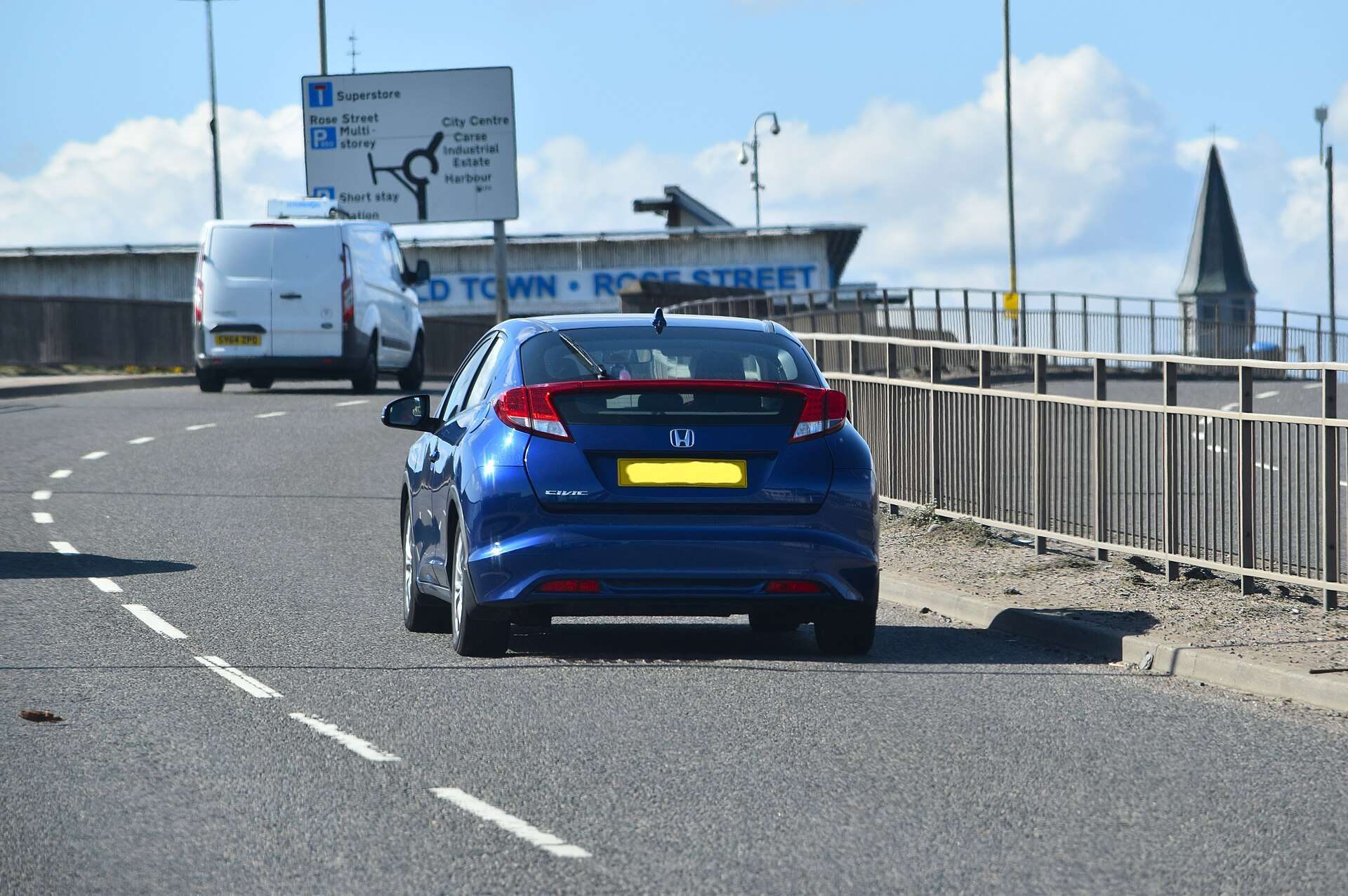
IN-DEPTH BUYING GUIDE · EUROPEAN MK9 · 1.8 PETROL HATCHBACK AND TOURER
The Honda Civic Mk9 1.8 i-VTEC is worth shortlisting if you want a useful petrol family car without choosing a turbocharged hot hatch or a diesel. Its naturally aspirated engine, practical cabin and available conventional automatic make it an attractive everyday purchase. The Tourer adds substantial luggage space while retaining the flexibility that makes this generation distinctive.
Reputation is not an inspection. These cars are now old enough for deferred fluids, worn suspension, clutch or automatic issues, brake corrosion, air-conditioning faults and body repairs to matter. The strongest buy is a properly identified, maintained example whose condition and first-year costs can be understood before paying a deposit.
This guide covers the European ninth-generation 1.8 petrol hatchback and Tourer. It excludes the older Mk8, the later 1.0/1.5 turbo Mk10, diesel models, Type R, hybrids and other-market saloons that can appear under the same Civic generation label. Do not transfer a US Civic parts list or an older i-Shift gearbox description to this car without checking the actual application.
The buying verdict
Start with the best-documented 1.8 manual or five-speed automatic that suits your driving. Choose the Tourer if you need its loading practicality, after checking the rear-damper equipment. Prioritise correct servicing, a dry cabin, normal hot and cold running, a sound underside and working air conditioning. A later facelift or desirable trim is a benefit only when the underlying car justifies it.
Which Civic 1.8 are you buying?
Honda’s 2012 European Civic press kit identifies the 1.8 i-VTEC at 142 PS and 174 Nm, with a six-speed manual or five-speed automatic. It distinguishes the new car from the older 140 PS 1.8. This is a useful factory reference, not a performance test of a surviving vehicle.
| Choice | Why it might suit you | Buying checks |
|---|---|---|
| 1.8 manual hatchback | Useful petrol family car with direct control of the six-speed gearbox. | Clutch engagement, selection, maintenance, underside and cabin condition. |
| 1.8 five-speed automatic | A conventional automatic alternative for buyers who prefer it. | Correct fluid history and normal hot/cold engagement and shifts. It is not an older i-Shift automated manual. |
| Facelift / later Mk9 | Updated appearance and equipment, including changes described in Honda’s 2015 material. | Verify actual build and fitted features rather than buying solely on a registration year. |
| 1.8 Tourer | More useful load access and space for family travel. | Rear damper equipment, seat mechanisms, tailgate, load floor and previous heavy/towing use. |
| Sport and other trims | Equipment, seats and appearance that may suit your needs. | A Sport badge does not make the 1.8 a Type R; check actual options and wheel/tyre costs. |
Use the generation and VIN, not a search filter alone
Build date, market and body style matter. A broad Civic 1.8 search can mix Mk8 three-door Type S and i-Shift cars with Mk9 hatchbacks, Tourers and imported saloons. Ask for registration, VIN, body, gearbox and engine details before travelling. If the engine or transmission has been replaced, seek a record identifying the replacement and associated work.
Trim contents changed during production. Check navigation, Honda Connect, parking sensors/camera, heated seats, climate functions and any assistance equipment on the actual car. A screen or badge can be changed; factory data and working functions provide stronger evidence than an advert’s equipment list.
Understand how the 1.8 drives
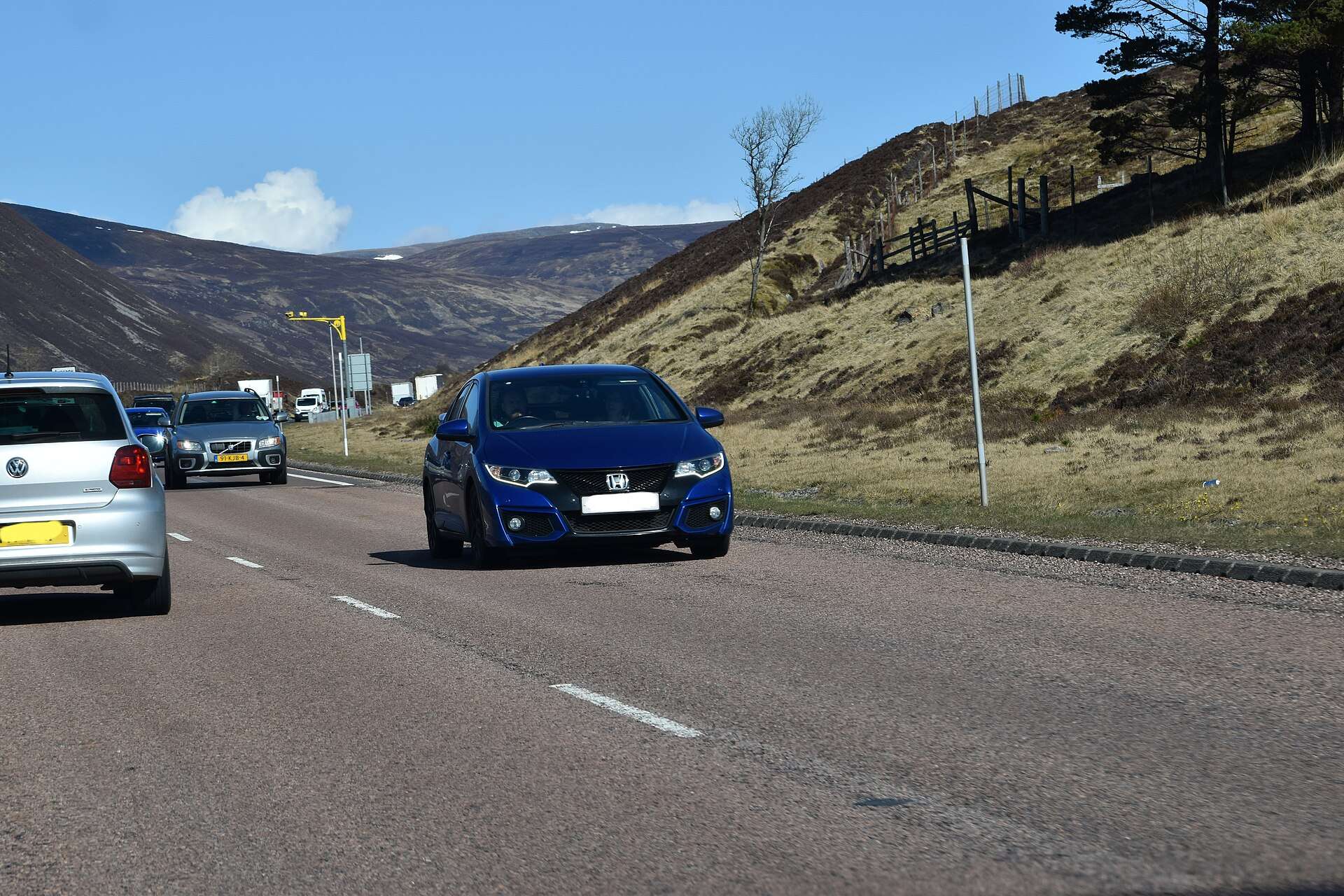
A naturally aspirated petrol engine delivers its performance differently from a small turbo petrol or diesel. Try the car on the routes and gradients you use, with normal loading where practical. It may need a downshift and more engine speed for an overtake; that is different from a misfire, slipping clutch or a car that cannot produce normal power.
Judge economy using your actual annual mileage, traffic and journeys. A petrol Civic can be a sensible choice for mixed or shorter use, but repeated cold starts and neglected maintenance still matter. Compare insurance, tax, tyres, servicing and purchase price instead of choosing on one advertised miles-per-gallon figure.
UK prices: avoid the wrong-generation bargain
The Autotrader Civic 1.8 page is useful for finding cars, but its initial examples at our check included older Type S and i-Shift models. Those cheap advertisements are not a Mk9 price floor. Narrow to the correct generation and body, then compare manual and automatic separately.
Record mileage, service evidence, seller type, trim, number of keys, MOT history and immediate work for each shortlisted registration. Keep Tourer pricing distinct where load space is the main attraction. A recently serviced example with quality tyres and working air conditioning can be more useful than a cheaper facelift needing several jobs.
Price condition before negotiating
Ask about accidents, corrosion repairs, clutch or gearbox work, oil use, overheating, air-conditioning faults and water entry. Review MOT history for repeated brake, tyre or suspension advisories and ask for the repair invoices. An MOT pass shows a test outcome, not the health of every engine and comfort component.
Obtain written quotes for the specific work. A seller’s “only needs a regas” does not establish a sound air-conditioning system, and a gearbox noise cannot honestly be priced as an oil change without diagnosis. Add inspection, collection, insurance and a sensible allowance for known due work before setting your purchase ceiling.
1.8 i-VTEC engine checks and service evidence
Oil, filters and a coherent record
Look for dated oil-service invoices, correct specification and the filters and plugs actually renewed. A service stamp or a reset reminder does not prove every due item was completed. Ask about intervals, long gaps, low oil level, overheating and any engine replacement. Compare the record with mileage progression and the seller’s description of use.
Check the oil and coolant while cold with the owner’s permission and inspect accessible leaks, hoses and visible wiring. Observe a genuine cold start, idle and warm-up rather than accepting an already warm car as sufficient. Recheck once fully warm and after a hot restart. Persistent smoke, misfire, abnormal noise or unexplained fluid loss needs diagnosis before you agree a repair allowance.
Timing chain: do not invent a cambelt service
The 1.8 uses a timing chain. It should not receive a routine cambelt-and-water-pump cost copied from another engine. That does not make the timing system immune to wear or poor maintenance. Have persistent rattling, relevant timing faults or other suspicious behaviour assessed by a Honda-aware specialist.
A replacement invoice should identify the diagnosed problem and parts rather than simply say “chain done”. A partial kit is not a complete timing repair. If mechanical damage is suspected, agree whether the car should be transported rather than repeatedly started for demonstrations. The actual condition and work scope should drive the budget.
Valve-clearance checks and spark plugs
Ask whether valve-clearance inspection or adjustment has been carried out when required for the actual engine and schedule. Do not assume an ordinary oil service includes it, or that a quiet engine proves all clearances are correct. The workshop should follow the specified procedure and record the work rather than adjust by guesswork.
Use the correct plug type and replacement requirements for the engine. A misfire can involve plugs, coils, air leaks, fuel delivery or mechanical condition, so do not accept “just a coil” without diagnosis and retest. Wrong plugs or improvised ignition parts can create a problem instead of saving money.
Cooling and hot-running behaviour
Ask about coolant changes, leaks, thermostat or pump work and any history of overheating. Inspect for staining, repeated top-ups and an explanation of recently replaced components. A new radiator or reservoir is not itself proof of either abuse or a cure; read the invoice and check the result.
Watch temperature behaviour and heater operation as the car warms. Stop safely if it overheats, and never open a hot pressure cap. A persistent cooling problem should be tested before the purchase, because an apparently small leak and an internal engine fault have very different repair scopes.
Diagnostics support the inspection
A model-aware scan can help identify engine, transmission and chassis warnings, but it should be interpreted with the drive and mechanical checks. Recently cleared codes, no current lamp or one reassuring screenshot cannot certify the whole car. Ask for the original codes and diagnosed cause after recent repairs, not simply evidence that someone erased a warning.
Check that warning lamps perform their normal self-test and extinguish appropriately. Investigate intermittent ABS, stability or engine warnings rather than waiting for them to become permanent. A battery or charging problem can produce several symptoms, but that possibility should be tested rather than used to dismiss every fault.
Love cars you don’t see every day?
Get forgotten cars, surprising motoring stories and the most interesting finds from Unusual Cars by email.
Free to join. No spam. Unsubscribe whenever you like. See our privacy policy.
Manual versus five-speed automatic
Six-speed manual viewing checks
Assess pedal feel, bite and gear selection from cold, then repeat once the car is fully warm. Try every forward gear at sensible speeds and reverse while stationary. Note difficulty selecting, crunching, unusual whine, vibration or engine speed increasing without matching acceleration. Do not deliberately stall-test or abuse the clutch.
If the clutch has been replaced, read the invoice for the kit and related components and ask how the car behaved afterwards. A clutch pedal, hydraulic, mounting or internal gearbox fault can require a different scope. A seller’s “needs a clutch” can be either a useful diagnosis or an expensive guess; establish which before setting a buying allowance.
Ask about manual gearbox oil changes and the fluid actually used. A general service may not include them, and correct oil matters. If an engine or gearbox has been swapped, order by the installed component after identification rather than assuming the registration’s original part is still present.
Five-speed automatic: different from i-Shift and CVT
The UK/European Mk9 1.8’s factory-listed five-speed automatic should not be confused with the older i-Shift automated manual or an unrelated-market Civic CVT. Establish the actual transmission and use the right service information. A search result containing “Civic automatic” is not a reliable parts match.
Check prompt but controlled engagement of Drive and Reverse, smooth gentle take-off, ordinary shifts, kickdown when safe, and behaviour during a hot restart. Persistent flare, slipping, banging changes, shudder or delayed engagement needs specialist diagnosis. Do not accept a reset or a fluid top-up as proof that an internal fault has gone.
Ask for fluid-service invoices and confirm the correct Honda specification, quantity and procedure for the transmission. A drain/refill and a more extensive fluid-exchange procedure are different scopes. Have the workshop explain its recommendation before buying a generic ATF or a service kit selected only by model name.
Tourer, Magic Seats and rear adaptive dampers
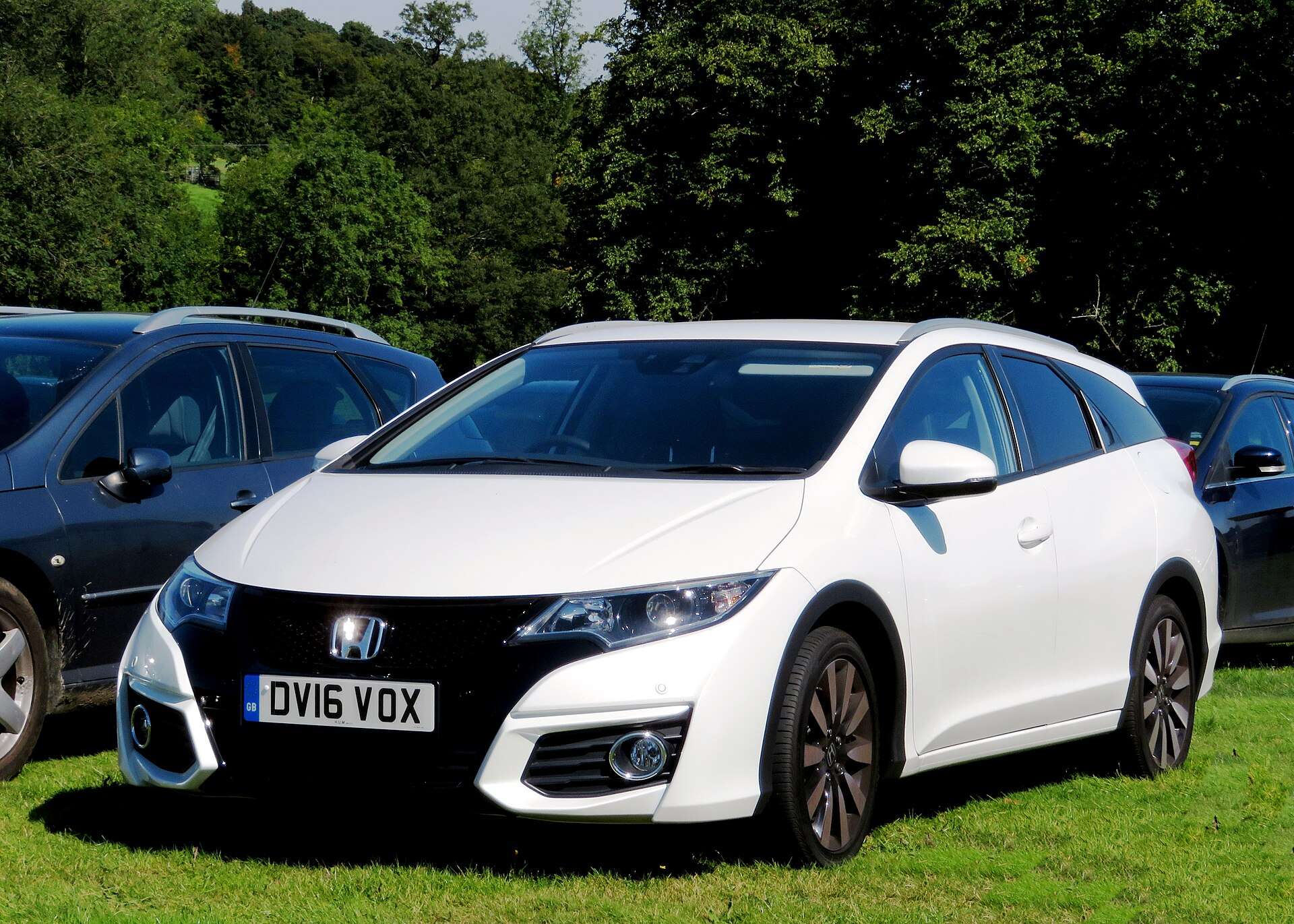
Honda’s Tourer press kit explains the centre fuel-tank layout and flexible seating arrangement. For a buyer, the benefit only exists if the mechanisms work and the space fits your needs. Operate the rear seat bases, backrests and latches as fitted, check seatbelts and head restraints, and try the loads you intend to carry.
Adaptive damping is not air suspension
The Tourer’s available rear adaptive damper system adjusts damping and has Comfort, Normal and Dynamic settings. It should not be described or priced as rear air suspension. Identify whether the actual car has this equipment, operate its controls, assess the ride and inspect for leaks, damage or warnings.
Match replacements to the fitted hardware. A cheap ordinary hatchback shock absorber is not automatically a suitable adaptive Tourer part. If the car has been converted or modified, ask for the specification and a competent assessment of the complete installation, including any electrical changes. Do not assume a warning light has been legitimately resolved because it is no longer visible.
Load area and tailgate
Check the floor panels, storage compartments, load cover, tailgate supports, lock, wiper, washer and demister. Look for dampness, damaged latches, loose trim and signs of heavy cargo. On a roof-rail or towbar-equipped car, inspect fixings and electrics and verify the actual load/towing limits for that model.
Test the seating and boot with child seats, a dog crate, mobility equipment or luggage if those determine the purchase. A quoted litre capacity cannot show whether the opening and floor shape suit a particular item. Check that removable accessories are included in the sale and that folded seats return to a securely latched position.

Rust, body repairs, brakes and suspension
A Honda badge does not remove the need for an underside inspection. Examine sills, jacking points, floor areas, suspension mounts, subframes, brake pipes and accessible rear structure. Ask for explanations of fresh underseal, welding and disturbed seams. A clean upper body and a tidy interior cannot establish the quality of hidden repairs.
Review MOT history for repeated corrosion, brake and tyre advisories. Surface corrosion and structurally weakened metal are different findings and need a competent assessment. If a cover or coating prevents a useful view, record what remains unknown rather than treating the area as sound.
Brake condition on lightly used cars
Inspect discs, pads, calipers, hoses and parking-brake operation. A low-mileage car can still suffer from standing-related corrosion or sticking brakes. Ask whether a previous pad replacement included investigation of uneven wear. A brake-fluid invoice does not establish that calipers and discs are healthy.
During the drive, assess straight braking, pedal consistency and any vibration. Do not deliberately provoke ABS or perform aggressive stops on a car of uncertain condition. Have symptoms diagnosed and quote the complete repair rather than adding the cheapest disc/pad set to a shopping list.
Tyres, wheels and steering
Check tyre size, age, condition and wear across the entire tread. Damage and uneven inner-edge wear deserve investigation of alignment, wheels and suspension. An attractive wheel upgrade can alter ride, clearances and tyre cost; verify suitability and insurance disclosure.
Listen for knocks over ordinary road surfaces and assess steering response and stability. Drop links, bushes, dampers, bearings, tyres and damaged components can produce overlapping symptoms. A claim that it only needs tracking should be supported by an inspection explaining why the wear or steering position occurred.
Cabin, climate, water entry and electrical checks
Try the driving position and visibility rather than assuming the distinctive dashboard suits everyone. Check the instruments and controls from your normal seat position, rear access and parking visibility. Test any camera or sensors and compare their operation with the equipment list.
Operate climate control at different temperatures and fan speeds and confirm that air conditioning actually cools. A system needing refrigerant may have a leak or component fault; a regas quote is not a diagnosis. Read the vehicle’s refrigerant label and ask for a leak test where appropriate.
Check windows, mirrors, central locking, both keys, lights, wipers, washers, rear demister, audio and fitted navigation/phone functions. Later Honda Connect equipment differs from earlier systems. Verify what still works and what depends on current phone/software compatibility instead of assuming the original brochure’s connected features remain unchanged.
Feel accessible carpets and inspect the boot/load-floor area for dampness and smells. Ask what caused previous water entry and whether wet insulation was dried or replaced and affected electrics checked. A fresh valet or scented cabin does not settle the question. Obtain permission before lifting trim or carpets and leave dismantling to an agreed specialist inspection.
UK parts, labour and fitted-cost references
These are dated examples, not a fixed quote for every Civic. The ClickMechanic clutch estimator provides a useful 2013 1.8 row with parts and labour time separated. It is an estimate generated from data, not a booking quotation or a guarantee for every Tourer, import or production variant.
| Job | Parts reference | Labour / fitted reference | Qualification |
|---|---|---|---|
| 2013 Civic 1.8 manual clutch | Estimator parts £314–£376. | 4–5 hours; independent fitted estimate £536–£593, franchise £817–£903. | Use the correct generation/gearbox and obtain a final quote. Do not add the parts estimate to the already fitted total. |
| 2012 Civic 1.8 manual clutch | Estimator parts £315–£377. | 4–6 hours; independent £538–£593, franchise £808–£914. | A year-specific estimated application, not every clutch or associated repair. |
| Specialist clutch/gearbox labour cross-check | Red-R menu excludes clutch parts and gearbox oil. | £365 + VAT = £438 for its described replacement labour service. | General Honda workshop menu; confirm Mk9 application, access and what extra parts/work are required. |
| Valve-clearance check/adjustment | Parts or seals may depend on the actual job. | Red-R from £90 + VAT = £108; advertised with timing-drive inspection. | A starting reference requiring engine-specific scope, not proof a normal service includes it. |
| Manual gearbox oil | Menu includes two litres of genuine Honda MTF-3. | Red-R £78 + VAT = £93.60. | Confirm required specification/quantity for this gearbox. It is not an automatic-transmission service. |
| Coolant and brake/clutch fluid | Menu coolant is a stated package; fluid for the brake/clutch work is additional. | Coolant £55 + VAT = £66; brake/clutch-fluid labour £50 + VAT = £60 plus fluid. | Confirm Honda-compatible coolant/specification and a final complete quote. |
| Retail engine-service comparison | Oil/air-filter plus 5L-oil kit advertised at £56.13; oil/air/cabin-filter basket £45.81 without oil. | Parts only; fitting, disposal and diagnosis extra. | Different baskets and no automatic fitment approval. Confirm oil requirement and actual kit contents. |
The supplementary workshop source is Red-R Performance’s general Honda menu. Its headline interval packages are promoted for Type R and are not silently presented here as fixed Mk9 1.8 prices. We use its separately described job references with an application check. Its timing-chain labour starting figure is also not a universal fitted Civic chain-repair quote.
The parts examples were visible in the Mk9 1.8 eBay service-kit results before coupons. One result mixed a Mk10 1.5 title with a Mk9 fitment label, illustrating why search matching is not certification. Verify the actual part numbers, approvals, quantity, seller, delivery and returns before buying.
Worked budget without hiding exclusions
A 2013 car needing the estimator’s upper independent clutch figure (£593), the specialist’s starting valve check (£108) and manual gearbox oil reference (£93.60) produces a conditional total of £794.60. It excludes any additional diagnosis, seals or repairs, as well as engine service, tyres, insurance and collection. Obtain a consolidated quote to avoid charging twice for work that overlaps.
Request written quotes showing parts, labour, VAT, fluids, required fixings and testing. If dismantling may reveal more damage, agree the investigation stage and how further work will be authorised. Comparing a bare clutch kit with a complete workshop package does not establish whether either is expensive.
Civic Mk9 1.8 service-parts table and eBay searches
Affiliate disclosure: these links use campaign 5339238906. We may earn a commission from qualifying purchases at no extra cost to you. Match European Mk9 body, actual engine, gearbox, build, dimensions and part numbers; do not rely on a search-result compatibility badge alone.
| Item | Check before ordering | eBay search |
|---|---|---|
| Oil/filter service kit | Correct Honda oil requirement and quantity; verify basket contents. | Service kits |
| Air filter | Match housing and engine; not a Mk10 turbo filter. | Air filters |
| Cabin filter | Housing, filtration type and fitment; resolve dampness separately. | Cabin filters |
| Spark plugs | Exact specification and required number; do not substitute a generic performance label. | Spark plugs |
| Ignition coils | Identify a diagnosed fault and match existing part number/engine. | Ignition coils |
| Auxiliary belt/tensioner | Inspect the whole drive and verify installed equipment. | Auxiliary-drive parts |
| Timing-chain components | Only after diagnosis; a partial kit is not a complete repair. | Timing-drive parts |
| Alternator | Output, connections, pulley and application; check exchange deposit/warranty. | Alternators |
| Battery | Correct size, technology and rating for the actual stop/start equipment. | Batteries |
| Discs and pads | Axle, dimensions, fitted brakes and actual caliper condition. | Brake parts |
| Manual clutch kit | Correct manual gearbox and engine; include associated diagnosed work. | Clutch kits |
| Tourer rear dampers | Identify adaptive equipment; generic hatchback shocks may be unsuitable. | Tourer rear dampers |
Hidden ownership costs
A dependable reputation does not make age-related bills disappear. Allow for tyres, brakes beyond pads, suspension alignment, a second key, weak battery and air-conditioning investigation. The Tourer’s adaptive rear dampers can be a different parts proposition from a hatchback’s ordinary shocks. Obtain a quote before buying a car with an unexplained damping warning or conversion.
Collection, inspection, recovery and alternative transport during repairs belong in the first-year budget. Exchange components can carry refundable deposits and return postage. Warranty exclusions, service-plan contents and insurance for modifications need to be read before relying on them.
Choose the car whose condition and practicality make sense, rather than spending the entire budget to obtain a particular trim or facelift. A sound earlier example with correct maintenance can be better value than a later one whose clutch, tyres, air conditioning and suspension all need attention.
Civic 1.8 viewing and test-drive checklist
Before travelling
- Confirm European Mk9 hatchback/Tourer, 1.8 engine and actual gearbox.
- Read MOT history and request dated oil, plug, valve-check, fluid and transmission records.
- Ask about oil/coolant use, overheating, gearbox faults, repairs, dampness and air conditioning.
- Arrange a cold start, fully warm legal drive, model-aware scan and underside inspection.
- For a Tourer, establish rear-damper equipment and test all load/seat mechanisms.
At the car
Match the identity and paperwork, assess the shell and repair evidence, then inspect cold fluids, tyres and accessible leaks or moisture. Test both keys and every fitted control. Try the seating and load space with the equipment that determines your purchase.
Drive gently from cold to fully warm and assess normal performance, steering, brakes and manual or automatic behaviour. Recheck hot start, fresh leaks and warnings after stopping. Record unresolved symptoms and obtain a diagnosis rather than accepting a seller’s guess at a cheap part.
Buy, investigate or stop?
Proceed with a coherent history, sound structure, normal running and an inspection that supports the price. Negotiate around clearly diagnosed maintenance or faults with written quotes. Stop for overheating, serious undiagnosed smoke/noise, slipping transmission, unsafe structural work, identity concerns or refusal to permit meaningful checks.
Frequently asked questions
Is this the same automatic as the older i-Shift?
No. Honda’s European Mk9 1.8 factory information lists a five-speed automatic. Identify the actual car and use its fluid/service procedure, not an older i-Shift or unrelated CVT guide.
Does the 1.8 have a cambelt?
It uses a timing chain. Investigate suspicious noise or faults rather than budgeting a routine belt package copied from a different engine.
Does a quiet engine prove the valve clearances are right?
No. Check the maintenance requirement and evidence of an appropriate inspection or adjustment. An oil service and a valve-clearance job are different scopes.
Does the Tourer have air suspension?
The factory-described adaptive rear system controls damper stiffness. It should not be described as air suspension. Confirm the actual equipment before buying replacement shocks.
Is a Sport a Type R?
No. A Mk9 1.8 Sport is its own everyday petrol proposition. Do not pay a Type R premium or use Type R service parts because of a styling badge.
What would we buy?
The best-documented, independently assessed 1.8 with the body and gearbox that suit your use. Make dryness, chassis condition, working climate control and a clear first-year maintenance plan part of the decision.

Love cars you don’t see every day?
Get forgotten cars, surprising motoring stories and the most interesting finds from Unusual Cars by email.
Free to join. No spam. Unsubscribe whenever you like. See our privacy policy.