
The MINI Cooper 1.5 petrol F55/F56 is the everyday sweet spot for many used-MINI buyers: enough performance to enjoy the chassis without automatically taking on the purchase price and running requirements of a Cooper S or JCW. Its appeal is character and a responsive driving experience, but a carefully chosen ordinary Cooper can also be a sensible daily car.
This guide covers the third-generation F56 three-door and F55 five-door Cooper with the 1.5-litre B38-family petrol engine, broadly 2014–2023. It excludes the older R56, Cooper S/JCW engines, Cooper D/SD, the electric Cooper SE, Convertible and newer F65/F66 cars. Dates and registrations overlap: identify the body, engine, build specification and gearbox before applying advice or buying parts.
Affiliate disclosure: qualifying eBay purchases through our links may earn commission at no extra cost to you. Searches are starting points, not fitment approval. Confirm VIN, engine/gearbox code and component references with the supplier.
The buying verdict
A standard, documented Cooper 1.5 manual with the equipment you actually want is our starting point. The five-door is worth trying if rear access matters; the three-door remains appealing when you rarely carry rear passengers. Choose an automatic on its actual transmission and condition, not simply on registration year.
Give a proper cold-and-hot inspection more weight than cosmetic customisation. Cooling leaks, abnormal vibration, gearbox symptoms, water entry and malfunctioning electronics need diagnosis. A well maintained ordinary car on sensible wheels can be a better purchase than a highly specified example that leaves no reserve for repairs.
Know which Cooper you are buying
The 1.5 petrol is not the older 1.6
The B38-family engine is a turbocharged three-cylinder petrol. The familiar Cooper badge also appears on other generations and diesel/electric variants, so establish the actual engine rather than using badge-only internet advice. In particular, fault stories and service kits for an older R56 1.6 should not be transferred wholesale to this car.
MINI’s 2018 manufacturer material lists the Cooper at 100 kW/136 PS. The important practical distinction is its flexible everyday response rather than a performance comparison with the 2.0 Cooper S. If you want a standard daily car, do not buy an unknown remap simply because it promises to close that gap cheaply.
A three-cylinder engine has its own sound and feel, but repeated misfiring, a persistent warning or excessive vibration still requires investigation. Smooth acceleration on one short demonstration does not establish the condition of mounts, cooling components, turbo plumbing or the history of the oil supply.
F56 three-door or F55 five-door?
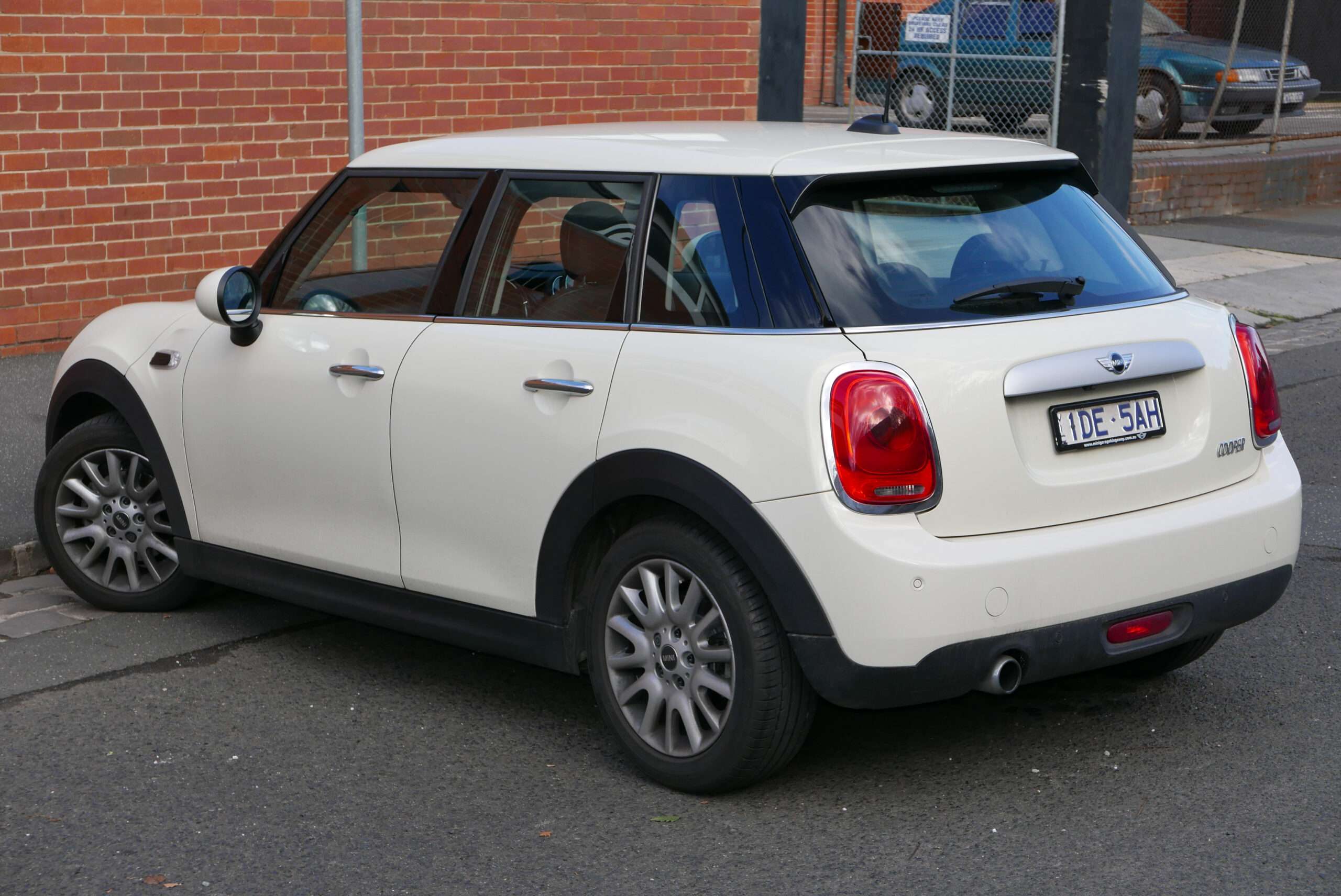
The F56 is the three-door hatchback; the F55 is the five-door. Try both rather than assuming the five-door is automatically comfortable for your family. Check rear access, headroom and legroom behind the driver’s normal seat position. Bring the child seat or bulky item that determines your purchase.
The three-door’s longer doors need space to open, and rear access requires the front seats to move correctly. Test the seat-release and return mechanism. In the five-door, assess the rear door opening and the space around a child seat. Those everyday differences can matter more than a trim package.
Check boot opening, load cover and the way the rear seat folds. Verify repair-kit or spare-wheel provision on the actual car. Published capacity is useful context but does not tell you whether your particular luggage fits. If the car is too cramped, a higher trim will not solve it.
Manual: the straightforward reference point
The six-speed manual provides a clear starting point for a buyer wanting direct control and simpler transmission comparison. Check selection into every ratio and reverse, clutch take-up and any noise that changes when the pedal is pressed. Repeat the assessment after the car is fully warm.
Slipping under sensible load, persistent difficulty selecting gears or a marked shudder needs a complete estimate. A high bite point alone is not a diagnosis. Ask the workshop to identify gearbox and release-component scope before treating the price of an online clutch kit as a fitted bill.
Earlier automatic versus later dual-clutch
Earlier Cooper automatics use a conventional six-speed arrangement; MINI’s 2018 update introduced the optional seven-speed double-clutch Steptronic for the Cooper. Build date, derivative and market matter, so verify the actual unit. The word Steptronic in an advertisement does not by itself identify one mechanical system.
For either, test engagement into drive/reverse, gentle progress, ordinary acceleration and warm parking manoeuvres. Look for significant delay, shudder, repeated flare or harsh shifting. A short cold departure is not enough, particularly when you intend to use the car in slow traffic.
Servicing advice and fluid procedures differ. Obtain the gearbox code and workshop guidance, and distinguish preventive servicing from diagnosis of a symptom already present. A generic flush is not a universal cure, while advice from a different MINI or BMW gearbox can be misleading.
2018 and 2021 updates: verify equipment individually
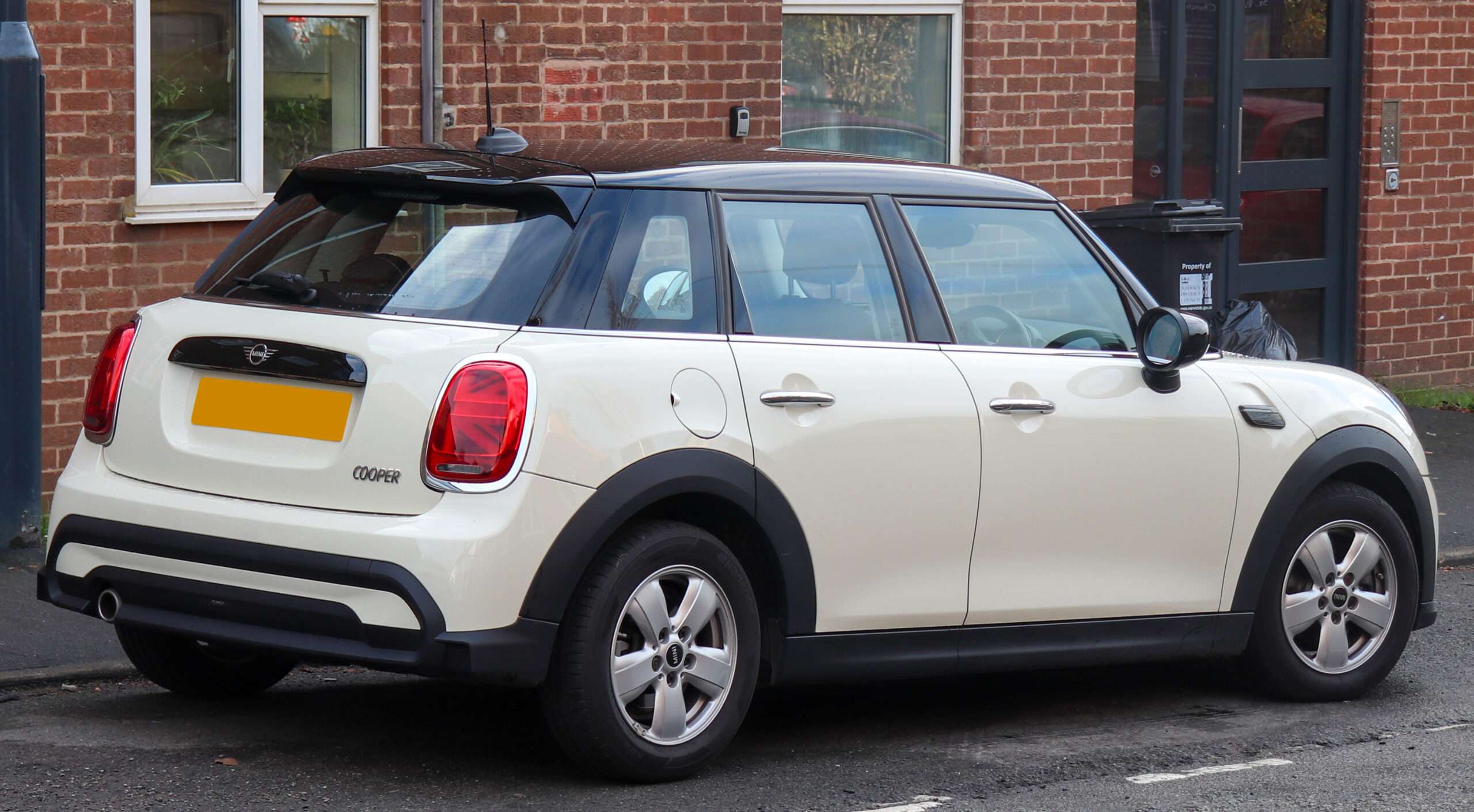
The 2018 manufacturer update describes the new transmission option, revised lighting and infotainment changes. Later cars changed appearance and equipment again. Styling details can help identify an era, but retrofits and optional equipment mean that appearance alone does not prove build specification.
Union Jack rear lamps, screen size, navigation and phone integration should be checked on the actual car. Do not apply an international press specification as a guaranteed UK standard-equipment list. Ask for the original specification or a VIN-based equipment record when a feature matters to your decision.
Trim and options: buy what you will use
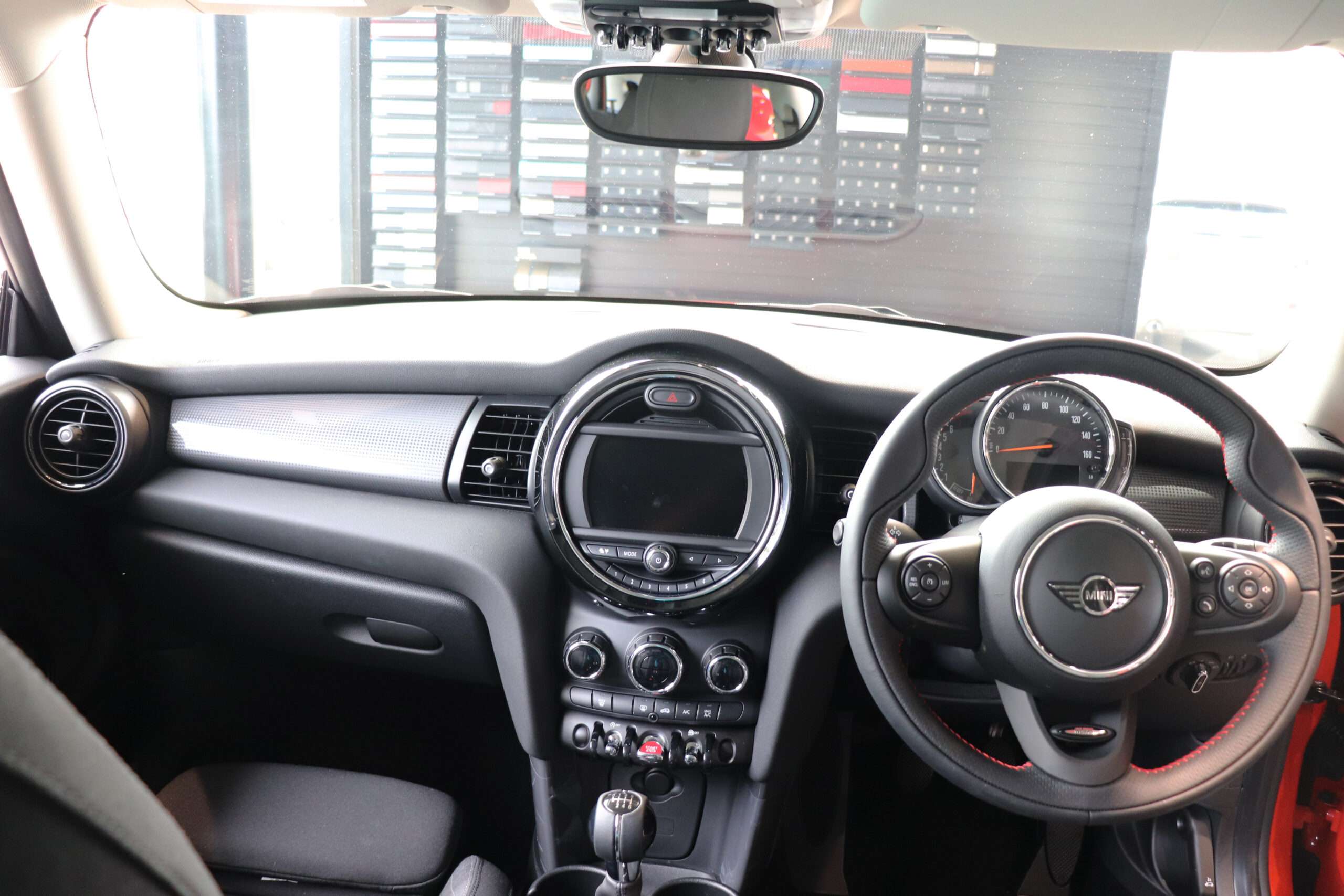
MINIs are frequently personalised, and option packages can materially change the experience. Check seat type, climate controls, parking sensors/camera, lights, cruise control and phone functions rather than buying from a trim name. A generic advert template can describe equipment the car does not have.
Try the driving position and seats for more than a minute. Larger wheels and lower-profile tyres can affect comfort and replacement cost. A car that feels entertaining on a smooth road may be less attractive on the broken surfaces you commute over daily. Test a representative route before paying for a sportier look.
Check the actual smartphone functionality with your device while stationary. A central display or navigation does not guarantee Apple CarPlay or the connectivity service you want. Older services can depend on hardware, activation, phone compatibility and continuing availability. Do not assume a cheap update will add every missing function.
If a panoramic roof is fitted, inspect it as an additional system. Operate it normally and look around the lining and floor for water. Do not force a reluctant mechanism. A simpler car without the roof may be preferable if you want fewer optional components to maintain.
UK buying budget: compare the ordinary Cooper properly
The ordinary petrol Cooper has an active used market, but a useful comparison must separate F55/F56 1.5 petrols from older 1.6 cars, Cooper S, diesels, Convertibles and electric models. The badge alone produces an unhelpful spread of asking prices. Start with a generation, engine, gearbox and body-style filter.
Then compare broad mileage, original equipment, service evidence, tyre condition and seller preparation. An older manual and a low-mileage later dual-clutch car are not equivalent examples. Separate dealer and private advertisements and record what any warranty actually covers.
No precise valuation band is asserted here. During the final research check eBay’s direct results were temporarily unavailable, so no fresh asking-price range has been manufactured from them. Use the live car searches below when available and compare several genuinely equivalent cars before making an offer.
How to turn condition into an offer
Prepare three figures: purchase, documented catch-up work and an uncommitted repair reserve. Worn tyres and overdue routine servicing can be quoted. Excessive vibration, coolant loss or automatic symptoms need diagnosis before the financial exposure is known. Do not treat every uncertainty as the cost of one cheap component.
For a dealer purchase, put preparation in the order: exact job, parts standard, workshop and evidence to be supplied. “Serviced before collection” may only mean an oil/filter change. It does not automatically include plugs, brake fluid, a cooling repair or a gearbox service.
If an advert emphasises expensive optional equipment, decide whether it works and whether you value it. You are buying the car in its present condition, not reimbursing the first owner’s option bill. A standard car with better maintenance can be the stronger financial choice.
Records, identity and recall checks
Before travelling, obtain the registration, exact body and engine, gearbox type, service records and both-key status. Request a cold start. Review MOT history for consistent mileage and recurring tyre, brake or suspension advisories. A pass is a minimum roadworthiness result on the test date, not an engine or gearbox warranty.
Compare VIN details, V5C and the seller’s explanation. Complete suitable finance and vehicle-history checks before payment. Investigate identity discrepancies or uncertain entitlement to sell independently. A discount does not make unclear ownership or concealed structural repairs acceptable.
Ask MINI to check outstanding safety recalls and service campaigns by VIN. Do not assume every early B38 had a particular repair or that a later registration is automatically exempt from all campaigns. A routine service stamp and a clear dashboard are not proof of recall completion.
Review digital service entries alongside itemised invoices. A service reminder reset does not prove that the right oil, plugs or fluid work was performed. Ask how an independent workshop documents its work and whether any digital update was made. Keep the evidence coherent rather than relying on the number of stamps alone.
The MINI Cooper viewing checklist
Cold start: distinguish character from faults
Arrange for the car to be unstarted before arrival. If it is already warm, request another opportunity to observe cold behaviour. There may be an innocent reason, but a warm demonstration does not answer the cold-start question.
Observe the warning-light check and listen to the engine without excessive throttle. A three-cylinder rhythm is expected; severe shaking, misfiring or persistent abnormal noise is not something to dismiss as MINI character. Ask a workshop to establish whether vibration originates in running quality, mount condition or another source.
Engine mounts and vibration
Observe normal idle and gentle take-up, and note any marked thump or movement sensation as load changes. Have an inspector examine the mounts safely. A worn mount can transmit vibration, but buying a mount on speculation does not resolve a misfire or gearbox issue that produces a similar complaint.
Request a quote for the diagnosed mount and complete fitted scope, not simply the cheapest rubber component advertised online. Access, hardware and related components can affect labour. Do not deliberately load the engine against the brakes to perform an improvised destructive test at a viewing.
Cooling system and leaks
Inspect safe cold coolant level, visible hose connections and surrounding areas for dried residue or fresh dampness. Never open a hot pressurised system. Ask about top-ups, overheating and any previous pump, housing or hose repairs, matching the account to invoices.
During the drive, check temperature behaviour and cabin heat. Afterwards, look for new smells, warnings or leaks without opening the system hot. A car that still loses fluid has an unresolved issue even if several parts have been replaced. A pressure test and proper diagnosis establish the repair scope.
Oil history, timing chain and abnormal noise
The B38 uses a timing chain rather than a scheduled cambelt package. Do not transfer older R56 engine stories or another manufacturer’s wet-belt service plan to it. Chain drive still depends on appropriate maintenance and does not make persistent rattling or oil-pressure warnings harmless.
Ask for the oil approval used and service timing. If the engine has a serious warning, stop safely and investigate rather than continuing the test. A generic viscosity description is not the complete oil specification, and a new filter is not proof that earlier poor maintenance caused no wear.
Ignition, intake and response
Check smooth acceleration once warm, consistent idle and a clean restart. A recurring misfire, hesitation or warning needs diagnosis using the history and appropriate fault information. Plugs and coils are possible investigation areas, not automatic remote diagnoses.
For a car with intake or exhaust changes, check installation quality, secure connections and supporting paperwork. Ask whether tuning was declared and whether original parts are available. An enthusiastic demonstration of power does not establish correct fuelling, cooling or long-term condition.
Manual or automatic road test
Use local roads and a faster section long enough to warm the drivetrain. Check every manual ratio and reverse and compare clutch behaviour cold/hot. For an automatic, include gentle traffic progress, normal acceleration and another set of parking manoeuvres after warming.
Significant delay, harsh engagement, judder or warnings should be assessed by a specialist familiar with the actual gearbox. A cleared fault or adaptation without an explanation is incomplete evidence. Have the diagnosis and repair confirmed before relying on a seller’s statement that the car is now fine.
Suspension, steering, wheels and tyres
Check tyre size/rating, full-width wear, sidewall damage and age. Large wheels can be costly to refurbish or replace, and poor roads can expose damage beyond the visible rim. Uneven tread wear may require alignment or suspension investigation as well as tyres.
Listen for knocks over ordinary rough surfaces and assess whether the car steers consistently. A pull or vibration is a symptom, not automatically a balance adjustment. Ask a workshop to establish the cause and check for previous impact damage before agreeing a repair allowance.
Brakes and parking brake
Brake progressively in a safe place and look for judder, pulling, inconsistent response and abnormal noise. Low annual mileage can still leave corrosion or sticking operation. A recent MOT does not mean the brakes have years of service life remaining.
Match parts to the ordinary Cooper’s brake specification. Cooper S and JCW kits are not automatically compatible or the correct purchasing assumption. Ask whether a repair quote includes the diagnosed mechanism, discs/pads, hardware and associated checks.
Body, underside and repair evidence
Inspect paint transitions, panel gaps, lamps, door closure and the boot floor. Look at sill edges and jacking points for lifting damage. Cosmetic personalisation can distract from a poor body repair, so judge the structure separately from stripes, mirror covers and gloss trim.
Arrange a lift inspection if history or visible evidence raises concerns. Look for leaks, damaged boots, corrosion around important areas and distorted mounting points. Fresh coatings should not be treated as proof of sound metal below. Never crawl under a car supported only by a jack.
Water ingress and roof equipment
Feel accessible carpets and inspect beneath the boot floor. Look for stains around roof lining, doors and rear trim. A strong fragrance or fresh valet should not replace a dampness check. A leak needs tracing; the wet area may be some distance from the entry point.
If there is a panoramic roof, operate it normally and inspect surrounding seals and trim. Do not force it or improvise drain clearing with sharp tools or high-pressure air. Get a leak/mechanism diagnosis before assuming the repair is a cheap seal.
Electronics and the second key
Test every window, lock, mirror, light, parking aid and climate control. Pair your own phone while stationary and verify the functions you need. Check screen stability through the drive and restart. Do not assume a warning after battery work is harmless without checking its cause.
Test both keys and any keyless features. A programmed replacement can cost more than a physical blank, and a non-working remote is not a fully functional spare. Have any promised second key supplied and working before final handover.
Love cars you don’t see every day?
Get forgotten cars, surprising motoring stories and the most interesting finds from Unusual Cars by email.
Free to join. No spam. Unsubscribe whenever you like. See our privacy policy.
Maintenance and UK service costs
Condition-based reminders and real maintenance
Use MINI’s requirements for the specific VIN, age, mileage and operating pattern. Dashboard reminders and digital entries should be supported by invoices. Oil/filter work, vehicle inspection, plugs, brake fluid and other additional maintenance are separate items; one reset indicator does not prove that all are current.
Confirm the appropriate oil approval and quantity for the actual engine. A service package or kit that covers several MINI generations needs careful checking. Do not apply the Cooper S oil/plug parts automatically to the B38 or assume every 1.5-litre MINI is petrol.
Published specialist examples
| Item/job | Published example | Scope |
|---|---|---|
| Lohen oil-change service, Gen 3 option | £202.50 | The selected Gen 3 option, not the collection’s lower “from” price. Confirm B38 suitability and work scope. |
| Lohen diagnostic check | £150 | Published specialist service; diagnosis does not automatically include repair. |
| Lohen visual / engine health check | £102 / from £102 | Different checks; confirm which assessment addresses your concern. |
| Lohen coolant change / performance brake-fluid service | £103 / £123 | Specialist menu examples; confirm fluid specification and suitability for ordinary road use. |
| F55/F56 1.5 filters and oil kit | Example eBay advertisement £109.99 | Parts-only snapshot; confirm approval, contents and fitment. |
| Mount, clutch, cooling fault or gearbox repair | Diagnosis and itemised quote | Parts, labour, VAT and associated work depend on the actual fault and transmission. |
The specialist oil-service option was checked specifically as Gen 3. It is a useful illustration of why a collection’s starting price is not necessarily the price for your car. Check the current workshop quote, included products, VAT and any discretionary procedures before booking; the listed service is not a blanket recommendation to flush every engine.
No stand-alone labour rate has been inferred from those package prices. Ask the workshop to show parts, labour and diagnosis separately. An oil service at £202.50 plus the listed £150 diagnostic check totals £352.50 before repairs or extra scheduled work. That is a scoped example, not an annual ownership forecast.
Cooper 1.5 service-parts table
The following searches open eBay UK with campaign 5339238906. Match the B38 petrol engine and actual gearbox, not a Cooper D, R56, Cooper S or electric SE. Product titles and automated compatibility entries can be wrong; supplier confirmation of OE references is essential.
| Service part | Fitment and buying advice | eBay UK comparison |
|---|---|---|
| Oil/filter service kit | Verify oil approval, quantity and petrol-engine references. | Compare oil/filter service kit |
| Air filter | Match engine and airbox; Cooper S parts are not the default. | Compare air filter |
| Cabin filter | Confirm dimensions and standard/carbon option. | Compare cabin filter |
| Spark plugs | Three-cylinder petrol specification; not Cooper D or B48 sets. | Compare spark plugs |
| Ignition coil | Diagnose misfire first and match the OE reference. | Compare ignition coil |
| Auxiliary belt | Separate from the timing chain; match accessories and engine. | Compare auxiliary belt |
| Front brakes | Confirm brake specification; do not assume Cooper S or JCW compatibility. | Compare front brakes |
| Rear brakes | Check dimensions, hardware and the actual diagnosed job. | Compare rear brakes |
| Battery | Confirm technology, size/rating and battery registration requirements. | Compare battery |
| Alternator | Match engine, output, pulley and connector; exchange terms vary. | Compare alternator |
| Manual clutch kit | Manual only; identify gearbox and release/flywheel scope. | Compare manual clutch kit |
| Wiper blades | Confirm body style, lengths and rear fitting. | Compare wiper blades |
Inspect the options as separate buying decisions
A MINI can have a long equipment list without providing the functions you personally need. Make a short list before viewing: rear access, seat support, phone integration, parking aids, roof preference and acceptable wheel size. Demonstrate each item on the car rather than paying a premium for a package name.
For navigation and connected functions, ask what remains usable without a subscription and whether the installation is original. If equipment has been retrofitted, obtain the specification and invoices. An aftermarket screen can be useful, but confirm audio quality, microphone, parking displays and vehicle settings all still work as intended.
Check optional lights and assistance equipment for correct operation and warnings. A replacement lamp or windscreen may have associated coding or calibration requirements. Price an actual repair before accepting a seller’s suggestion that it only needs one inexpensive second-hand module.
On cars with a roof opening, establish whether you want the feature enough to accept the additional inspection and maintenance questions. Normal operation and dry trim are good starting points, but signs of previous water repairs deserve further investigation. Do not pay a roof premium if you would prefer a fixed roof in everyday use.
Hidden ownership costs
Premium equipment on an affordable used car
The purchase price can fall faster than the cost of replacement lamps, screens, keys and roof components. That is why a cheap highly specified example needs a reserve. Verify function and obtain complete fitted estimates, including programming or calibration where applicable.
Decide which failures would prevent you using the car as intended. A cosmetic trim mark may be acceptable at the right price; a failed phone connection might matter daily if you rely on it. Do not confuse an optional upgrade with repairing equipment the advert promises already works.
Tyres and ride comfort
Compare the cost of suitable tyres for the actual wheels, including fitting, valves and disposal. Do not assume all wheel/tyre combinations give the same ride. Check whether the car uses run-flat tyres and that any proposed change is suitable, correctly specified and understood by the insurer where relevant.
Tyre wear and wheel damage should be assessed with alignment and suspension condition. A full set of tyres may be only part of the remedy after an impact. Choose the specification that suits your roads rather than paying a styling premium and then budgeting to undo it.
Engine mounts and cooling repairs
A relatively modest part can involve enough labour to matter on a budget car. Have the cause of vibration or coolant loss established and ask what the fitted quote includes. Replacing one guessed component can leave the original problem and consume the money reserved to diagnose it properly.
For a car with overheating or serious oil-pressure history, ask about consequential checks rather than accepting a receipt for the first failed part as the complete story. Present healthy operation and a coherent workshop explanation should support the records.
Automatic maintenance and repair
Verify the transmission and obtain a gearbox-specific plan. The earlier conventional automatic and later dual-clutch unit should not receive one generic service prescription. If symptoms exist, diagnosis and repair come before treating routine servicing as a cure.
Read warranty limits, exclusions and authorisation rules. A warranty may not pay for a pre-existing fault or every part of a substantial repair. A healthy, inspected car is the primary buying objective; cover should not replace resolving concerns before handover.
Tax, insurance and keys
Obtain registration-specific tax and insurance figures before paying. First-registration date, emissions, exact derivative and modifications affect the comparison. Do not assume that every Cooper costs the same or that a modified car is insured on ordinary standard-car terms.
Price a programmed spare key and any missing load-cover or repair-kit items. Small omissions can become an irritating immediate bill. Confirm promised replacements are present and functional before collection.
Reviewing the records: what does each item prove?
| Record | Useful evidence | Remaining question |
|---|---|---|
| Digital service entry | A recorded maintenance visit | Which oil and additional items were actually completed? |
| Mount replacement | A described component repair | Was vibration diagnosed and resolved, or does it still occur? |
| Cooling-system invoice | Work on the stated part | Was the leak or overheating cause identified and tested afterwards? |
| Automatic service | Only the work itemised on the invoice | Which gearbox, fluid and procedure were used, and why was it done? |
| New MOT | Test outcome on a date | Scheduled maintenance and internal engine/gearbox health remain separate. |
| Replacement engine | A major intervention | Provenance, original failure, ancillary scope and warranty need explanation. |
Ask the seller for permission to contact the relevant workshop if clarification would decide the purchase. A thick folder is less useful than a coherent timeline matching this vehicle and its current condition. If a significant claim cannot be substantiated, treat it as unverified.
First-month ownership plan
Commission a baseline inspection with a workshop familiar with F55/F56 petrol cars. Supply the records and ask for a plan separating safety issues, work due now, monitoring and optional improvements. This avoids repeating recent work while overlooking items not included in a generic service.
Record safe cold fluid levels and tyre pressures and compare them under similar conditions over the following weeks. Keep mileage and top-up information. A recurring warning, fluid loss or change in gearbox behaviour deserves prompt diagnosis rather than waiting until the next dashboard reminder.
Check both keys, locking-wheel key and tyre-repair arrangements. Learn the screen and connected functions while parked. Keep itemised invoices and any digital-record evidence together, showing the parts, fluids, mileage and date. That record makes the next maintenance and resale decision easier.
MINI Cooper 1.5 buying questions
Is this the same engine as an R56 Cooper?
No. The F55/F56 1.5 petrol uses the later B38-family three-cylinder turbo installation. Identify the generation and engine before using fault discussions or parts listings. The Cooper badge spans very different cars.
Would you choose manual or automatic?
A healthy manual is our straightforward starting point. Choose an automatic if it suits your driving, after identifying the actual transmission and testing it cold and warm. Earlier conventional and later dual-clutch units need different maintenance advice.
Is a three-cylinder vibration normal?
Some difference in character is expected, but excessive shaking, thumps, misfiring and warnings need diagnosis. Engine mounts are one inspection area; they should not be assumed to explain every vibration without checking the engine and drivetrain.
Does the B38 need a scheduled cambelt?
It uses a timing chain. That does not remove the need for correct oil and investigation of persistent abnormal noise. Do not order an older engine’s belt or chain kit from a badge-only search.
Do Union Jack lamps prove it is a facelift?
Not alone. Lights and other styling details can be retrofitted. Verify build specification and equipment, particularly where registration timing or modifications create uncertainty.
Should I pay extra for the five-door?
Pay for the practical benefit after trying rear access and your normal load. The F55 may make daily family use easier, while the F56 can suit someone who rarely uses the rear seats. Body style is a more meaningful choice than cosmetic trim when access matters.
Our final recommendation
Buy a documented, standard Cooper 1.5 with a sound inspection and the equipment you will use. Choose body style and transmission deliberately, check cooling, vibration and electronics, and retain a maintenance reserve. That is a better route into everyday MINI ownership than buying the most elaborate specification and hoping the condition matches the photographs.
MINI Cooper F55/F56 1.5 Petrol cars for sale
Compare current asking prices, then verify the generation, engine, history and condition of each advertised car. Results can include incorrectly described vehicles.

Love cars you don’t see every day?
Get forgotten cars, surprising motoring stories and the most interesting finds from Unusual Cars by email.
Free to join. No spam. Unsubscribe whenever you like. See our privacy policy.